
Inversion of the eyelid in a cat
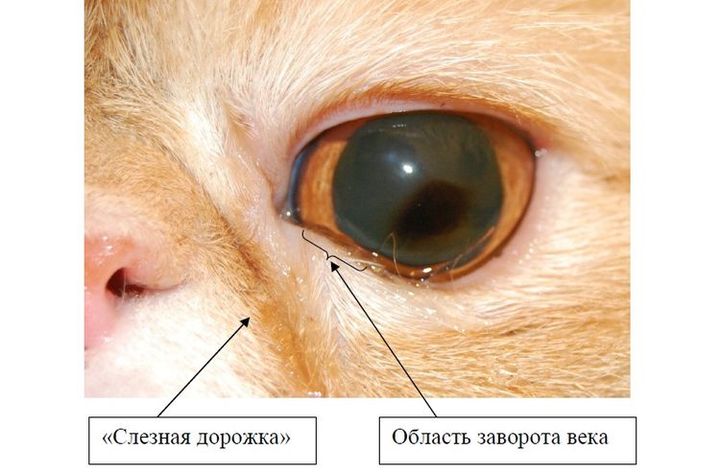
A disease such as entropion in cats is one of the most common diseases of veterinary ophthalmologyAnother name for this condition used by veterinarians is entropion. This disorder involves an abnormal positioning of the eyelids relative to the structures of the eye.
Entropion can be unilateral or bilateral (affecting one or both eyes at a time), affecting only the upper or lower eyelid. Over time, this condition can be complicated by inflammation or injury to the mucous membrane. If left untreated, this condition can cause a sharp deterioration or even complete loss of vision.
Content
Provoking factors and causes
Entropion can affect pets of any gender and age, but experts note that some breeds are predisposed to this condition.
Those at risk include:
- Persians;
- sphinxes;
- Maine Coons;
- Scots;
- British.
This dependence is due to a certain weakness of the connective tissue on the inner layer of the eyelid, which leads to a high risk of inversion.
All causes are divided into those due to congenital characteristics and those that arise throughout life. Congenital factors include breed-related factors. Among acquired causes, the most common are the following:
- Inflammatory diseases - uveitis and panophthalmitisThey can be triggered by a virus, fungus, infection, or parasite entering the mucous membrane. In cats with a weakened immune system, the risk of complications such as bloat is greatly increased.
- Injury. The occurrence of such problems can be provoked by injuries to the structures of the eye or areas located in close proximity to them.
- MacroblepharonThis causes the animal's eyes to not close completely, which in winter leads to corneal damage after exposure to cold air. This can also cause spasm of the nerves innervating the eyelid.
- Corneal syndromeIt can manifest as erosions or ulcers on the cornea, causing redness. It is always accompanied by purulent discharge that accumulates in the inner corner of the eye.
- Age-related changes. They lead to a loss of muscle tone, which causes the eyelid to droop and turn inward.
- NeoplasmsBoth malignant and benign tumors can cause such phenomena.
Symptoms
Symptoms vary depending on the stage of entropion. In the early stages, blinking becomes more frequent, and a fear of bright light caused by pain may be observed. The cat often seeks shelter in dark places and turns its face away. In most cases, intense lacrimation begins.
As the bloat progresses, the pain worsens, and tears may become viscous and cloudy. It often appears as if the cat is squinting with one or both eyes. The eyelids appear hyperemic and red, and the skin around them becomes swollen and hot. The process can be complicated by a bacterial infection, which causes pus production. Fever sometimes develops.
As the discomfort increases, the cat may actively rub its eyes with its paw and constantly wash its face. Sometimes this further injures the cornea and increases keratitisIf it becomes chronic, it can lead to complete loss of vision.
Diagnostics
The outcome of the disease depends on how quickly and accurately the underlying causes of the entropion are identified. Identifying these causes without the help of a veterinarian is virtually impossible, so the first step is to take your cat to a specialist.
In all cases, the diagnosis is made based on a visual examination during the initial visit. In rare cases, a slit lamp examination with fluorescent solution is performed.
Cats react negatively to slit-eye examinations; they often resist and struggle during eye drops. However, the procedure is completely painless, so owners need not worry.
Depending on the underlying cause the veterinarian suspects, a bacterial culture may be necessary. If bacteria are detected in the sample, they are tested for sensitivity to specific antibiotic groups, which can shorten the treatment period.
Treatment
The veterinarian's approach depends on whether the entropion is primary or secondary. If it's caused by other conditions, all efforts should be directed toward eliminating the underlying factors. If this is done quickly, conservative treatments may be successful.
Other cases require immediate surgical treatment, which is performed in a veterinary clinic by a veterinary ophthalmologist.
Conservative therapy
The choice of treatment depends directly on the underlying cause. If the condition is caused by bacteria, antibacterial treatment is used. In the case of viral infections, antiviral medications are prescribed. If the mucous membranes of the eye are affected by fungal microorganisms, treatment is carried out with antifungal medications.
In each of these cases, additional therapy is prescribed to strengthen the body's defenses, and in the final stages of treatment, vitamin complexes for cats are recommended.
Operation
If a decision is made to perform surgical intervention, special preparation is carried out in the form of the following tests:
- general and biochemical blood test;
- urine analysis;
- electrocardiogram.
In some cases, an ultrasound of internal organs is necessary.
During the surgery, the inverted portion is brought into the desired position and secured with cosmetic sutures. The procedure is short, lasting 15 to 30 minutes. If the surgery is performed in the early stages, a single procedure is sufficient. If the inversion of the eyelid has become chronic, three to four surgeries may be necessary.
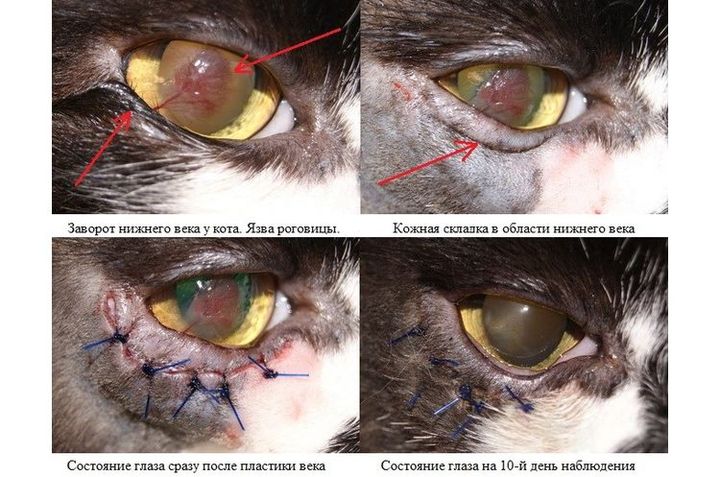
In 80% of cases, cats with inverted eyelids require surgical treatment. Recovery is usually easy and without complications.
Read also:
- A thorn in the cat's eye
- My cat has a watery eye: what should I do?
- Third eyelid in cats: causes and treatment


Add a comment