
A thorn in the cat's eye
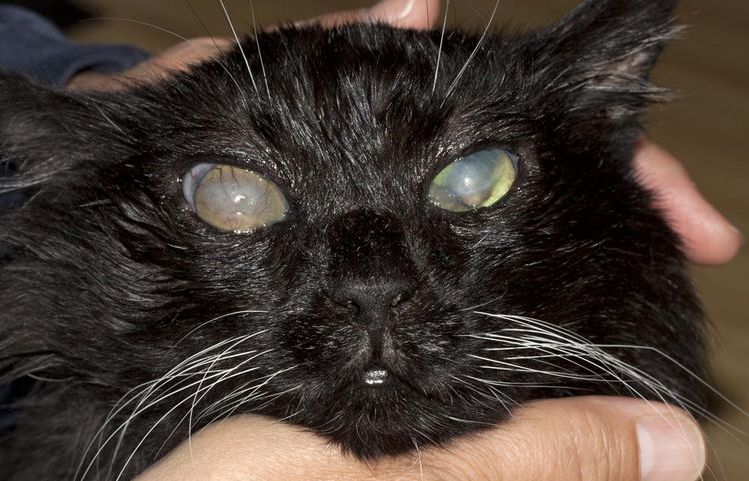
An unpleasant discovery that sometimes befalls cat owners is the presence of a patch of cornea that differs from a healthy eye in its reduced transparency and color. It appears whitish and opaque, often film-like. This cloudiness or white spot is called a cataract and can appear in kittens, adult cats, or male cats. Some owners believe that a cataract inevitably leads to blindness and that there is no treatment. This is not true: in many cases, proper and timely treatment can preserve a pet's vision, so diagnosis and treatment should begin immediately after the cataract is detected.
Reasons
Veterinarians divide the causes of the appearance of a cataract into two main groups: congenital and those that appear during life.
Congenital lesions account for only 7-10% of cases. This can occur due to abnormal visual development or if the cat was severely ill during pregnancy. Most often, the problem affects several or even all kittens in a litter.
The following factors can lead to acquired corneal opacity:
- infections and viruses that affect the cat's body;
- parasitic diseases localized on the cornea;
- mechanical damage and trauma to the eye or nearby areas;
- disruption of metabolic processes leading to excessive accumulation of cholesterol and calcium;
- prolonged exposure to an allergen;
- impaired renal function, leading to severe swelling of the mucous tissues and conjunctiva;
- destructive processes caused by aging that cause a veil to form over the animal's eye.
Approximately 90% of cases are acquired, which is usually reversible. Even after severe injuries, when owners feel their vision is beyond saving due to a large corneal lesion, veterinary care can, in most cases, fully or partially restore the animal's ability to see normally.
Symptoms
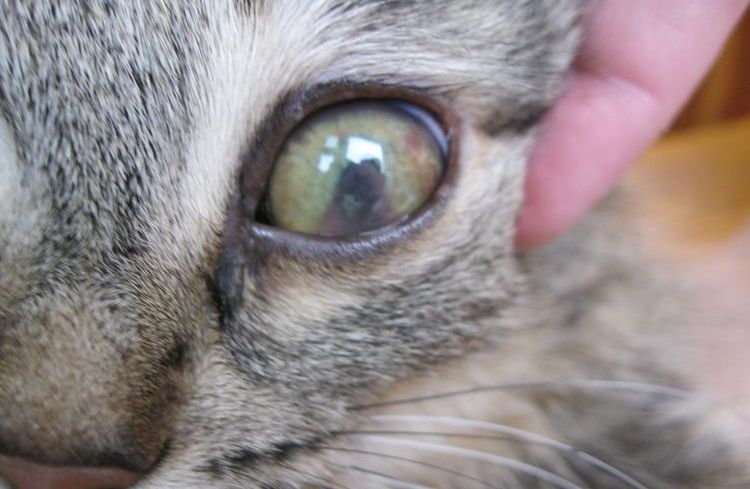
The presence of a cataract is not always clearly expressed, but its presence can be judged by a number of signs:
- animal avoidance of places with bright lighting;
- increased activity of the lacrimal glands, sometimes increased accumulation of mucus in the inner corners of the eyes;
- swelling of the cornea and acquisition of a reddish tint;
- formation of a purulent film;
- cloudiness of gray-red or light yellow color;
- unevenly colored cornea with an uneven surface;
- bulging leukoma;
- atrophy of the visual organ;
- change in the shape of the pupil;
- uneven pupillary movements when the cat looks to the side, strabismus.
In addition to all of the above, the cat's behavior often changes, and visible signs of vision loss may appear. The animal often bumps into walls, doorways, furniture, and people, and moves slowly and unsteadily.
Often, a pet becomes more irritable and less sociable due to increasing discomfort. The cat is prone to constant grooming, trying to remove anything that interferes with normal vision. If the condition is caused by an inflammatory process, it will be impossible to clean the cat, as it will struggle to hold on, fearing pain.
The visual impairment associated with a cataract depends on its location and size. The further the cataract is from the center of the eye and the smaller it is, the less significant the impairment. When the pupil remains open and not obscured by the cataract, vision is preserved, but its quality is significantly reduced, and the cat's vision appears blurred and unclear.
What to do
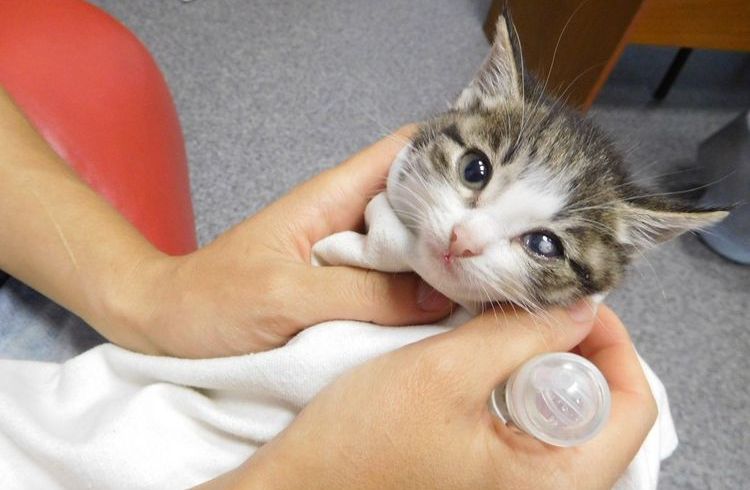
As soon as a pet owner notices such changes, immediate action is necessary. Determining the cause on your own is virtually impossible unless the animal is injured in front of the owner. Even then, providing qualified care to a cat at home is nearly impossible, so the first step should be to contact a veterinarian.
During the initial consultation, the specialist attempts to assess the clinical picture. This involves a visual examination of the cat, particularly the eye area. The cat's owner should be asked when the cataract was first noticed, what diet the animal is receiving, and what other symptoms it may have. diseases the pet had them before.
Based on this information, an examination is prescribed. It may include:
- a comprehensive blood test and biochemistry analysis;
- serological tests;
- ophthalmoscopy;
- eye pressure measurements to determine risk cataracts or glaucoma;
- slit lamp examination;
- Seidel test;
- detection of corneal injuries and ulcers using fluorescein;
- cytology of biological material from the conjunctival mucosa;
- scraping microscopy;
- biopsy of intraocular fluid;
- checking the reflex constriction of the pupil;
- microbiological analysis, etc.
In some cases, a standard examination cannot be performed. In such cases, the veterinarian will order an ultrasound of the eye to determine the cause of the cat's cataract. If concomitant viral or infectious diseases are suspected, appropriate diagnostic tests may be prescribed to identify them.
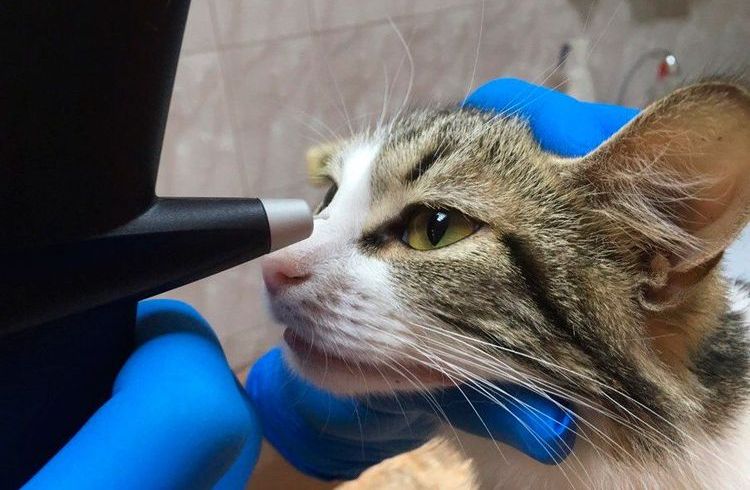
Since the success of treatment is directly related to the time of its initiation, preference is given to faster tests and express methods.
How to cure
Treatment for corneal leukoma begins only after the cause has been accurately determined. It's important to initiate the first treatment measures before the corneal tissue begins to degenerate into scar tissue. The main measures include the following:
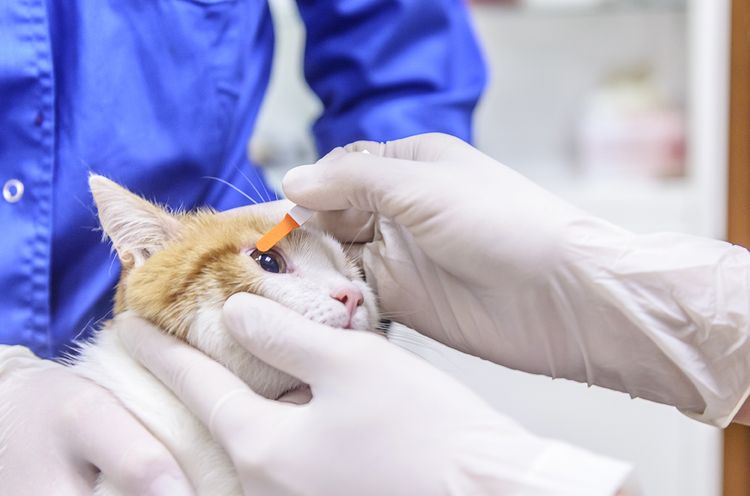
- Keratitis is treated with medication. This involves a two-week course of eye drops or special ointments (such as 3% Tetracycline or Floxal).
- To activate corneal regeneration processes, keratoprotectors are applied and placed into the eye. This is done morning, afternoon, and evening at regular intervals. The course lasts at least two weeks.
- If a cataract is caused by an injury, the affected eye should be promptly flushed with saline or Miramistin solution (the cat's owner can do this) to disinfect it. Tetracycline drops are then prescribed.
- For severe pain, the cat can be relieved by injecting Novocaine with cortisone under the eyeball. If necessary, the procedure can be repeated after a certain period of time.
- To reduce intraocular pressure, it may be necessary to prescribe Pilocarpine or Brinzolamide.
- In cases where conservative treatments fail to produce the desired results, surgery is performed. The choice depends on the underlying cause and stage of the disease at the time of treatment. Sometimes, surgery to replace the stratum corneum is necessary. Surgery is performed only after the inflammatory process has been controlled.
The more serious the disease, the more carefully you should choose a doctor. For surgical treatment, ideally, consult an experienced practicing veterinary ophthalmologist.
What can the owner do?
Not everything during the treatment of a cataract depends on the doctor. The actions of the cat's owner are also important. All instructions must be strictly followed. Furthermore, it will be necessary to ensure that the animal does not rub or injure its eyes. If calming the animal is impossible, a cervical restraint collar should be used.
The eye condition should be checked twice daily. If any deterioration is noticed or the animal shows signs of rapid progression, consult your veterinarian immediately. Deterioration most often manifests as increased swelling, redness of the eyeball, increased pain in the eye area, increased signs of vision loss, etc.
If your cat's vision has significantly deteriorated, you can make its life easier by removing unnecessary furniture (ottomans, stools, etc.) from the room that it could bump into and injure itself.
Veterinarian appointments and check-ups should not be missed, as the veterinarian is responsible for monitoring the progress of treatment and, if necessary, adjusting earlier prescriptions.
It is important to remember that maintaining a pet's vision depends entirely on the responsible attitude of the cat owner.
Of course, patience and compassion are essential during this period, as the cat may become irritable and unloving. Once the cataract is healed, the animal will feel grateful to its owners for relieving its discomfort.
Read also:
- My cat has brown discharge coming out of her eye: what should I do?
- My cat has a watery eye: what should I do?
- Third eyelid in cats: causes and treatment


1 comment
Irina
The kitten had a cataract covering its entire eye. Treatment with Tobrex drops and, most importantly, Carnirogel ointment helped. It cleared up completely. The eyeball is clear, and there's no trace of the cataract left.
Add a comment