
Volvulus in dogs
Among all the pathological manifestations in dogs, intestinal volvulus is considered one of the most dangerous. The danger lies in the fact that symptoms develop very quickly, the animal's condition rapidly worsens, and inevitably leads to death if medical attention is not provided in the early stages. Statistics show that the risk of this pathology depends on the breed size: larger dogs are significantly more likely to suffer from it than smaller ones. Various shepherd dogs are at risk. bullmastiffs, dogs, Labradors and other breeds whose weight exceeds 40 kg.
To promptly detect the cause of the disease and provide assistance to the pet, the owner must know the signs of intestinal volvulus and be able to identify them in the early stages.
Content
Causes of occurrence
To date, veterinarians and dog trainers have not yet reached a consensus on the exact cause of stomach and intestinal displacement in dogs. However, several factors have been identified that significantly increase the risk of developing this extremely dangerous condition:
- Abdominal injuries - both with tissue damage and ordinary blows, falls and severe bruises.
- Hormonal changes and disruptions in the body that reduce the elasticity of muscles and ligaments (including pregnancy and the period of nursing puppies).
- Excessive physical activity immediately after eating - active games, running and training.
- Stressful situations: loud noises, explosions, car rides, long separations from the owner, and other strong experiences.
- Incorrect feeding schedule. Especially dangerous is feeding only once a day, when the dog eats too much food and gulps it down without chewing.
- Poor quality and unsuitable nutrition - using spoiled products or food not intended for dogs.
- Any diseases of the digestive system of infectious, tumor or congenital nature (ulcer, cancer, duodenitis, pathology of mesentery development, etc.).
- Belonging to large breeds, which are prone to intestinal volvulus.
- Heredity. Statistics show that offspring of parents who suffered from this pathology have a significantly increased risk of developing the disease.
Main features
All symptoms associated with volvulus manifest very quickly. They may appear all at once or one at a time, randomly. Sometimes, some of them disappear. The first symptoms are noticeable within an hour or two of the normal digestive disturbance.
The severity of symptoms depends largely on the specific area of the digestive system affected, but only a highly qualified veterinarian can accurately determine this. The following symptoms should signal the owner to take immediate action:
- Abdominal enlargement. This often occurs immediately after eating or physical activity. The abdominal wall becomes tense, and the enlargement is visible during a routine visual examination and palpable.
- All the signs of severe pain appear: the hind legs are tense and may tremble, the pet has difficulty maintaining a standing position, and after lying down, the hind limbs are extended and the toes remain tense. The animal may restlessly change position to relieve the pain. Sometimes, severe pain can lead to pain shock, which in some cases manifests as apathy.
- The gag reflex is triggered, so severe, intermittent vomiting is often observed. If the upper stomach is pinched, vomit may come out instead of vomit. foamSometimes, one simply notices intermittent urges to vomit, which are ineffective. This leads to stagnation of vomit within the gastrointestinal tract.
- The temperature drops, the mucous membranes become bloodless, and unconsciousness may occur.
- Breathing is impaired. This can manifest as intermittent breathing, which sometimes stops and then resumes with effort, and sometimes severe shortness of breath. Due to the enlarged stomach, the diaphragm experiences severe pressure, preventing the lungs from fully expanding, leading to severe respiratory failure.
- The necrotic process can cause the onset of sepsis.
- The dog does not defecate for a long time due to a disruption in the structure of the intestinal loops.
- Cardiac complications in the form of arrhythmia are not uncommon.
It is important to remember that emergency care for intestinal volvulus can save your pet within the first 7-8 hours from the onset of initial symptoms.
Diagnostics in the clinic
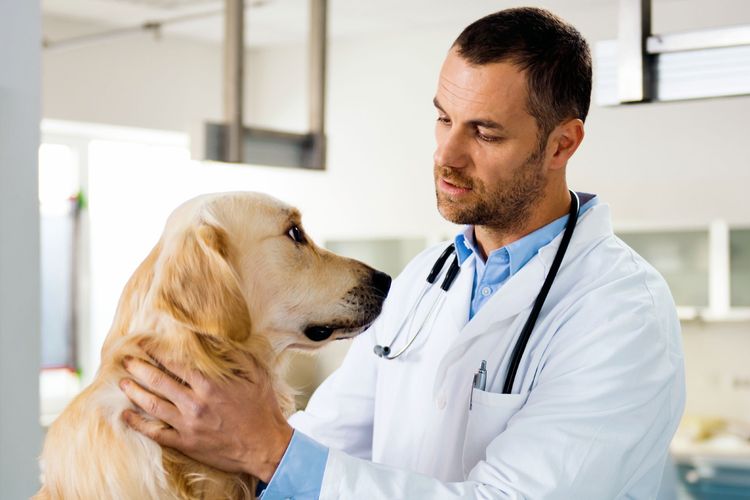
Accurately diagnosing volvulus requires prompt and coordinated work by the clinic staff. The first step is a conversation with the owner to determine the timing of the first signs and their likely causes.
All subsequent steps are aimed at determining the specific condition the specialists are dealing with, as the external manifestations are virtually identical for both types of pathologies: gastric torsion and gastric dilatation. To accurately determine the cause of the dog's poor health, gastric intubation is used.
The probe is selected based on the pet's size. If the probe easily enters the stomach and gases are released, the doctors are dealing with gastric dilation. If this procedure is not successful, a volvulus is suspected. To confirm this, the pet is sent for an abdominal X-ray, which helps provide a definitive diagnosis.
Treatment
The only way to save a dog with intestinal volvulus is with abdominal surgery. Treatment involves several stages:
- steroid hormones, antispasmodic substances and painkillers are injected;
- sedation is applied and drugs are administered to relieve vomiting;
- If necessary, a puncture of the stomach cavity is made through the peritoneum using a long surgical needle, which helps to remove excess gas and reduce pressure on the abdominal cavity;
- a surgical intervention is performed aimed at returning the stomach to the correct position and removing stagnant food masses
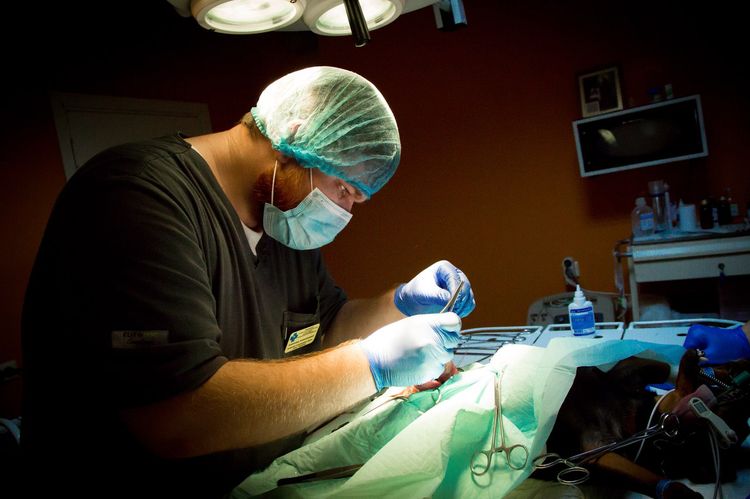
- If dead areas of the stomach are detected, they are removed, and sometimes it is impossible to do without removing the spleen;
- the gastric cavity is thoroughly washed with saline solution;
- At the final stage, part of the stomach is sewn to the abdominal wall to prevent re-displacement.
After the surgery, the dog remains in the clinic for several days, where its condition is monitored around the clock. For the first day, food is restricted, and nutrient solutions may be administered through an IV. Antibiotic injections are started immediately after the surgery and continued for some time after discharge.
Most intestinal torsion surgeries performed in a timely manner produce good results and allow the animal to lead a normal life after recovery.
Surgical intervention
First, the animal is put under general anesthesia, after which the surgeon proceeds with the following steps:
- An incision is made along the white line of the abdomen near the affected area, then a needle is inserted into the wound to remove accumulated gases.
- If there are no foci of necrosis, the intestinal loops are carefully straightened, and if there are dead areas, they are removed and healthy tissue is sutured.
- The digestive tract is washed through a tube with an antiseptic solution.
- The weakened ligaments of the stomach and intestines are sutured to reduce the risk of re-torsion.
- If necessary, the spleen is removed, as toxins and tissue breakdown products can accumulate in it.
- At the end of the operation, the edges of the wound are sutured.
Proper dog care
Proper care of your dog from an early age is considered the most reliable way to prevent health problems, including bloat.
Routine is crucial—your pet should have a consistent feeding and walk schedule, followed daily. Most often, the dog is walked first, then fed, and this is repeated morning and evening. Giving treats between meals is not recommended, as this can lead to poor eating habits. This can lead to overeating, which is a common cause of bloat.
The quality of nutrition is equally important—it should be complete, balanced, and appropriate for the dog's age and breed. It's also important to adhere to the recommended portion sizes, as overfeeding increases the risk of volvulus.
Video From a veterinarian about intestinal volvulus in dogs:
Read also:


Add a comment