
Japanese cat breeds
Japan is a country with a significant number of feline clubs and cat fanciers' clubs. However, only one breed developed by Japanese breeders has been officially recognized by international feline organizations.
In this country, with its unique traditions and culture, national character leaves its mark on all aspects of life, including the diversity of cat breeds developed here. A unique approach and distinctive exterior requirements have led to a highly targeted breeding of cats here.
Content
Reasons for the uniformity of selection
In Japan, felines enjoy a level of respect, honor, and exclusive rights they cannot claim anywhere else. This special attitude toward cats stems from cultural and religious traditions passed down over many centuries.
According to local beliefs, the tail of any animal is a concentration of demonic energy, negativity, and destruction. This meant that cats with long tails were not particularly popular, while those with shortened tails became residents of the imperial palace. Other cats suffered a terrible fate: their furry pride was simply chopped off by people seeking to protect themselves from negativity.
It was here that kittens without this organ began to be born. It's possible that such mutations in cats occurred everywhere, but only Japanese residents were enthusiastic about this fact and began to especially carefully care for the tailless animals, which marked the beginning of targeted breeding.
The trait quickly took hold and became the main anatomical feature cultivated in Japan. Since the country remained closed for a long time, the new standards did not introduce any changes, and the breed became increasingly established and rooted through crossbreeding between similar specimens. The species was named Japanese Bobtail.
Japanese exterior
Japanese cats have clear exterior requirements that they must meet:
- They are characterized by the genotype of the Japanese bobtail and are directly related to it.
- Good health is a must.
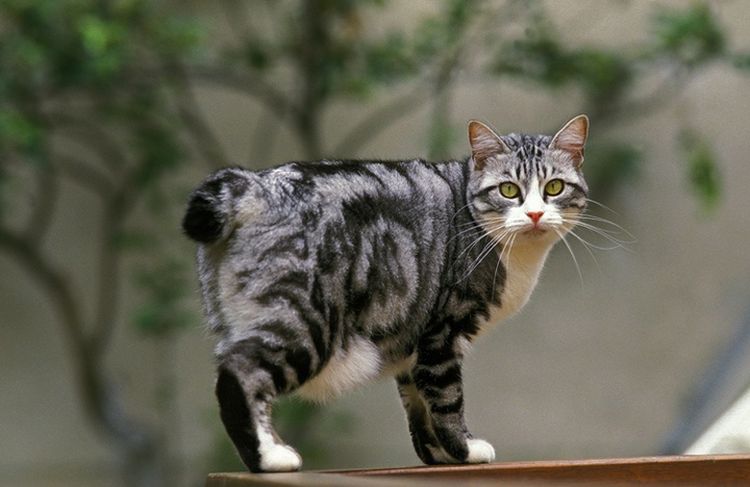
- The most common colors are bicolors with predominantly white, calico, and tortoiseshell and white. The only exceptions are colorpoints and the Abyssinian phenotype.
- The key feature is taillessness.
It is important to know that the presence of heterochromia (different eye colors) in cats is a consequence of American selection, so such a representative cannot be classified as a Japanese breed.
The breed received its first recognition in 1976, when the Japanese Bobtail was officially listed by the CFA association.
Twenty years later, another variety was recognized, the result of the work of Japanese breeders – the longhaired bobtail.
Japanese Bobtail Shorthair
The gene responsible for the key traits of this breed of cat is recessive, meaning it won't express itself when crossed with other breeds. Therefore, when purchasing such a kitten, it's important to pay special attention to its pedigree.
Appearance
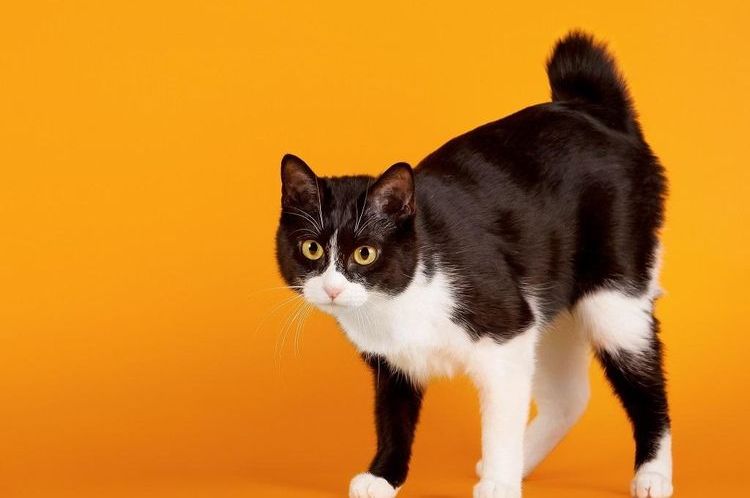
The Japanese Bobtail's body size is medium, with harmonious proportions. Its characteristic "samurai stance" is one of its most distinctive features.
The cat's head, shaped like an equilateral triangle, has a graceful muzzle. The ears are erect and set high. The large oval eyes have an attentive expression; ideally, their color should match the color of the cat's fur.
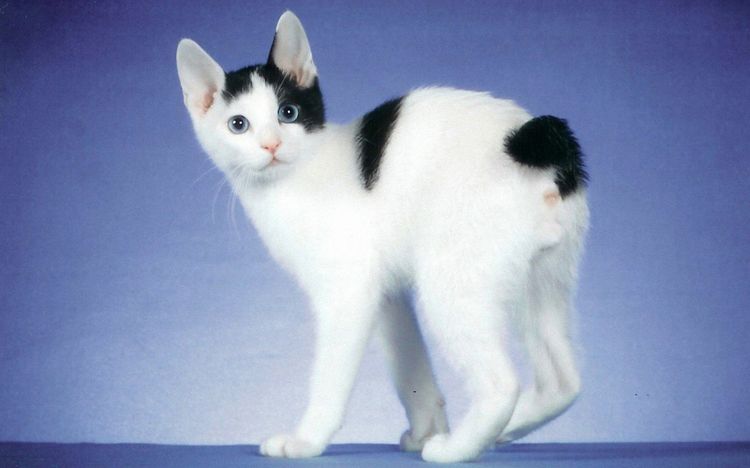
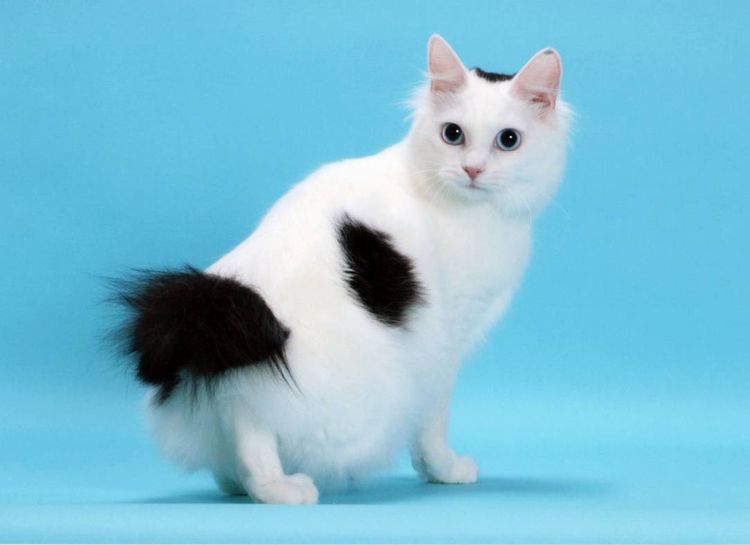
The coat is not particularly variegated and is usually limited to two colors. The coat is single-layered, lacking an undercoat due to the breed's origins in a mild climate. The cat does not shed heavily, so it does not cause severe allergies. The breed's taillessness is somewhat exaggerated: in fact, the cat does have a tail rudiment measuring between 2.5 and 7.5 cm. This is covered with thicker, longer hair, which resembles a pom-pom.
Character
They have a friendly nature and a reputation for being affectionate. They are very active and enjoy movement, but they especially prefer games that they can play with their owner.
Their fur is highly water-resistant, so many cats of this breed enjoy swimming in bathtubs or open water. Another characteristic is their wide range of sounds: these cats can produce sounds ranging from meowing to bird-like trills.
They require frequent attention from their owner, since such a cat, left alone for a long time, may show its protest in the form of mischief: torn wallpaper, scratched furniture or overturned flower pots.
Health
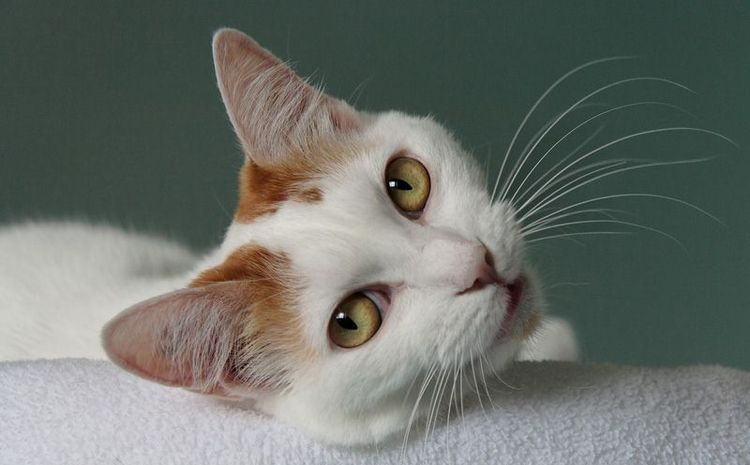
Centuries of outdoor life, during which these cats were forced to catch mice and forage for food, have resulted in Japanese Bobtails enjoying excellent health and strong immune systems. They rarely suffer from most feline diseases and recover quickly.
Kittens of this breed begin to walk and become independent much earlier than other felines, and their life expectancy is about 15 years.
Longhaired Japanese Bobtail
This breed of cat also had other names: "bobby" and "chrysanthemum cat", but it was officially recognized as the Japanese longhaired bobtail.
Appearance
Medium-sized, with large males weighing no more than 4 kg. The body is muscular (not skinny). Because the hind legs are longer than the short ones, this species has a distinctive, uneven gait, with a distinctive "hopping" motion from the hindquarters.
Unlike the shorthaired variety, longhairs do not have a flattened muzzle, but they do have a slight indentation at the transition from the forehead to the nose. The ears are set wide apart and may appear slightly forward when the cat is at rest.
The coat has an undercoat, but significant shedding occurs only in the spring and lasts no more than 5-6 days. There may be a small "ruff" of fur around the neck.
Character
The cat is very active and lively, but unlike the shorthaired variety, it is more jealous, so keeping it in a household with a dog or other pets is not recommended, as this can cause a sharp deterioration in its character. However, if it receives sufficient attention, it becomes a very affectionate animal that adores its owners.
Health
Since this variety is a derivative of the original species, it is less resistant to various diseases. These cats must be fed high-quality food. If this is followed, health problems will be avoided.
Cats of these breeds are currently widespread only in Japan, and in the USA and Europe they remain quite rare and expensive, but their exotic appearance and wonderful character make them increasingly popular.
Video about the breed:
Read also:


Add a comment