
Wolfhound: a dog breed or a purpose?
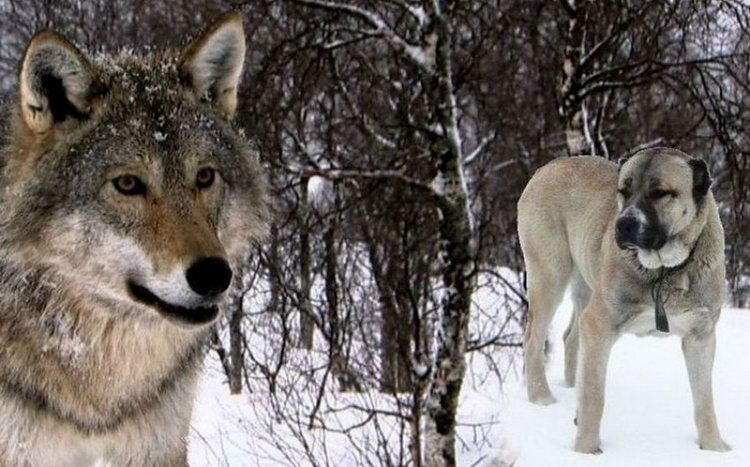
Wolfhounds are popularly known as large dog breeds used to hunt wolves and other wild animals, as well as to protect livestock in the pastures. In fact, any dog suitable for such work can be called a wolfhound. In cynology, there is only one breed with this official name: the Irish Wolfhound.
Content
Wolfhound dog breeds
There are several breeds that fit the succinct and descriptive name of wolfhound. These dogs share a remarkable size, strength, endurance, independence, and the ability to make independent decisions. However, this description does not include sighthounds, which are also used in wolf hunting and are therefore sometimes referred to as wolfhounds.
Wolfhound dog breeds:
- Irish Wolfhound;
- Buryato Mongol wolfhound (khotosho dog);
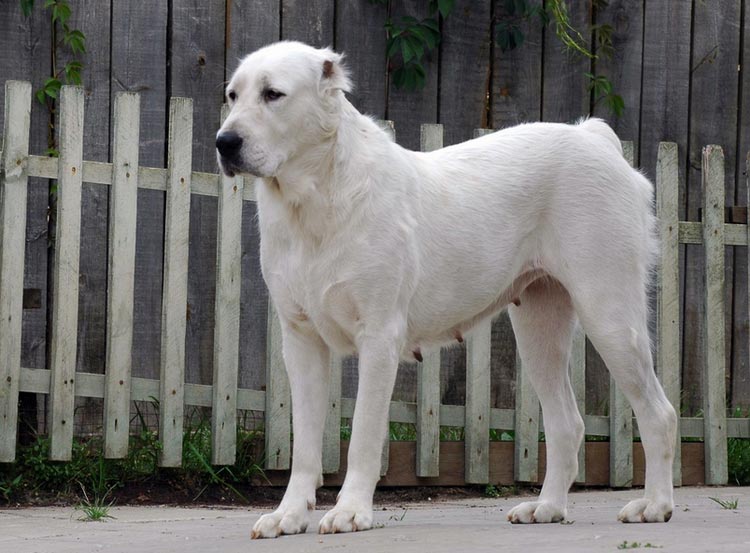
- Central Asian Shepherd Dog (Turkmen Wolfhound);
- Caucasian Shepherd Dog (Caucasian Wolfhound);
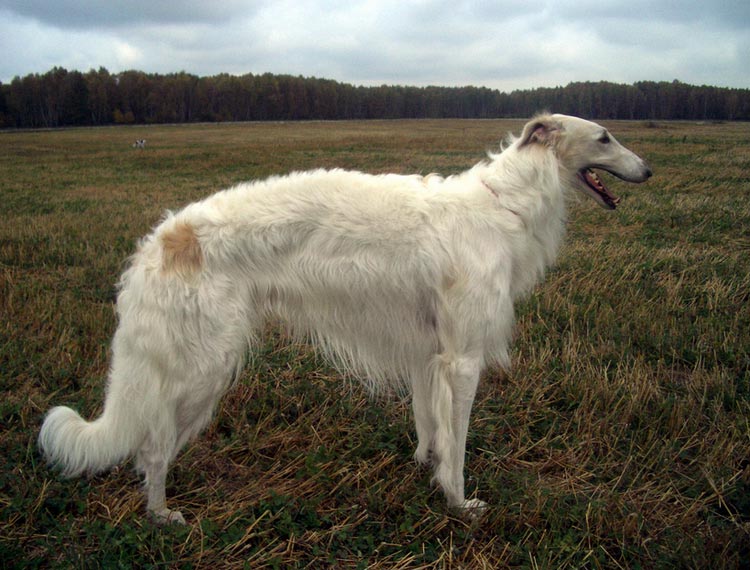
- Russian Borzoi (Russian Wolfhound).
Photos of wolfhounds can be seen below in the breed descriptions.
Irish Wolfhound
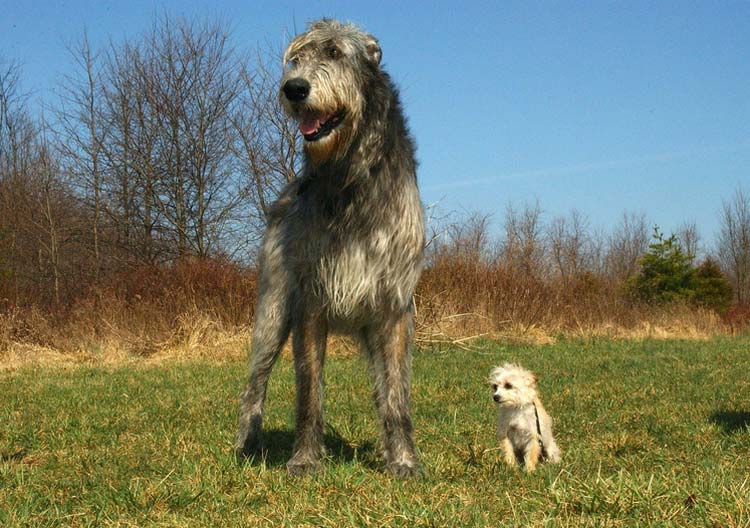
The Irish Wolfhound is considered one of the largest breeds. Despite its impressive name and size, the Irish Wolfhound is surprisingly peaceful and good-natured. It's completely non-aggressive and won't initiate conflict. It won't defend or protect, but it will love and lick.
Origin
The ancestors of modern Irish wolfhounds are believed to have been large, wire-haired dogs used by the Celts in Ireland for protection and hunting. The breed's modern appearance developed during the Middle Ages. The breed became very popular due to Cromwell's order to exterminate all wolves (a bounty was offered for those killed). It is believed that the last wolf in Ireland was killed in 1786. Irish wolfhounds fell out of demand and were on the brink of extinction. Only thanks to enthusiasts who transformed the dog into a companion were the Irish wolfhounds saved.
Appearance
The Irish Wolfhound, as seen in the photo, has a muscular, strong, yet elegant build, a broad chest, a long, strong back, and high legs. The head is held high and proud. The muzzle is tapered, the eyes are small, and the ears are drooping. The tail is long. The hair is wiry, forming a beard and eyebrows on the muzzle. Colors include fawn, brindle, wheaten, and black.
Character
Irish wolfhounds are intelligent, friendly, and well-balanced. They form strong bonds with their owners, literally unable to live without them. However, this love does not imply unquestioning obedience. They are independent, self-sufficient, and capable of making their own decisions. Irish wolfhounds are expensive, with an average price of $1,000.
Buryat-Mongolian wolfhound
Another name for this breed is the Khotosho Nokhoi. These dogs are common in Mongolia, Buryatia, and neighboring regions. Like many other native breeds, the wolfhound is a well-built dog, easy to maintain, and versatile. It has robust health and a functional build, allowing it to perform a variety of tasks.
The word "khotosho" - the main name in the Buryat language means "yard wolf" or "yard dog".
Origin
The breed is considered one of the most ancient. During excavations at the Hunnic settlement near Ulan-Ude, dog remains were discovered, which, after analysis, scientists identified as the ancestors of modern Mongolian wolfhounds. The dogs were first entered into the Russian Stud Book in 2000, and the breed standard was published in 2006.
Appearance
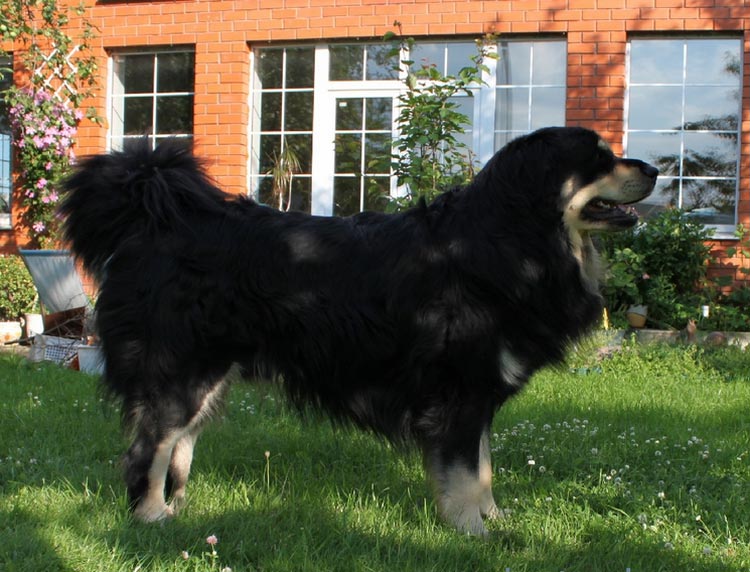
The Buryat-Mongolian Wolfhound is taller than average, strong, with a heavy bone structure and well-defined muscles. The skin forms folds on the head, and a dewlap forms on the neck. The coat is coarse and straight with a soft, dense undercoat. There are several types based on coat length, with the topcoat being short, semi-long, or long. The coat color is black and tan.
Character
Buryat Mongolian wolfhounds are even-tempered and loyal to their owners. Their innate protective instincts and caring attitude toward all family members have made the breed popular both in their homeland and in other regions of Russia. Today, they are used as guard dogs, watchdogs, and companions.
Caucasian Shepherd Dog
Unlike European shepherd dogs, Caucasian Shepherd Dogs - "guards", they never herded sheep, they only helped the shepherds drive the flock, but their main task was to protect the livestock from thieves and predators.
Origin
Caucasian Shepherds are descendants of the so-called mountain dogs of the Molossian group. In their homeland, they have long been used to guard livestock from predators and intruders. This has played a role in shaping their appearance and personality. Caucasian Shepherds are large and powerful, independent, capable of working independently and making their own decisions.
In the late 1920s, selective breeding work began on the aboriginal breed, which was intended to enhance the wolfhounds' best qualities. In 1931, the breed standard was first developed. The dogs were presented at a show in Newberg, Germany, and they became a topic of discussion in Europe. However, despite the widespread interest, the breed saw little development. It was only in 1990 that the FCI officially registered the Caucasian Shepherd Dog.
Appearance
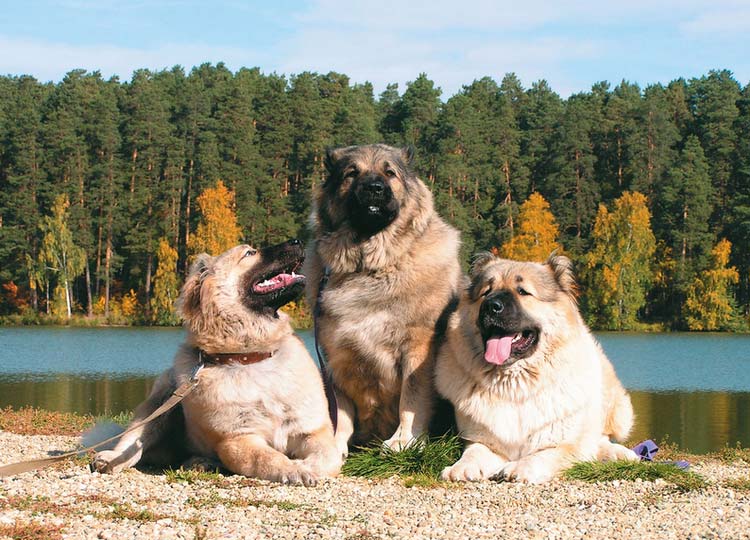
Caucasian Shepherds resemble large teddy bears. They are robust, strong, and resilient. They are above average in height and weigh 50-70 kg, but can reach up to 100 kg. Their heads are large and powerful. Their deep-set, dark eyes give them a stern expression. Their bodies are strong, with their hips slightly raised above their backs. Their paws are large and heavy.
The coat is very thick, with a well-developed undercoat, making the Soaks appear even more massive. Colors vary: gray, fawn, brindle, and white.
Character
The Caucasian Shepherd can be proud and unruly, and will defend its owner with its own life. This is a difficult breed to train and maintain, and is only suitable for experienced dog owners.
This dog breed is also popularly known as the Caucasian Shepherd or Caucasian Wolfhound. Photo:
Central Asian Shepherd Dog
The Central Asian wolfhound is a product of natural selection; it is an aboriginal breed used for guard and watchdog duties. Today, it is officially recognized as the "Central Asian Shepherd Dog," but is also commonly known as the Turkmen wolfhound.
Origin
The Central Asian Shepherd is a typical representative of the Molossoid breed. Its ancestors are believed to have been the fighting dogs of Mesopotamia, as well as Tibetan mastiffs. Throughout their existence, these dogs have been subjected to rigorous natural selection, which has shaped their modern appearance and tempered their character. In Turkmenistan, purebred Central Asian Shepherds are called Turkmen wolfhounds and are considered a national treasure alongside the Akhal-Teke horse.
Breeding work on this breed began in the USSR in the 1930s. An attempt was made to use Asian wolfhounds to guard government facilities, but the breed's complex psychology proved difficult to achieve. In 1990, the State Agrarian Committee of Turkmenistan approved a standard for the Turkmen wolfhound. This standard served as the basis for the breed's registration with the FCI in 1993 under the name Central Asian Shepherd Dog.
Appearance
Central Asian Shepherds are large, powerful dogs with strong bones and well-developed muscles. Their minimum height at the withers is 65-70 cm, and their weight ranges from 40-80 kg. Their heads are massive and broad, with a well-filled muzzle. Their drooping ears, like their tail, are docked. Their coat is coarse and straight, and they are divided into two types based on length: short-haired (3-4 cm) and long-haired (7-8 cm). They have a well-developed, dense undercoat. Any color is acceptable, but chocolate, liver, and blue are not permitted.
Character
The Turkmen wolfhound's main character traits are fearlessness, courage, pride, independence, and self-esteem. While they are relatively reserved in their displays of affection, they are very attached to their family and will do anything to protect them. They are generally peaceful with other pets in their pack, and are willing to guard every chicken in the owner's yard.
Russian Borzoi
Russian Borzoi Borzois are a breed of large hunting dogs capable of reaching very high speeds, possessing excellent eyesight, strength, endurance, and aggressiveness toward other animals. The word "psovaya" in their name refers to their coat, which is derived from the Old Russian word "psovina" (silky, wavy hair).
Origin
The first descriptions of Russian sighthounds date back to the 17th century. Prior to this, sighthounds were called Circassian sighthounds. In the early 18th century, they began to be crossed with European sighthounds, and since the 20th century, also with mountain and Crimean sighthounds. This resulted in a multitude of different types. In 1888, the first description of the breed was made, and its development began. Since 1874, sighthound shows have been held, and the best specimens have been selected. In the 1980s, there were approximately 3,000 sighthounds in Russia, of which about 2,000 had a pedigree.
Appearance
The Russian Borzoi is a lean, stocky dog with a long, narrow head, large, expressive eyes, and small ears. Its paws are high, its chest is well developed, and its belly is very tucked up. Its coat is soft and wavy. Colors come in a wide variety.
Character
Greyhounds have a dynamic temperament: calm at one moment, but upon seeing an animal, they immediately become excited and ready to work. They are very independent and self-sufficient, capable of living and feeding themselves without humans, yet they submissively serve their master. In the family, greyhounds are gentle and trusting, trying to become full members of the family and following established rules. At home, they behave calmly, almost unnoticed.
This description only covers those breeds most often referred to as wolfhounds. It could be significantly expanded by including, for example, guard dog breeds that were once used to protect livestock from gray predators (Akbash, Gampr, Tobet, Great Pyrenean Dog, Giant Schnauzer, Baskhan Pariy), as well as greyhounds bred in areas where wolf hunting is possible (Taigan, Tazy).
Video about wolfhounds – "5 breeds capable of killing a wolf":
Read also:
- Bouvier des Flandres (cowhound)
- Who is stronger: a wolf or a dog?
- Bearded Dog: What is the name of the breed?


Add a comment