
Why does a cat have pus in its eyes?
Domestic pets are more delicate than their wild counterparts. Of course, stray cats are no less likely to experience eye infections due to their lifestyle. But when the problem affects a well-groomed, indoor cat, a caring owner will never ignore this warning sign. In this case, a desire to help and understand the situation is the first step to alleviating the cat's suffering and ensuring its successful recovery. After all, if a cat's eyes are oozing or watery, it means your pet is sick. What should you do? How can you treat a cat in this situation? We'll explore this together today.
Content
Causes and symptoms
Healthy animals also experience eye discharge. Typically, these are normal tears, grayish or sometimes reddish in color. The causes of this discharge vary and are numerous. the cat's eyes are watery If your eyes are draining pus, this isn't necessarily a cause for concern, especially if the discharge is rare and isolated. It's also important to consider the nature of the discharge. While simple tearing is normal, the appearance of thick green or yellow pus is a warning sign.
First, let's figure out why a cat's eyes are oozing pus—what's the cause? Without understanding the cause, understanding and treating the condition is much more challenging. Typically, this clear, watery discharge is the result of allergic reactions or mechanical damage. It may have a grayish or reddish tint.
A greenish or yellowish, purulent, thick discharge from a cat's eyes is considered a symptom of a bacterial or fungal infection. The disease does not resolve on its own, so these signs should not be ignored.
Ocular and systemic diseases can be accompanied by purulent discharge from a cat's eyes. Ocular diseases include:
- diseases of the cornea, eyelids;
- eye injuries;
- conjunctivitis.
Systemic diseases include chronic viral infections, panleukopenia, or distemper.
An attentive owner will quickly notice that a cat has persistently purulent eyes, but the owner should also be wary if the sick animal exhibits additional symptoms that indicate a problem:
- the animal looks worried, rubs its eye with its paw, refuses to eat;
- hides in dark places, body temperature may increase;
- the fur around the eye is felted, with brown tint;
- the organ of vision is clouded and reddened.
You don't need a veterinary degree to figure out that something is wrong with your pet. Incidentally, if you notice your cat's eyes are red and oozing pus, don't necessarily mistake the redness for a symptom of any underlying illness. It's most likely a result of irritation from discharge, or your pet may have rubbed the eye with its paw, trying to relieve the pain and itching that's been bothering them.
At the first sign of symptoms, your cat should be taken to the veterinarian for a proper diagnosis and testing. To rule out conjunctivitis, the veterinarian will perform a microscopic swab of the cat's mucous membrane and prescribe a comprehensive treatment plan. They may prescribe antibiotics as a systemic therapy. Topical treatment involves ointments and eye drops.
Eyelid injury or trauma is another major cause of pus in the eyes. In this case, the inflammatory process is transmitted to the eyeball. Injuries can occur for a variety of reasons, including fighting, carelessness during play, and many others.
A cat can develop blepharitis, which occurs due to traumatic, chemical, or thermal effects on the eyelids. The damaged area is an open door for microbes, viruses, and pathogenic fungi to infect the eye.
Keratitis (inflammation of the cornea) is another disease that causes a cat's eyes to become infected.
Allergens – dust, perfume, flower pollen, medications.
There are many other reasons for the appearance of purulent discharge:
- dream;
- bad food;
- household chemicals;
- a feature of the structure of the muzzle.
Other causes of purulent eyes
When an owner notices a cat with pus-filled eyes and frequent sneezing, rubbing its runny nose, it's unlikely they'll immediately be able to determine the cause of the sneezing and increased discharge. The same applies to the steps needed to alleviate the problem. Identifying the underlying cause is the top priority in this case.
Sneezing can be triggered by ordinary dust. However, if an animal sneezes constantly, it's a worrying symptom, indicating illness or other abnormalities in the body.
For example, if a cat has a runny nose and pus-filled eyes, this is a common sign of a cold. It could also be an allergic reaction to irritants or an infection.
Cat allergies are one of the most common causes of eye infections. Allergens are everywhere:
- pest control, mosquito control, fly control;
- perfume, household deodorants;
- cleaning and washing agents;
- pollen of houseplants;
- mold, fungi on the walls;
- cigarette smoke.
In addition to the main signs of allergies, such as when a cat's eyes and nose become runny, there are secondary symptoms of exposure to allergens:
- hoarse breathing;
- elevated temperature;
- general depressed state of the pet.
Each of these signs, or all of them taken together, is a reason to take your pet to the veterinarian. Veterinarians often encounter similar problems and know which antihistamine to prescribe when specific symptoms appear.
Important! It's important to understand that if your cat's eyes are irritated by allergies, antihistamines won't work. They may temporarily alleviate the problem, but to permanently relieve your pet's suffering, you'll need to identify the irritating allergen and eliminate it.
A cat's eyes may become infected for various reasons:
- poor health;
- reduced immunity;
- unkempt sleeping area;
- insufficiently balanced food.
Don't forget about hypothermia and drafts, which are especially common causes of runny eyes and snot in cats.
The first signs of a disease such as chlamydia are characterized by the appearance of purulent ichor and subsequent inflammation of the cornea and mucous membrane.
The next reason why a cat's eye is watery and festering is atopic dermatitisThis is a seasonal disease of allergic origin.
Don't discount heredity. Cats with ancestors with eye diseases are at particular risk, with a 50% higher risk of developing these pathologies.
Sometimes a pet appears to be healthy. There are no visible symptoms of illness other than discharge, and there are no secondary signs of infection or mechanical damage to the eye. Test results also show favorable results. Naturally, the pet owner has a reasonable question: why does a cat have pus in its eyes if there's no underlying cause?
In such cases, the answer must be sought literally in the cat's eye. After all, the problem is most likely a congenital pathology:
- incorrectly positioned hair follicle;
- incorrect position of the lower eyelid;
- eyelashes in several rows;
- absence of lacrimal punctum;
- lacrimal sac defect.
As a kitten, an animal already begins to experience discomfort from the pathology, and with age and, consequently, the enlargement of the "defective area," the symptoms become more pronounced. In our case, the cat has pus in his eyes. The solution is to address the problem, usually surgically.
Self-medication is prohibited; only a doctor can prescribe the correct medications.
What medications do doctors recommend?
Having determined why the cat's eyes are festering, the veterinarian prescribes a series of restorative procedures:
- If swelling is present in addition to pus, the pet is prescribed a solution of novocaine and hydrocortisone.
- If the disease is acute, antibiotic injections are used.
- The consequences of a bruise are treated with Levomycetin.
- Locally prescribed are Mizofen, Albucid, Bars.
- Among the solutions for washing the eyeball, Medkinos and Lacrimin are distinguished.
Diagnosis
A diagnosis can only be made by a qualified veterinary professional after an initial examination and review of test results. Self-diagnosis, as well as treatment, can have serious consequences for the cat. Even with advanced diagnostic skills, a definitive diagnosis cannot be guaranteed without laboratory testing. Furthermore, self-diagnosis cannot independently determine an individual's tolerance to medications during treatment.
Self-medication is prohibited; only a doctor can prescribe the correct medications.
How to treat?
Treatment for purulent eyes is primarily aimed at identifying and eliminating the cause irritating the mucous membrane. The effectiveness of treatment depends on the accuracy of the diagnosis. If the cause is a bruise, the damaged area is cleaned with hydrogen peroxide. If blepharitis is present, the underlying cause is determined. If conjunctivitis is present, it's time to see a veterinarian for comprehensive treatment.
How to treat a cat with purulent discharge from the eyes? Even before seeing a vet, the cat needs first aid. If there is thick, purulent discharge, then rinse eyesYou can't do this without an assistant, as it's very difficult to perform this procedure alone.
Eye wash
This procedure is performed using chamomile tea, boric acid solution, and furacilin. Two teaspoons of boric acid should be dissolved in 0.5 cups of water, and the furacilin solution should be 0.02%. Rinse with a warm solution, not a hot one. Twist a cotton ball into a tight rope, dip it in the solution, and squeeze the liquid onto the pet's eyeball. It is recommended to repeat this procedure until the eyes are clear.
Swabs should be changed during the procedure; swabs should not be reused more than once. Cotton swabs should not be used, as they do not absorb liquid. To avoid damaging the cat's eyeball, do not touch it with a dry swab.
The eyes are cleared of purulent discharge. It is now recommended to apply tetracycline ophthalmic ointment (1%) under the eyelids. Pull down the lower eyelid and apply the ointment inside with a special spatula. Then, close the cat's eye and gently massage it. This will ensure the ointment is evenly distributed over the eye. It is recommended to warm the ointment tube in your hands to ensure better distribution of the ointment.
If the cat is nervous and resists, do not apply the ointment, otherwise it may cause eye injury.
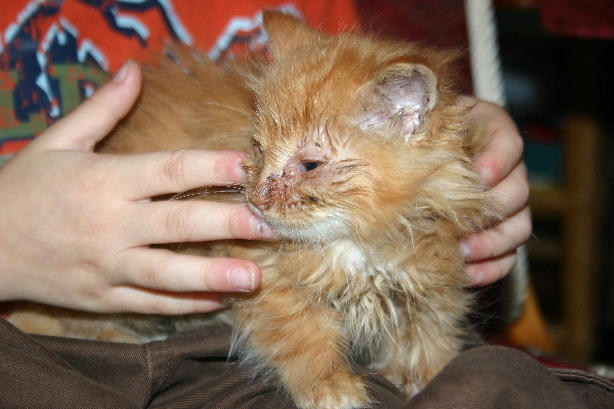
We use drops
Now let's figure out what to do if a cat has purulent eyes, and what drops to use, to be more precise.
To treat the animal's visual organs, different drops are used:
- Diamond eyes.
- Sulfacetamide.
- Levomycetin drops.
How to put eye drops in a cat's eyes
If your cat has a severely infected eye, you can treat it yourself. You don't want to take your pet to the vet several times a day. To ensure a successful procedure, keep the following guidelines in mind:
- Place the animal on its side with its head turned upward.
- If you have a boisterous or restless cat, you may need to restrain it. A large towel or sheet will do the trick. As you can imagine, the animal will need to be swaddled.
- Open your pet's eye slightly and apply the medicine. If the animal shakes its face, hold it with your hand, as in the photo.
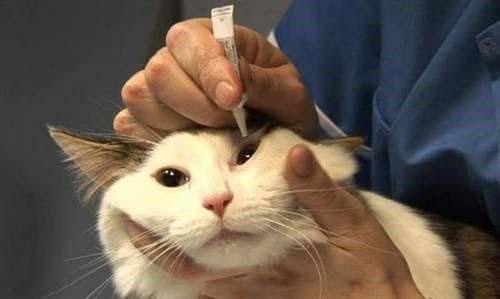
After the drug gets on the eyeball, the animal, by blinking, will help distribute it over the entire surface.
- After completing the procedure, dry the treated area with a napkin.
The procedures described will not cure the disease; they can only alleviate its symptoms. If your cat has purulent eyes, only a veterinarian can treat it. Timely treatment will save your pet's vision.
Prevention
Preventive measures against infectious diseases are essential. First and foremost, make sure your four-legged friend is up-to-date on all necessary vaccinations. Don't forget to have your pet examined regularly. It's also a good idea to visit your veterinarian for preventative care.
To avoid injury, supervise your pet during walks. If your pet is prone to inappropriate behavior, use a leash when walking. Remember, if a cat's eye becomes infected after a fight, it's nothing surprising. The organ has clearly been damaged by debris or the opponent's claws. If an eye injury occurs, don't delay first aid; treat the affected area as soon as possible. As for how to flush a cat's eyes if they're infected, it's simple: you can use boiled water or an herbal infusion.
Don't forget about deworming. Worms cause twofold harm to animals. In addition to the primary parasitic factor, helminths also harm animals by poisoning them with their waste products. A cat's eye that is watery and oozing is one sign of an allergic reaction caused by worms.
If your pet has injured the area around the eye for any reason, take steps to prevent it from scratching the affected area. An Elizabethan collar for cats works well for this purpose. You can even make one yourself, if you prefer.
If you have a long-haired cat prone to eye discharge, trimming the hair around its eyes is a good preventative measure and a possible cure for unwanted discharge.
In general, if you're interested in knowing why your cat's eyes are festering, first consider how much you care for your pet:
- do you vaccinate him;
- deworm;
- Conduct preventive examinations.
After all, timely care for the animal and treatment of minor injuries can help avoid many complications, including problems affecting the cat's eyes.
Basic recommendations
We've covered what to do if your cat has a severely purulent eye. However, don't overlook the basic recommendations for treatment and prevention, which are aimed at reducing the risk of complications. And if complications have already occurred, these recommendations will help you manage them with minimal harm to your cat's health:
- If more than three months have passed since the last deworming, it's time to repeat the procedure. If this doesn't help, consult a doctor.
- At home, you can help your pet by making compresses with chamomile infusion or green tea before administering medication.
- Don't treat cats with pus in their eyes using medications intended for humans. There's a high risk that the medication will only worsen the condition and lead to a critical condition. Only a veterinarian can prescribe "human" medications.
How to treat a cat's eye if it's injured
If a cat's eye is swollen and oozing pus after being outdoors, it could be due to an injury. The animal may have been in a fight or injured its eye on a twig. In these cases, people often consider using brilliant green or iodine. While this treatment is acceptable, it should only be administered by a qualified professional. These fluids, if they come into contact with the conjunctiva, can cause pain shock and, worse, irreversible damage to the eye.
The next step is what to do if the eye is also swollen. If a cat's eye is swollen and draining pus, there's a reason. For example, the combination of a swollen eye and oozing exudate often indicates a foreign object in the eye area. In this case, it's not advisable to treat the animal at home. After all, you don't know what exactly got into the pet's eye—it might be a thorn that's pierced the cornea. Therefore, removing the foreign object could cause further damage, which would definitely harm the animal.
Corneal inflammation is a little less serious. If the condition is acute, your cat's eyes will become severely infected. You already know what to do in this case—go ahead and see a veterinarian.
Why do many stray cats have pus in their eyes?
Recently, on a cat forum, I came across a question: an old stray cat has purulent eyes. How can I treat them, what is the best ointment, and why do stray cats often have eye problems?
Someone on that forum already answered for me, so I'm passing this information on to you. The answer is banally simple: the main reason is the street. Factors such as:
- poor food conditions;
- lack of minimal maintenance;
- constant contact with many sick animals.
The ending, as you understand, is often unfavorable.
On this same forum, I came across questions about whether it is possible to take home cats with purulent eyes, snot, and other signs of health problems.
What can I say? If you have the money and time, there's a good chance the animal can be saved. In some cases, a new pet will only need tasty food, love, and loving care to forget about any eye problems forever. Keep in mind that if you have other pets in your home, it's best to isolate the new family member initially to prevent possible infection. In this regard, precautions apply to everyone, including humans.
You are responsible for the animals you own and tame, so your pet's health depends on you. If you have any questions about what to do if your cat has pus in its eyes, please leave a comment; we'll respond promptly!
Any questions? You can ask our website's staff veterinarian in the comments below, who will answer them as quickly as possible.
Read also:
- Eye diseases in cats
- A thorn in the cat's eye
- Iris drops for cats
- Abscesses in cats: symptoms and treatment


14 comments
Sergey
Hello, please tell me what antibiotics and doses are recommended for intramuscular injections for cats with purulent infectious inflammation of the mucous membrane of the eye.
Daria is a veterinarian
Hello! Prescribing medications without an in-person examination and determining the cause is extremely dangerous! If your cat has developed purulent conjunctivitis, the cause (trauma, foreign body, etc.) must first be determined. It's possible that conjunctivitis is merely a symptom of a systemic disease (infection, underlying inflammation). It's also important to determine whether the conjunctiva is chronic or acute (the treatment regimen will also differ). Ideally, a bacterial culture should be taken to accurately identify the causative agent and select the appropriate antibiotic to prevent the bacteria from developing resistance to the medication.
Elena
Yes, I know this without you, that he was infected with one of the diseases.
Valentina
Hello! My kitten will be only 2 months old. When we bought her, I immediately noticed that she had pus in her eyes! They said that since she's so young, it would pass! But I'm still worried. I've been wiping her with tea leaves for a week now! Can you tell me what I can do now?
Daria is a veterinarian
Hello! Don't wipe with tea leaves, but with a sterile aqueous solution of furacilin (from the outer corner to the inner corner) 3-4 times a day before applying the drops. Use drops with an antibiotic (if there's pus, then there's definitely an infection). Drops with tobramycin (the active ingredient) have proven effective. However, if the kitten wasn't vaccinated (and something tells me this is precisely the case, since they obviously sold a sick kitten), there's a risk of a viral infection (watch for a runny nose or other nasal discharge, cough, wheezing, or other symptoms). If you notice any, take them to the vet immediately.
Julia
Hello, could you please help? My cat is a free-ranging cat in the countryside. After hanging out with other cats, she became ill and her eyes started to ooze pus. She seemed to be recovering, but her eyes have been oozing pus for about two weeks now. We tried tetracycline ointment, and it seemed to help, but the pus won't go away. This is the first time this has happened in three years.
Daria is a veterinarian
Hello! Well, tetracycline ointment isn't a cure-all. It's not prescribed very often these days because it doesn't have as broad a spectrum of action as other medications. Wipe the eyes with an aqueous solution of furacilin (available from a human pharmacy) 3-4 times a day, from the outer corner to the inner corner. Apply eye drops (tobramycin-based ones are most helpful for me). Intramuscular antibiotics are also recommended (you can start with amoxicillin, it's considered a first-choice antibiotic because it's one of the mildest). If that doesn't help, then more powerful ones are fluoroquinolones (but they're usually only available by prescription, unless you can get them at a veterinary pharmacy). Otherwise, observe. If purulent rhinitis (runny nose), cough, wheezing, or behavioral changes develop, then a viral disease such as infectious rhinotracheitis should be ruled out, and then the therapy will change.
Tamara
Hello !!!
Help, please!!!
My cat goes for walks outside, we live outside the city!
He clearly has an eye injury, you can see deep scratches, the eye is inflamed and watery!
I wash with chamomile!
What else can be used in this case?
Thank you in advance!!!
Daria is a veterinarian
Hello! You can use antibacterial drops to prevent complications from bacterial infection through wounds. These are based on the same tobramycin (available in human pharmacies, but there are many brand names, and the price varies depending on the brand). If tears are not produced, then you can also try drops similar to natural tears (like diamond eyes, and there are similar ones available in human pharmacies). However, the depth of the wound determines whether the cornea will heal normally (whether it will regenerate or leave pits), so to determine the prognosis, you should see a doctor in person.
Christina
Eye iodine? Are you kidding? I definitely wouldn't use eye drops or treat it with it. When our cat's eyes were infected, they prescribed eye drops and Cornegel. Everything healed quickly and there was no pain for the cat.
Elena
Hello. Our cat has a purulent infection in one of his eyes. We have a female cat, but her eyes are fine. If there was an infection, she probably would have gotten sick too. The vet thought he had damaged his eye and prescribed eye drops, 5-6 times a day. We used the drops for two weeks, and the swelling seemed to improve. But we stopped, and everything returned. I looked closely and noticed that the eyelashes in his swollen eye had dried up. Could it be that the eyelashes are damaging and irritating the mucous membrane of the eye, or could it be something else?
Dasha is a veterinarian
Hello! So, didn't the doctor examine the eye during the appointment? Were the eyelashes curled inward at the time? Look at the eyelid: maybe it's swollen or twisted. What eye drops did they prescribe? Did they wipe the eyes with chamomile tea? If it was infectious, not only would the other cat have gotten sick, but the other eye would have been affected as well. Therefore, we need to find the cause of the conjunctivitis and address it. It could be the grass, or maybe the eyelashes are actually rubbing.
Vera
The vet prescribed Betadine for a 2-month-old kitten to use because of crusting in the corners of both eyes. The solution is 1:50. But the directions don't say anywhere that it can be used for rinsing (wiping) the eyes. It's iodine, after all, and what if I burn my eyes?
Dasha is a veterinarian
You shouldn't do that! It's dangerous to apply iodine to cats, and it's dangerous to apply it to their skin, as it can cause a burn. And even though it's a weak solution, I wouldn't risk it. There are plenty of antiseptic drops available. What's the diagnosis? Why did you prescribe such "harsh" treatment? Is it just because of the scabs, or are there other clinical signs?
Add a comment