
Turkish Angora (Angora cat)
Turkish Angora (Angora cat) The Turkish Angora is a well-known breed of domestic cat, developed by American and European breeders. The cats were originally from the Ankara Zoo in Turkey. The breed's English name is Turkish Angora. The Turkish Angora's ancestor was the Libyan wildcat, which inhabited the steppes of Africa and the Middle East.
Content
History of origin
Many centuries ago, these cats were domesticated and became pets. Sailors took the cats with them to catch mice, and this is how they reached India, China, and later Europe. Dramatic changes were noted in representatives of this breed that lived in the Caucasus. There, the ancestors of the Turkish Angora acquired their fluffy, long, snow-white fur.
At one point, this breed was on the verge of extinction. To improve the Persian cat's coat, they were crossed with Turkish Angoras. The breeding program was initiated by the Turkish government after collaborating with the Ankara Zoo.
The white Angora cat, which has different colored eyes (one blue and the other yellow), is considered especially valuable.
Representatives of this Angora cat breed were officially registered in 1973. Five years later, only white-coated cats were registered. Throughout the world, the Turkish Angora is known as a graceful, regal, and beautiful cat with luxurious snow-white fur and eyes of varying colors.
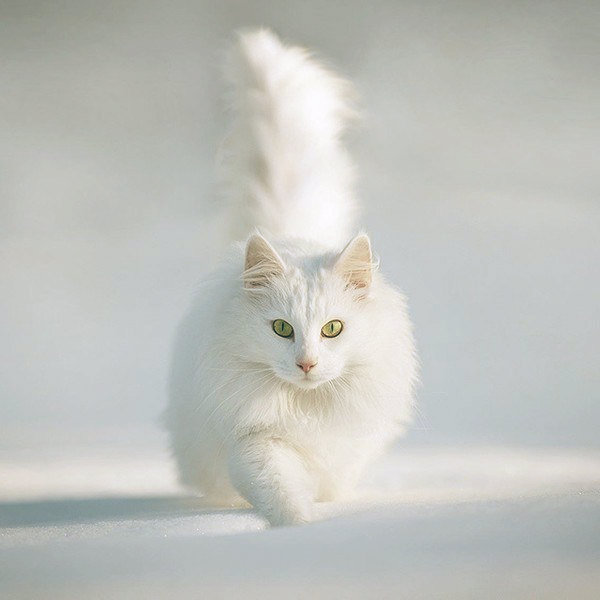
Today, there are cats with eyes of the same color (green, blue, amber). The Turkish Angora is often confused with the cat breed— Turkish van.
The true Angora cat is medium-sized, weighing 2.5 to 4 kilograms. Their heads are small and wedge-shaped, with a strong chin. Their eyes are large, almond-shaped, and expressive, set slanted. Their large ears are set close together.
The paws are oval-shaped, with small pads of hair between the toes. The long tail is shaped like an ostrich feather, tapering toward the tip and widening at the base.
The Angora's soft coat has almost no undercoat. The hair on the tail, collar, and breeches is longer than on the rest of the body. Cats of this breed are distinguished by a regal gait.
Turkish Angora coloring
The Angora is symbolized by a white cat. But in fact, white fur only became popular in the 20th century. Breeders contributed to this. Previously, a purely white coat was rare. Today, white fur is the breed's signature style, prized by breeders.
Besides white Turkish Angoras, you can find cats with a wide variety of colors:
- various tabby colors;
- tortoiseshell color;
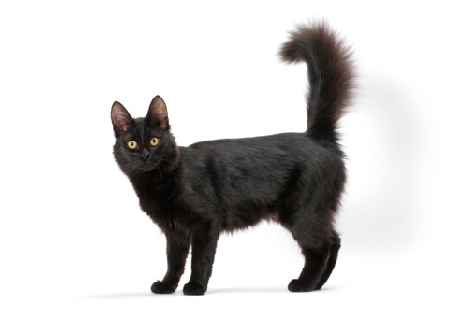
- solid black;
- bicolor and others.
However, there are some colors that are considered unacceptable for the breed. These include:
- faun;
- purple;
- cinnamon;
- chocolate.
Character and behavior
These cats have a changeable personality, depending on their mood. Turkish Angoras can be affectionate and gentle when in a good mood, and nervous and unapproachable when in a bad mood. They can be aggressive toward strangers and other people and animals, but they are incredibly loyal to their owners.
Compared to other cats, Angoras are more intelligent and easy to train. They can be taught to turn on lights and open doors independently. It's very rare for an Angora to make a mess in the house.
Turkish Angoras are attractive for their appearance and docile nature. This breed is friendly with both people and other cats. Angoras are very obedient cats, quickly and perfectly fulfilling all human requests.
These cats may make peculiar guttural sounds instead of the usual cat purr.
Angoras love to spend time outdoors, so try to take them for walks as often as possible. Don't worry about your cat getting their snow-white fur dirty, as they can be washed afterwards. This breed is known for its love of water activities and sometimes enjoys a swim themselves.
Despite their delicate appearance, the Turkish Angora is an excellent hunter, catching mice and birds. Their light weight and excellent agility allow them to jump up to 1.5 meters high. They are also excellent companions and almost always get along with other pets. Overall, this cat is best suited for single people who don't tolerate fuss but value loyalty.
The Angora's character is very similar to the American Curl.
Diseases
Veterinarians describe the Turkish Angora as a healthy breed, but there's a catch. Cats have certain health conditions that occasionally affect one or another animal:
- Cat's hypertrophic cardiomyopathyIn other words, a large, fat heart. There are symptoms that can help identify the onset of the disease. These include shortness of breath due to activity and a cough that resembles vomiting. If you notice the symptoms of an impending threat in time, your pets will be safe. The disease is successfully treated.
- Angora cat toxemia. This condition affects only this breed. Symptoms that almost always indicate the disease include impaired motor coordination. This condition is considered fatal.
- Congenital deafness. This condition is common in white Angora cats.
Interesting fact! Turkish Angora cats have a specific hierarchy when it comes to congenital deafness. Individuals with blue eyes are at the highest risk, while those with different colored eyes are second. Angoras with identical eyes of any color other than blue are the least likely to be affected.
On average, cats live about 15 years. But if you take good care of your pet, it will be with you for 20 years.
Feeding
The Turkish Angora is a delicate creature. The same goes for its stomach. Therefore, feeding it anything and everything, especially table scraps, is not advisable.
If you love your cat's snow-white coat, avoid foods that could affect its color. These foods include:
- heart;
- liver;
- seaweed.
Decide for yourself what to feed your pet - prepared food or homemade food, the main thing is to balance the diet.
Don't forget to pamper your Turkish Angora with sprouted grass; it helps the cat remove excess grass from its stomach.
Care
Turkish Angoras are easy to care for. Their coat should be brushed a couple of times a week, and during shedding periods, their fur should be combed with a special brush. During shedding periods, their diet should also include more fat-soluble vitamins. They should be bathed once every five months.
Angora's claws are groomed once every two weeks.
Using a special lotion and a cotton swab, clean your pet's ears of wax once a week. Lotions should only be purchased from pet stores or veterinary clinics.
The Angora cat's diet should consist of fresh and natural products; it should be given not only dry food, but also dairy products, fish, chicken and beef, minerals and vitamins.
Price of Turkish Angora
The average cost of an adorable kitten varies within the following price range:
- Russia – up to 25,000 rubles.
- Ukraine – up to 5000 hryvnia.
- Rest of the world – up to $600.
How to choose an Angora kitten
When buying a Turkish Angora kitten, be careful, as it's easy to run into unscrupulous breeders offering kittens without pedigree. These "frauds" are often Persian crossbreeds. If you don't know the seller and haven't heard any recommendations, consider consulting a felinologist. This specialist in domestic cats will quickly determine the kitten's pedigree. Furthermore, a reputable breeder will always keep the animal's documents confirming its pedigree and will present them upon request.
Looking at the kitten itself, young Turkish Angoras 3-4 months old are lively and active. They are not afraid of people. Judging by the kitten's appearance, the norm is:
- no bad breath;
- eyes without discharge;
- pure wool;
- clean ears.
Try squeezing the animal's belly. If the belly is hard, the animal may be infected with worms.
A detailed description of the Turkish Angora breed on video
Read also:


Add a comment