
Ceylon cat (Ceylon cat)
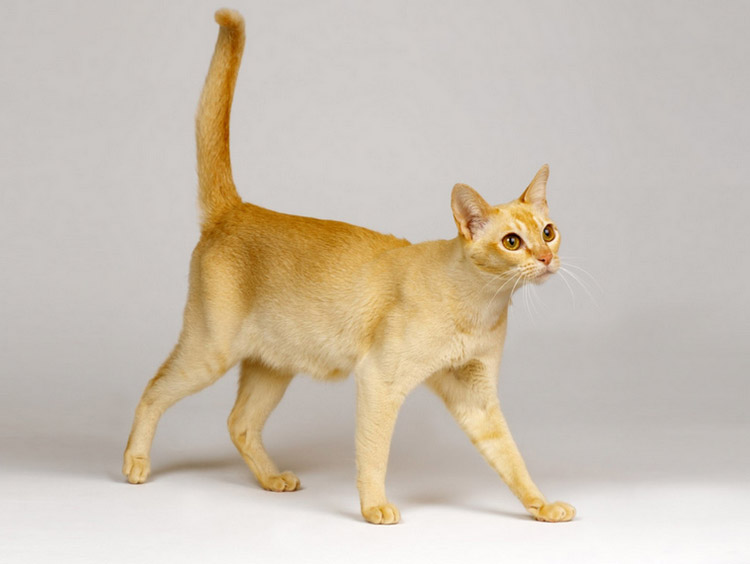
Ceylon cat The Ceylonese cat is remarkable simply because of its origins. As its name suggests, the ancestors of this oriental beauty hail from the island of Ceylon, but its origins are European. Italy is officially considered the breed's birthplace. The main distinguishing feature of Ceylonese cats is their beautiful ticked coat.
Content
History of origin
Ceylon cats are a relatively young breed. In 1984, Italian doctor Paolo Pelegatta visited Sri Lanka and was fascinated by the local Murka cats, whose unusual ticked patterning made him take several of them with him.
Paula and several other breeders developed a breeding program for the new breed, wrote a standard, and named it. The breeding program involves introducing new bloodlines into the breed every fourth and fifth generation. This practice helps preserve the traditional appearance and robust health of the Ceylon cat.
Information about which other breeds contributed to the development of the Ceylon cat remains confidential. They are described as an aboriginal breed that arose spontaneously on the island of Sri Lanka. In 1988, the breed was recognized by the Italian feline association FIAF, and later by the World Cat Federation (WCF). Little is known about the breed in Russia. It only appeared once at the PCA cat show in Moscow in 2004.
Video about the Ceylon cat breed:
Appearance
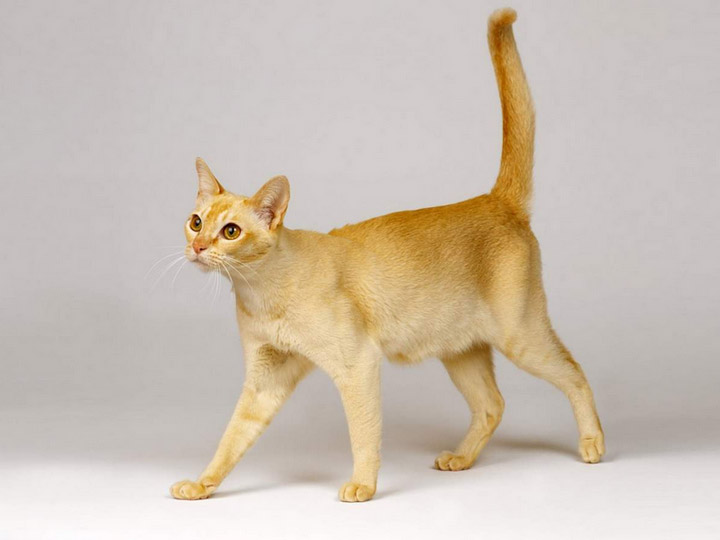
The Ceylon is a well-balanced, medium-sized cat with a remarkably quiet gait. Overall, with a harmonious and compact build, it is slender, graceful, and flexible.
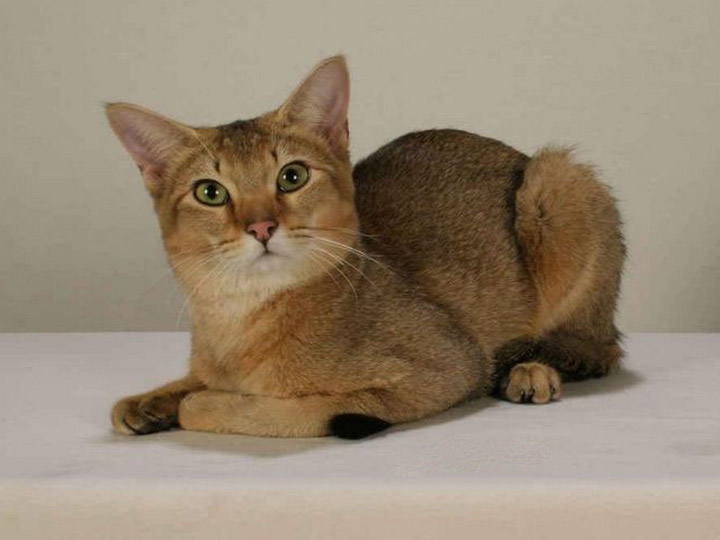
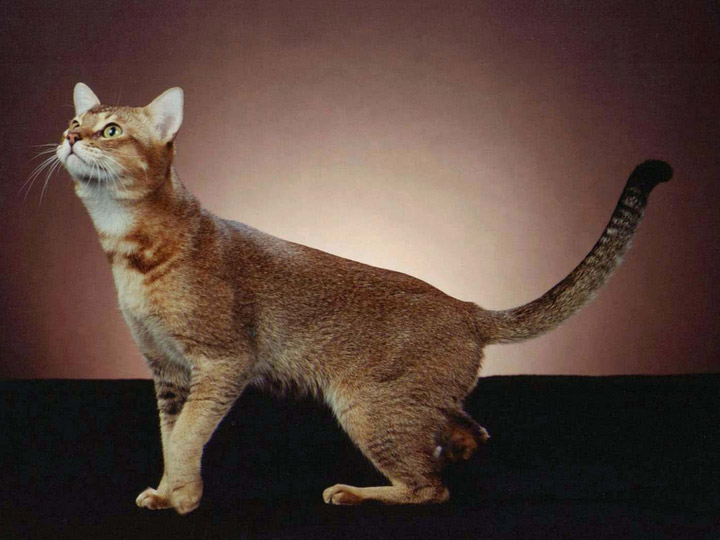
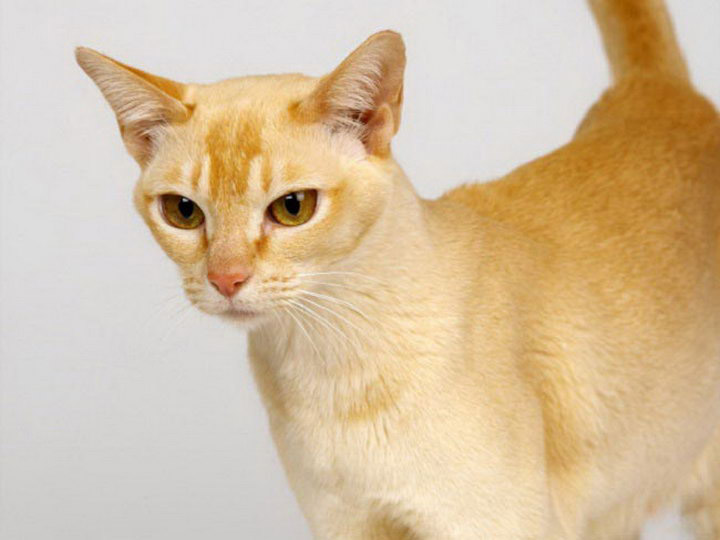
The head is rounded and broad, with prominent cheekbones. The forehead is slightly flattened, and the profile is moderately arched. The ears are large, wide at the base, and slightly rounded at the tips. The eyes are set wide apart, large, and expressive, with almond-shaped upper eyelids and rounded lower eyelids. Eye color ranges from yellow to green. The legs are medium-length, slender, and have rounded paws. The tail is strong, not short, and tapers to a rounded tip. The chest is very well developed.
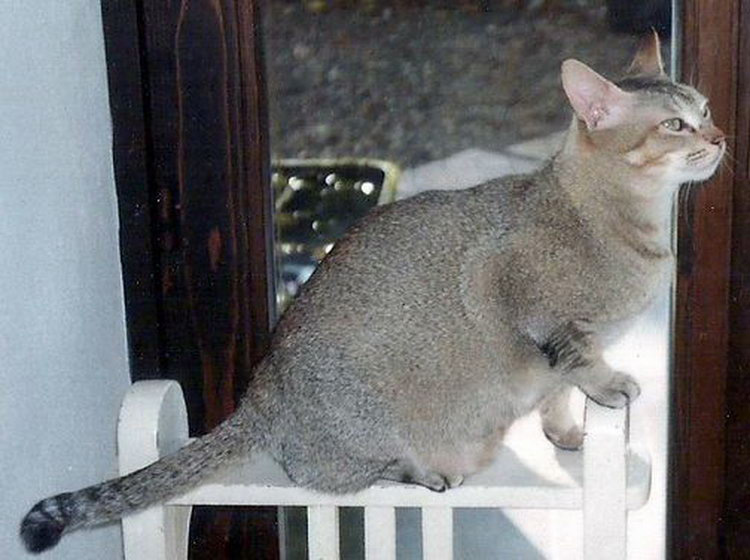
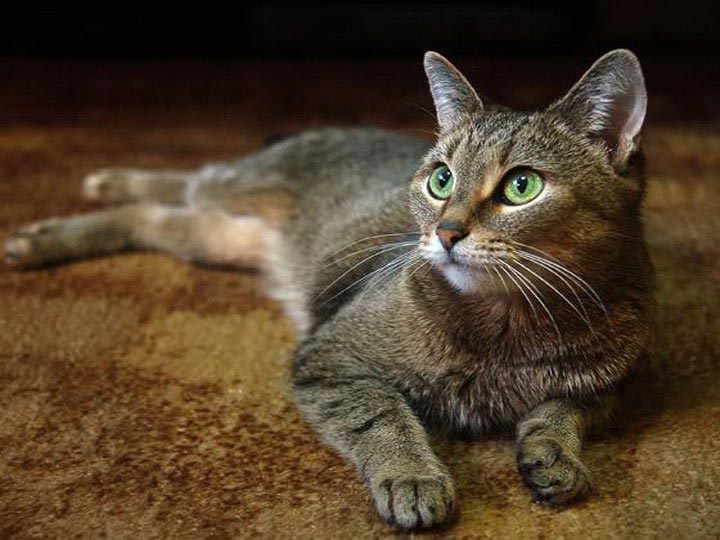
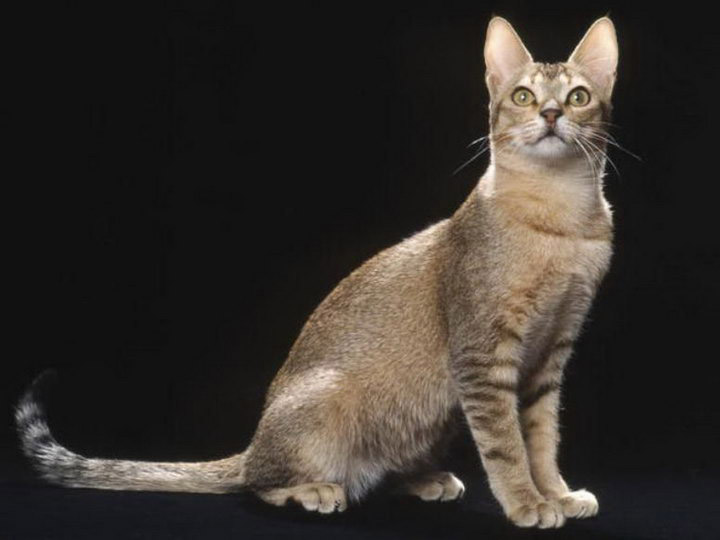
The coat is short, fine, silky, and lies close to the body. There is virtually no undercoat. The tabby pattern is clearly visible on the back, legs, and tail. On the neck, the lines of the so-called necklace are usually broken. On the belly, the spots are arranged in two rows.
Ticked cats are also known as patternless cats. This coloring lacks the usual spots or stripes. Its distinctive feature is the zoned coloration of the fur, where each hair is colored with dark stripes against a light background. This tinting of the hair is what gives the ticked coat its unusual color. Depending on the coat color, cats can be black, red, tortoiseshell, blue, cream, or light blue.
The ticked pattern of a cat is its most striking distinguishing feature. Another name for this pattern, agouti, is found in nature in hares, chinchillas, and some other animals. Among cats, it is also found in Abyssinian And Singaporean, but only in Ceylonese cats is it complemented by tabby markings. In other breeds, ticked markings may be present, but they have been artificially bred.
Character
Ceylon cats are known for their lively nature. They are curious and active, adapt quickly to new environments, and get used to people and other animals. They are very sociable and always try to engage their owners in all their games and activities. These creatures are sociable even with strangers. Ceylon cats are best kept in pairs so that they have the opportunity to entertain each other.
Maintenance and care
Ceylon cats prefer free-range living and open spaces, but also thrive in apartments with ample space to roam. Reproduction is generally unproblematic. Male and female cats reach sexual maturity by the age of one year and have well-developed maternal instincts. A litter typically consists of no more than four kittens, which the mother raises with care and love.
Generally, cat grooming is standard for shorthaired breeds. Once a week, the cat is brushed, and its ears, eyes, and teeth are cleaned. Bathing is infrequent—up to three times a year. It is very important to provide your cat with proper nutrition. If the diet is inadequate, it will immediately affect the animal's health and coat. Both commercial and natural foods are suitable for feeding.
Health and life expectancy
The Ceylon cat is a very rare breed, so there is no information about their health or the presence of genetic diseases. The average lifespan is 14 years.
Where to buy a Ceylon kitten. Price
It is extremely difficult to find representatives of this breed outside of Italy. To obtain information about catteries and breeders, you'll have to contact the organization that registered the breed (in this case, the WCF or FIAF). There's no information online about cats or kittens of this breed for sale, nor about catteries.
Photos
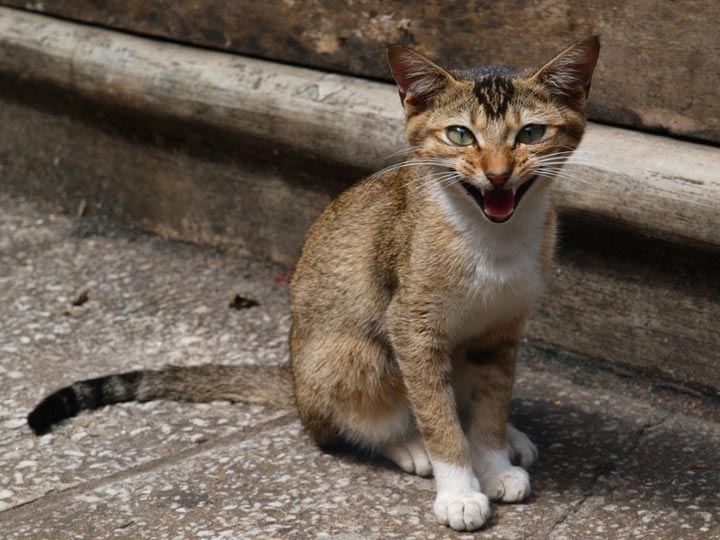
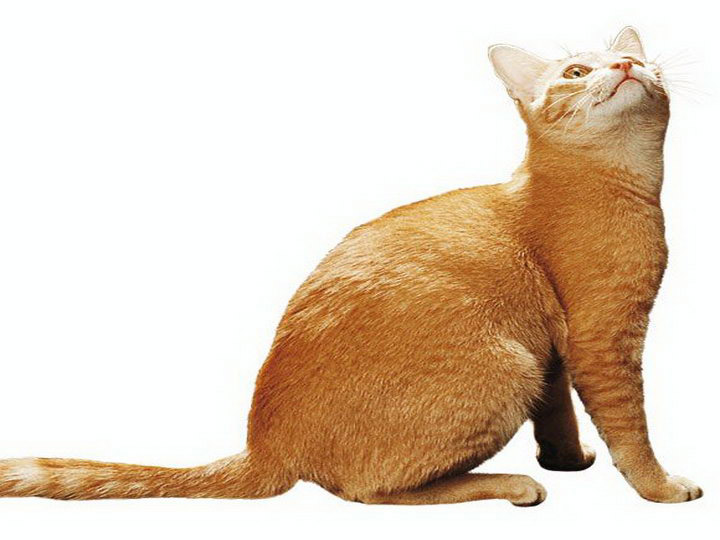
The gallery contains photos of Ceylon cats, male cats, and kittens:
Read also:
- The Top 15 Most Popular Cat Breeds in the World
- Somali cat (Somali)
- Golden Chinchilla: What Breed Is It?


Add a comment