
Third eyelid in cats: causes and treatment
The third eyelid (nictitating membrane) is a thin, clear membrane in the corner of a cat's eye that protects the mucous membrane from damage and dust. It secretes a small amount of tears, which, when blinking, moistens the surface of the eyeball, thereby collecting foreign particles and trapping bacteria. Normally, this membrane is only visible when a cat blinks or tilts its head, so if a third eyelid appears in other situations, it's important to take your pet to the veterinarian, even if there are no other symptoms. This condition not only causes discomfort and impairs vision, but can also be a sign of underlying health issues and even lead to blindness.
Content
Causes of occurrence
A prolapsed third eyelid in a cat isn't a standalone condition, but rather a signal to the owner of potential health issues. These include:
- mechanical damage to the organs of vision;
- the presence of a foreign body that is not removed by tear fluid and provokes the development of inflammation;
- infection of the body with parasites (internal or external);
- allergic conjunctivitis (reaction to household chemicals, food, pollen, etc.);
- bacterial, viral or fungal infections (mycoplasmosis, chlamydia, calicivirus, viral rhinotracheitis);
- disorders in the functioning of internal organs (chronic renal failure, intestinal disorder after diarrhea or dehydration, etc.);
- genetic breed characteristics (characteristic of Persians and British cats).
Important: prolapse of the third eyelid in one eye indicates possible injury or the presence of a foreign body, while its appearance in both eyes is a symptom of one of the diseases.
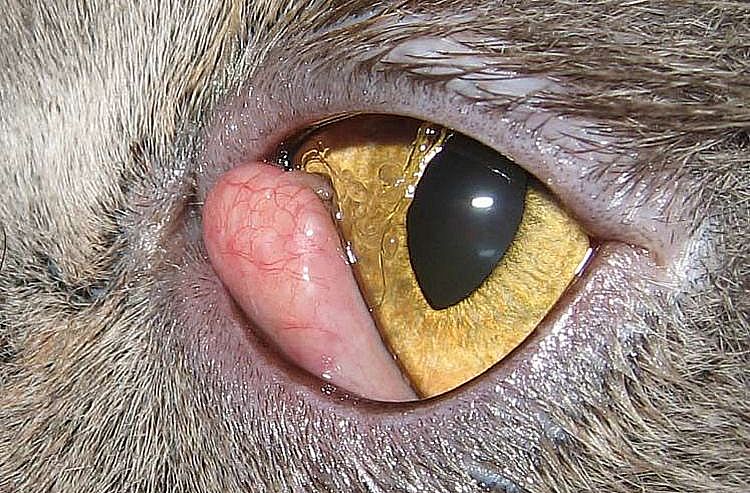
Symptoms
The appearance of a third eyelid in a cat is most often accompanied by the following phenomena:
- increased lacrimation;
- redness of the conjunctiva;
- the appearance of edema;
- blepharospasms (involuntary contraction of the eye muscle);
- mucus discharge or pus;
- volumetric neoplasms in the inner corner of the eyes;
- Itching and increased body temperature may occur.
Owners don't always immediately notice enlarged growths on their pet's eyes. However, it's important to carefully examine the eyes periodically, especially if the cat:
- blinks frequently or squints excessively;
- constantly strives to hide from any sources of light;
- washes his face too often for no apparent reason.
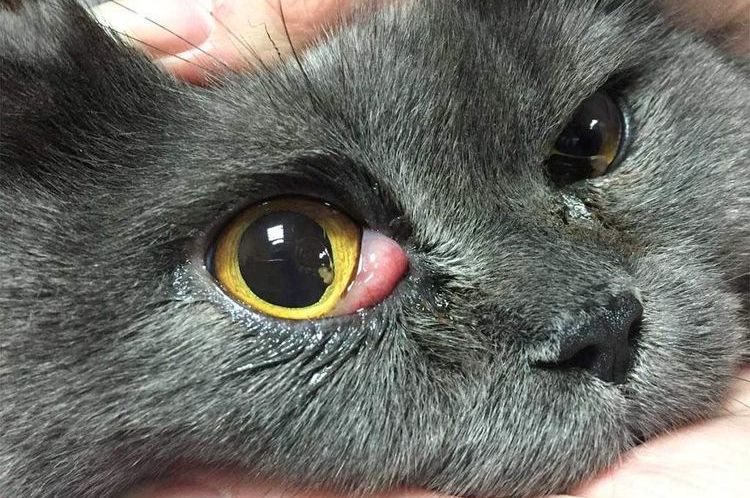
If you notice that the third eyelid is clearly visible even while the pet is awake, you should consult a veterinarian immediately. The longer this problem remains undiagnosed, the greater the risk of secondary infections, which complicate diagnosis and further treatment.
Treatment
Since nictitating membrane prolapse is only a symptom of a disease, treatment directly depends on the underlying cause. Sometimes, nictitating membrane prolapse resolves without intervention and returns to its original position within 24 hours. However, in any case, it's important to consult a specialist to identify the cause and prevent possible recurrence.
Before consulting a veterinarian, the use of any medications is contraindicated: they can relieve local irritation, but at the same time distort the overall picture, which will complicate diagnosis and can also cause complications and even vision loss.
Depending on the identified cause, appropriate treatment methods are selected:
- If the body is infected with parasites, antiparasitic drugs (in the form of drops, tablets) and additional protective measures (collars against fleas and ticks) are prescribed, which are selected depending on the type and extent of the infection.
- In case of allergic reactions, remedies are selected to eliminate external manifestations and additional symptoms (itching, edema, skin redness, problems with fur, etc.), antihistamines and even hormonal therapy in cases of severe disease are prescribed; the exclusion of possible allergens is mandatory.
- In case of bacterial, viral or fungal etiology, complex treatment is carried out, which may include antibiotics, antiviral and antifungal drugs of general and local action, and also supplemented by symptomatic therapy (antipyretics, immunostimulants, IVs to eliminate dehydration, etc.).
- For diseases of internal organs, various methods and drugs of complex action are selected, as well as specialized feeds with a therapeutic focus;
- If a foreign body is detected, an examination and anesthesia are performed, after which eye washes are prescribed, but in severe cases it may lead to surgical intervention.
- In case of mechanical injuries, attention is paid first of all to anesthetizing the eye (by instilling drops), after which the injured eye is examined to determine the severity of the injury and measures to alleviate the animal’s condition.
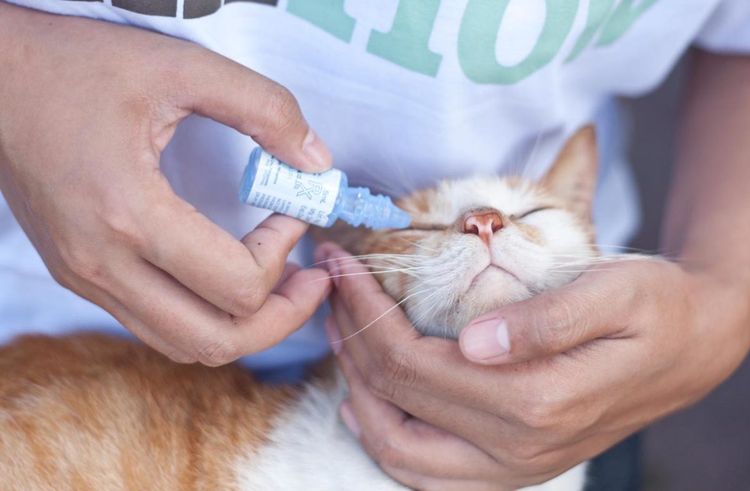
The most important thing the owner needs to do is provide the cat with a balanced, nutritious diet, rest, and timely administration of any medications prescribed by the veterinarian. Treatment should be continued until all symptoms disappear. Under no circumstances should treatment be discontinued once the first noticeable improvements appear, as the risk of relapse is very high. diseases and the development of complications. After completing the course, it is important to take the animal to the veterinarian again, who will confirm complete recovery.
When treatment is not required
If your pet's eyes are covered by the third eyelid, this doesn't always mean medication is needed. Treatment is usually not required for:
- weakening of the immune system;
- recovery period after illness;
- significant weight loss or dehydration;
- cat flu in a mild form.
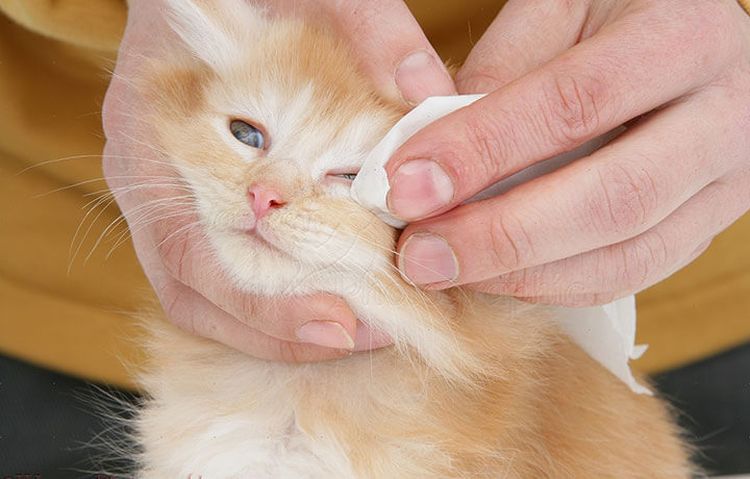
In these cases, simply observing the cat is sufficient: if its health and behavior do not change, you should simply supplement its diet with vitamins, nutrients, and sufficient fluids, and follow your veterinarian's recommendations for caring for the animal (for example, regularly removing discharge from the eyes and nose in case of the flu).
Diseases of the third eyelid
It is worth highlighting separately the diseases that are directly related to the nictitating membrane:
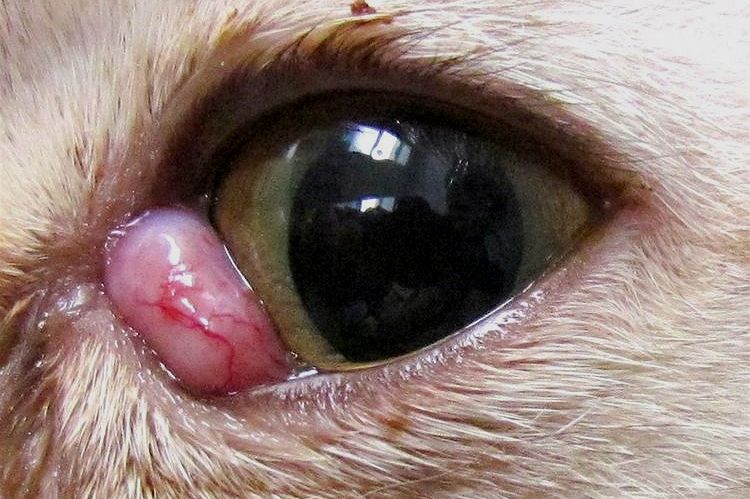
- A third eyelid adenoma (tumor) is a benign, pink, "bean-shaped" growth that occurs due to trauma, hormonal problems, or other bodily dysfunction. It prevents the cat from closing the eye normally, increasing the risk of injury and infection. Over time, the tumor increases in size, becomes red, and may develop a fever and purulent discharge. The general condition worsens, the animal loses its appetite, and becomes aggressive and irritable. If the tumor does not grow and does not bother the pet, only supportive therapy is prescribed as treatment. Otherwise, surgery is recommended. In this case, the tumor itself must be removed, as removal of the nictitating membrane can lead to chronic complications. conjunctivitis, insufficient tear fluid (dry eye syndrome), lifelong purulent discharge and blindness.
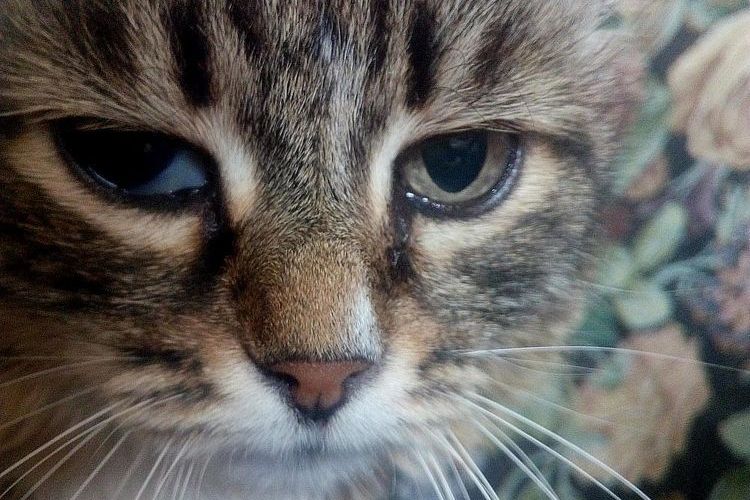
- Prolapse is a specific condition in which the nictitating membrane remains permanently extended. It's often mistaken for a prolapsed third eyelid, but the key difference is that with prolapse, there's no inflammation or redness. Instead, the surface of the eye is covered with a grayish or bluish film, causing the cat to cover its eyes with its paws and wash them, attempting to remove the obstruction. Prolapse, like prolapse, can be a symptom of various medical conditions, so identifying the underlying cause is crucial for treatment. Once the underlying cause is corrected, the nictitating membrane will return to its original position.
Prevention
Preventative measures to prevent third eyelid inflammation are simple and aimed at maintaining overall health and normal development. This requires:
- a balanced diet with additional recommendations in case of chronic diseases;
- proper care of your pet, its sleeping place and personal items;
- examining the cat after walks;
- regular deworming (every 3 months) and treatment for ectoparasites;
- annual scheduled vaccinations.
These simple measures will strengthen your pet's body, making it more resistant to various types of viruses and bacteria.
You can also ask our website's staff veterinarian a question, who will answer them as quickly as possible in the comments box below.
Read also:


69 comments
Alfia
Good afternoon. We bought a Siberian kitten yesterday. The third eyelid on both eyes covers between a third and half of the eye. The owner said he'll outgrow it and that there's nothing unusual about it. The kitten sneezed occasionally yesterday, but almost none today. He eats mostly wet food, but is now eating dry food. He uses a litter box, but his stool is unformed. The owner recommended antiparasitic treatment in 2-3 weeks. Please advise whether we should panic or continue to observe. I would appreciate your response.
Daria is a veterinarian
Hello!
When a new pet arrives, we recommend that you show it to a veterinarian within the first few days.
There are several reasons why this is worth doing:
1. The veterinarian will examine the kitten for any visible symptoms of illness. Testing for viral infections is also possible, if desired. All illnesses in young kittens develop very quickly. Incidentally, loose stools can be the first sign of illness.
2. Your veterinarian will select the optimal medications for your pet and advise you on the dosage, as it depends on your pet's weight.
3. The doctor will also help you navigate the nuances of caring for a small kitten and point out red flags that, if they appear, require immediate medical attention.
for example, the appearance of vomiting, loose stools, nasal discharge, refusal to eat, and so on...
Remember that kitten sellers/breeders are not doctors and are guided only by their own experience.
Happy days with your new pet!
Zhenya
Hello. My cat's third eyelid constantly covers the corners of her eyes (both eyes). She has poor vision (I discovered this a couple of days ago). She's had a clear film on her eyes since she was a puppy. We saw an ophthalmologist and passed all the tests. They told us to observe the cat and come back in a month for a checkup. Then we'll have an MRI of the head and an ERG. Should I wait a whole month or should I see other ophthalmologists?
Daria is a veterinarian
Good afternoon
I'm very sorry your question remains unanswered. I sincerely hope you've already found another ophthalmologist and that they've been helpful.
Why did you decide to answer you after so long? The most important thing is that this is a prime example of when a second doctor's opinion is definitely needed.
If I understand correctly, the cat has had eye problems since childhood, and if the vet doesn't even have a rough diagnosis, and sends you for a month of self-monitoring, and then expensive diagnostic tests, then the vet doesn't know what they're looking for.
And if you think you need to get a second opinion, you're not imagining it.
Good health to your cat!
Natalia
Hello, we found a kitten, he was about a month old, he has been living with us for a month, a week ago his third eyelid became inflamed, we went to the vet, he prescribed Iris drops and hydrocortisone ointment to apply, there is no pus, but the eyelid is a little swollen, we fed Whiskas for kittens for a month, what else can be done?
Daria is a veterinarian
Hello! First, do not use hydrocortisone for more than 3 days. Use any hormonal medications with caution, especially in the face/eye area. Second, it's been said many times that commercial pet food should be of good quality, definitely not Whiskas, Kitekat, Friskas (or other cheap ones). Such budget-friendly foods can trigger an allergic reaction. You can add intramuscular antibiotic injections; an antiviral medication may be necessary. Is there a runny nose? Cough? Sneezing? Fever?
Julia
Hello! A year ago, my adult domestic cat developed profuse brown discharge and inflammation from one eye. We took him to the vet. During treatment, the eye began to change color, becoming dark brown. The inflammation was controlled for a year. But now the situation has repeated itself. The profuse dark discharge has started again. Then I noticed that the top layer of the eye appeared to be scarred. The cornea is deteriorating. He was prescribed intramuscular antibiotics, eye drops, and gel for the eye.
The doctors say there's a chance the eye could leak. They're suggesting surgery—pulling the third eyelid over the eye for 10-12 days while continuing treatment. This might save the eye. But the cat is getting older. He'll be 12 years old by the end of winter. Will he tolerate anesthesia? Or should I try to treat the eye with medication? I hope your advice will help me make the right decision.
Daria is a veterinarian
Hello! Well, 12 years isn't quite old enough. I'd rather be 18-20. Regarding anesthesia, a cardiac ultrasound is needed. If your clinic offers this type of surgery, I'll probably administer anesthesia properly and monitor the patient's condition during the procedure. The eyelid is pulled taut to "close" the affected cornea from the outside world, allowing it to recover. If the veterinarians see a chance of saving the pet's eye, it's worth considering. After all, removing the eye would also require anesthesia. A leaky eye won't be enough to walk around. Furthermore, persistent inflammation of the eye can spread to surrounding tissue (remember that the skull contains not only the eye but also the brain, and inflammation of the brain is possible if an advanced infection is lurking nearby).
Julia
Thank you so much for your comprehensive answer! You've calmed me down and encouraged me. My cat isn't that old after all. We'll save and treat his eye!
Daria is a veterinarian
Hello again! What can I say then, when my cat is 13 years old, and every other day they bring 20-year-old cats to work =) And I don't even consider them old, because they run around like crazy. As if they haven't lived that long. Get well soon! All the best.
Anna
We found a half-dead kitten with a film covering its eyes, pus all over them, and a high fever. They prescribed a course of antibiotics and shots to boost its immunity. Eye drops and gel were given. They nursed the kitten back to health, and its vision improved, but two months later, the film is still halfway gone. The vet said it wouldn't get any better. It was too far gone. Is there a chance of a cure?
Daria is a veterinarian
Hello! I understand that my kitten has a protruding third eyelid, not just corneal clouding. If the protruding third eyelid remains after treatment, surgical removal (not a particularly complicated procedure) is an option. Perhaps the cartilage has become "leaky," or the inflammation has been severe enough that the tissue hasn't returned to its original shape. Discuss the option of third eyelid removal with your veterinarian if you're concerned about your pet's aesthetics, or if this "film" is interfering with your kitten's vision.
Lyudmila
Hello, I recently got a small Siamese kitten, and he has a third eyelid on both eyes, which covers a quarter of his eyes. What should I do?
Daria is a veterinarian
Hello! First of all, it's important to rule out an infectious or allergic cause for the inflammation. Was the kitten vaccinated before coming to you? What are you feeding them? How long has this inflammation been present? Have they undergone any treatments: deworming, vitamin supplements, or perhaps dietary supplements? Are there any other clinical signs? Have you tried chamomile tea or a furacilin solution? Have any eye drops been applied yet? Is the third eyelid inflamed, red, or white, or has it simply "slipped" over the eye? Is there any discharge?
Catherine
Good evening. My 10-month-old Scottish Fold cat's eyes started watering, then they started producing pus, and then his third eyelid closed in half. We've been sick for 1.5 months now. First one eye, and now both. I've been using Albucid, Decta-2, and Brilliant Eyes—nothing's helping! Now I'm using Kornegel twice a day. I just rinse with water. What should I do????? I gave him Melbimax, and I took him to the vet for a checkup a week ago, who said there was nothing to worry about! But now it's gotten worse!
Daria is a veterinarian
Hello! What are you feeding them? What about vaccinations and other preventative treatments (for fleas, ticks, and worms)? Can allergies be ruled out? British Shorthairs are naturally prone to excessive tearing and eye problems (a problem common to all brachycephalic breeds). But if pus appears, it's a sign of a bacterial infection. Self-medication and putting so many eye drops in the eyes shouldn't have been a good idea. This can lead to the bacterial flora developing resistance to antibiotics.
Daria is a veterinarian
Before using the drops, wipe the eyes with an aqueous solution of furacilin or at least a chamomile decoction (3-4 times a day, or more often if there is a lot of pus). You can use Tobradex (tobramycin and dexamethasone) twice a day for a 5-day course. Intramuscular antibiotics could also be added; conjunctivitis may not be the underlying disease, but merely a symptom of something else. It's also a good idea to add immunostimulants (Immunat, Ribonorm, or others available at your local veterinary pharmacies). The most readily available ones are Fosfosal, Katozal, or Vitosal (any of these or an analogue containing vitamin B12 and butophosphan). Also, administer 1 ml of the drops every 5 days. Vitamins and minerals are also added to normalize the natural resistance.
Otlia
Hello, our cat developed a third eyelid on both eyes two days ago. We usually feed her crusty food, but
We recently gave her KitKat. The film is white. She's acting normal, playing and eating. Her nose is warm, though, and her ears are red and hot. She's an indoor cat and doesn't go outside. She has bad breath. There's no pus, but there's some redness under her eyes.
Daria is a veterinarian
Hello! Start by feeding your pet a normal, balanced diet. Store-bought chicken is a common allergen. Kitekat should not be fed to your pet at all if you're concerned about their health (the food should be free of dyes and unnatural additives). It can cause a ton of problems. The gastrointestinal tract is the first to suffer (it all starts with gastritis and pancreatitis). Allergic reactions to Whiskas, Kitekat, and other budget foods are also common (this can lead to conjunctivitis and the development of a third eyelid).
Daria is a veterinarian
But an infectious nature of the disease cannot be ruled out (body temperature should be measured with a thermometer, not by the nose and ears; if it's elevated, there's an inflammatory process somewhere). If the temperature is elevated, antibiotic therapy may be necessary. Bad breath is often associated with gastritis (again, poor feeding could be a trigger). There's also the question of mandatory veterinary treatments: vaccinations and deworming. Have they been performed at all? How is the stool? Is it regular? Consistency? Color?
Alexander
Hello. Please help me with some advice. My cat is 2.5 months old and has developed a gray film over both eyes, in the inner corners. She's eating well and hasn't lost her appetite, but her stool is a bit loose. She sometimes seems tired and lies down to rest, but is mostly active. What could be wrong?
Daria is a veterinarian
Hello! As I understand it, the kitten is not vaccinated against viral diseases. Based on what you've written, I would first begin emergency treatment specifically for infectious diseases: specific serum, antiviral medications, antibiotics (to suppress accumulated pathogenic microflora), anti-inflammatory medications (like NSAIDs), and vitamins to boost the immune system. I would also add topical drops such as anandin, maxidin, and similar medications. If pus appears in the eyes, antibiotic drops are essential. Ideally, the animal should be taken to a vet for an examination. However, if both eyes are affected equally and the symptoms appeared at the same time, then there's a 99% chance the disease is infectious.
Elena
Good afternoon. Today I noticed my cat's third eyelid is pink and filled with pus. I'm wiping it with chamomile solution. What should I do next at home? Maybe some eye drops?
Daria is a veterinarian
Hello! Not a solution, but a decoction, I think. Antibiotic drops should be added 2-3 times a day for 5-7 days. If there are also symptoms of inflammation (perhaps sneezing, coughing, purulent discharge), then antibiotics should be given intramuscularly or at least orally (tablets). If this is the case in both eyes, then infection or allergy should be ruled out. The eyelid should be examined. It could be an inversion, in which case only surgery will help. If it's an allergy, then you need to find the allergen, eliminate it, and give your pet an antihistamine.
Oksana
Good evening! Please tell me what to do. My cat is about 5 years old. She lived on the street. I've had her for about 3 years. About a month ago, an eyelid appeared in both eyes. We visited the vet, and she said it was an intestinal problem. She prescribed enzymes. I give them, but to no avail. But sometimes the eyelid goes away on its own. Then it comes back. I don't trust our vets. My cat died on July 18th, and I don't think they diagnosed her correctly. She vomited mucus for about two weeks... We treated her repeatedly, and it resulted in pulmonary edema. They performed a pulmonary bypass, and she died two days later. She was hospitalized the entire time. After her death, they didn't even call me.
Daria is a veterinarian
Hello! Have you ruled out an allergic reaction? Pulmonary edema doesn't just develop that way. It's a fairly serious condition that requires immediate assistance. The cause of death can only be determined after a postmortem examination.
Alena
Hello, I just gave my three-year-old neutered cat a bath, put a flea collar on him, and went back to work for two days. When I got home from work, I noticed a film over both eyes, so I went straight to the vet. The girl who feeds him while I'm at work said he's started sneezing. When I got to the hospital, I told the doctor about the sneezing...his third eyelid...and a small bump on his chin on the left side. She just took his temperature and said everything was fine. She prescribed Neomycin and half a tablet of Suprastin. She said it will go away on its own in two or three days. I don't trust her.
Daria is a veterinarian
Hello! The most important thing is to remove the collar when administering medication. As soon as I read your message and the description of your symptoms, the first thing that came to mind was a reaction to the flea collar. It may have triggered an allergic reaction. Therefore, the suggestion to give your pet Suprastin for 2-3 days is worthwhile. It helps relieve acute clinical signs of allergy. If after removing the collar, revising the diet, and 3 days of antihistamine treatment, your pet doesn't feel better (the lump, by the way, may take longer to go away, so pay attention to the eyes and sneezing), then a full, thorough examination is in order.
Alla
We have a British Shorthair cat with folded ears. The doctor diagnosed him with purulent conjunctivitis and prescribed Ciprovet drops and four antibiotic injections. It started to improve, but then he went outside one night and came home with a swollen eyelid. What should we do?
Daria is a veterinarian
Hello! Are you not treating your eyes with anything until the drops disappear? Are you not wiping them with anything to remove the pus? What antibiotic has been prescribed? How many days has it been? Is there still any nasal discharge? Wheezing? How are your vaccinations against infectious diseases? Have you followed the instructions exactly? Using the drops 2-3 times a day? Perhaps you need to change the intramuscular antibiotic and add eye treatment. And look for the cause of the problem (rule out viral infections). Is the third eyelid protruding in one eye or both? How does the conjunctiva look now (is it red or has it cleared up)? This is either a complication or a new eye problem.
Michel Lazarev
Our cat also had a problem with her third eyelid protruding. The vet prescribed eye drops after eye drops for a long time, but there was no improvement. A lot of time was wasted trying to uselessly treat the symptom, even though the cause was completely different.
When I finally took the animal to another clinic, a mouth examination revealed a severe, neglected injury to the upper palate. Was it dry food or a sharp bone that was the cause? It was impossible to heal the wound or stop the extensive inflammation, and it all ended tragically.
I would like people to know that when the third eyelid appears, an examination of the animal’s oral cavity is absolutely necessary!
Daria is a veterinarian
Hello! I'm very sorry you've had such a misfortune. My condolences.
Dry food is unlikely to have caused such severe damage to the upper palate, but a sharp bone is far more likely. Any inflammatory process in the body can lead to inflammation of the third eyelid. And if the infection is in the facial area, the "chances" only increase, as the inflammatory process spreads much more quickly.
Therefore, if your pet's third eyelid begins to become inflamed, you should not treat it at home, but run to the doctor for a full examination.
Maria
Hello, we picked up a kitten on the street yesterday because we felt sorry for her (a girl), and her eyes, so to speak, run in different directions, but sometimes they are straight, what should we do?
Daria is a veterinarian
Hello! See a doctor. Rule out a traumatic brain injury (its consequences) or weak eye muscles (hence the strabismus). While the former can be treated with medication, the latter, unfortunately, is a non-starter. He'll either "outgrow it" with improved living conditions and feeding (enriching his diet with vitamins), or he'll remain cross-eyed (it's unlikely you'll perform surgery on a mixed-breed kitten). In any case, your little friend needs a checkup to determine his health.
Elena
Hello, I need some help. My cat (Scottish Fold) started sneezing violently yesterday, after which one eye became swollen, the third eyelid bulged, and the eye barely opens. There's no way to take her to the vet. What should I do?
Daria is a veterinarian
Hello! First, it's important to rule out infectious diseases (especially if your pet isn't vaccinated and has had contact with other animals or goes outside). Then, rule out an eye injury. For now, you should treat the eye with at least chamomile tea or a furacilin solution. And apply antibiotic drops twice a day for a course of 5-7 days. In more complex cases, it's recommended to use antibiotics not only topically (with food or intramuscularly). If there's no improvement within 3-4 days, you should definitely see a doctor. Surgery may be necessary to remove the third eyelid (this could indicate entropion or other serious conditions that don't respond to medication).
Catherine
Good afternoon! My 2-month-old Maine Coon kitten's eyes started watering when we brought him home. We used eye drops, and one of them squinted and there was pus. We started giving him levomycetin eye drops, then he started sneezing and had a runny nose. We prescribed anandin for the eyes and nose. After 5 days, it hadn't improved, and the runny nose only started to subside. We started using tetracycline in his eyes for 3 days. After that, his eyes turned red, he squints a little, and his sneezing stopped. He feels well, plays, and eats well. Can you tell me what this could be and what to do? I haven't applied anything for 2 days now, only wiping his eyes with calendula.
Daria is a veterinarian
Hello! Why did you suddenly start self-medicating? Levomycetin drops and tetracycline ointment are rarely prescribed anymore. And what was the point of using ointment if the animal only had a runny nose? What if the animal had an infectious disease? Was it vaccinated when you got it? The only thing that helped was adding anandin to the treatment. It's best to clean the eyes with an aqueous solution of furacilin 3-4 times a day, and tobramycin-based drops (available in human pharmacies) twice a day.
A runny nose always takes longer to go away on its own. You can give intramuscular antibiotics, vitamins, and improve feeding to speed up recovery. Monitor your child's well-being. If these symptoms recur, begin treatment as for an infectious disease.
Saya
Hello. Yesterday, my cat developed a third eyelid in both eyes. He squints. He also seems weak. He had previously lost weight. He is almost two years old and not neutered. His nose is more dry than wet. He had a twitch on the right side of his face once while sleeping. Before that, he had twitches all over his body while sleeping. Since our town is small, there is no proper veterinary pharmacy, and there is no veterinary clinic at all.
Daria is a veterinarian
Hello! I don't know why, but the situation is identical to the one in the other comment, even the twitching on the same side (the email is different, so I'll reply again in case the situations are different). First, you need to find and rule out the cause. Both eyes react simultaneously, either to an infection or an allergy (including parasites, which secrete toxins that trigger allergies). You need to determine if there are any indications for surgery, such as prolapse or inversion of the third eyelid. If you're willing to take a risk and take responsibility for self-treatment, you can prescribe 1/4-1/5 of a Suprastin tablet once daily for 1-2 days for the allergy and observe. If it improves, you have allergic blepharitis.
If it doesn't help, try tobramycin-based drops (antibacterial), after wiping the eyes with a furacilin solution or at least a chamomile decoction, and anandin (antiviral) in the nose. Two to three days of treatment will tell if you're on the right track. If there's no improvement, then go to the clinic for a definitive diagnosis. Surgery may be necessary.
Lira
Good day. I have a male cat, a year and a half old, not neutered. I arrived at my parents' house yesterday. He's their cat. He was fine yesterday, but today I noticed a third eyelid has appeared on both eyes. He's a bit weak and squints, but he's eating normally. I also noticed he's lost a little weight. The right side of his face has been twitching in his sleep. But only once. Although he's had twitching all over his body while sleeping before, there's no decent veterinary pharmacy, let alone a clinic. We live in a provincial town, so it's not even possible to neuter him. Today they gave him some antiparasitic medication. Any recommendations, please?
Daria is a veterinarian
Hello! If you don't have access to a veterinary pharmacy, how can you help your pet? First, you need to determine the cause of the third eyelid. If it appears in both eyes at the same time, the cause is either infectious or allergic. Inflammatory processes (for example, conjunctivitis, blepharitis, keratitis, etc.) are extremely rare and are characterized by symmetry and a uniform progression. It's important to determine whether the third eyelid is prolapsed or inverted (this is only corrected promptly). If you're willing to take a risk and self-medicate, you can prescribe 1/4-1/5 of a Suprastin tablet once daily for 1-2 days for allergies and observe. If the symptoms improve, it's allergic blepharitis. If it doesn't help, try tobramycin-based drops (antibacterial), after wiping the eyes with an aqueous solution of furacilin or at least a chamomile decoction, and apply Anandin (antiviral) to the nose. Two to three days of treatment will tell you if you're on the right track. If there's no improvement, then go to the clinic for a definitive diagnosis. Surgery may be necessary.
Anna
Hello, my cat recently had gumboil, the wound is already healing, but after taking antibiotics, his third eyelid came out.
Are there any treatment options?
Daria is a veterinarian
Hello! It all depends on how severely the eyelid has protruded. In some cases, antibiotic drops, nonsteroidal anti-inflammatory drugs, and ointments may help. In other cases, if the eyelid has protruded significantly, only surgery will help.
Olga
Good day. My two-year-old Scottish Fold cat is neutered and has been moderately active for three days now. He's been sleeping constantly, not eating or drinking. He just sleeps peacefully, doesn't twitch or moan when I stroke his tummy. He lies quietly, but I noticed a white membrane in one of his eyes. It doesn't disappear right away, but after 2-3 seconds, it goes away. He's trying to retreat. Can you tell me what could be wrong?
Daria is a veterinarian
Hello! Run to the clinic for an examination! Is it normal and not alarming for you that your cat hasn't eaten or drunk for three days and is sleeping all day? This will lead to dehydration and intoxication. An IV drip is needed immediately. A complete blood count and biochemistry panel will be performed. Based on these results, an ultrasound of the affected organ will be ordered. It's impossible to tell what exactly is wrong with the animal based on these general symptoms alone. An examination and diagnosis are urgently needed! However, without water, the animal will die.
Olga
Hello, Daria, we can't sit still; I always give him warm fluids and broth. We couldn't get him to the vet because we live far away and the road was snowed in. Today, he started to improve; he ate finely chopped boiled meat on his own. He still can't drink, wheezes and sneezes occasionally, but he's feeling much better. He's started washing himself. The symptoms are more like rhinotracheitis, but we don't have much discharge, just a little mucus from his nose. But we also have a male cat and a female cat, and thank God, they haven't gotten infected.
Daria is a veterinarian
The incubation period for rhinotracheitis is not one or two days. Therefore, symptoms in other animals may not yet appear. In any case, an examination is necessary. Antibiotics (intramuscular or tablet, but injectables are better), antiviral medications (the same interferon for 5 days in a row, 1 ml per cat on the first day, then 0.5 ml each), an immunostimulant (katosal, fosfosal, uberin, fosfosal, and other similar drugs containing butophosphan and cyanocobalamin, i.e., vitamin B12), and vitamins will be prescribed. Feed the cat easily digestible, and water should be given through a syringe without a needle in small portions (ideally, with solutions that restore water and salt balance). Saline solutions can also be administered subcutaneously to relieve symptoms of dehydration.
Olga
Hello, Daria! We're on the mend, and they prescribed Sulphur and Gamavit. Since I don't know how to give injections and am afraid, we asked the doctor to prescribe oral medications. Our first attempt at giving him Sulphur was unsuccessful (the manufacturer of these pills needs a 0 rating). Why make one large pill when you still have to split it in half? He wriggled around in the foam for about 10 minutes, and he became fearful of anyone approaching him. We decided to stop giving him these medications; getting another one was problematic. We decided to give him Gamavit, one cube three times a day. We spoon-fed him semolina broth, and gave him water from a syringe 4-5 times a day, and by the 8th or 9th day, he was eating on his own. Thank goodness, everything is fine now. Thank you for your reply.
Daria is a veterinarian
Hello! Honestly? I feel like scolding you. You violated the animal's treatment plan. You stopped the antimicrobial medication and continued with the "useless" homeopathic medication (Gamavit). Have you read the ingredients in Gamavit? A drop of the active ingredient per barrel of water (the concentration of the beneficial ingredient is minimal, essentially just rose water). I don't prescribe it at all, and at the clinic where I work, I've also weaned my colleagues off useless medications (owners are already short of money, and I can't stand the thought of foisting placebos on them).
Don't feed semolina to animals! It's not digested, but instead clumps together in the intestines. And if peristalsis is poor, it can even lead to intestinal blockage.
It's good that she's improving. But don't change the treatment plan! I haven't heard a diagnosis yet, though. What's wrong with the animal, anyway?
Yana
Hello. My 3-year-old Sphynx cat is spayed and vaccinated. She eats frozen beef and dry Royal. She occasionally had blood in her stool. The doctors said she had an inflamed intestine and needed a different diet. She hasn't wanted to eat anything else for three days. She started vomiting after eating Recovery pate. An adenoma appeared on her eye (immediately after the vet visit). Before the diet change and examination, she was cheerful. Now she's not. The doctor insists on urgently removing the adenoma (he already made a diagnosis based on a photo). Do you think it's necessary or not?
Daria is a veterinarian
Hello! Why are you so precarious about feeding? Sometimes it's natural food, sometimes dry commercial food, sometimes canned food. Switching completely to medicated food is better since there are gastrointestinal issues. Replace the Royal with another good medicated food. It might just not be working for your pet. You should have the stool sample analyzed for parasites and protozoa. What kind of blood is it: bright red and droplets, or dark, as if it had been curdled for a long time? How long ago was the dog's parasite treatment and vaccinations completed? Regarding the adenoma: the doctor diagnosed you based on a photograph, and you didn't like that approach. You want me to give you advice without seeing the animal? You could try antivirals and immune stimulants. It might help alleviate the adenoma a bit.
Kate
My cat's fur was torn apart, and I don't know who to turn to! There aren't even a vet's office in our town. You have to go to the nearest pharmacy. I live near Zhmerynka. I feel so sorry for the cat! His fur is sticking out, and he's got a stranger to him who has torn it so much... PLEASE HELP!
Daria is a veterinarian
Hello! If there's a veterinary pharmacy, there's also a veterinary clinic. Or at least a veterinarian. City or district state veterinary stations are a last resort! Drops and ointments won't solve this problem. The loose portion of the third eyelid needs to be surgically removed. Antibiotic therapy (primarily tobramycin) will be prescribed. But this will only happen after the vet carefully trims the torn tissue with special "eye" scissors. If you don't see a vet immediately, your cat will try to tear it with its paw, yanking it and potentially causing further damage (blood and infection).
Svetlana
Hello, Dasha. We went to the vet. They said our cat has allergies. They put him on a strict diet and prescribed Zodak eye drops. We've been using the drops, and his eyes seem to have fully opened.
Daria is a veterinarian
It's great that you saw a doctor. Get well soon =) But don't stop the treatment, even if you're feeling better. What were you feeding him before? Are you taking the parasite treatments on time?
Svetlana
Good afternoon. My cat has developed a third eyelid in both eyes. It's white and not inflamed. It looks like he's woken up. There's no tearing or conjunctivitis. It doesn't bother him. He's acting normal. What is it and how can I treat it?
Daria is a veterinarian
Hello! You need to get it examined. In one case, conservative treatment is necessary (with medications, drops, antibiotics, etc.), in the other, surgery. Since both are inflamed at the same time, you need to rule out an allergy or infection. Don't apply tetracycline ointment before seeing a doctor. It's more difficult to make a diagnosis. You should at least take your temperature.
Svetlana
Thank you... No fever. Both nostrils are breathing well. Appetite is as usual, playful as usual. No rubbing of eyes, washes as usual. Let's go to the doctor...
Daria is a veterinarian
Correct. During an in-person examination, you can at least suggest several diagnoses and ask questions on the spot. This makes the diagnosis much easier. Please let me know what your diagnosis was later.
Sergey
Hello, we live in a rural area, so we can't go to a clinic. Our three-year-old cat's third eyelid has become visible and he always looks like he just woke up. Both eyes are covered by the eyelid by a third. There are no other symptoms.
Dasha is a veterinarian
Hello! It's important to rule out an allergic reaction. What are you feeding him? What treatments have you given him? Have you given him any medications? Is there any tearing? Is the eyelid just showing or is it inflamed? Is it pink or red? Is the cornea shiny or matte? Is the conjunctiva edematous or normal, and what color is it?
Sergey
We feed him KitKat dry food. We haven't treated him with anything, haven't given him any medications. His eyelid isn't inflamed, there's no tearing, and his cornea is shiny. He's acting normal, except for that eyelid on both eyes.
Daria is a veterinarian
Change the food. Definitely. Kitekat, Friskies, Darling, Meow, Felix, Whiskas, and other "advertised" budget brands are not food, they're garbage. They often lead to the development of allergies, gastrointestinal inflammation, and urolithiasis. Charcoal/Enterosgel, Fortiflora, and a normal, high-quality food should be used to eliminate parasites. If the condition doesn't improve within a day or two, then you need to go to the vet for an examination. Rule out an infectious cause. Avoid using ointments and drops for now, as going to the vet later will complicate the diagnosis.
Valeria
Good afternoon. My daughter brought home a kitten from the street (2-3 months old). Everything was fine for a few days, but now she's developed diarrhea and a third eyelid has appeared on both eyes. How can I treat it at home?
(As soon as we brought her home, we immediately bathed her and gave her the deworming medicine "Pracesid suspension plus")Thanks in advance.
Dasha is a veterinarian
Hello! You won't be able to treat this at home. It's important to rule out an infectious cause (after all, this is a stray kitten, so there are many possible illnesses). Treatment is specific, often involving serums and antibiotics. Only symptomatic therapy (such as stopping diarrhea and using eye gel) will only help temporarily. Since the underlying cause isn't addressed, clinical signs will recur, and the animal will get progressively worse. Take your cat's temperature, is there a runny nose or eye discharge? How often is the diarrhea occurring, and what color is it?
Svetlana
Good afternoon. Our little cat (1.5 months old) had a problem with one of her eyes. For several days, pus had been collecting in the corner. I treated it with chlorhexidine, and then some kind of tumor or something developed. It's a tiny, light-blue bean, but when I wash her eye, it turns out to be a large, red bean inside the eye.
We went to the vet, but Spanish vets probably don't understand anything.
They said there was nothing to worry about, didn’t take any tests and prescribed Terra-Cortil ointment (oxytetracilina hidrocloriro, hidrocortisone acetato, polimyxina B
They told me to apply it for 2 weeks, 2 times a day.
I don’t know, maybe this will help, but I’m wondering why they didn’t prescribe oral medication?
Tell me, please, what else should I give the kitten?
Thank you.
Dasha is a veterinarian
Hello! Your pet was examined in person, by European doctors. They prescribed a tetracycline ointment similar to this, but with added hydrocortisone (good for reducing inflammation). I don't know what you have available. I can only recommend drops with antibacterial and antiviral properties, and immunostimulant injections. Wipe the area with furacilin, chamomile infusion, or dioxidine before administering the drops. It's extremely difficult to advise without seeing the animal and knowing what's readily available.
Oksana
Scottish fold female kitten. 3 months old. I got her from a dealer. No vaccinations. The kitten wasn't dewormed. She had soft stool. I wasn't told about this. We took her from her mother at 1 month and a week old. I got her at 2 months old. She got her first vaccination that same day and I brought her home. I also have 3 other kittens, 7 and 8 months old. All vaccinated and healthy. And a Russian Black Terrier. The dog rarely goes into the room with the cats. They finish with the cat. He comes to her to chat. The new girl started sneezing from the first minutes. Her eyes were watering. She made some kind of incomprehensible sound, like a click. She had diarrhea at first, then it got more and more liquid. She ate like crazy, 50g of canned food 5 times a day. On New Year's Eve, her stool became completely liquid and watered. The girl is having a hard time breathed.
She drank with difficulty and did not eat for 10 hours. Then she completely fell ill. I gave her smecta and probiotics with lactobacilli. For 7 days, I fed her from a pipette 6 times a day. I soaked Evo food for ducklings and fed her a mushy formula. She ate. She drank probiotics from a pipette every hour and smecta 2 hours before feeding. The diarrhea was the same color as at the entrance. Then I started giving her Trichapol. I crushed the tablet into powder and mixed a drop with more water and gave her 2 times a day. The diarrhea stopped. I gave her 4 days and then stopped.
The stool was normal for 2 days. Then it started to get soft again. I called the vet. He said to continue Trichopolum for another week. Well, that week has passed. The girl has gained 1 kg. She has become happy and plays, but she doesn’t eat or drink on her own. Everything is from a pipette. I continue to put eye drops. Today, it seems like the watering has stopped. And I continue to put nose drops. The nose is running. Now, one nostril or the other is periodically blocked. I put baby drops in the nose, as the vet said, and Tsipro in the eyes. The eyes are not red and don’t water now. But when I put drops, a third eyelid appears. Not only my cat has this, I put drops in everyone. The rest have no diarrhea. Three weeks after the first vaccination, I dewormed everyone, including myself. What else should I do? How many days should a kitten take Trichopolum? And what should I do about this third eyelid? It comes out as soon as I move her apart eyelids to put in drops.
Add a comment