
Tosa Inu (Tosa Ken, Japanese Mastiff)
The Tosa Inu is a Japanese breed of large Molossian-type dogs, developed in the 19th century for fighting. The Tosa is courageous, strong, and intelligent. Without proper socialization and training, it can be aggressive and unruly, but when raised properly, it will become a loyal and affectionate companion for the entire family.
Content
History of origin
The Tosa Inu is one of the few Japanese breeds that was developed from imported dogs rather than native ones. In literature, it is often referred to as the Japanese Mastiff or the Samurai Dog.
In 1853-54, American Commodore Matthew Perry ended the centuries-long isolation of the Japanese Empire and opened its ports to the world's merchants. Dogs of various breeds, including many Molossoids, began to be imported to the Land of the Rising Sun. They immediately attracted the attention of the Japanese, who adored dog fighting and were constantly losing to the mastiff-like heavyweights with their light dogs. This prompted breeders to develop a fighting dog that would steadfastly and silently defeat all opponents. Breeding work was carried out quickly, but with characteristic Japanese meticulousness. In a short period of time, the Tosa Inu was developed through successive crossings. shikoku-ken With English Mastiff, bulldog, St. Bernard, bull terrier, German pointer, Great Dane and some other breeds. The breeding work has not yet been published anywhere, and its scheme remains a secret.
As early as 1868, breeders from Shikoku Island (Kohi Prefecture, known as Toza in the Middle Ages) introduced their fighting dogs under the name Tosa Inu. In 1925, a breed standard was developed and adopted, and in 1930, an official association for the protection, preservation, and promotion of the breed was established. During and after the war, the breed was preserved only thanks to the decision to evacuate 12 of the best specimens to Aomori Prefecture.
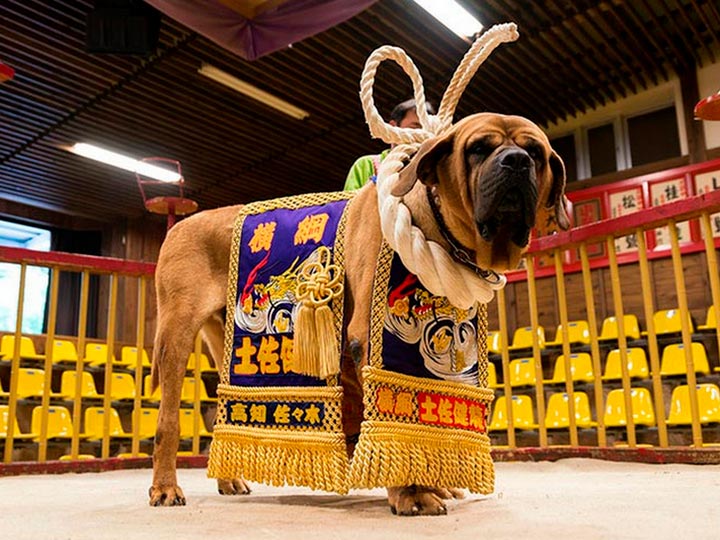
In the small town of Katsurohrama, today, as in the distant past, there is a Tosa-token center, a place where dogs are bred, trained, and even held dog fights. In addition to their traditional use in Japan, Tosus are also used as companion dogs and reliable, fearless guard dogs.
Video about the Tosa Inu (Japanese Mastiff) dog breed:
Appearance
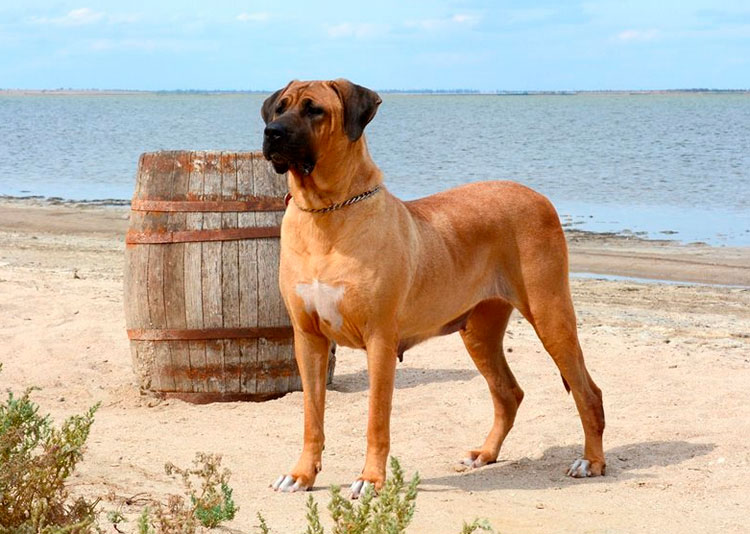
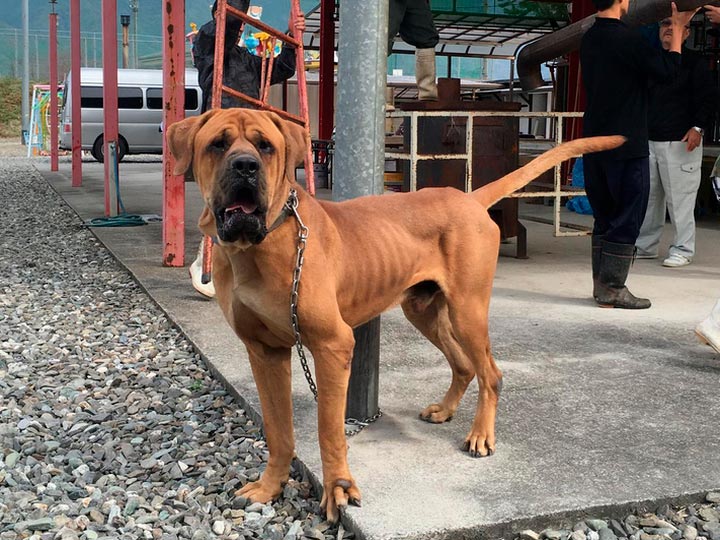
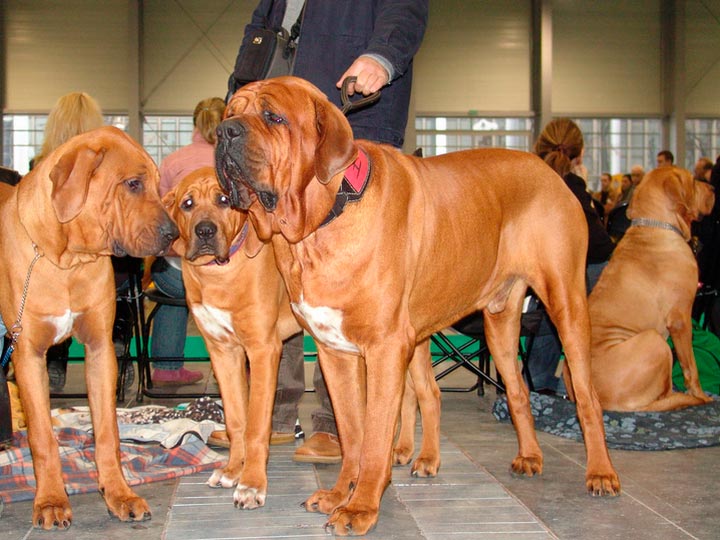
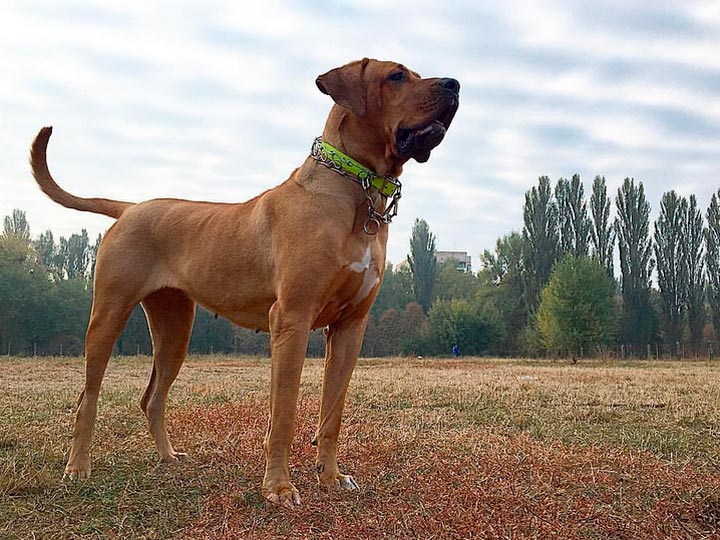
The Tosa Inu is a large, short-haired dog with a slightly elongated build, athletic build, and strong bone structure. The Tosa Inu's appearance inspires fear and intimidation, with a light and swift gait. The minimum height at the withers for males is 60 cm (24 in), and for females, 55 cm (22 in). Weight is not specified in the standard; the dog must be proportionate, first and foremost.
The skull is broad. The stop is distinct. The muzzle is outlined by noticeable symmetrical folds, moderately long with a straight nasal bridge ending in a large black tip. The jaws are strong. The teeth are strong and meet in a scissor bite. The eyes are relatively small and dark brown. The ears are relatively small, thin, set high, located on the sides of the skull and held close to the cheekbones. Puppies have ears larger in proportion to their head than adult dogs.
The neck is muscular with a well-defined dewlap. The withers are high. The back is straight and level. The loin is wide. The croup is slightly arched. The tail is thick at the base and tapers toward the tip. It is carried low, but is raised when moving or excited. The chest is broad and deep, with moderately sprung ribs. The belly is well tucked up. The legs are strong, moderately long, and well-muscled. The paws are tightly knit, with thick, elastic pads and hard, dark nails.
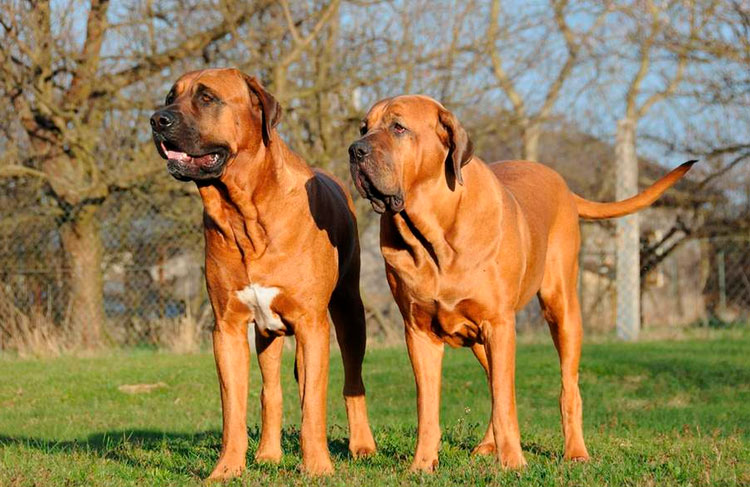
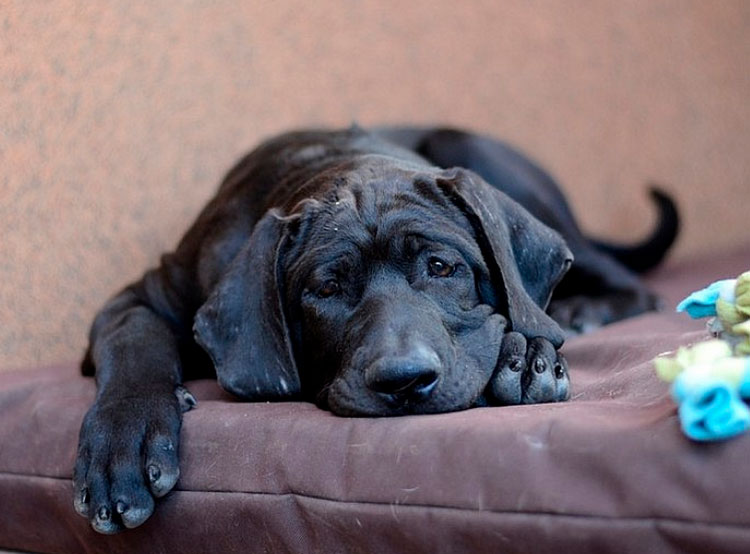
The coat is short, thick and hard. The color can be apricot, black, brindle, fawn or red. Small white spots are allowed on the paws and chest.
Character
The Tosa Inu is a patient, cool-blooded, courageous, and surprisingly brave dog, devoted to its owner and family. It can be a reliable, uncompromising protector, guard dog, companion, and watchdog. While it has a formidable appearance, in everyday life it is calm, reliable, playful, and silent. The Tosa quickly establishes rapport with strangers, as long as they pose no threat to its owner.
Tosa Inus are generally loyal to their owners and are not dangerous to family members or guests, but will attack aggressively if threatened. The Tosa is a remarkable combination of tact and fighting spirit, impressive size, speed, and the ability to fit into even the most modest apartments, strength, fearlessness, and devotion.
A Tosa Inu always knows where everyone is and what they're doing. This is the dog's primary job, which it performs responsibly and discreetly. Tosas don't exhibit hysterical outbursts or complain; they are very patient and good-natured. They treat other animals they share the house with either kindly or indifferently, viewing them as the owner's property. Dogs of Japanese breeds are often very aggressive toward other large dogs. "European" dogs are generally calm and friendly, although some are aggressive toward their own kind. Korean dogs are considered the most ferocious. Representatives of their breeds are mostly aggressive toward both strange dogs and people. In any case, the Tosa knows its strength and always chooses worthy opponents.
Education and training
From an early age, a Tosa Inu puppy requires proper, consistent training. In experienced hands, they quickly demonstrate working qualities and a good learning ability. They are highly socializable, quickly learning and following rules of behavior.
Due to its enormous size, physical strength, and difficult temperament, the Tosa is not suitable for everyone. It requires an experienced owner with a firm hand and a kind heart.
It's recommended that Tosa Inus undergo at least an OKD course or a city dog training course. These dogs mature physically and psychologically late, at 2-3 years of age. At a young age, they are often overly stubborn and periodically test their owner's mettle, attempting to establish leadership. Tosa Inus require a great deal of time and attention; only then will they fully accept their owner and reveal all their positive traits.
Content Features
Tosa Inu is not suitable for keeping in an aviary, such as Caucasians or Central Asian Shepherd Dogs, which can be locked in a cage during the day and released at night. She must live surrounded by family, in close contact with people. When leashed or confined, they wither and lose their temper, develop bad habits, and can become aggressive and unruly. In Japanese and Korean kennels, dogs are often kept in spacious enclosures, but in groups of several. The Tosa is not a street dog and never has been. Despite its watchdog qualities, it is not suitable for yard guard duty.
The ideal option is to keep a Tosa Inu in a private home with plenty of time in a well-fenced yard. Periodically, the dog should be taken outdoors where it can run freely. Good exercise is especially important for a growing dog. It helps develop its musculoskeletal system properly and prevent many health problems later in life.
Providing the necessary exercise to a dog living in an apartment is quite difficult. The Tosa Inu is moderately active and requires regular walks lasting about 30-45 minutes, supplemented by games and activities. The Tosa can be a good companion for jogging or cycling, but is not suitable for most sports.
Care
The Tosa Inu is completely low-maintenance in terms of grooming. If the dog lives indoors, it only needs to be brushed occasionally with a glove or a brush designed for short-haired breeds. This will maintain a neat appearance and reduce hair loss. The Tosa is a moderate shedder and should be bathed as needed. Bathing frequency is determined individually, but typically ranges from every 2-3 weeks to every 2-3 months.
Trimming a Tosa's overgrown nails requires a very strong tool and considerable physical strength, so owners prefer to use electric nail files or take them for long walks on hard ground to ensure the nails wear down naturally. Ears are inspected weekly and cleaned if necessary. Eyes and facial folds are also kept clean. These are usually not wiped with anything unless absolutely necessary. Tosa Inus typically have very strong teeth, and the presence of bones, cartilage, and beef tendons in their diet naturally removes plaque, thereby preventing tartar buildup.
Nutrition
Tosa Inu breeders and owners generally agree that a natural diet is more suitable for this Japanese dog. However, feeding high-quality dry food is also possible. In some cases, a mixed diet is used.
In Japan, dogs are primarily fed the meat and offal of poultry, goat, and, less commonly, other animals. They are also fed fish, rice (cooked in milk or water) with herbs, parboiled carrots, tofu, and natto. They are also given one boiled and one fresh egg daily, along with raw bones. A dog weighing approximately 50 kg (110 lbs) requires approximately 1.5 kg (3.3 lbs) of food per day.
In wealthy breeders, Tosa Inus are fed freshly slaughtered, unplucked chickens from puppyhood. Young dogs consume them along with the giblets, blood, and bones. Adult Tosus are sometimes given the opportunity to kill a goat. Afterward, the animal is removed, butchered, and fed to the dogs in portions.
Domestic breeders follow a similar diet. In the morning, dogs are given a light snack: cottage cheese (0.5-1% of the animal's body weight) with vegetables or fruit (0.5% of body weight). In the evening, they are given raw or scalded poultry, beef, lamb, and offal (about 5% of body weight). rice or buckwheat porridge (1% of the dog's body weight) with vegetables (0.5% of body weight) and a small amount of vegetable oil. Once a week, the meat can be replaced with fish and the diet can be supplemented with raw or boiled eggs.
Proponents of prepared foods in most cases selected their brand experimentally, taking into account the age, size, physiological condition of the dog and its taste preferences.
Health and life expectancy
The breed is susceptible to various types of diseases that are hereditary.
- Hip dysplasia, elbow dysplasia and other joint diseases;
- Kidney pathologies;
- Heart failure (more common in older dogs).
- Eye diseases (cataract, progressive retinal atrophy);
- Allergies.
The problem of hereditary diseases is complicated by the fact that with a small population and low genetic diversity, inbreeding is unavoidable. Only a few breeders approach breeding wisely, screening their dogs and, if any serious illnesses are detected, actually removing them from the breeding program.
Tosa Inu owners are advised to maintain a vaccination schedule throughout their dog's life, ensure their dog is treated for external and internal parasites, and undergo an annual medical examination. This typically includes a general examination, blood and urine tests, a consultation with a cardiologist, and any other additional tests deemed necessary by the veterinarian. The lifespan of healthy dogs is typically 10-12 years.
Choosing a Tosa Inu Puppy
Purchasing a puppy from Japanese kennels is extremely difficult. The Japanese are reluctant to export their dogs, especially the Tosu Ken, which is a national treasure and a source of pride. The majority of Tosa Inu breeds are concentrated in Japan, Taiwan, South Korea, and Hawaii. These dogs are primarily kept by owners of wealthy estates who require reliable protection. Korean dogs are generally slightly smaller than their Japanese, European, and American counterparts, and have finer bones, but they are more likely to have the most beautiful and prized red color.
Future owners should focus not on choosing a puppy, but on choosing a kennel and parents, who should have not only a beautiful appearance, but also a good character. It's great to have the opportunity to see them in their daily lives, assessing their habits, temperament, and obedience. If everything is satisfactory, they move on to choosing a puppy from the litter. It's a good idea to decide on the gender, color, and personality in advance. Families with children are better off choosing a female dog with a calm disposition, while a male can be used as a guard dog, provided the future owner can handle the dog's dominant personality. Show and breeding dogs often require the help of an experienced breeder or dog trainer, while companion and guard dogs typically rely on personal preference and select the puppy they like. The optimal age to adopt a small Tosa is 3 months.
Price
The breed is quite rare, with most of the breeders imported from other countries. It's therefore unsurprising that the price of a Tosa Inu puppy rarely drops below 70,000 rubles. These are promising puppies from breeders. Incidentally, it's extremely rare to find ads for puppies without a pedigree at this stage of the breed's development.
Photos
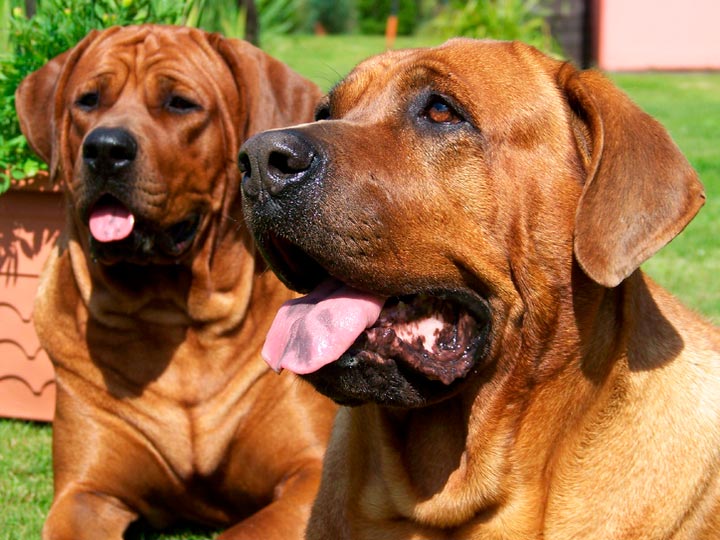
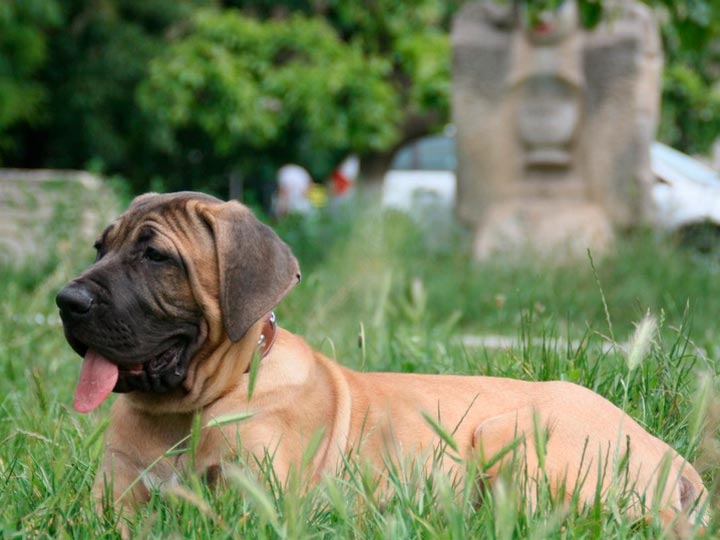
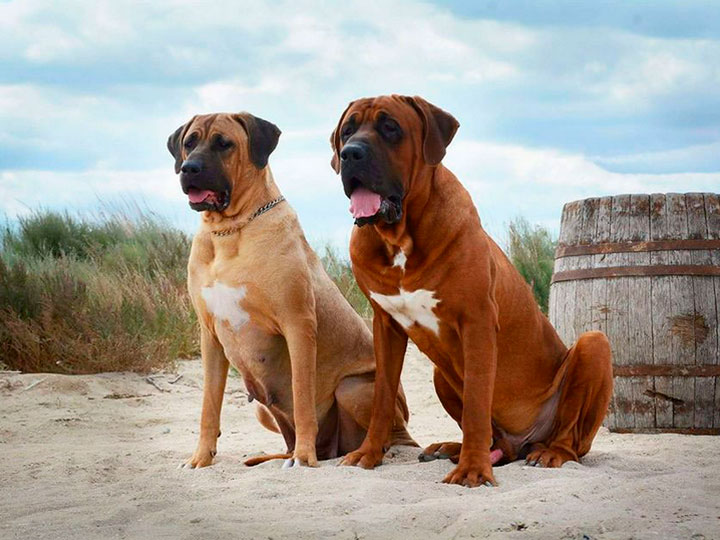
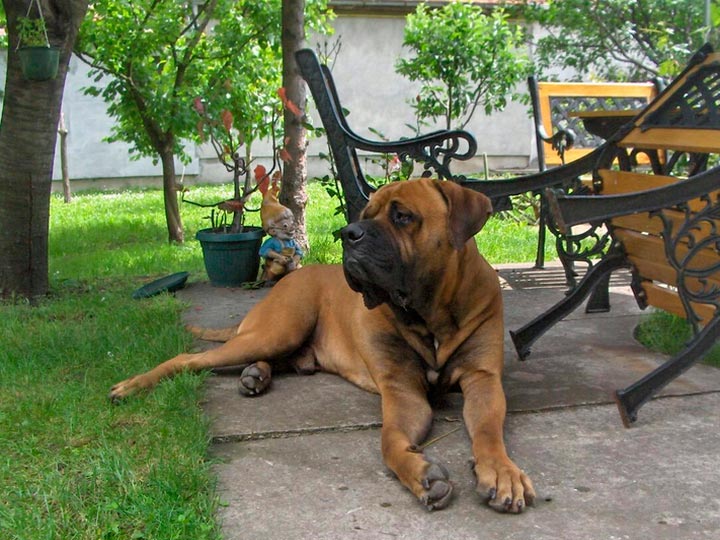
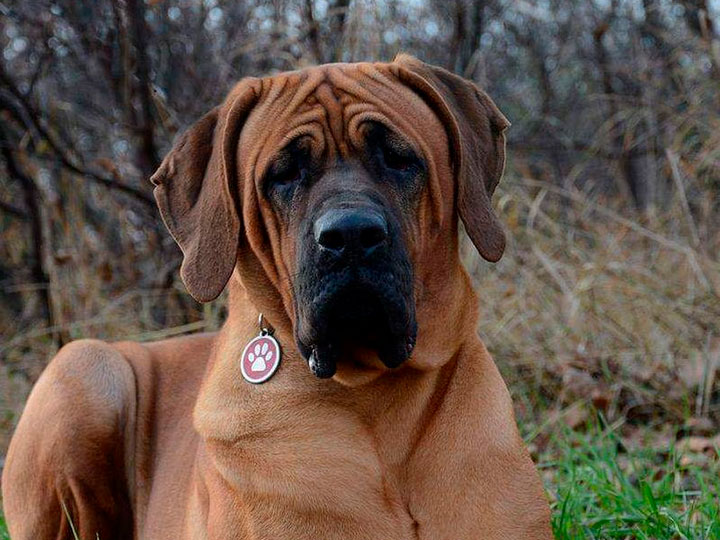
The gallery contains photos of Tosa Inu (Japanese Mastiff) puppies and adult dogs.

Read also:
- American Bandogge Mastiff
- Japanese Terrier (Mikado Terrier, Japanese Fox Terrier, Kobe Terrier)
- Korean Jindo (Chindo)


Add a comment