
Thai cat (Thai cat)
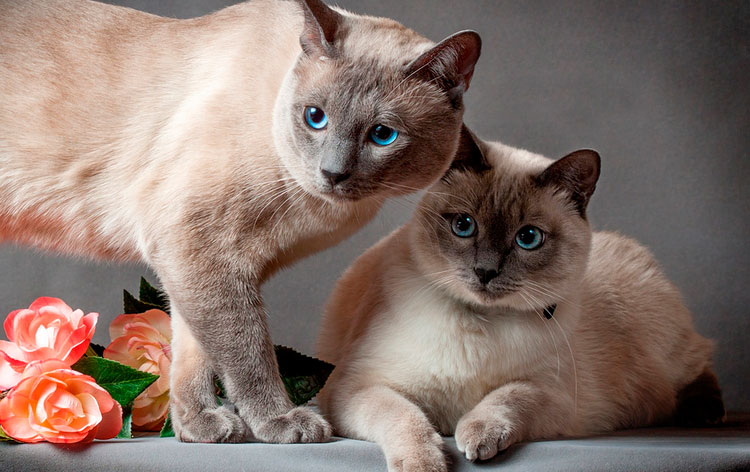
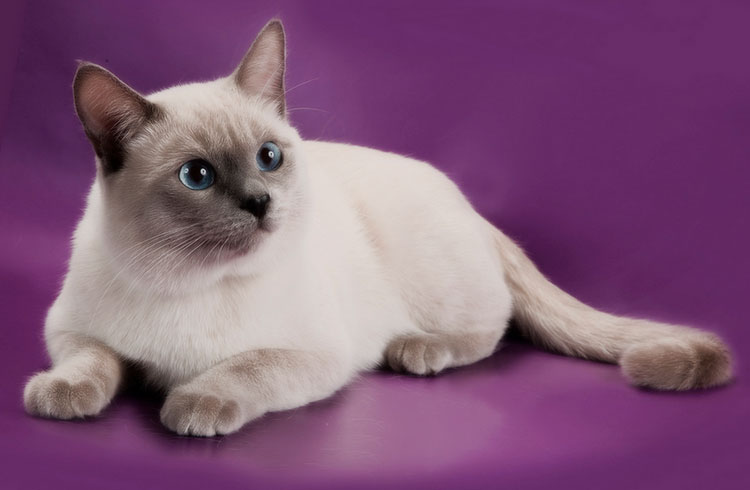
Thai cat The Traditional Siamese cat is also known as the Traditional Siamese. This is because the Siamese looked exactly like this until the early twentieth century. Later, changes were made to the exterior, and the breed became known as the Thai. The Thai cat attracts attention with its colorful point coloring, complemented by expressive blue eyes. Those fortunate enough to get to know the Thais better appreciate their high intelligence and wonderful character.
Content
History of origin
In ancient times, Thai cats were favored by kings. They were also considered a kind of "guardian" of monasteries, and as a reward for their loyalty, legend has it, they were gifted with sky-blue eyes. The heroes of legends, the Thais, were descendants of the elusive cats of ancient Ayutthaya, the historical capital of Thailand. They protected monasteries and temples, as well as homes, from evil spirits, and so the animals were deified and treated with reverence. No specific historical information about the Thais has survived. This is perhaps the most ancient breed, whose origin is shrouded in mystery.
Thai cats, renowned for their gentle docility and genuine love for people, have long attracted the interest of breeders. Anyone who has ever owned a Thai cat is unlikely to choose another breed in the future. They become so deeply ingrained in the heart.
The homeland of Thai cats, unsurprisingly, is Thailand. The earliest references to cats similar in appearance to the Thai cat date back to the fourteenth century. The first Thai cats were brought to Europe in 1870, when Europeans became interested in this exquisite breed. It is believed that the King of Siam gave Pho and Mia (the first Thai cats) as gifts to British General Owen Gould, who brought them to Great Britain, thus establishing the new breed.
In the 1920s, cats arrived in America from Great Britain. The fashion for Thai cats reached Russia in the mid-1960s.
Video about the Thai cat breed (Traditional Siamese cat):
Appearance
The appearance of modern Thai cats often impresses with the perfection of their coloring, as well as the gracefulness of their movements. Thai cats are often confused with Siamese cats due to their similar coloring, but upon closer inspection it becomes clear that they are completely different.
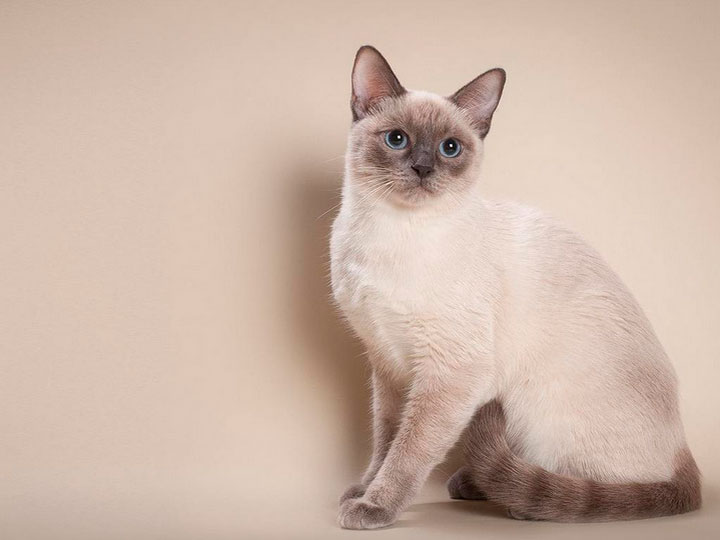
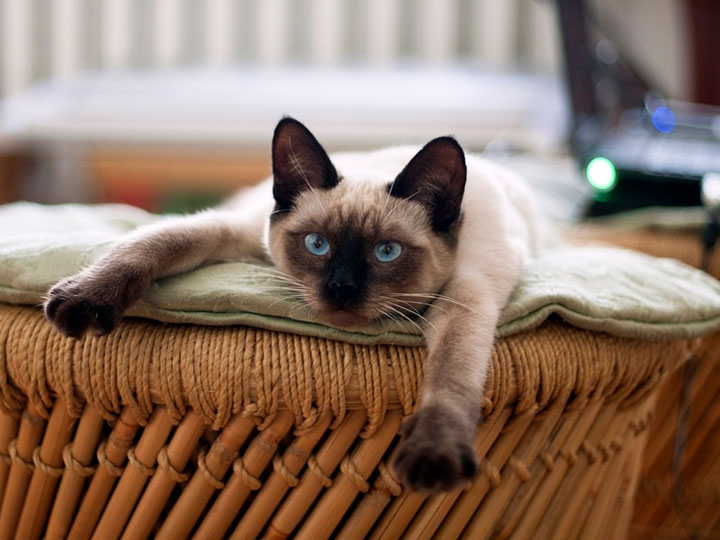
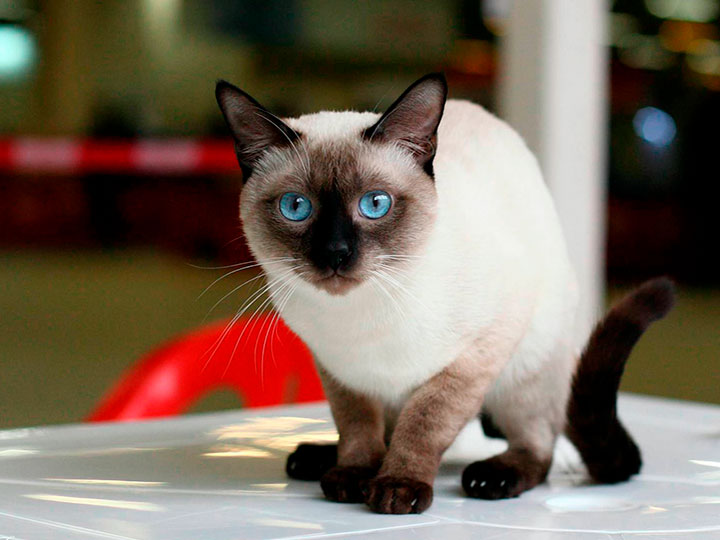
The Thai cat's compact, muscular body is quite difficult to confuse with the graceful, slightly elongated Siamese cat. It is quite large and strong. The head, shaped like an equilateral triangle, appears somewhat wide. The small ears (again, compared to Siamese cats) are set wide and straight, as if on the sides of the triangle. Their tips are neatly rounded. The Thai cat's extra charm is given by its very expressive large eyes, lemon-shaped and bright blue in color. A slight cross-eyed appearance is perfectly acceptable for typical Thai cats. Their neat, round paws spring well on the ground. Thai cats also have a short, straight tail.
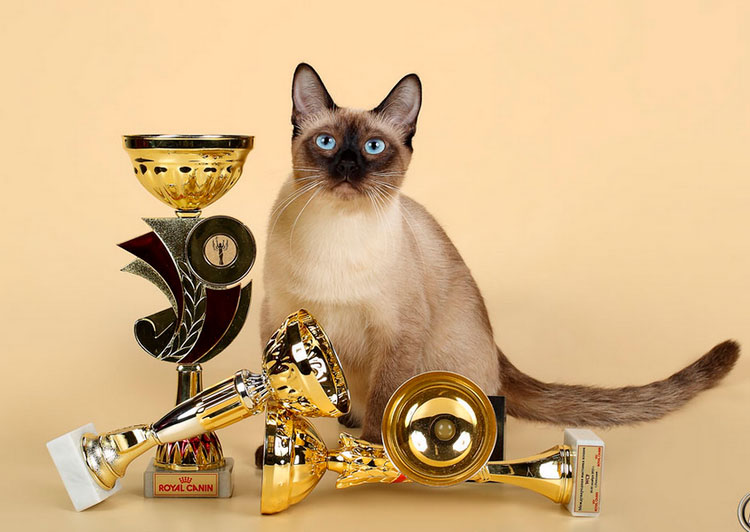
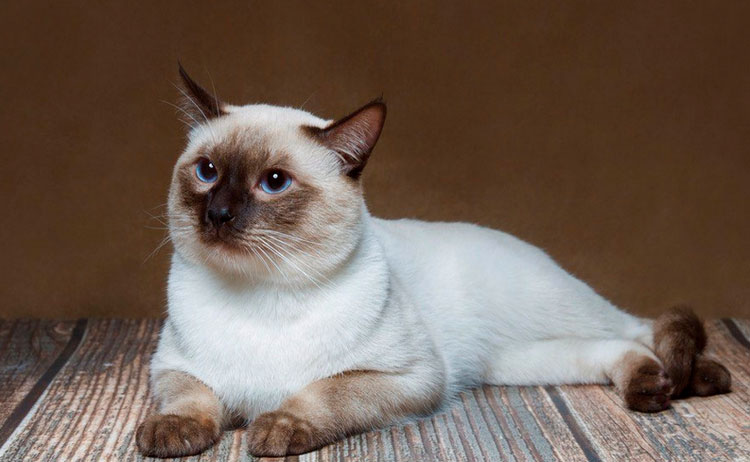
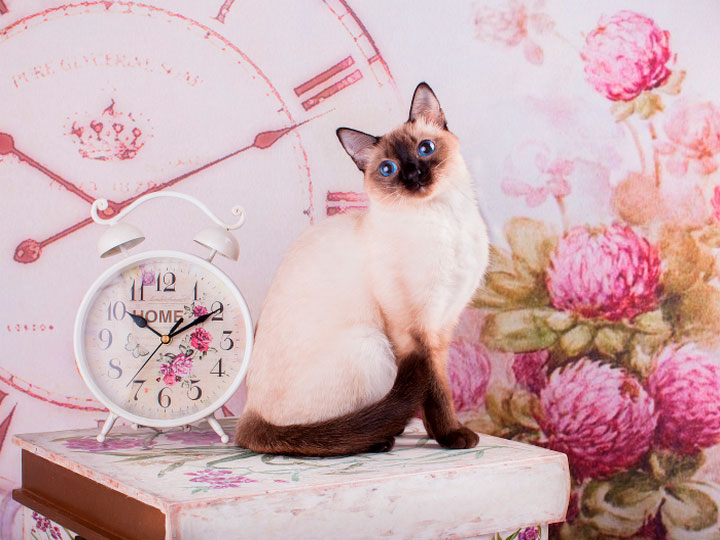
The Thai cat has short hair. Its fur is silky and very soft to the touch, with a very sparse undercoat. The typical color for Thai cats is called "point". The "socks" on the paws, the "mask" on the face, and the tail are colored one of several colors: cream, black, gray, or brown. The rest of the body is typically darker: solid-colored or tabby. Breeders have worked extensively to diversify the Thai cat and have developed a variety of other colors:
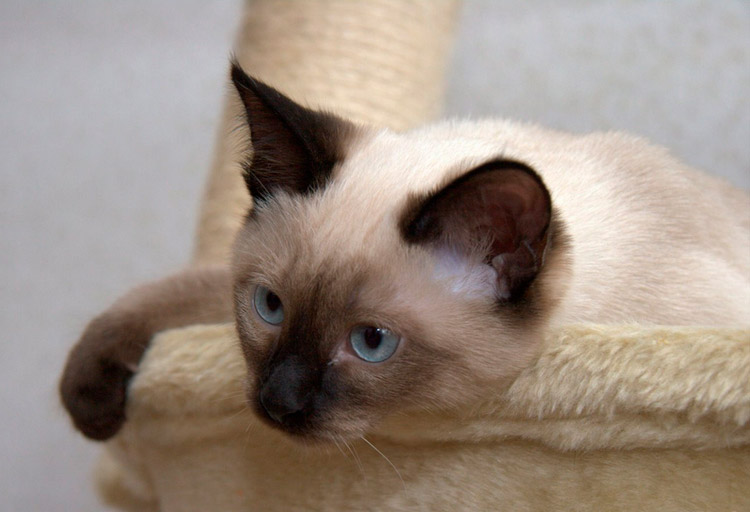
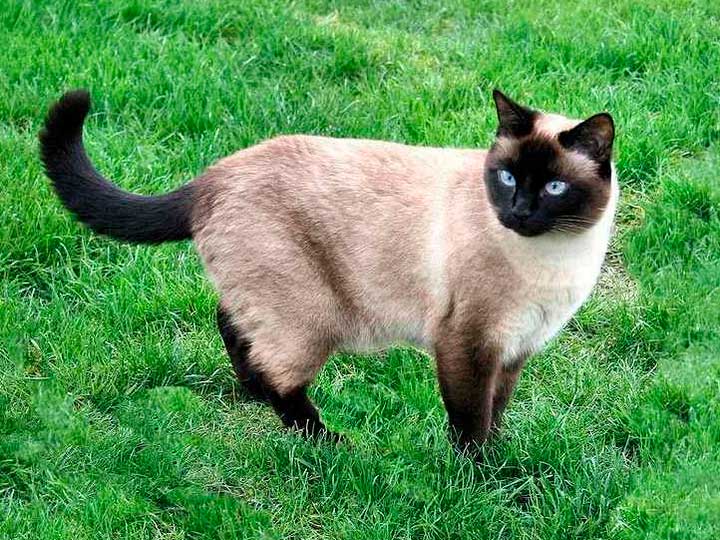
- Seal point. A distinctive coloring in which the animal's face and limbs are dark brown. A seal point cat has a nearly black face.
- Tabby point. The coloring is distinguished by a white body and a striped face and limbs.
- Red point. A shade of red on the paws, muzzle, ears, and a white body.
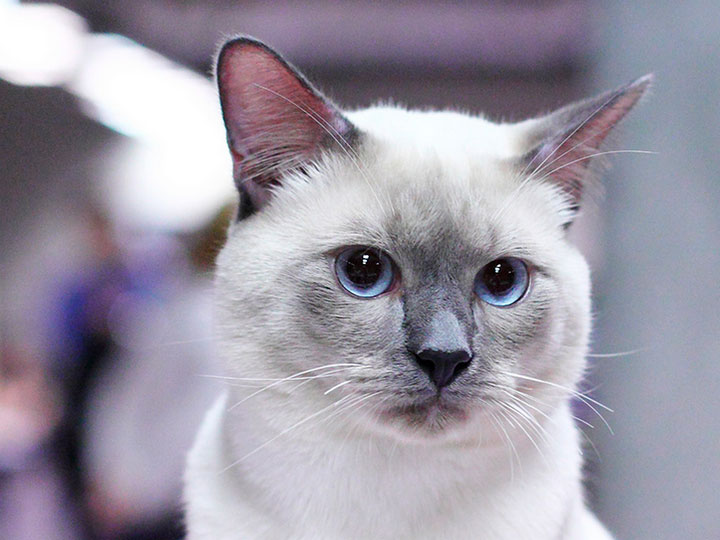
- The Thai cat's white coat is combined with a gray-blue tint on the face and paws. This is one of the rarest breeds.
- Lilac color. Characterized by a cool lilac hue on the muzzle and limbs.
- Tortoiseshell. Available in combinations of black and red, gray, and cream.
- Cream color. White body with a cream tint and a darker shade (sometimes striped) on the muzzle and paws.
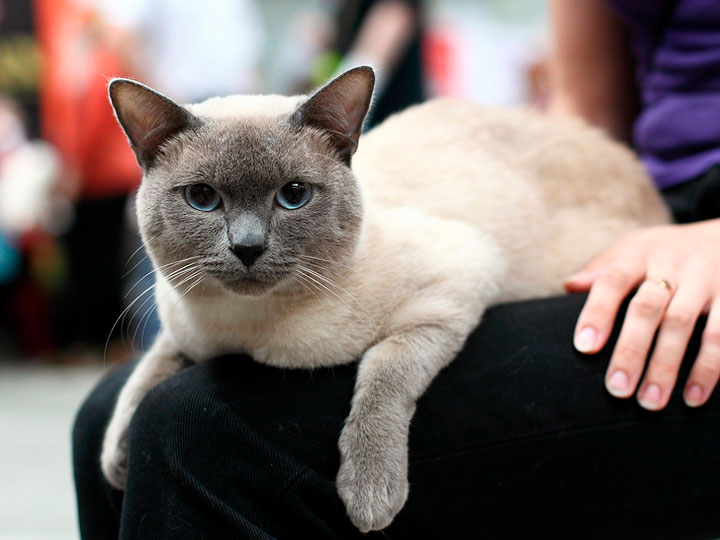
- Blue point. A Thai cat with this coloring has dark gray paws, face, and tail, and a bluish tint to the body.
- Chocolate. The body is darkish (ivory), the limbs and muzzle are light brown.
Character and behavior
Thai cats are incredibly energetic, reminiscent of a perpetual motion machine. Their activity level remains virtually constant with age. They love to play and, in the absence of any toys, will happily occupy themselves with the little things around them. In every corner, under every bed—everywhere, the curious pet sees something new and fascinating. And they won't give up until they uncover a secret and grasp the essence of their discovery. Inquisitive Thai cats know no fear when working toward a mystery. Therefore, these restless animals often get injured. Gradually accustomed to the sound of a vacuum cleaner, they will inevitably begin to explore the terrifying machine, sniffing and touching it with their paws. Unraveling the mysteries of the universe, they discover everything on their own. Sometimes they can sing their whiskers by getting too close to a boiling kettle or a lit candle, and jumping from a great height to retrieve an object of interest can injure their paws and nose. Thai cats aren't afraid of heights, but like other breeds, they can suffer serious injuries from a bad landing.
Satisfy your Thai cat's inquisitive mind by teaching them new and interesting things. This breed is easy to train. Young kittens quickly learn what they can and cannot do, where, and what's allowed. These animals are very athletic, but female cats are more active and master various skills faster than male cats.
The Thai cat is a very talkative creature. Its vocabulary encompasses several dozen vocal nuances, and each sound has a specific meaning. It's also been noted that Thai cats have a rich facial expression. The faces they love to make leave few people indifferent. Their emotions are immediately reflected on their blue-eyed faces. If a pet is sad, anxious, or suddenly shows signs of mischief, you'll know it the moment you look at them. They're impossible to keep still. They want to be aware of everything going on in the house and control their owner's actions. Trying to help, a pet might actually interfere with making the bed, sweeping the floor, or moving furniture, turning these activities into a fun game.
Sociable and affectionate for most of the day, Thai cats still love to "take a walk on their own." Thais are moderately inquisitive, yet quite intelligent. They obey commands very well and are generally trainable, but they struggle with overt pressure and can respond with aggression.
Thai cats, like Siamese cats, are surrounded by a myth about their incredible anger and uncontrollable aggression. But in reality, any bad moods in Thai cats are nothing more than whims. And this happens to them no more often than to other feline breeds.
Independent and fearless—these are the epithets that best describe the Thai cat breed. It's worth noting that they have a keen memory for grievances. While overt revenge may not follow, you certainly won't expect a favorable attitude from them anytime soon. Furthermore, these cats are good housekeepers and quickly alert their owners to any disruptions. Thanks to them, you can learn about burnt food, water leaks, and other household problems.
Content Features
When living with a family, a Thai cat chooses its favorite owner and will obey them in everything. The emotional component of its interaction with humans is an important aspect for it. The animal becomes very attached to its owner, demands reciprocity, and experiences separation anxiety. Therefore, if your lifestyle requires frequent absences, consider getting a friend for your Thai cat.
A Thai cat's home must have a private, secluded spot and plenty of toys. Inquisitive cats won't rest until they've figured out how to use it, and then they'll usually lose interest and soon be on the verge of new discoveries. A slightly open nightstand, for example, might catch their attention, and they'll be sure to peek inside to check out what's inside.
Non-confrontational Thais are excellent at interacting with everyone around them, including other pets. They'll interact with anyone, as long as they're not left alone.They get along very well with children, even small ones. They calmly tolerate any attempts by a child to tear off any limb. A Thai cat can be the best nanny for a baby. She tenderly cares for a human cub. If the parents don't hear the baby's cries, the sensitive cat will run up and meow loudly, signaling that they should come to her. She will be very grateful if the owners are equally attentive to her babies.
Care
Thais don't require complex grooming; it all comes down to regular, simple hygiene procedures. Overgrown hair should be removed periodically. You can wet your hands with plain tap water and gently stroke the Thai from head to tail. Any excess hair will simply stick to your hands. Thick brushes are usually used during shedding periods or before show preparation. Thais are bathed as needed, usually every few months or again before a show. It's important to choose special cosmetics for their soft fur. Inspect and clean the ears once a week. Trim the claws every 3-4 weeks. It's also a good idea to accustom your cat to regular teeth brushing. To prevent injury, keep windows open only if you have a mosquito net.
Nutrition
Proper nutrition is the key to any cat's health and well-being. It's crucial that the diet be balanced. A deficiency of certain nutrients is just as harmful to a cat as an excess. This is most easily achieved by choosing the right food. Super-premium or holistic foods for active cats are suitable for Thai cats.
Most Thai cats aren't prone to overeating or obesity, and they're very active, so two meals a day isn't ideal. It's best to feed your Thai cat four to five small meals a day. If you're feeding them commercially prepared food, you can leave the food bowl freely accessible. The owner just needs to ensure the bowl is full and the quality of the food is maintained. The same goes for water.
Health and life expectancy
Thai cats are truly long-lived, often reaching a ripe old age of 18-20 years. They have a strong immune system built into their genes, but it's important to keep up with the necessary vaccinations and treatments for external and internal parasites.
Some representatives of the breed are predisposed to certain diseases:
- malignant tumors of the mammary gland;
- liver amyloidosis;
- cardiomyopathy.
It is important to immediately take your cat to the veterinarian if any symptoms of any disease occur.
How to choose a Thai cat kitten
When considering buying a kitten, it's important to decide what kind of Thai cat you want: a true purebred that matches the breed description and character, or one that looks similar. Thai cats aren't the most popular breed, but they are quite common. There are many catteries, but even more are shady breeders who are looking to recoup the cost of their Thai cats (which aren't always high-quality, and sometimes of dubious origin) or make a small profit. This is why the number of "purebred Thais" at very attractive prices is growing.
The only indication that a kitten belongs to a breed is a birth certificate or pedigree! "Purebred parents without papers," "looks like," or "looks very similar" are not breed characteristics.
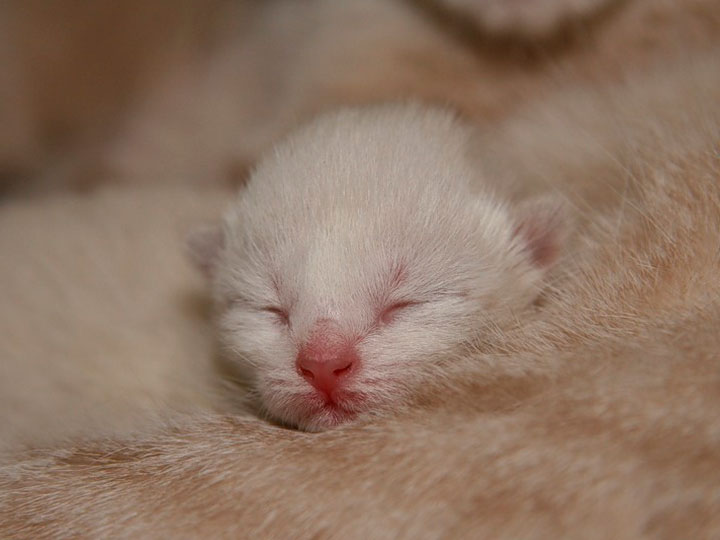
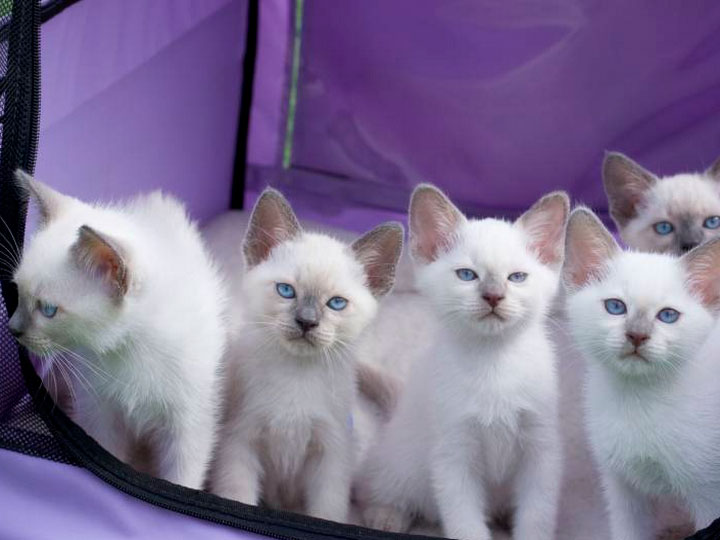
It's best to pick up the kitten in person. This way, you'll be able to assess the kittens' living conditions, observe them in a home environment, and meet their parents. Kittens are born completely white; by 1.5 months, their pointed coloring begins to develop, which is fully formed by 2 years. A healthy Thai cat kitten is an energetic, agile animal with a straight tail, no lumps or kinks, and a healthy appearance with clear ears and eyes. They are not aggressive or shy, and are just as inquisitive as an adult. A good breeder will never give away a kitten younger than 2.5 months old without vaccinations. At this age, little Thais should be accustomed to a scratching post, litter box and people.
Price
Kitten prices vary widely. The cheapest are pet-grade kittens (not for show or breeding) averaging 25,000 rubles. Promising kittens for show or breeding typically start at 35,000 rubles. Adult Thai cats, bred from breeding, and of course, kittens without documentation of origin that resemble Thai cats, are sometimes available for sale for up to 5,000 rubles.
Photos
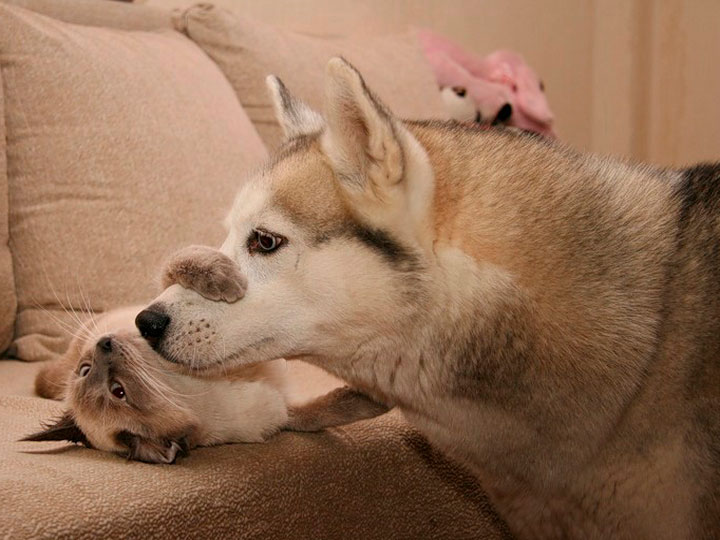
The gallery contains photos of adult cats and kittens of the Thai cat breed (Traditional Siamese cat).
Read also:


2 comments
Victoria
Can you tell me if Thai cats are afraid of water? Or is it more of an individual thing?
Daria is a veterinarian
Hello! All phobias are entirely individual. It's impossible to equate all representatives of a given breed with any stereotype. Some dogs will be terrified of water, while their siblings from the same litter will be invincible. And vice versa. And this applies not only to water.
Add a comment