
Dachshund is a breed of dog
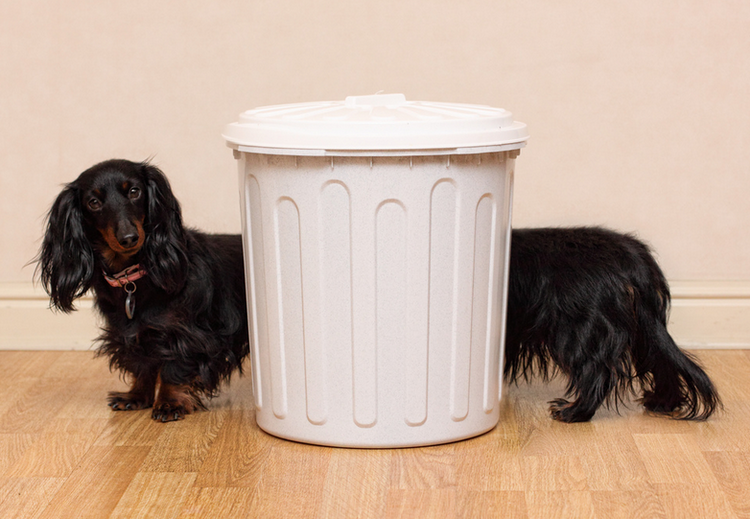
A breed of dog called dachshund Considered one of the most popular dogs in the world, it's known for its unusual, sausage-like body shape. The dachshund owes its elongated body to German hunters who painstakingly developed the ideal burrowing dog.
Content
History of origin
The first records of dogs similar to modern dachshunds appear in the 16th century in southern Germany. Dachshund Dachshunds are considered the oldest breed of hunting dogs. Their ancestors are believed to have been German hounds called Braques. It was from these stocky, short dogs that Dachshunds inherited their courage, exceptional intelligence, hunting instinct, and intuition.
The Germans call them Dachshund, which translates as "badger dog." The oldest club breeding them is called Deutscher Teckelklub e. V, founded in 1888.
The dachshund was brought to Russia around the mid-18th century, but its popularity only began to grow in the 20th century. Interestingly, dachshunds were Napoleon's favorite pets. He loved his dogs, Fossette and Grenouille, so much that he ordered them buried with him in the same grave. Other famous people who admired dachshunds include Anton Chekhov (he had two dachshunds) and Andy Warhol.
Video review of the dachshund dog breed:
Appearance and standards
The dachshund is a short-legged, stocky dog with an elongated yet compact build, well-muscled, proudly carried head, and an alert expression. Dachshunds are very agile and flexible.
For decades, breeders have bred dachshunds in three sizes:
- Standard (chest circumference from 36 cm);
- Miniature dachshund (chest girth up to 30 to 35 cm);
- Rabbit dachshund (chest circumference up to 30 cm).
And also three varieties by wool:
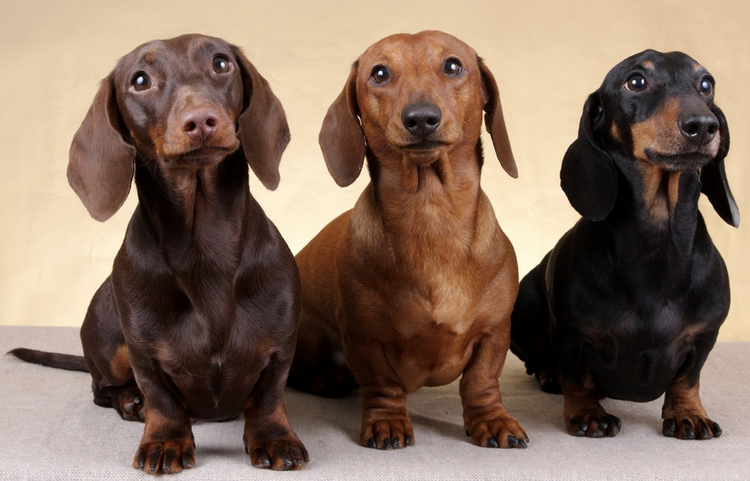
- Smooth-haired
- Wirehaired
- Longhaired.
Regardless of the type, the dachshund should not weigh more than 10 kg.
Head and muzzle
The dachshund's head is elongated but not pointed, tapering evenly toward the nose. Jaws are well developed. The teeth should be complete and correctly aligned. The lips are tightly fitting and cover the lower jaw. The eyes are oval, medium in size, and set wide apart, with a friendly, energetic expression. The coat color should range from light to dark brown in all colors. Even in merle-colored dogs, light eyes are undesirable but tolerated. The ears are fairly long, set high, and rounded. The front edges of the ears lie close to the cheekbones. The neck is long and flexible. The withers are slightly arched.
Frame
The topline slopes slightly due to the slightly sloping croup. The back is strong, straight or slightly sloping. The chest is well developed, with ribs well sprung. The lowest point of the sternum should be 1/3 of the height at the withers above the ground. The underline is slightly tucked up. The tail is an extension of the topline, straight or saber-shaped, tapering to a tip. A slight curve in the last third is permissible. The limbs are short and very muscular. When viewed from the front, the forelegs are straight, the paws point forward, and the elbows are well back. The hind legs are parallel. The paws are well knit and set on strong pads.
According to the FCI standard, which provides a detailed description of the breed, dachshunds must undergo working trials. Some clubs in non-European countries are trying to abolish this and instead award the International Champion title solely for beauty. The association's leadership takes a different view: the dachshund is a hunting dog, as confirmed by the tests, and excellent conformation should not preclude excellent working abilities.
Coat and colors
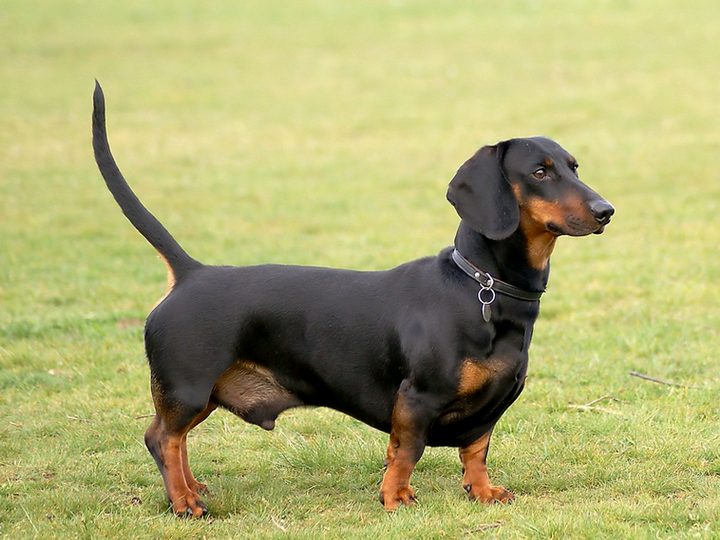
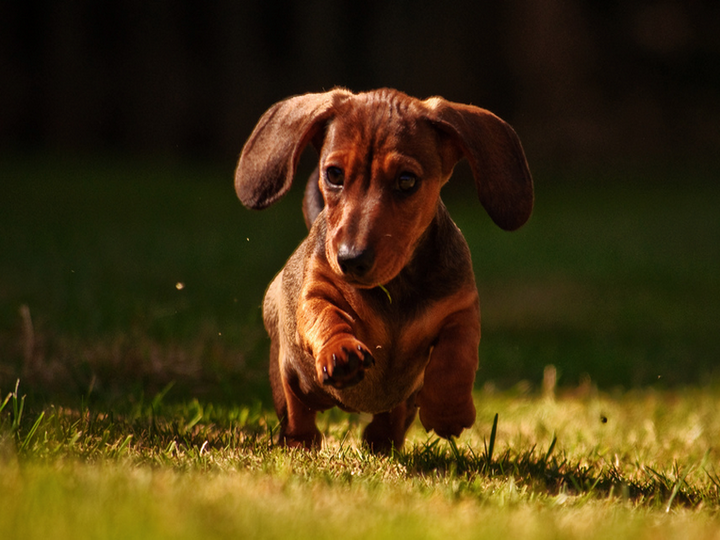
Smooth-haired dachshund The breed is distinguished by its short, shiny, thick coat, which lies close to the skin and is harsh to the touch. The winter coat is slightly longer and thicker than the summer coat.
There are three types of colors:
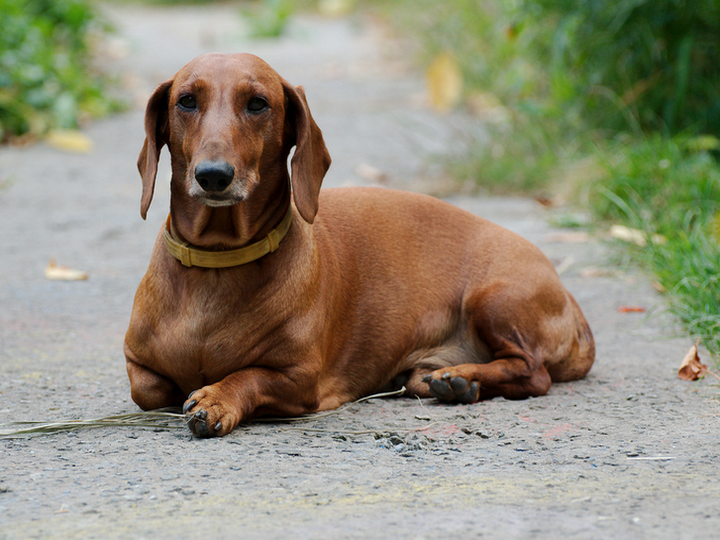
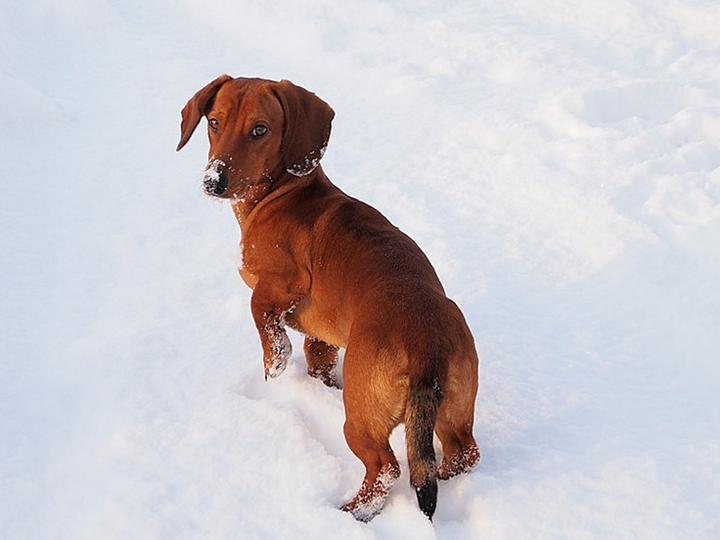
- Solid color (red, reddish-yellow, fawn). Pure color is preferred; black hairs are not permitted.
- Two-tone rich brown or black with red or fawn markings.
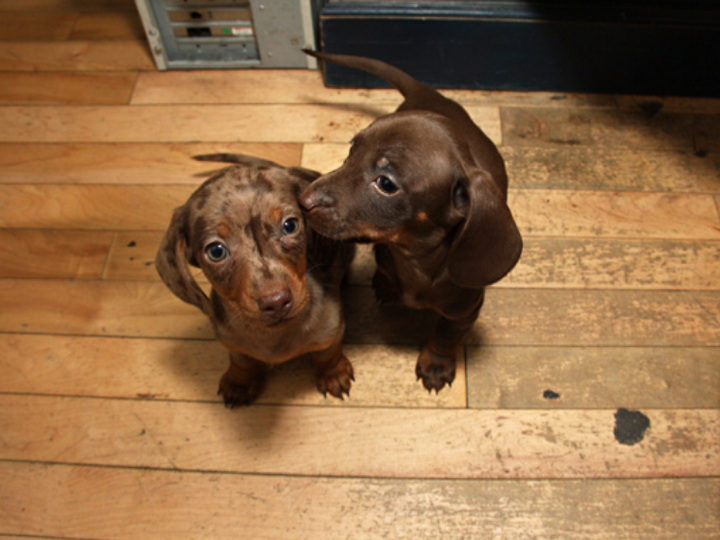
- Marble with a base dark colour (black, red or grey) on which there are random beige or grey spots.
Breeding a merle-colored dachshund is a rather daring undertaking, since the merle gene, which is responsible for the color, carries hidden health risks.
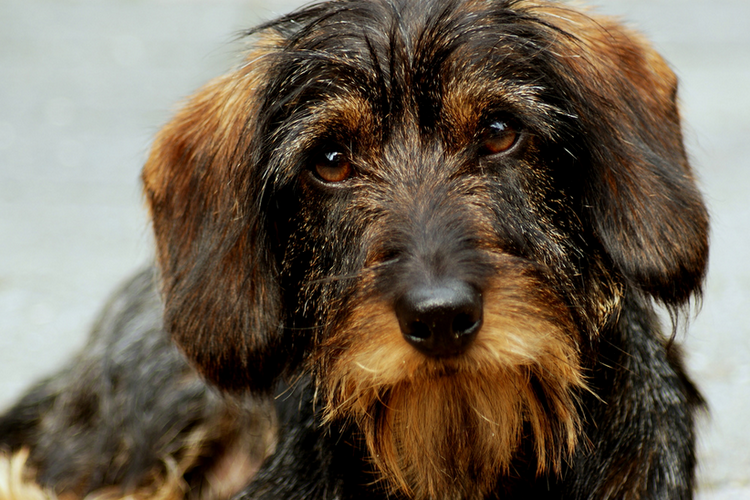
Wirehaired Dachshund The breed has a thick, wiry coat with an undercoat. The hair is uniform in length and lies flat all over the body, forming a beard and bushy eyebrows only on the muzzle. The hair on the ears is shorter than on the body, almost smooth. The predominant color is the so-called wild boar (which has a variety of shades from light to dark). Other patterns, as described for the smooth-coated variety, can also occur, in addition to marbled and brindle.
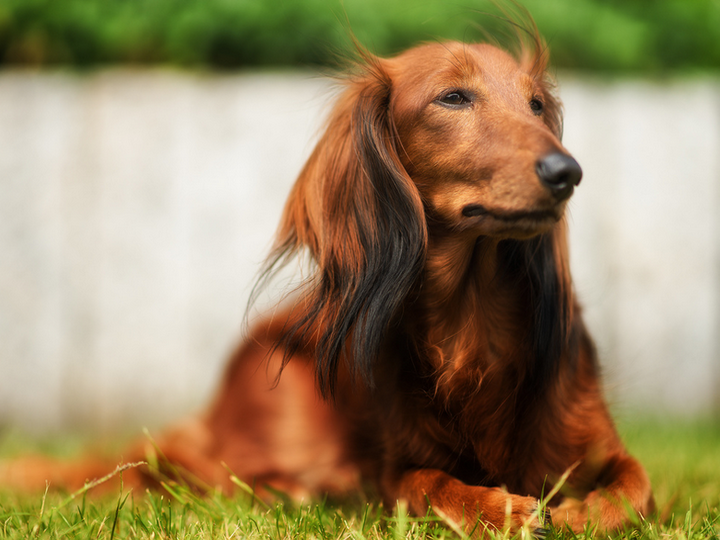
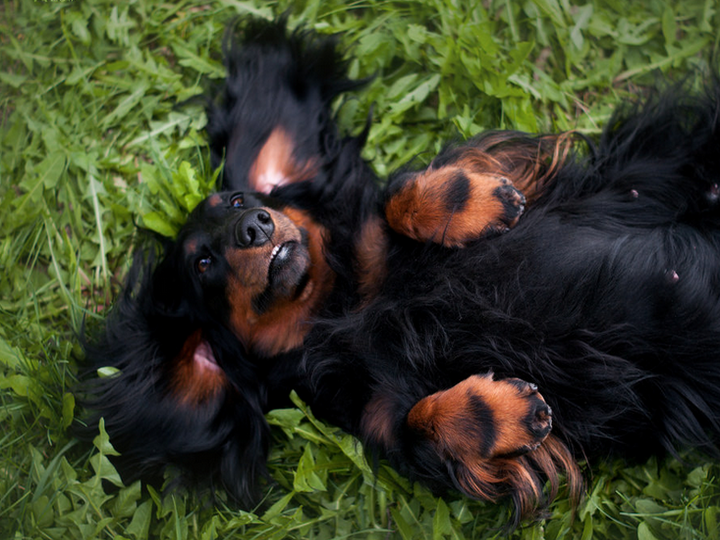
Long-haired dachshund The most elegant. Its coat is moderately soft, shiny, and has an undercoat. It lies close to the body, slightly longer on the throat and underparts. On the ears, the hair falls below the edge, forming a fringe. The feathering on the hind legs and underside of the tail is prominent. Longhaired dogs can be solid-colored or two-colored, like smooth-haired dogs.
Dachshund personality traits
Dachshunds are truly sanguine. These long-legged dogs are naturally inquisitive, as their hunting instinct makes them aware of everything going on around them. Dachshunds are sure to be intrigued by the slightest creak or rustle, making them excellent watchdogs.
Dachshunds are always full of energy, but they are also very gentle creatures. Their courage and pride can sometimes be reckless. However, larger dogs often respect the serious intentions of a small dog. A cheerful dachshund will always be devoted to its owner. This dog gets along well with children who treat it with respect, but may be intolerant of excessive affection from a very young child. Dachshunds also love to travel.
Dachshunds get along well with other pets in the house, but they can sometimes be prone to bouts of jealousy. Dachshunds will always demand respect, as they consider themselves proud and important individuals. Dachshunds are true lovers of comfort, and therefore often climb onto their owner's lap or arms. They can often be found tucked under a blanket.
Education and training
Almost all dachshunds are relatively difficult to train, but this doesn't mean they're stupid. Dachshunds quickly learn house rules, various commands, and even tricks, but they're not always willing to obey their owner's orders. Sometimes it's difficult to get them to stop barking, as they love to bark. These intelligent dogs will always defend their owner. Experienced dachshund owners believe that long-haired dachshunds are calmer than their short-haired counterparts. Dogs of this breed do not tolerate rudeness or neglect.
Dachshunds are very obedient dogs when they are at home, but when hunting or on a walk, the dog forgets its docile nature and, having smelled a scent, plunges headlong into the search for the animal.
Hunting with a dachshund
Dachshunds were originally bred for burrow hunting, but these dogs also enjoy tracking hares, flushing grouse, and retrieving birds from water. Most modern dachshund owners keep them as pets, couch potatoes, and family dogs, but there are also enthusiasts who use the breed for its intended purpose; however, according to cynologists, these dogs make up less than a third of all owners.
Using dachshunds to hunt burrowing animals is quite dangerous. While following the animal underground, dachshunds can be caught in a cave-in, lose a fight with the denizens, or get stuck. Therefore, a hunter with a dachshund will need to carry not only a gun but also a shovel.
The dog can work in different ways. One dachshund barks at its prey, alarming it with short bites, and forcing the den's occupant to jump out of its hiding place to be shot. Another, having spotted a rival, clamps its jaws on it and doesn't let go until the animal is alive or until the hunter arrives.
Dachshunds are characterized by endurance, tenacity, and hunting spirit, passion, and courage. They also possess another distinctive trait when hunting: intelligence, which only truly manifests itself in the field. A dog raised in close contact with its owner understands the task at a glance and performs as required at the moment.
Maintenance and care
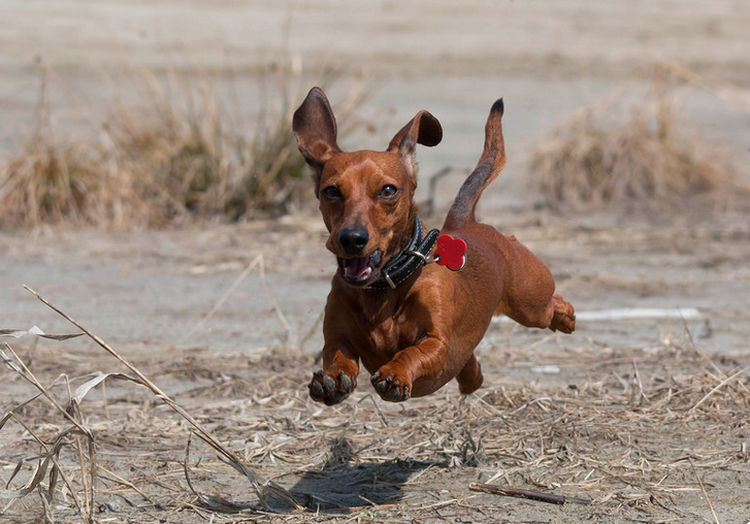
A dachshund needs its own space in the house. It should be spacious enough. Dachshunds are very active, playful, and love toys, so their space should be equipped with various balls, rubber bones, and other toys. Due to their large build, dachshunds are prone to back problems. For this reason, their sleeping area should not be too soft.
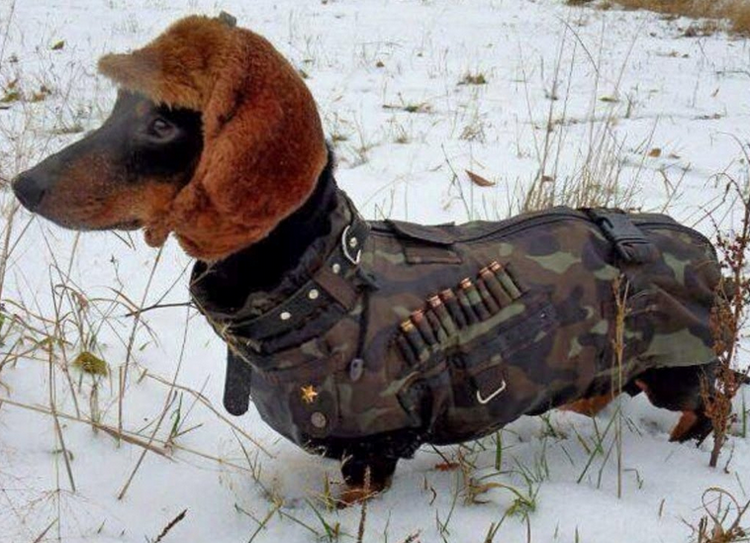
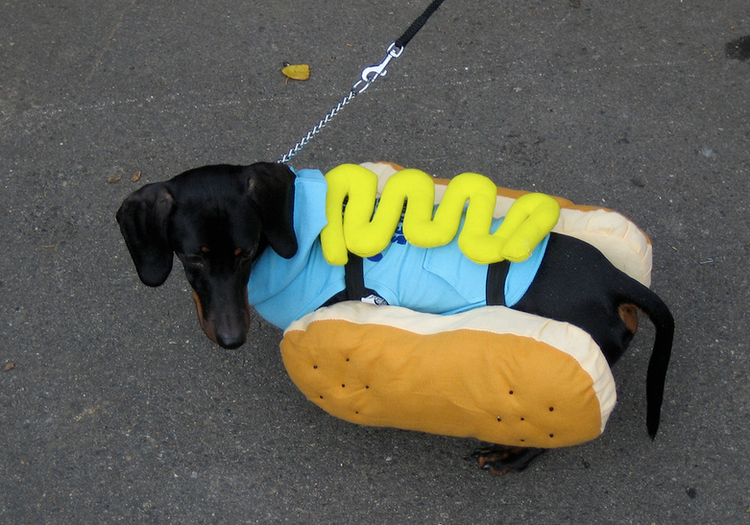
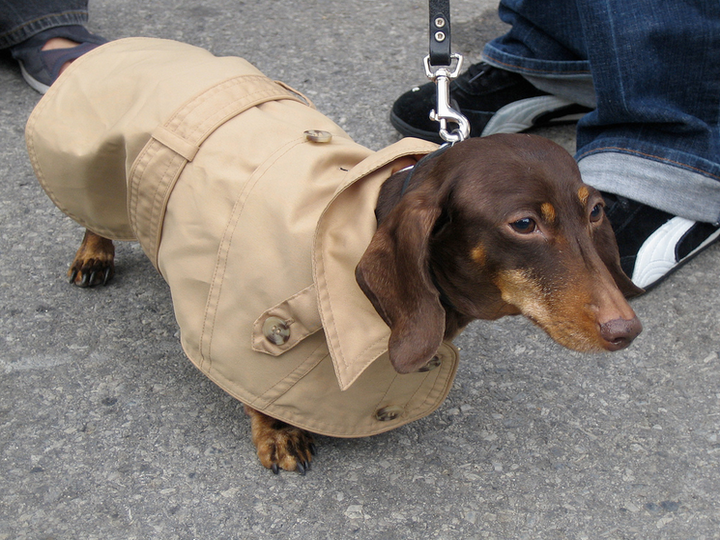
To maintain its playful nature, dogs need regular exercise in the form of walks and active play. Climbing slopes and walking on rough terrain are very beneficial for the musculoskeletal system. During the cold season, many owners choose dress according to the weather.
Dachshund grooming is not difficult, with the exception of wire-haired dogs, which require regular trimming. Regular brushing is sufficient for other breeds, with a little more frequent brushing during shedding season. Bathing is infrequent, as needed. Grooming tools and cosmetics are selected based on the coat type and length.
Dachshunds require eye care. Any mucus in the eyes can be removed with a cotton swab soaked in plain boiled water. If excessive discharge occurs, consult a veterinarian immediately. Ears should be cleaned as often as needed to prevent inflammation and infection. Their teeth also require regular care. Special toothpastes, treats, and toys are used to clean them. These remove plaque and thus prevent tartar buildup.
Diet
Since dachshunds are active, well-muscled hunting breeds, they require meat, which should make up 30-50% of their diet. This includes beef, veal, and rabbit. It's best to avoid pork, as it's too fatty for dogs, and chicken often causes allergies. Boiled, lean sea fish fillet and organ meats are excellent meat substitutes, eaten once or twice a week. Grains (such as rolled oats, rice, or buckwheat) should make up about a fifth of their diet. Vegetables (such as carrots, pumpkin, and zucchini) are also a good addition to their diet. They'll happily eat them boiled or stewed. A little vegetable oil can be added to the vegetables. Bananas, dried fruit, and fermented milk products are also great treats for dachshunds.
If you prefer to feed your dog commercial food, consider holistic or super-premium options. Calculate the daily feeding amount based on the package recommendations and divide it into 2-3 meals. Dachshunds are prone to obesity, so they should not be overfed.
Health and life expectancy
Dachshunds typically suffer from illnesses acquired as a result of improper housing, care, or feeding, as well as age-related and other physiological changes beyond the owner's control. In addition, several inherited diseases are recognized in the breed:
- Papillary dystrophy is an increased secretion of sebum by the sebaceous glands, leading to the formation of wrinkles, hyperpigmentation, and thickening of the skin. Sometimes the disease is associated with dysfunction of the adrenal cortex or thyroid gland. It primarily affects smooth-coated dogs.
- Swimmer's syndrome is an anomaly that appears at 3-4 weeks of age; puppies are unable to stand on their feet due to a deformed chest.
- Intervertebral disc defect. The most common type is slipped disc syndrome, which leads to spinal cord compression and subsequent paralysis. It typically appears between the ages of 5 and 7.
- Idiopathic epilepsy manifests in dogs aged 2-3 years. Wirehaired and longhaired dachshunds are most often affected.
- Wirehaired dogs may experience eyelash growth defects that can be corrected surgically.
- Dachshunds with a marbled coat may have eye developmental anomalies;
- Alopecia (hair loss) due to weakening of pigment occurs in dogs of gray and isabella colors, but since they are quite rare, the disease is not widespread.
- Progressive retinal atrophy begins to manifest itself at the age of 1.5-5 years and usually leads to complete blindness.
The life expectancy of dachshunds is 12-14 years.
Choosing a puppy and price
The first thing potential owners need to do is determine the purpose of purchasing a dachshund. A dog can be:
- Working (hunting);
- Decorative;
- Sports.
Toy dogs are bred solely for appearance and acquired for show. These are mostly miniature dachshunds. However, their hunting qualities are quickly lost.
With hunting dogs, everything is clear: they must have strong instincts and be born to parents who have proven themselves in this field. This doesn't guarantee that the puppy will become an excellent assistant, but it significantly increases the likelihood.
Sporting dachshunds are companion dogs that are unlikely to be shown or used as hunting companions, but owners plan to participate in various sporting competitions or denning trials with them. This preserves the dog's working qualities. They can be used for breeding to produce excellent denners while maintaining their conformation standards.
Once you've decided on the type, you should begin choosing a kennel and parents, and only then move on to selecting a puppy from the litter. Working dogs are typically selected not at shows, but in the field. When observing work, it's important to remember that top-notch dogs don't always produce good offspring.
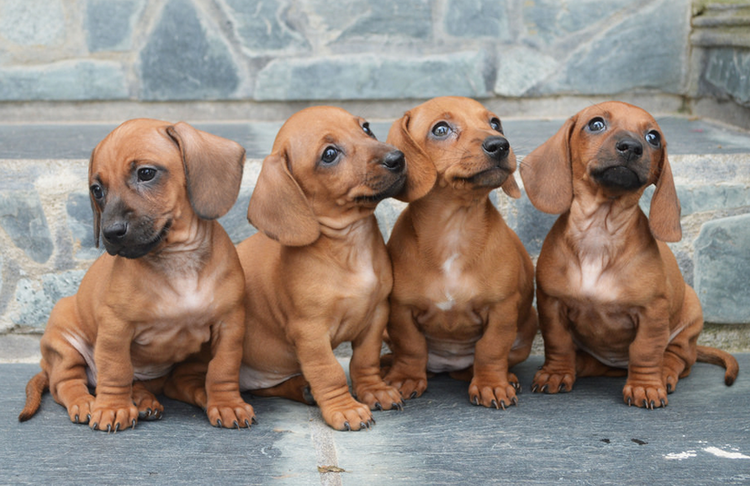
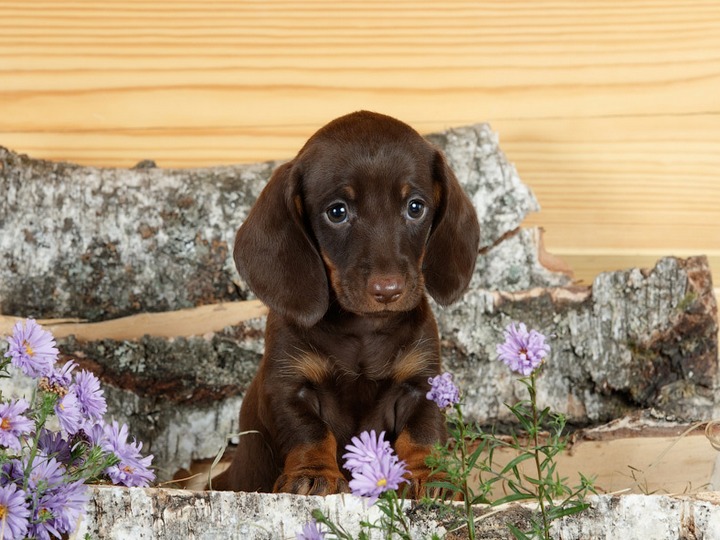
A breeder's expertise and experience are crucial. The foundation for a dog's mental and physical health is laid in the first weeks of life. When choosing a puppy from a litter, it's important to pay attention to its appearance; this isn't particularly important unless the dog is intended for breeding. Puppies should be healthy, well-fed, and heavy, but not due to overfeeding or a bloated belly. Their limbs and head should appear disproportionately large. Their coat should be shiny, their movements active and cheerful, and they should be curious and playful.
Prices for puppies vary widely. A dachshund from a breeder will cost around 25,000-35,000 rubles. Puppies without papers, but from working parents, are sold by hunters for an average of 10,000-15,000 rubles. Dachshunds without pedigrees, born to hobbyists, can sometimes cost quite a bit less, up to 5,000 rubles.
Photos
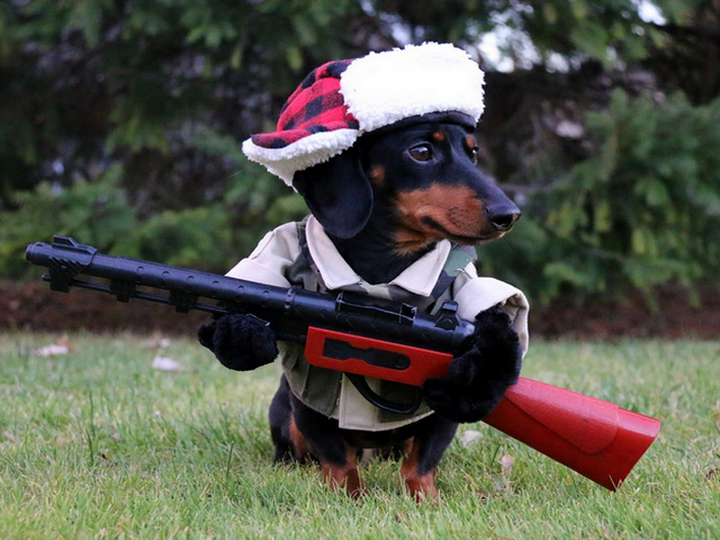
A photo gallery dedicated to the dachshund dog breed (puppies and adult dogs, long-haired, smooth-haired, and wire-haired representatives of the breed):
Read also:


1 comment
Pauline
MY DACHSHUND HAS A CHEST CIRCUMFERENCE OF 43 CM!
Add a comment