
Rottweiler
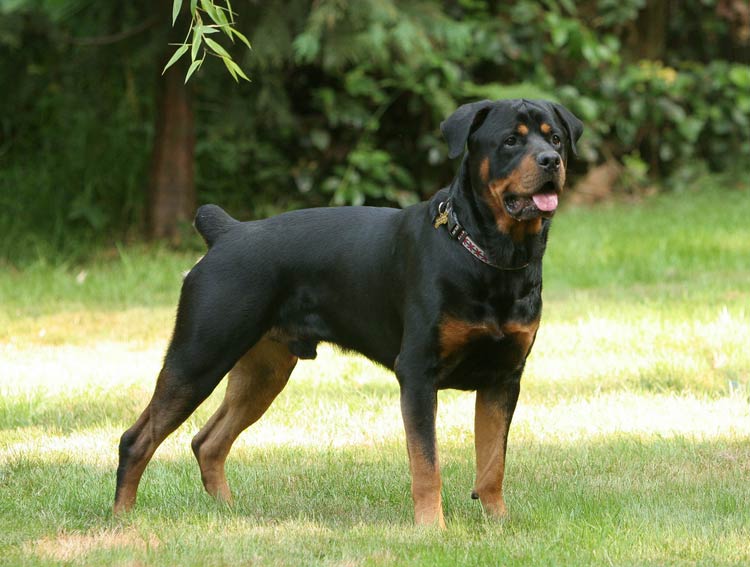
The Rottweiler is a large, serious dog with a balanced personality and excellent guard qualities. If you dream of acquiring a loyal companion and courageous protector, ready to help at any moment, then the Rottweiler is a worthy candidate. However, it's important to remember that their reputation for aggression and unpredictability is not without reason.
Content
History of the Rottweiler breed
According to some sources, the ancestors of the breed were Roman fighting dogs. They were tasked with escorting countless herds of goats and cows, which were sent following military detachments to battlefields. Molossian dogs guarded the warriors' future food supplies during camps and also drove the cattle to new locations. When the services of "shepherds" and "cattle herders" were no longer needed, the dogs were freed or presented as gifts to local residents. Thus, Molossian dogs spread throughout Europe, leaving behind crossbreed descendants. But not all Rottweiler ancestors were "shepherds" for the Romans. Selected, aggressive, and large specimens were specially trained for "military duties." During attacks, a pack of ferocious and cruel, armored dogs was first unleashed on the enemy. The brave war dogs did not retreat under any circumstances and desperately fought the enemy until the very end.
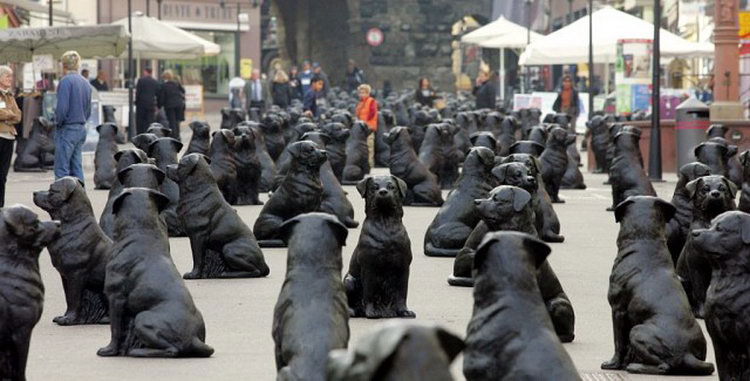
Once in Germany, the Roman dogs interbred with local breeds. These large dogs were later used by the Germans to herd livestock and protect property. It's quite possible that dogs from neighboring regions contributed to the development of the breed: Bernese Mountain Dog and the Entlebucher. The development of the Rottweiler as a breed began in the old German town of Rottweil in the late 19th century. There, they became famous as butchers' dogs. Traders used the dogs to pull carts and serve as guards. There are reports that butchers always kept money around their Rottweilers' necks.
In 1901, the Rottweiler breed standard was officially approved. In 1907, a breed club was established, organizing breeding records and working to improve the breed's appearance and character. In 1910, the breed received official status as police dogs. Beginning in the early 1930s, Rottweilers began to spread throughout Europe and first arrived in America, where they immediately attracted attention. Germany is officially recognized as the breed's country of origin.
According to the FCI classification, the Rottweiler breed belongs to the Pinscher, Schnauzer, Molosser group, Molosser, Mastiff-type and working trial dog section.
Video review of the Rottweiler dog breed:
Appearance and standards
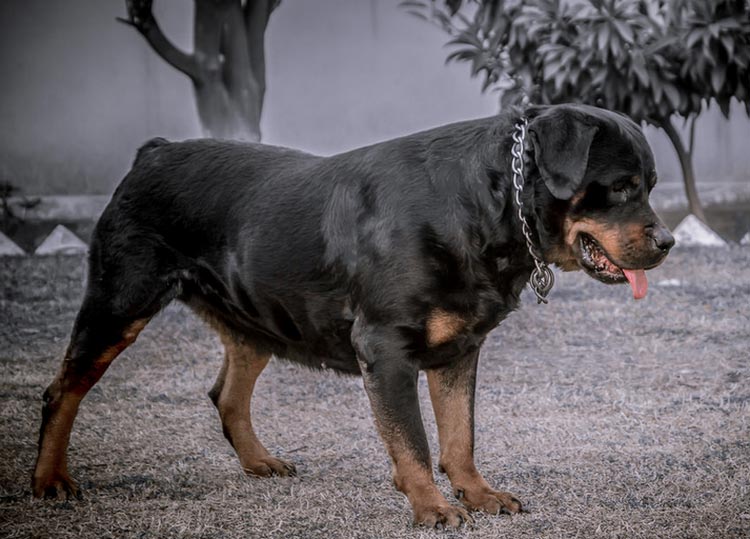
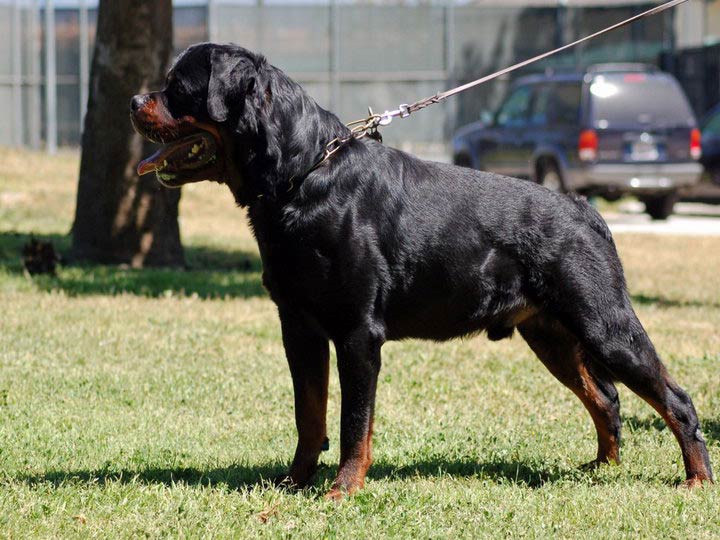
Rottweilers are fairly strong and tall dogs. Males reach a height of 61-68 centimeters at the withers, while females range from 56-63 centimeters. They weigh 46-50 kilograms. Representatives of the breed are distinguished by a strong build, proportionally developed muscles, and excellent strength.
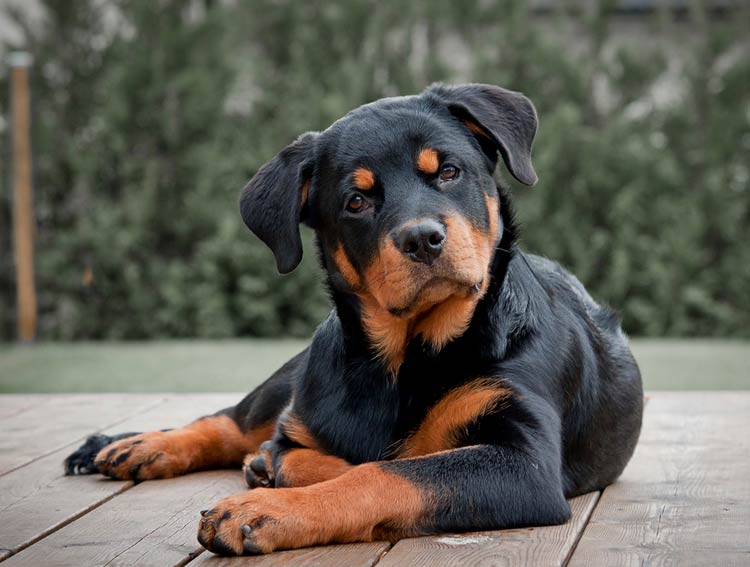
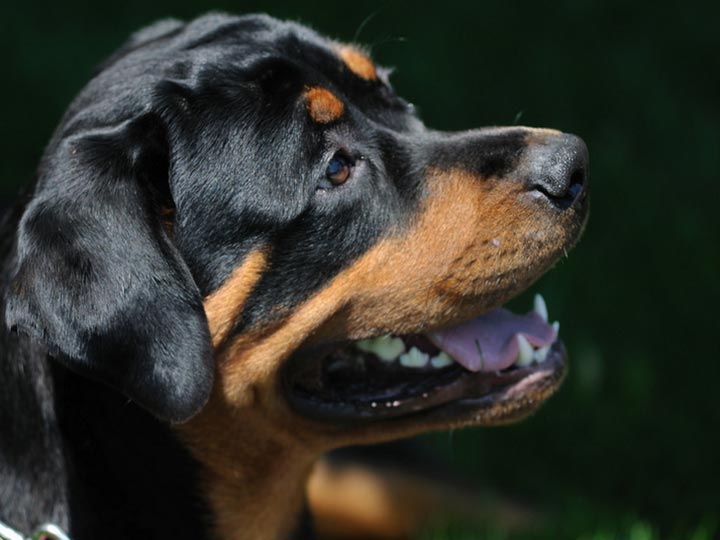
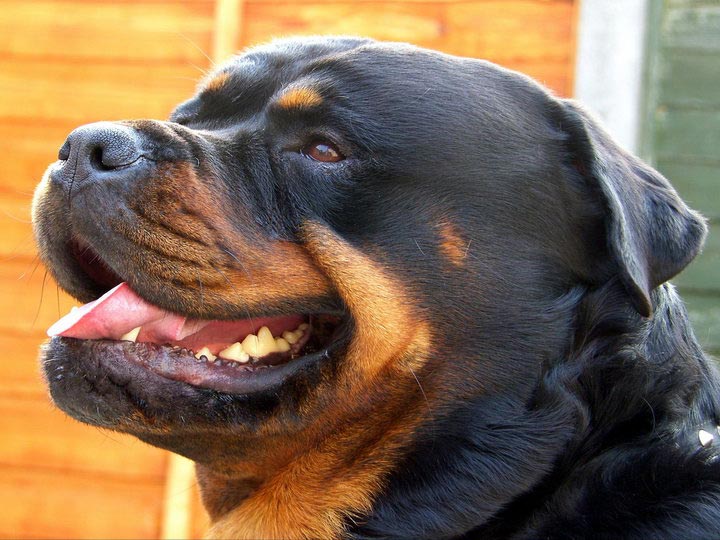
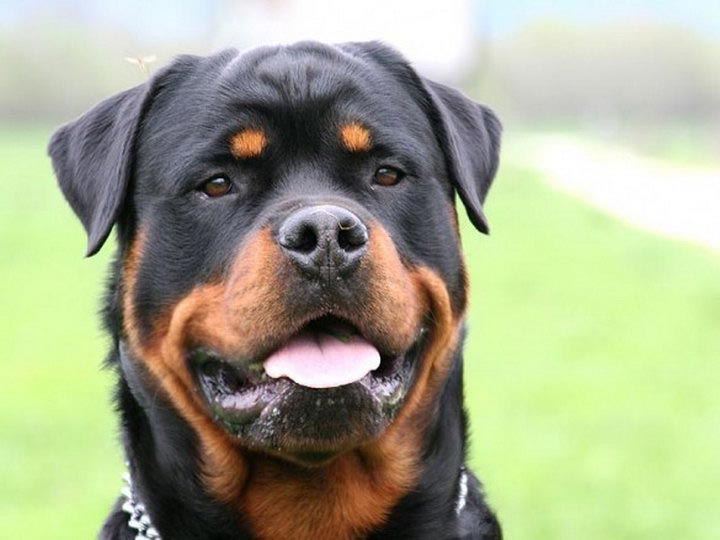
The muzzle should not appear long or short. The bridge of the nose is straight, tapering moderately to a well-defined black tip. The eyes are almond-shaped, medium in size, and dark in color. The ears are medium in size, triangular, and drooping, set high and wide apart.
The neck is powerful and moderately long. The nape is slightly arched. The back is straight. The croup is slightly rounded. The chest is deep and broad. The belly is not tucked up. The tail is docked or left natural. The legs are strong, sinewy, and well set. The skin fits tightly throughout, except for the forehead, which may show folds when the dog is alert.
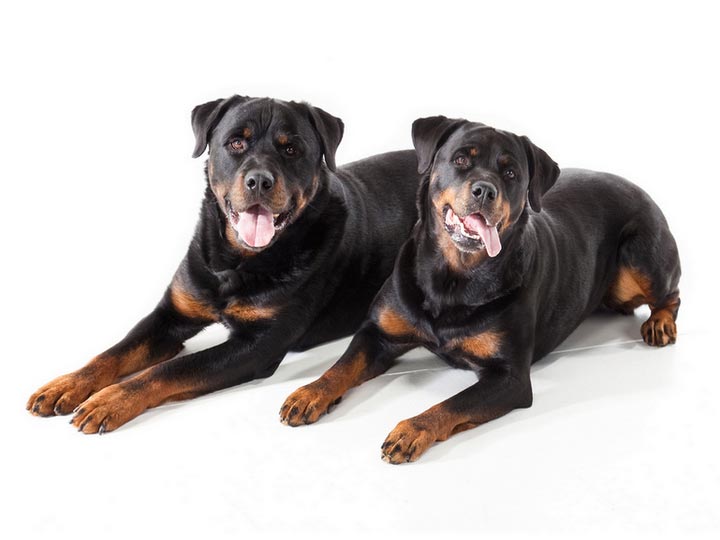
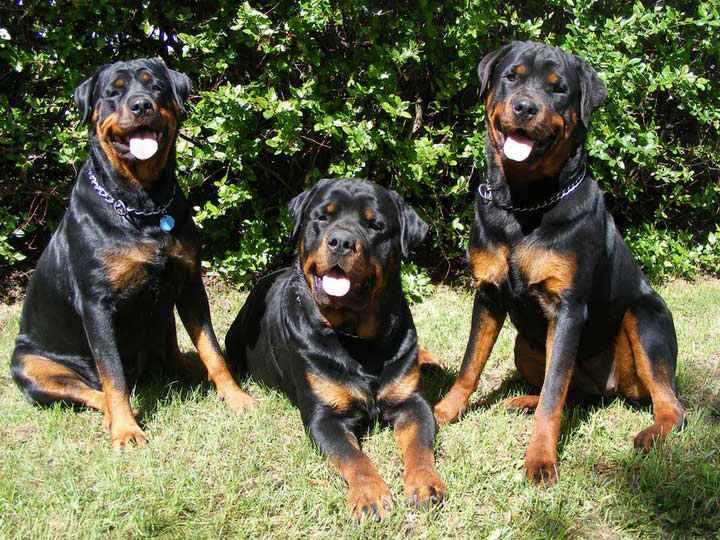
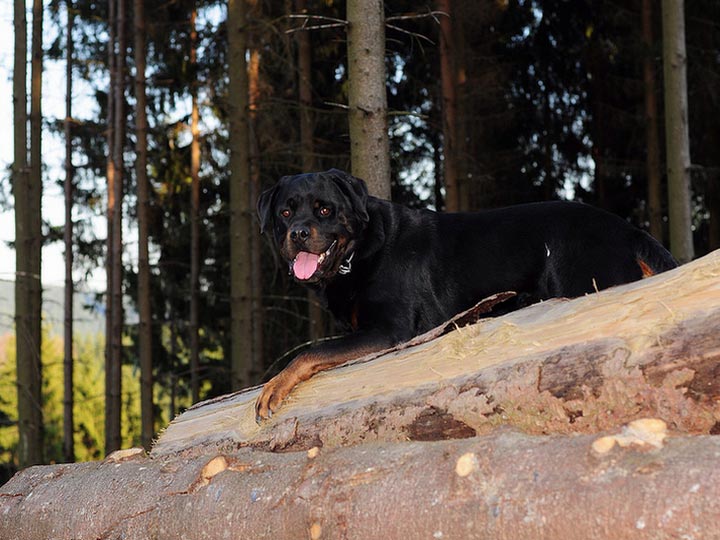
The coat is short and straight, with an undercoat. The topcoat is coarse and dense, with a smooth undercoat. The hair on the hind legs is slightly longer. According to the breed standard, representatives should have a black coat with reddish-tan markings above the eyes, on the muzzle, neck, chest, and legs.
Character and psychological portrait
Rottweilers have a strong will. They are balanced, capable of independently analyzing situations and making decisions. Their character traits include self-confidence, fearlessness, endurance, attentiveness, and assertiveness. Rottweilers act with precision and accuracy not only in familiar surroundings but also in extreme situations. In times of danger, they show no signs of anxiety or fear. From birth, puppies are characterized by steadfastness and courage. These qualities make Rottweilers excellent guard dogs and protectors.
A distinctive trait of Rottweilers is their sense of dominance, so it's important to demonstrate to the dog from the first meeting that you are their master. It's crucial for the Rottweiler to sense and accept your superiority; only then will they accept authority and allow you to control them. Their strong dominant nature makes sharing a dog with other animals unpredictable.
Well-behaved animals are distinguished by a shy and friendly demeanor within the family circle. They don't misbehave in the apartment, but on walks they love to relax and frolic. Be gentle with your pets, dedicate time to playing with them outdoors, and they will adore you. Rottweilers tend to lead a sedate life. If there is frequent and loud fighting in the family, dogs begin to show anxiety and aggression. From childhood, they are respectful of their owners, curious, and playful.
To gain a dog's respect, it's important to demonstrate firmness and confidence. But only through attention and care can you earn the devotion and love of a serious pet.
They are suspicious and unfriendly toward strangers. Therefore, their mood must be closely monitored during walks. Rottweilers are not recommended for novice dog owners. These dogs require an experienced, physically and mentally strong owner.
Education and training
Anyone who has spent any time with Rottweilers has personally witnessed their remarkable qualities. These loyal and self-assured dogs always display courage and bravery. Balanced and wise, they never act rashly.
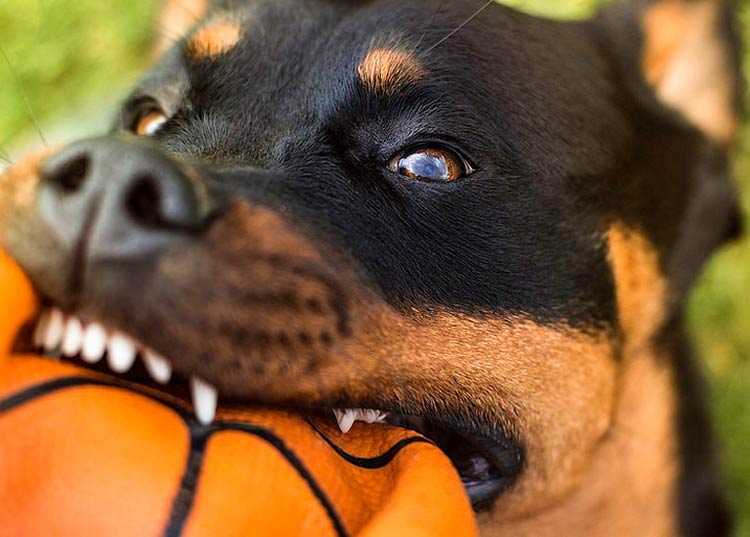
To develop and reinforce these qualities, Rottweilers need regular training. Otherwise, they will become unwilling. Displays of dominance and willfulness in this breed can be very dangerous to others. Rottweilers should be trained immediately, from puppyhood. Thanks to their natural intelligence, they quickly master all skills and readily take on new tasks.
Training and education of Rottweilers should begin in puppyhood, if possible, early. When training a dog, it's important to demonstrate confidence and never allow it to question your superiority. Any weakness on your part can undermine the authority you've earned. When training, it's important to teach the animal discipline and prompt execution of commands. Rottweilers are quite stubborn, so you'll need a great deal of endurance and patience.
Rottweilers are successfully used in service, as well as fighting dogs and guide dogs.
Rottweiler aggression
Many people are afraid to keep these dogs because of their notorious reputation: they may attack their owners. The problem lies in the breed's natural tendency toward aggressive behavior, which can be especially pronounced if not properly trained. Experts are trying to eradicate this gene, but for now, they only recommend active training. When working with service dogs, breeders carefully study their personalities, allowing only peaceful individuals to be bred. All animals undergo testing to determine their mental stability, protective ability, and unquestioning obedience.
Maintenance and care
This breed shouldn't be kept in the confines of a city apartment. A country house with free-range exercise is better suited for them. They require intense exercise and will happily accompany you on active vacations. Avoid keeping dogs with other animals in the house.
Rottweilers are easy to care for. They have short, close-lying fur, and weekly brushing is sufficient. Thick brushes made of natural materials or special mittens for short-haired breeds are preferred. Bathing is only permitted as needed. Pay special attention to the eyes and ears, regularly cleaning them of any unwanted dirt.
Nutrition
Feeding a Rottweiler on a regular basis is straightforward. They're not picky eaters and will eat what their owner offers. The owner, in turn, can choose between natural food or commercially prepared foods. Both are acceptable, but avoid mixing them. There are no specific recommendations for diet composition. It should be healthy and balanced, following general guidelines. Rottweilers are recommended to be fed twice a day. A couple of times a month, a fasting day is acceptable.
Health and life expectancy
Rottweilers are very hardy dogs. They have a naturally strong immune system and good health, but they are also prone to a number of health conditions:
- Diabetes mellitus;
- Dermatological diseases (eczema, congenital hypertrichosis);
- Diseases of the musculoskeletal system (hip dysplasia, osteochondrosis, spinal weakness);
- Eye diseases (cataract, retinal atrophy, entropion);
- Gastric bloating and torsion;
- Cardiovascular pathologies (most often aortic stenosis);
- Tumor diseases.
At an early age, puppies are susceptible to infectious diseases, so they must be vaccinated against major viral diseases. Even adult dogs should receive annual vaccinations and regular treatment for internal and external parasites. Rottweilers typically live for 9-12 years.

Choosing a puppy and prices
Purchasing a puppy from a professional breeder or kennel doesn't guarantee a smooth ride, but it does allow you to be confident that your pet will be free of obvious physical and psychological defects. When choosing a puppy, be sure to pay attention to proper conformation, behavior, and appetite. Puppies should be kept clean and in good health. It's believed that puppies with darker tan markings are stronger. Furthermore, after their first shedding, their coat will become slightly lighter. A Rottweiler should weigh 3.5-4.5 kg by the age of one month, and there should be no signs of rickets on the paws or ribs. Tails are docked at 3-5 days of age. The breeder makes the decision in this case, but sometimes it's possible to reserve a puppy and arrange for a full or docked tail in advance. If possible, it's important to evaluate the working and behavioral qualities of the parents. Heredity plays a significant role.
A person who is getting a Rottweiler for the first time is advised to get a female, as she is more docile and becomes more attached to her owner.
Rottweilers are very popular dogs. There are numerous offers for puppies of varying quality, and prices vary widely. A puppy sold privately typically costs up to 5,000 rubles. Kennels offer their puppies for 15,000-25,000 rubles. Some promising puppies or puppies from elite breeders can cost much more.
Photos
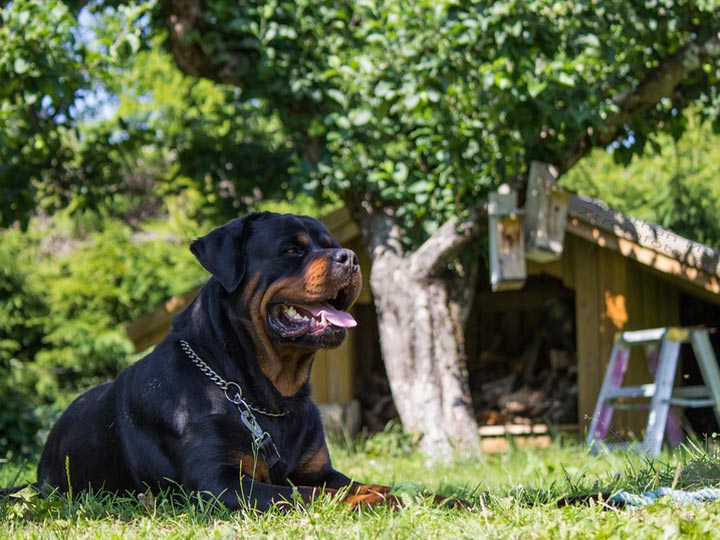
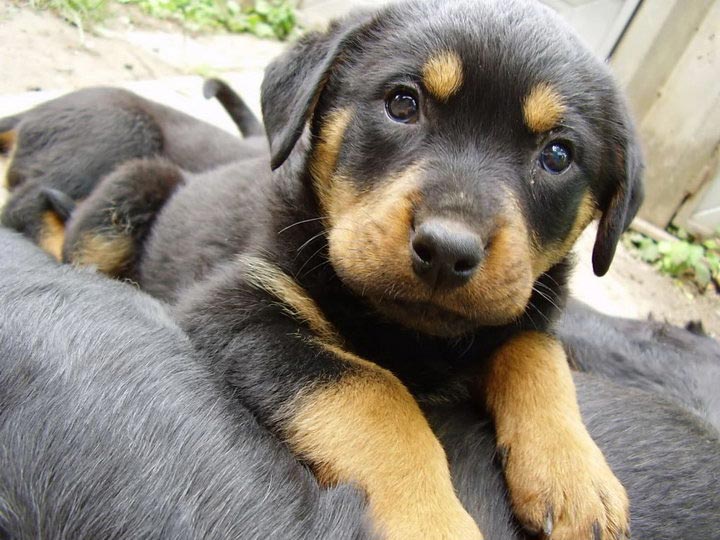
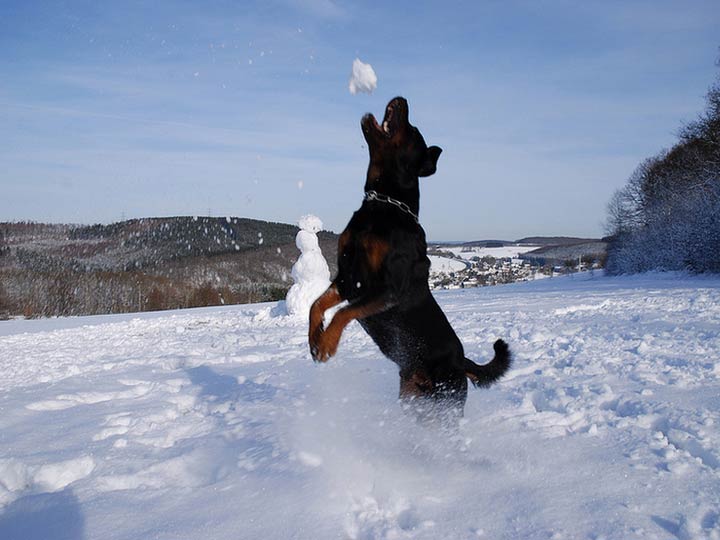
Photos of Rottweiler dogs and puppies:
Read also:


Add a comment