
Skif-toy-bob (Toybob, Dwarf bobtail)
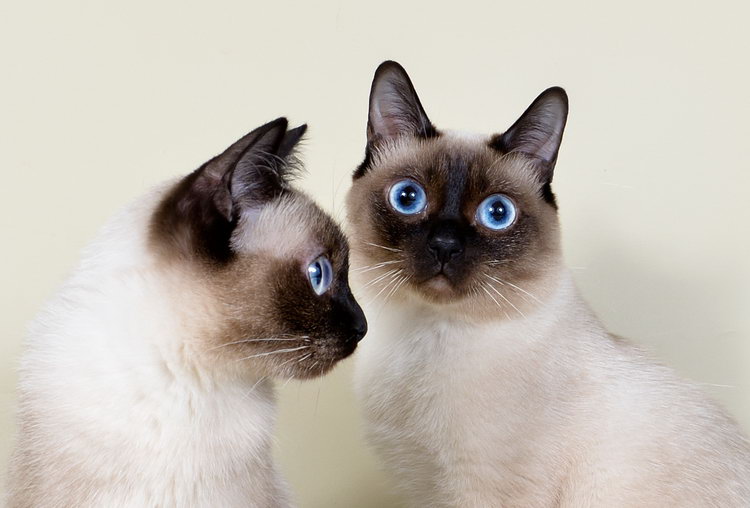
Scythian-toy-bob (toy-bob) The Siamese is a unique breed of cat with a "Siamese" pattern, the smallest of all currently in existence. These tiny cats with their bunny tails and expressive blue eyes quickly found their fans and are now famous not only in their homeland, Russia, but also abroad. It's not just their appearance; these little cats have a wonderfully docile nature and quirky manners.
Content
History of origin
The history of the Scythian Toy Bob breed began in 1983, when Elena Krasnichenko adopted an adult stray cat with a shortened tail and a "Siamese" pattern. They named him Mishka. As fate would have it, in 1985, Elena's mother brought home a female cat with the same pattern and tail; they named her Simka. In 1988, Mikhail and Simka had kittens. One of the kittens stood out; he was the smallest, but still quite active. They named him Kutsy. It was probably no coincidence that Kutsy ended up at the first cat show in Rostov-on-Don. The experts who examined him whispered for a long time, not believing they were looking at an adult cat, and dubbed him a mini Siamese.
In the following years, Elena Krasnichenko and her mother actively bred small cats, and by 1993, the experimental breed was issued its own certificate, number 8, for the registration of an indigenous Russian cat breed called the Dwarf Bobtail or Toy Bob. Other names for the new breed are Skif-tai-don or Skif-toy-bob.
From 2003 to 2007, Elena Krasnichenko was unable to attend major cat shows due to family circumstances, but she continued to work with the breed. This gave rise to rumors that the breed was becoming extinct. In 2008, Elena Krasnichenko returned to work and today runs one of the largest Toy Bobcat breeding facilities in Russia.As of 2017, the breed is officially recognized by several felinological organizations: ASC, FARUS, AFC, WACC, AFC, and WCF—under these systems, Toy Bobcats are shown and receive their well-deserved titles. Furthermore, in January 2017, the breed standard was submitted to the TICA felinological association.Video review of the Scythian Toy Bob cat breed:
Appearance
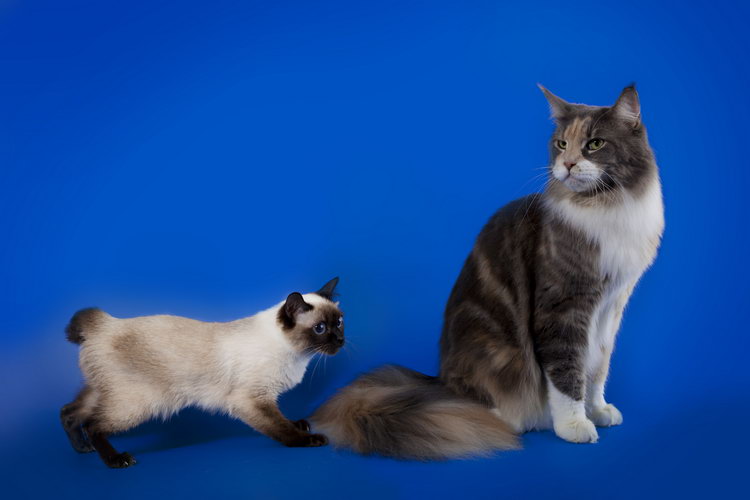
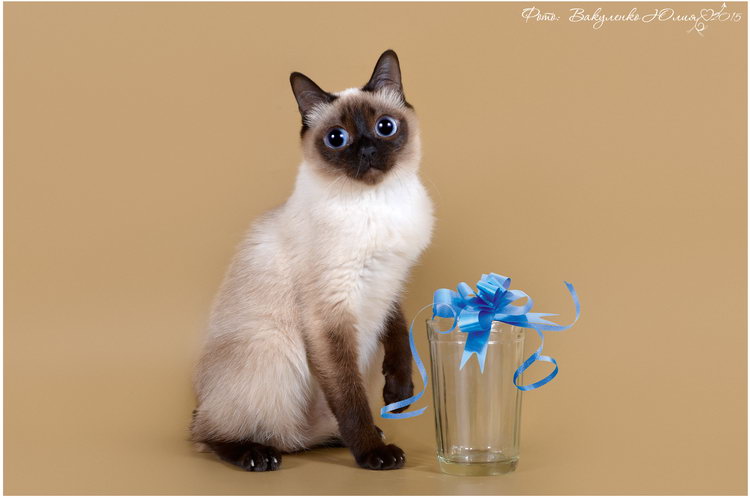
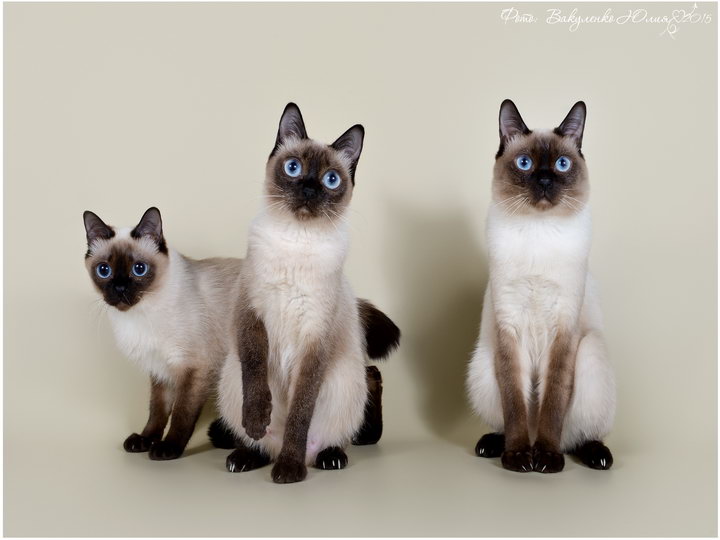
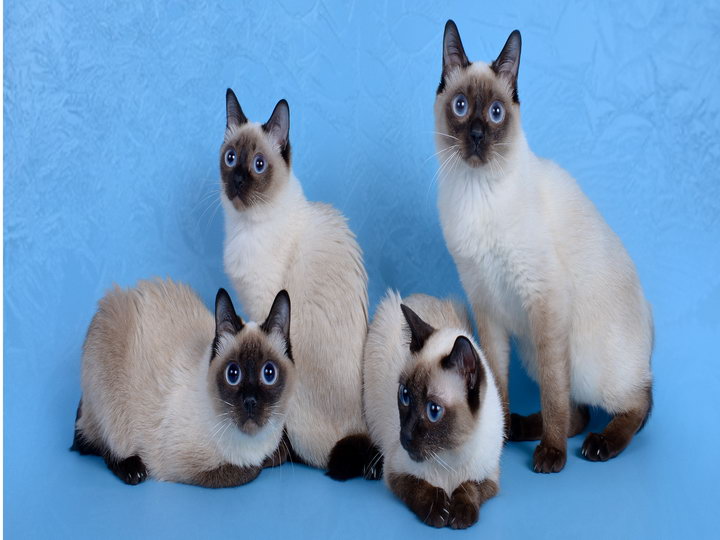
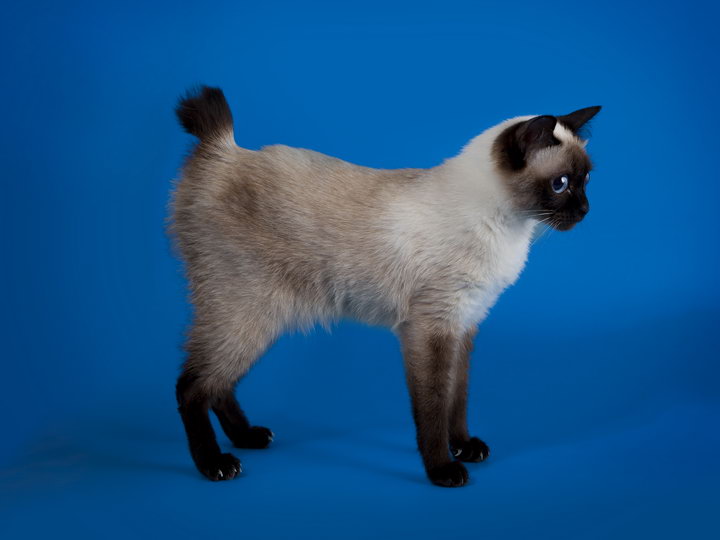
Toy Bobcats are small, sturdy cats with large, round, expressive eyes set on a rounded muzzle. They are smaller than average in size. They typically weigh up to 2 kg (4.4 lbs), while males are slightly larger, but overall, sexual dimorphism is not pronounced. Before the Toy Bobcat's appearance, the smallest cat was considered to be the Singaporean.
The head is trapezoidal in shape with rounded contours. In profile, the stop from the forehead to the nose is well defined. The bridge of the nose is slightly convex and may be straight. The muzzle is short and round. The eyes are large, round, and wide open, very expressive. The color is deep blue. The ears are set high, medium in size, and tilted slightly forward. The distance between the ears should not exceed the width of one ear at the base. The neck is short and strong. The body is square in format, compact and dense, with moderately developed muscles. The back is almost straight. The legs are not long, strong, with the hind legs slightly higher than the front ones. The paws are oval in shape, with elongated toes on the hind legs.
The tail is small and mobile, must have at least three vertebrae, and its visible length must be no more than 1/3 of the body length. The tail must have kinks or bends of any combination.
The coat is short, semi-flat, with a moderate undercoat. It feels firm, soft, and dense to the touch. The topcoat is slightly longer. Color: Sealpoint only (a cream color gradually darkens to light brown over the body, with dark brown markings). The color should be rich and even.
Character
These small cats have a very cheerful and kind disposition. They are active, sociable, and curious. They are moderately calm and even-tempered. They get along well with children and other pets. Even as adults, they remain very playful, often enjoying retrieving small objects in their mouths. Many Toy Bob cats are excellent hunters. While they may not be able to exterminate rats, they are excellent at catching butterflies and flies. Toy Bob cats have a very gentle nature; they are docile and non-aggressive. Owners often refer to their cats as "little dogs." Toy Bob cats always try to follow their owners everywhere, want to participate in all household chores, and are very obedient. They do not have a life of their own, like many other cats, but are very people-oriented.
Maintenance and care
As mentioned above, Toy Bob kittens are much smaller than kittens of other breeds or domestic cats, and therefore require more attention. They become very attached to their family and home and are not prone to long walks or escapes, so many owners safely let them out on their own. These cats adapt well to apartment life; if they're unfamiliar with the outdoors, they won't rush to escape.
Care
Toy Bobcats require no different grooming than other cats, and they are very clean and adept at grooming themselves. The owner's primary responsibility is to provide a healthy, balanced diet and clean drinking water. Breeders recommend brushing their cats regularly to remove mature hair. This will help renew their coat and reduce the amount of fur in the home. Regular ear checks are necessary to ensure cleanliness, and their claws should be trimmed by a few millimeters approximately every 3-4 weeks.
Feeding
There are no specific feeding recommendations for Scythian toy bobs. Like other cats, they require a balanced diet. Whether this is natural foods or commercial food is entirely up to the owner. Mixing the two types of food is not recommended. However, it's important to keep in mind that kittens and adult cats transition more easily from natural food to commercial food than vice versa.
Health and life expectancy
The breed is still too young to be considered susceptible to specific hereditary diseases. Breeders pay special attention to the health of their males, building a strong gene pool. Toy Bobcat owners claim their cats are very robust and, with proper care and maintenance, rarely get sick. Their lifespan is typically 18-20 years. Breeding considerations: Currently, only mating within the same breed is permitted.
Choosing and pricing a Scythian Toy Bob kitten
The breeding of this breed is strictly controlled and follows a specific plan, so only specialized catteries are allowed to sell kittens. The majority of the cats are concentrated in Rostov, Moscow, and Novomoskovsk. Genuine Toy Bobcats are found in the USA, Germany, France, Belgium, Monaco, Kazakhstan, Georgia, Belarus, and, of course, Russia. Catteries often advertise kittens online, but it's important to distinguish them from scammers who claim Siamese kittens are a rare and rather expensive breed. The only proof that a kitten is a Toy Bobcat is its pedigree. Even the most convincing claims of purebred status from sellers cannot replace them.
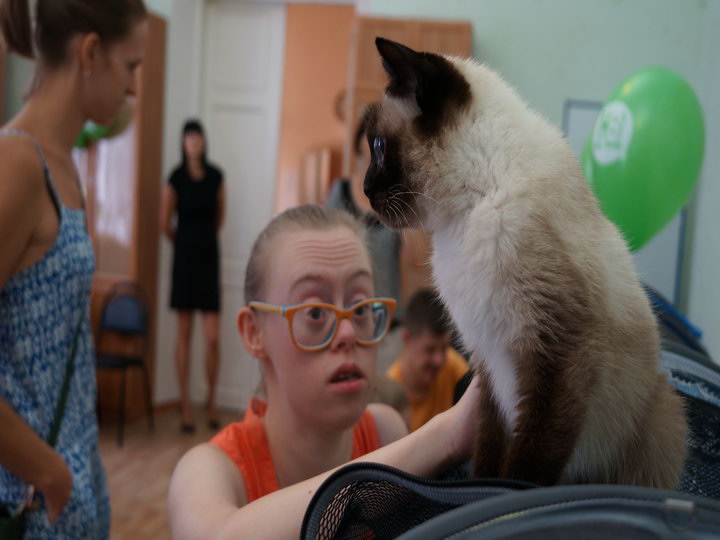
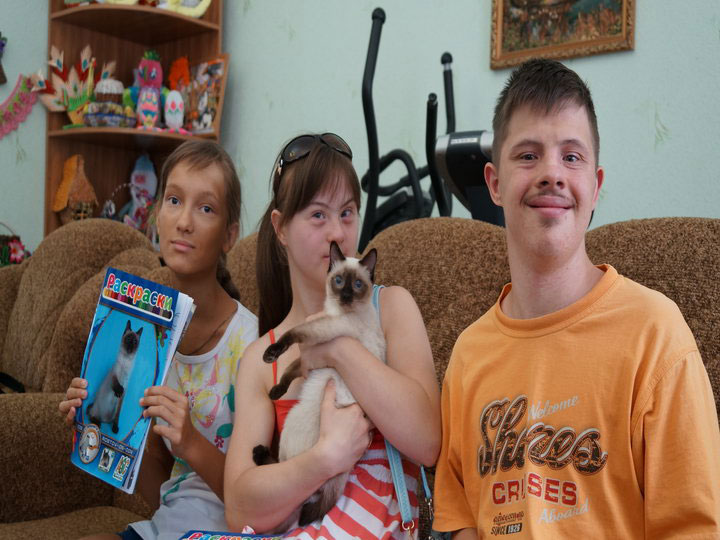
In 2016, a non-profit organization, the Felinotherapy Center "Cats – Planet of Trust," opened in Rostov-on-Don. It works with special children using Toy Bob cats.
Over many years of work, we've undergone rigorous genetic selection and managed to create the breed exactly as you see it. These are eternal kittens with huge blue eyes, a toy-like expression on their faces (yes, Toy Bobcats have a face), and who practically can't live without children and will never hurt a child.
These cats have a gentle and docile nature. They are also small in size and have huge  With their soul-piercing eyes—that's what special children need. The cats undergo training to work with children. The toy cats participating in the program aren't afraid of loud cries, joyful squeals, or popping balloons. They respond calmly to strong hugs from children, and in special cases, they even encourage children to pet them. This type of rehabilitation is not yet widely developed in our country, but it's very popular worldwide. Scientists have proven that interaction with cats helps the socialization of children with special needs. They develop greater trust in the world around them, interact more easily, and smile more often and willingly. Over the course of the center's year of operation, we have achieved many positive results, confirmed by both doctors and psychologists.
Skif-Toy-Bob kittens from the cattery, complete with papers, start at 70,000 rubles. Keep in mind that tiny cats are in high demand, so reservations are required in advance.
Photos
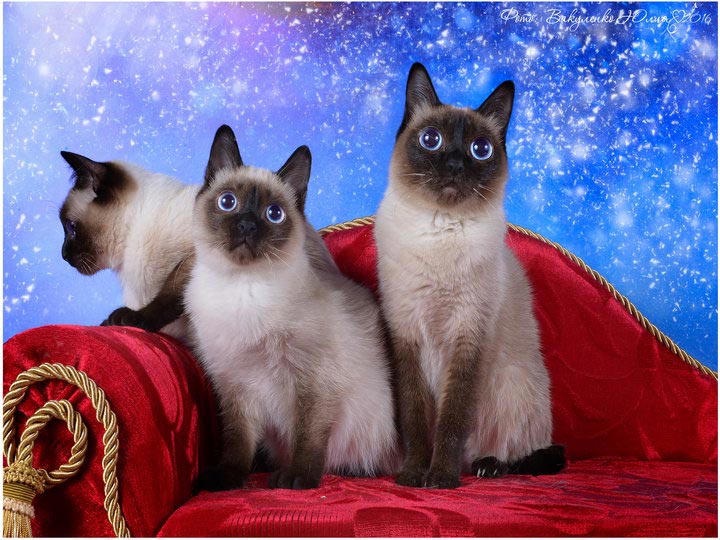
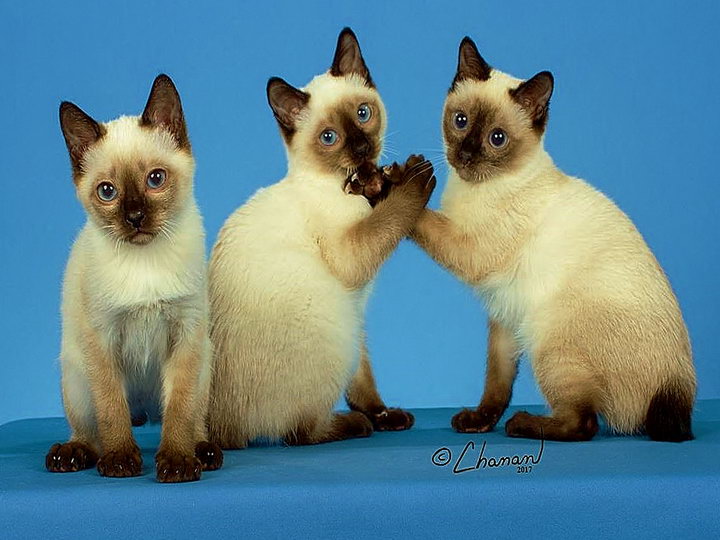
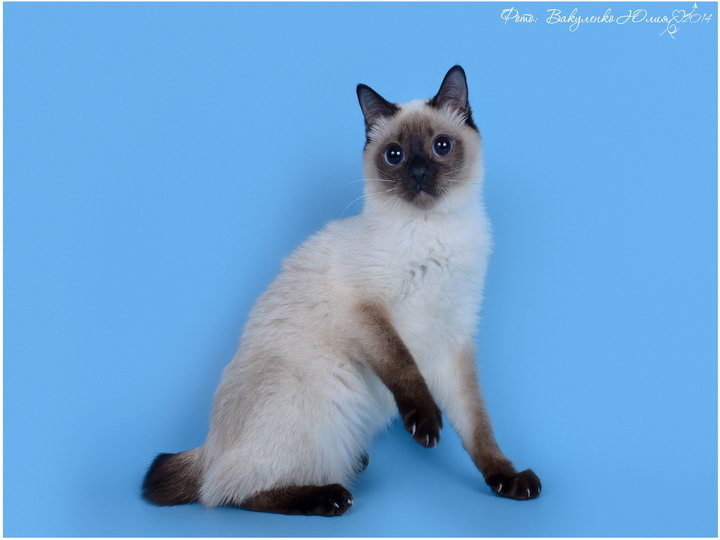
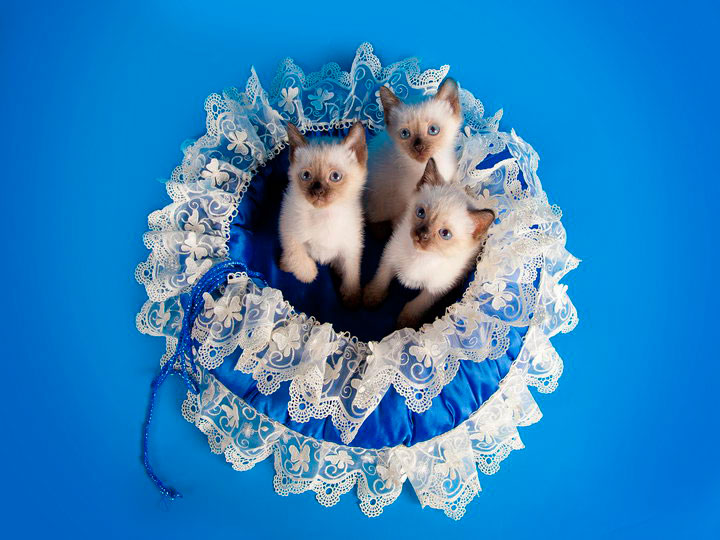
Photos of kittens and male cats of the new Russian Toy Bob breed are collected in the gallery:
Read also:


1 comment
Bel-Moor's Nursery
Toybob cattery of classic and rare colours.
Location: Moscow.
89771264833
Add a comment