
Potentially dangerous dog breeds in Russia: a list
The Ministry of Internal Affairs compiled a list of potentially dangerous dog breeds in Russia based on information from various government agencies and data from the Russian Cynological Federation. It was approved by Prime Minister Dmitry Medvedev. The list is the next step toward implementing the Law on Responsible Treatment of Animals, which was adopted in December 2018.
Content
Regulatory documents
Russia continues to regulate animal welfare practices, and a corresponding legislative framework is being developed. Federal Law No. 498-FZ "On the Responsible Treatment of Animals..." was adopted on December 27, 2018, after eight years of debate in the State Duma. Its primary goals are to protect animals from unlawful human actions and to ensure human safety by preventing unwanted contact with aggressive animals. The document contains Articles that define the fundamental principles of animal welfare:
- requirements for keeping domestic and service pets;
- conditions for the use of animals in cultural events;
- protection from cruelty;
- actions applicable to stray animals;
- rules for shelters;
- state and public control over the implementation of the Law.
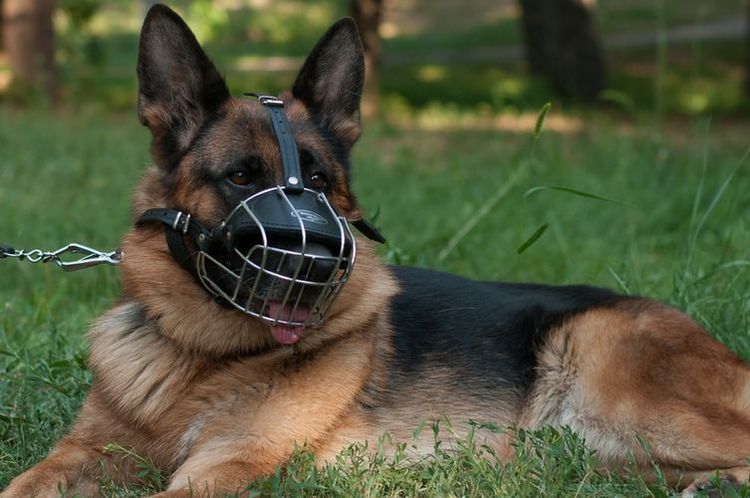
Article 13 states that potentially dangerous breeds of dogs cannot be on the street (regardless of where they are walked) without a muzzle and a leash.
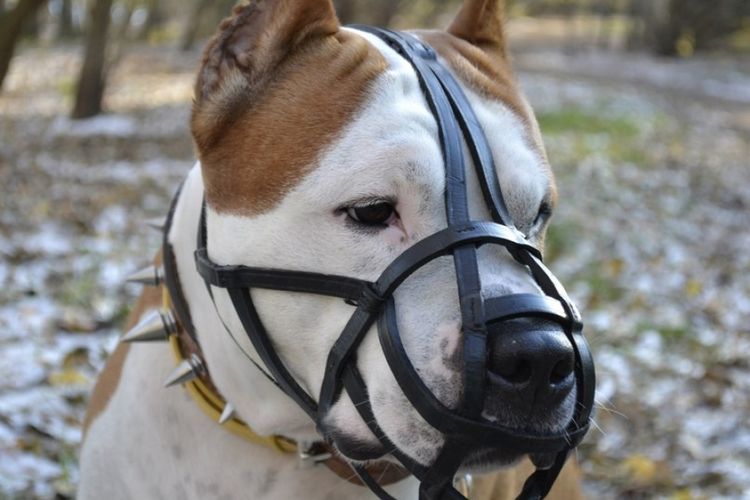
Note! An exception is a fenced area owned by the dog's owner. A warning sign indicating the dog's presence must also be posted on the fence.
The requirements specified in this part of Article 13 shall come into force on 01.01.2020.
The list itself was developed by employees of the Russian Ministry of Internal Affairs and published on the official Federal website of draft regulatory legal acts on March 7, 2019.
Following the draft's public consultation, Prime Minister Dmitry Medvedev signed Resolution No. 974 "On Approving the List of Potentially Dangerous Dogs" on July 29, 2019. The text of the Resolution can be found on the official website of the Russian Government. government.ru/docs/37505.
List of potentially dangerous breeds
The government believes that dogs can pose a potential threat if they belong to a certain species. The initial version of the draft government resolution "On Approving the List of Potentially Dangerous Dogs" included 69 species, including hybrids and mixed breeds. Two weeks after the draft was published, the list was reduced to 13.
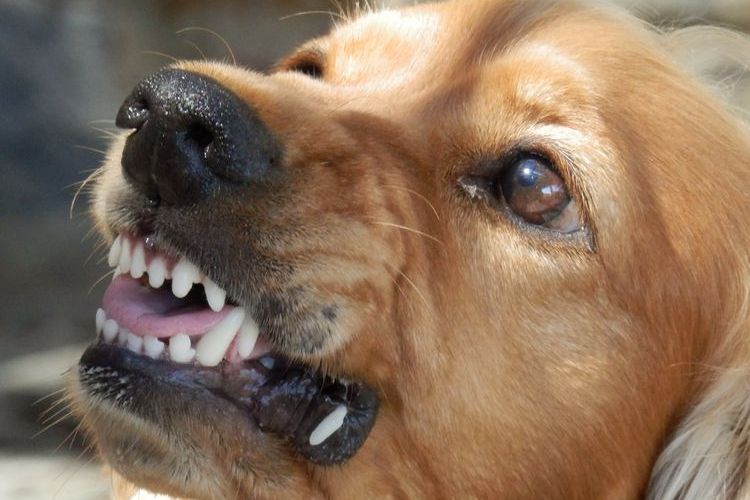
The decision was made following a regular meeting of the State Duma and consultation with representatives of the Union of Cynological Organizations of Russia. Cynologists fundamentally disagree with the assertion that certain breeds are unsafe for humans. A specific individual with an aggressive nature or poor training (or a complete lack thereof, as in the case of stray dogs) may pose a threat, but this does not depend on the specific species.
After being shortened, the list of potentially dangerous dogs approved by Resolution No. 947 now consists of 13 items. It includes 12 breeds, with their crossbreeds specifically identified. These breeds have the following characteristics:
- the presence of a genetic predisposition to aggressive behavior;
- innate powerful muscles and strength;
- originally used for baiting;
- native species that have not been domesticated.
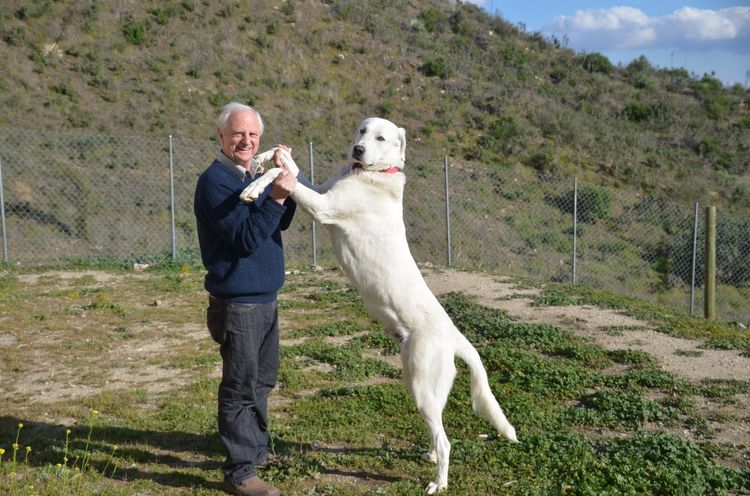
Akbash
Homeland Akbash Turkey is the home of this breed. Originally, this breed was used as a livestock guardian. It is gigantic in size—70-80 cm—and has a willful nature. Akbash dogs possess leadership qualities, so they will try to dominate not only their "charges" (the animals they guard) but also their owners. Therefore, sufficient time should be devoted to training the dog. It is also important to constantly remind the pet who is boss. Otherwise, the Akbash will seize the initiative.
American Bandogge and Pitbull Mastiff
These are separated into separate categories on the list of potentially dangerous dogs, but these breeds share some key characteristics. These breeds were created by crossing the American Pit Bull Terrier or Staffordshire Terrier with the Neapolitan Mastiff. The average adult height is 50 cm. Pit Bull Mastiffs were developed as reliable guard dogs and tough dog fighters. The result is a powerful, robust, and active dog that mercilessly deals with any threat to its owner or its territory.
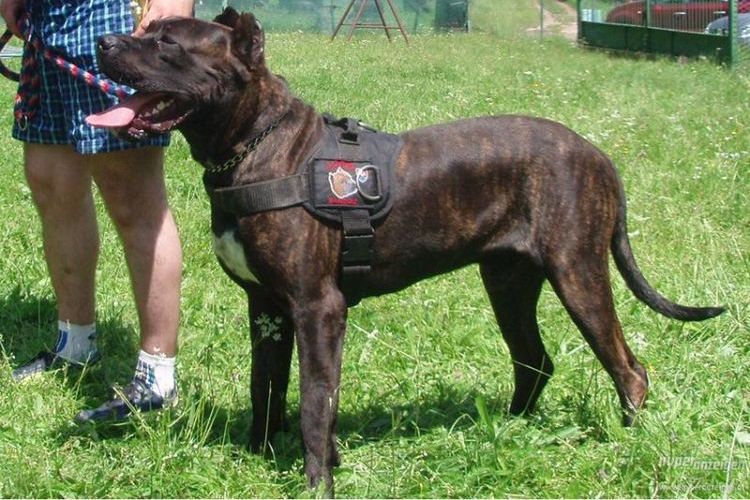
Ambulldog
IN American Bulldog The breed's original appearance and distinctive characteristics have been preserved since its inception. The Ambulldog possesses excellent physical qualities and a willful nature. It is stubborn and displays its dominance over other dogs. It is possible that this attitude may also be expressed toward its owner, if the owner proves less temperamental than its four-legged friend.
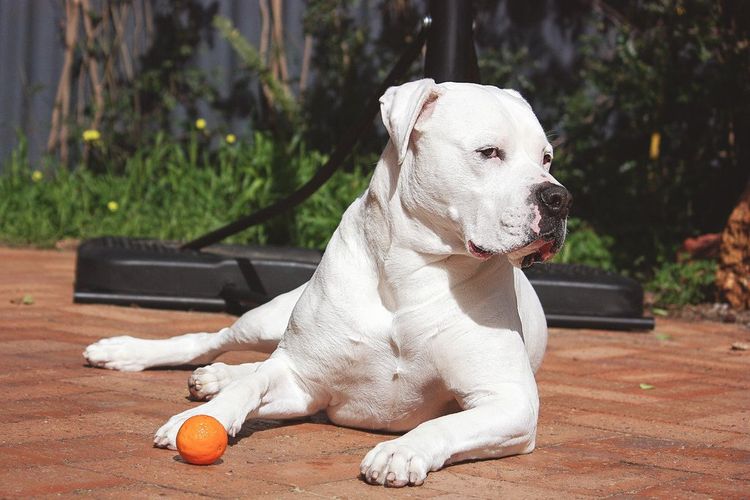
Brazilian Bulldog
Brazilian Bulldog The Campeiro Bulldog is a descendant of the Old English Bulldog, which was brought to South America in the 16th century. This dog has a strong build and possesses remarkable strength and endurance. He is intelligent and, with proper training, makes an excellent companion.
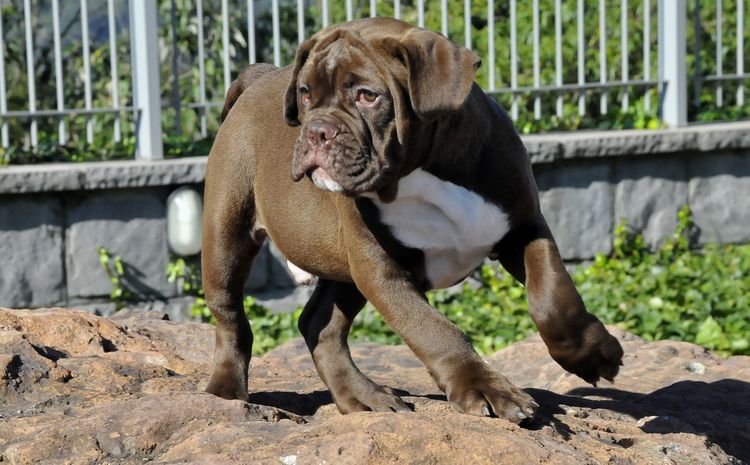
Bully kutta
Bully kutta The Bully Kutta (or Pakistani Mastiff) was bred for guarding and dog fighting. Adults are gigantic in size (70 to 110 cm) and are distinguished by their powerful build. The Bully Kutta should not be purchased by an inexperienced breeder. Despite its high intelligence, it is difficult to train and control. It is not without reason that the Bully Kutta is listed as a potentially dangerous dog: its fighting history has earned it a reputation for ferocity and aggression.
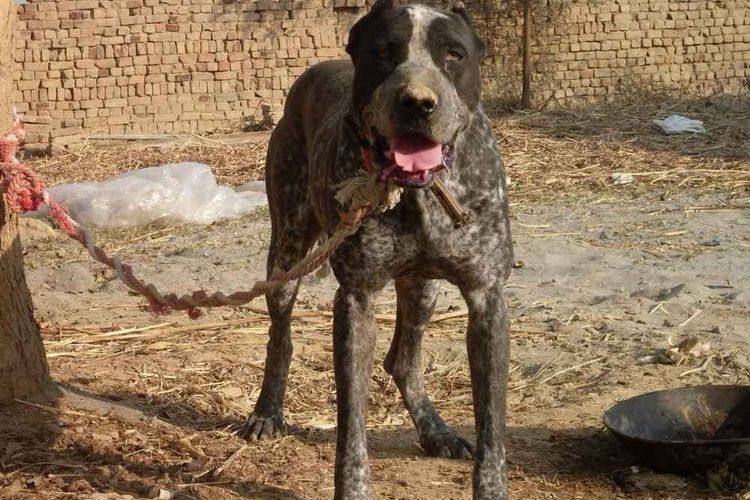
Alapaha Bulldog (Otto)
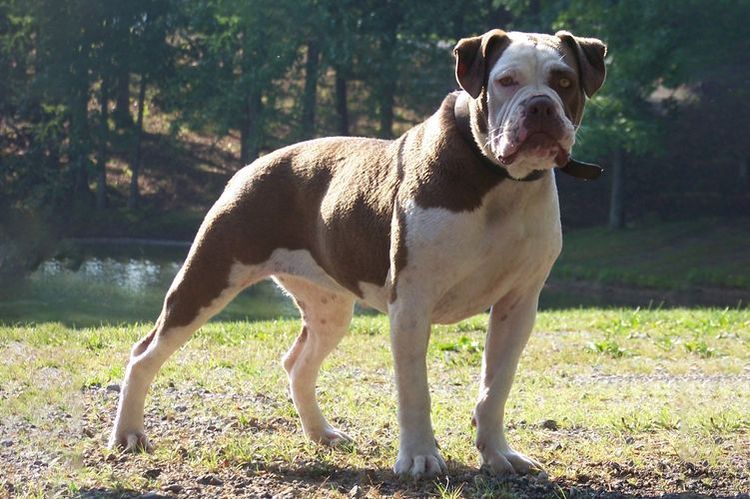
Another ancestor of the Old English Bulldog. It belongs to a rare species – today the number Alapaha Bulldogs The population of the breed is limited to 150 individuals. The dog has a powerful build and is an aggressive and fearless defender of its territory. However, it is completely devoted to its owner and will guard them reliably.
Bandog
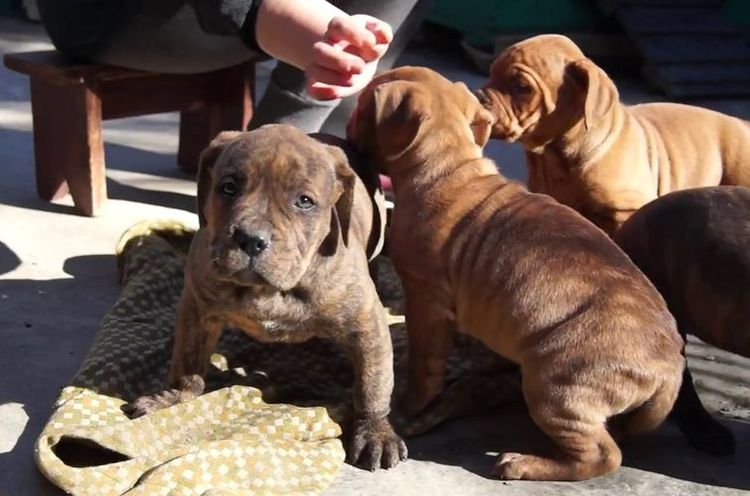
The Bandog is the result of crossing an American Pit Bull Terrier with a Mastiff. The goal of this experiment was to produce an agile and strong fighter for the arena. The result is a large specimen (averaging about 65 cm tall) with tremendous physical strength. It is a loyal companion and a reliable protector, capable of repelling threats from both animals and intruders.
Wolfdogs and wolf-dog hybrids
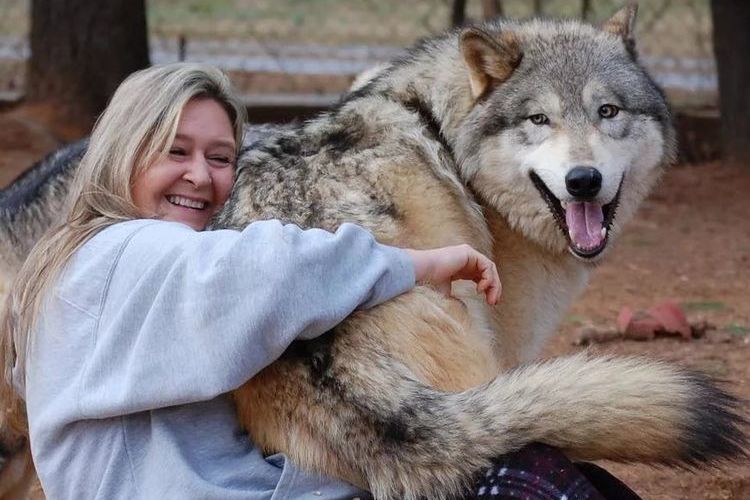
They also have separate points in the government list, but do not differ much. Wolfdogs A wolfdog is a cross between a domesticated dog and a wild wolf. Its character is more domesticated, preferring to be loyal to humans. However, its appearance strongly resembles that of a wild animal. Wolfdogs are intelligent and inquisitive; they can be trained, but this requires professional training. Wolfdogs are often used for official purposes, such as customs, police work, and so on.
Gul dong
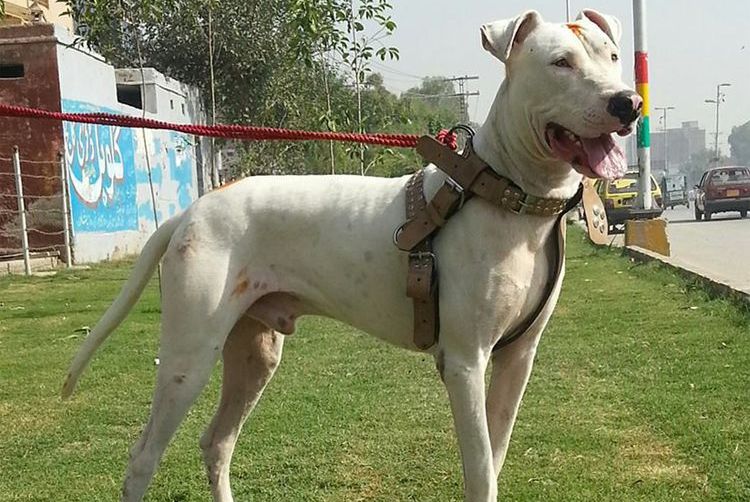
Pakistani Bulldog The Gull Dong is quite popular in Northern India and Pakistan, although it is rarely seen in other regions. The Gull Dong was developed by crossing the Gull Terrier and the Bully Kutta. The result is a huge, powerful, and agile dog. Its average size is 70-80 cm. Gull Dongs are intelligent and loyal, but they have an aggressive nature. They tend to be dominant, so they should not be left unsupervised with children or other pets.
North Caucasian dogs
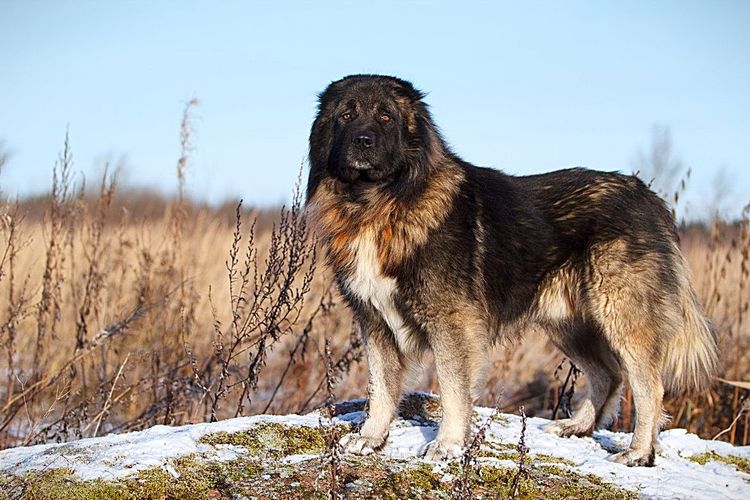
A striking example is the Caucasian Shepherd (Wolfhound). This is a strong, sturdy dog of impressive size. Caucasian Shepherds are intelligent and will become loyal family protectors. However, they are suspicious and aggressive toward strangers. Therefore, special training will be required to moderate their ardor toward strangers and animals.
Read also:
- The 10 Most Dangerous Cat Breeds in the World
- The World's 10 Most Dangerous Dogs
- How much does it cost to walk a dog for 1 hour?


Add a comment