
Great Pyrenees (Pyrenean Mountain Dog)
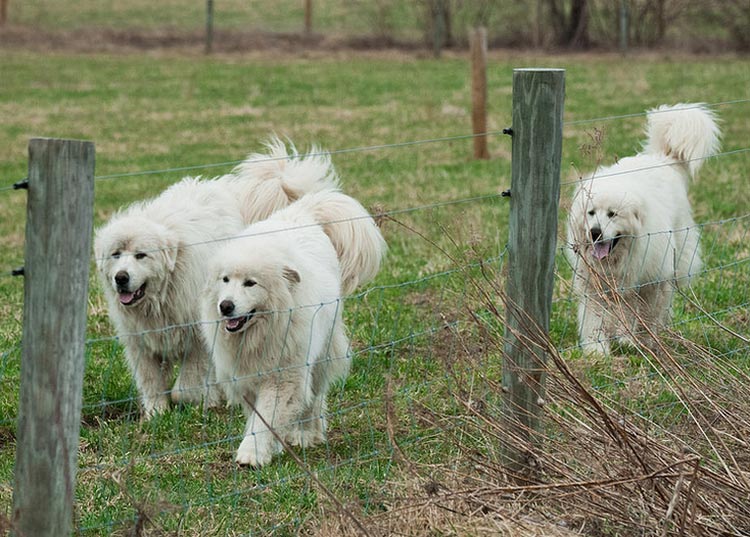
For centuries, the Great Pyrenees was a beloved and respected companion for shepherds on the slopes of the French mountains. Today, the breed has retained its working qualities, but has also proven itself as a companion and family dog. It's worth noting that these large white dogs with their attractive smiles aren't suitable for everyone.
Content
History of origin
The history of the Pyrenean dog begins in southwestern Europe, where they were first used as shepherds and flock guardians. They were known as Pyrenean Mountain Dogs. France is considered the breed's birthplace.
This group of dogs is believed to have descended from watchdogs from Asia Minor, who arrived in Europe with nomads approximately 3,000 years ago. There, they encountered the Basque people and their dogs. In the isolation of the Pyrenees, the breed developed naturally and acquired the characteristics desired by humans. Undoubtedly, there was an infusion of other breeds throughout its development, and similarities with the European gray wolf suggest that these breeds also played a role.
The first written mention of Pyrenean Mountain Dogs dates back to 1407. French letters mention white mountain dogs as guardians of the castle of Lourdes. In 1675, several dogs were gifted to King Louis XIV, after which they became highly sought after and respected. In 1824, General Lafayette brought a pair of dogs to America. A little later, in 1850, Pyrenean Mountain Dogs appeared at the court of Queen Victoria, and just 15 years later, the first dogs from the Pyrenees were registered by the Kennel Club in London and shown at the Crystal Palace.
From the mid-19th to the early 20th century, Pyrenean dogs declined in numbers. Efforts to revive the breed began in 1907. The French and Dutch established Pyrenean dog clubs and combed the mountains in search of typical specimens. This revival was not the last. The German occupation had a negative impact on the breed. Several breeders, led by Senac Lagrange, merged the remnants of two former clubs and formed a new one, which still exists today. Today, Pyrenean mountain dogs are not numerous, but this is more likely due to the breed's specific nature; overall, the population is not threatened.
Video review of the Great Pyrenees:
https://youtu.be/IzKz1b3XPzY
Appearance and standards
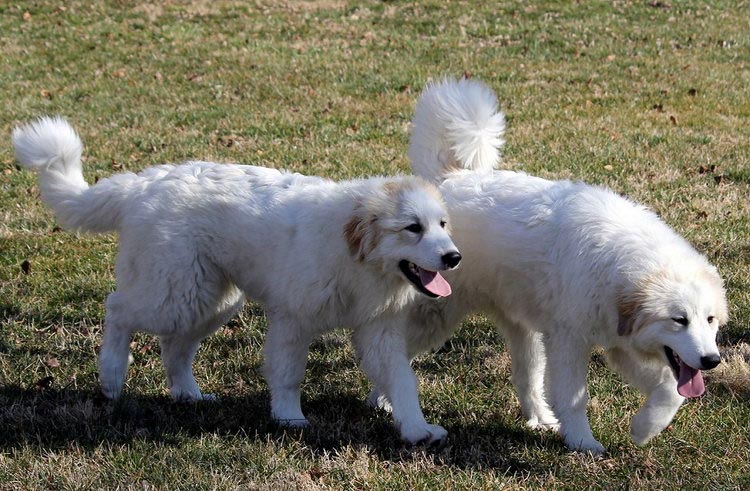
The Great Pyrenees is an elegant and strong dog of slightly above medium size, with a compact, well-balanced build and a long, white coat. Mentally, physically, and by nature, it should be a herd protector, working in all conditions and weather. Its gait is light and effortless. Males stand up to 80 cm tall, and females up to 75 cm. Its thick coat makes it difficult to visually assess its size.
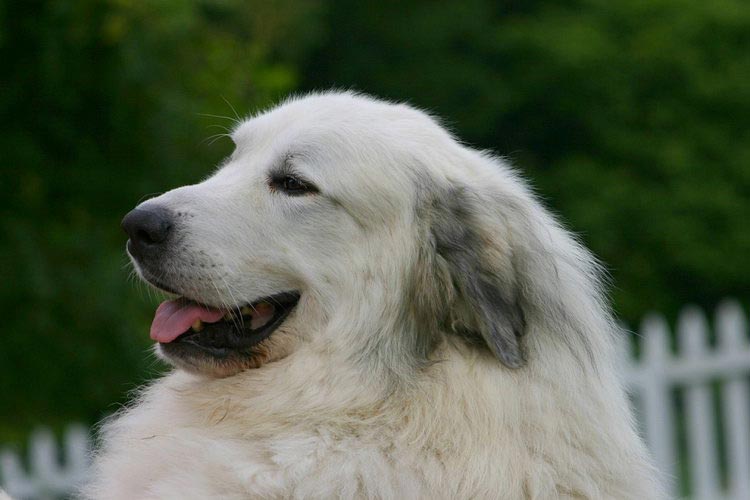
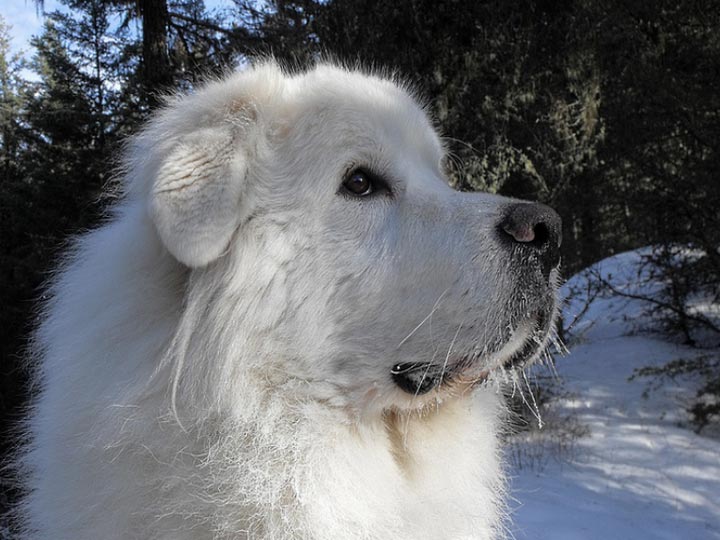
The head is wedge-shaped, with soft contours and smooth transitions, not overly large. The muzzle is broad, gradually tapering to a black nose. The lips are slightly overhanging. The teeth are healthy, strong, and complete, with a correct bite. A level bite and two prominent front incisors are also acceptable. The eyes are relatively small, almond-shaped, and set slightly at an angle. The ears are small to medium in size, flat, set low, and lie close to the head.
The neck is of medium length and has minimal dewlap. The topline is horizontal. The chest is oval-shaped, moderately broad and deep. The tail is set just below the line of the back, fairly long, and very well feathered. When relaxed, it hangs down, slightly curled at the tip; when excited, it is raised and curled. The legs are straight, strong, and have good bone structure. The paws are well-knit and oval-shaped.
On the hind legs there are double dewclaws with bones, on the front legs there are single, less often double.
The coat consists of a long, thick topcoat and a straight or slightly wavy, fine, dense undercoat. The hair on the muzzle and ears is short and finely textured. The base color is solid white, but gray, pale yellow, or light brown markings on the head, ears, base of the tail, and body are also permitted. Gray, so-called badger or wolfskin, markings are preferred.
Markings on the body should not exceed 1/3 of the total surface area. On the face, the coloring is represented by one of three types:
- Completely white, no markings;
- Typical light markings, slightly shading the ears;
- Pronounced markings in the form of a full mask.
Character and psychological portrait
The Great Pyrenees combines strength, exceptional intelligence, boundless devotion to family, and an innate protective instinct. It is a reliable, affectionate, and obedient companion, inspiring respect as a watchdog and admiration as a pet.
Adult Great Pyrenees are naturally calm and enjoy a quiet, serene environment. They thrive on consistency and predictability. They are not suited to apartments or houses with small yards in the city, where there is a lot of noise and bustle. They thrive in the company of other Great Pyrenees. Like many other guard dogs, Great Pyrenees bark a lot, especially at night. They are very intelligent and independent, sometimes stubborn and feline-like. Reviews of Great Pyrenees dogs are more like odes to praise.
The Great Pyrenees is a serious working breed; it's not a companion for active recreation, and it won't look you in the eye, waiting for a command, nor will it instantly and unquestioningly follow it. They are obedient only when required and won't waste energy. Mountain dogs are quite trainable, but they need to be motivated and "warmed up" first. It's advisable to spend time every day repeating and reinforcing commands.
Purpose and performance characteristics
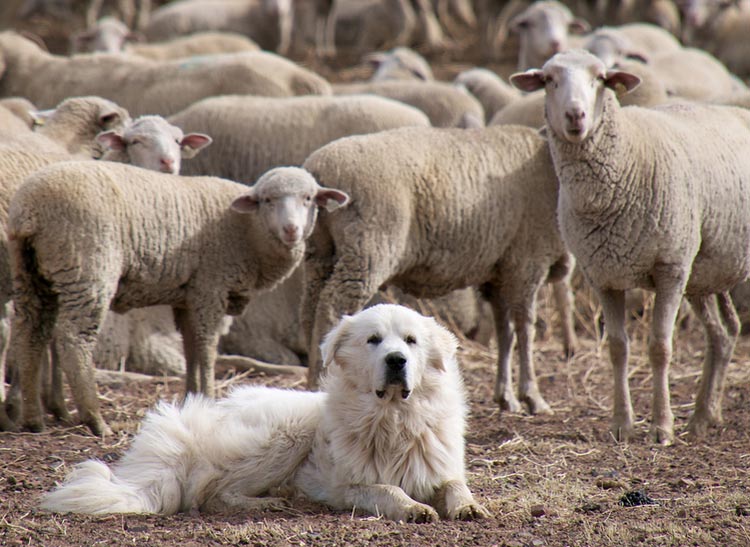
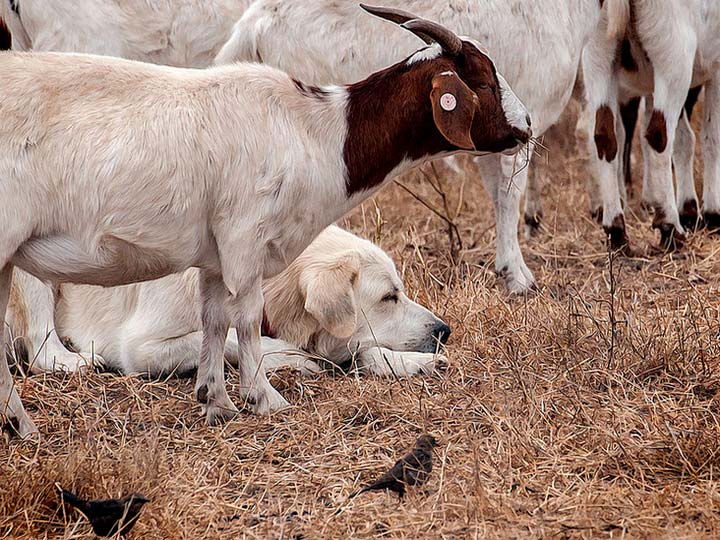
The Great Pyrenees is a guard dog by nature, with a strong territorial nature. Their primary role is to protect the flock, not to drive or round up livestock. Shepherds may go for long periods without seeing their helpers, who patrol the property independently. They are active both day and night.
The Great Pyrenees is a living example of how a guard dog can be a real asset to a property and doesn't necessarily have to be vicious or aggressive.
Farm or ranch helpers live peacefully among other animals, performing their guard duties. These dogs do not live indoors and do not require close proximity or human control, only daily interaction. At the same time, the dog can independently expand its guard territory and protect the property of adjacent neighbors. Unlike Central Asian Shepherds or Caucasians Pyrenees don't attack right away. They'll first growl and bark loudly, then try to push the stranger toward the exit by nipping at their legs. If that doesn't work, they'll resort to biting.
Conditions of detention
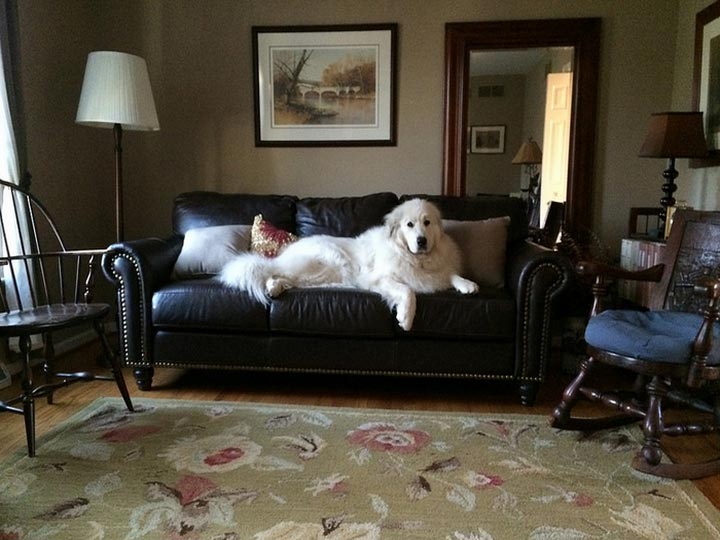
The Great Pyrenees is primarily a working breed and is not suited to apartment life, nor to urban living in general. This breed requires a spacious area that must be guarded. Many breeders do not even sell puppies for apartment living.
The Great Pyrenees is well-adapted to outdoor life and tolerates rain and frost well. Keeping it on a leash or in a permanently enclosed enclosure is out of the question. A private sleeping area where the dog can rest in peace is essential. Typically, a fully enclosed enclosure is built for the dog, complete with a spacious kennel, where a watchful guardian is confined at night, allowing both the dog and the neighbors to rest. As mentioned above, Great Pyrenees are very active at night and prone to loud barking.
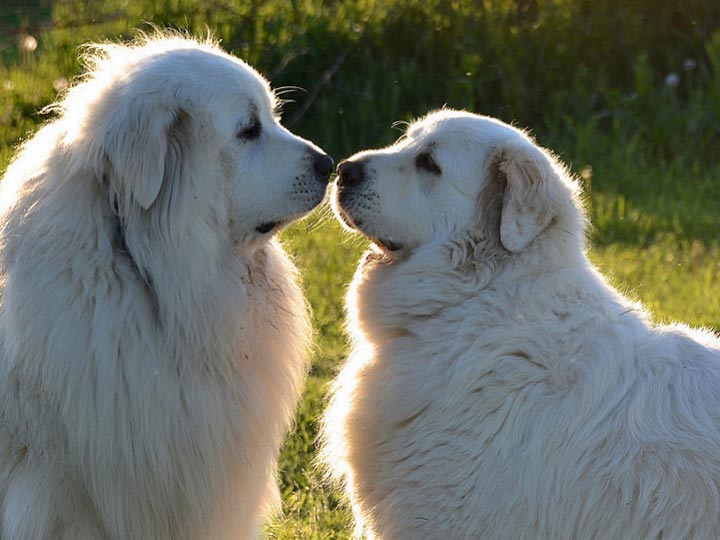
The Great Pyrenees gets along well with other dogs of its own breed, including herding dogs and small dogs. However, with dominant breeds, they are unlikely to share territory and responsibilities, especially if the dogs are of the same sex.
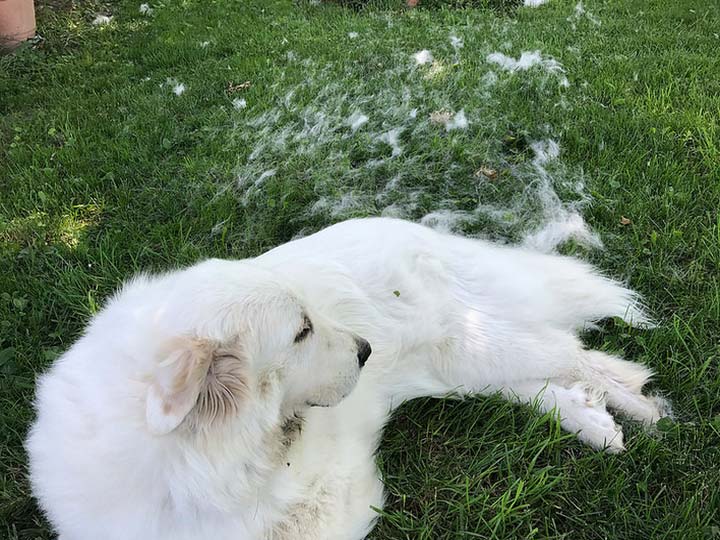
They shed heavily. They shed most of their fur during the seasonal shedding period, but they also shed a fair amount during the shedding periods. Regular brushing will minimize the problem, but won't eliminate it completely.
Care
As befits working dogs, Great Pyrenees don't require regular, complex grooming. Their white coat is self-cleaning and tangle-free. Furthermore, they shouldn't be brushed too often, as this can cause split ends. Brushing once a week is sufficient, and daily during shedding periods. Ears should be inspected weekly and cleaned as needed. Nail length should be monitored, especially on dewclaws, which don't wear down on their own and will curl and cut into the skin without trimming. Bathe no more than once every 3-4 months. Dry shampoos can be used in between.
Diet
High-quality nutrition is the key to health and longevity, and it's especially important to pay attention to a puppy's diet during its developmental period, up to 18 months. During active growth, supplements are essential for the normal development of bones, joints, and tendons. Most owners prefer a natural diet. In this case, two-thirds of the diet should be protein products (meat, organ meats, cottage cheese, fermented milk products, and seafood). The remainder is devoted to grains, vegetables, fruits, and greens. The daily diet is supplemented with unrefined vegetable oil, brewer's yeast, and bran. Butter, honey, and eggs are given twice a week. If desired, a high-quality dry food of at least premium quality for large and giant breed dogs is recommended.
Health and life expectancy
Pyrenees are large, hardy, and strong animals with strong immune systems. Unfortunately, the breed is not entirely free of hereditary diseases. Among the most common are:
- Hip dysplasia;
- Eczema;
- Diseases of the musculoskeletal system.
Under good conditions, Pyrenees live 10-12 years.
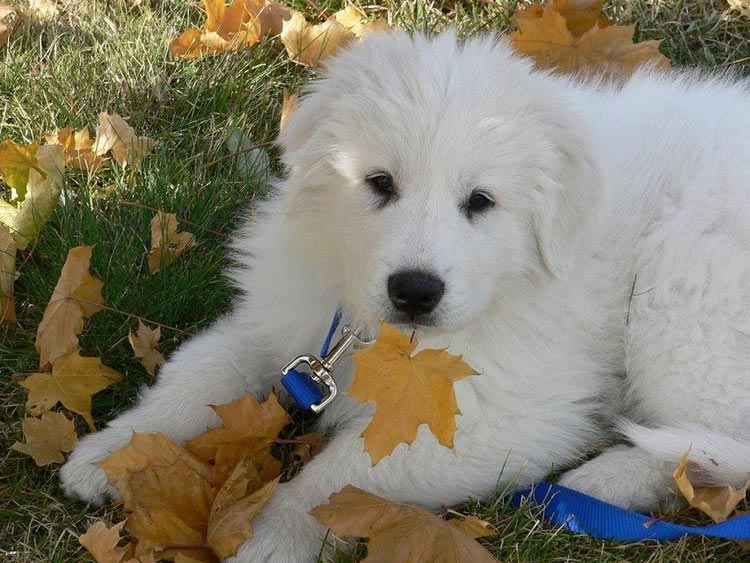
Choosing a Great Pyrenees Puppy and Price
It's best to buy a puppy from a breeder who specializes in the breed, rather than from a reseller. Lists of breeders can be found at your local or national club. It's important to examine the puppy's parents and evaluate their working qualities and character. Dogs should pass working trials, and it's ideal if they pass tests for dysplasia. The environment in which the animals are kept should be clean. The puppies in the litter should be healthy, active, well-groomed, and well-socialized. A reputable breeder will provide all the information you need about the parents and puppies, provide assistance with raising them, and be sure to ask about the environment in which their puppies will be raised.
The first puppy you see in an ad or the lowest price isn't always the best choice. If the breeder is far away and you can't see the puppies in person, it's better to ask the breeder to send a video rather than choosing a puppy from photos. You can pick up a puppy no earlier than two months old. By this time, it should be vaccinated, have all the necessary paperwork, and have a tattoo.
The average price for purebred Great Pyrenees puppies is 50,000 rubles. These are puppies with pedigrees from elite breeders. Puppies bred for health reasons typically cost no more than 25,000 rubles.
Photos
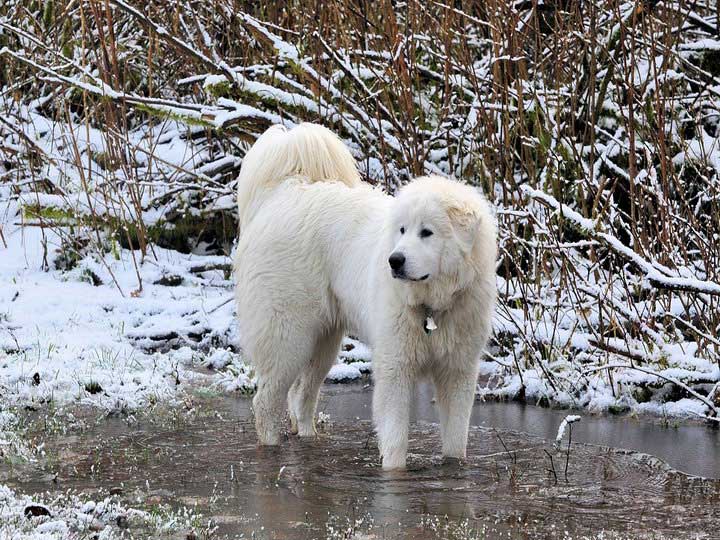
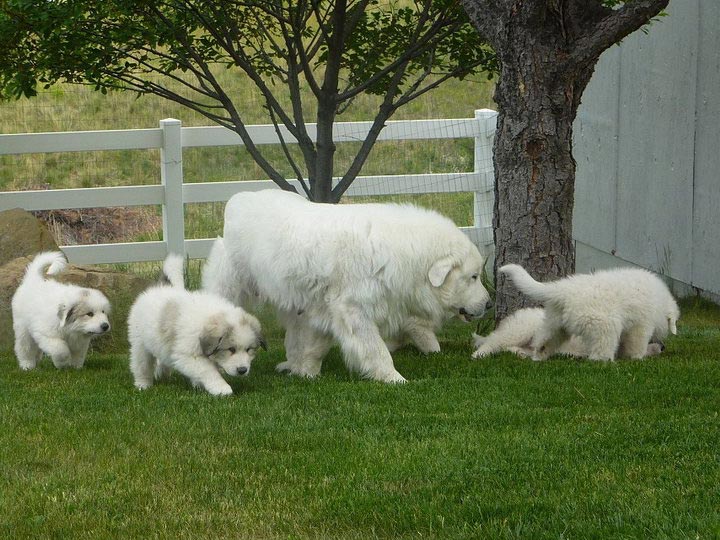
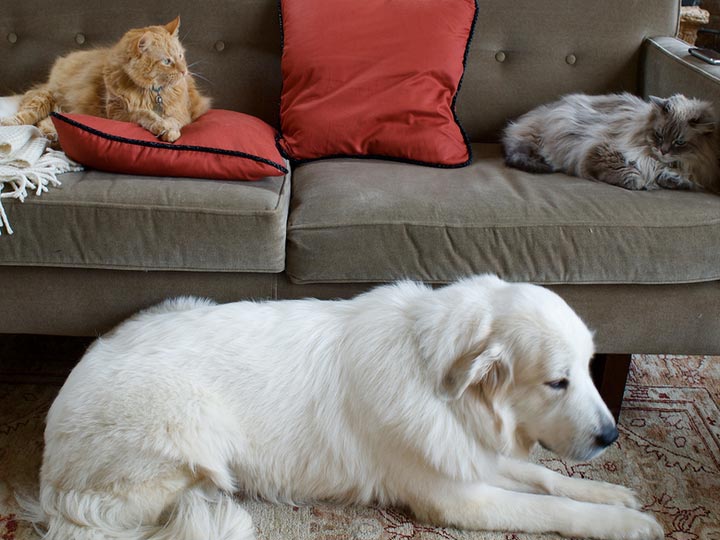
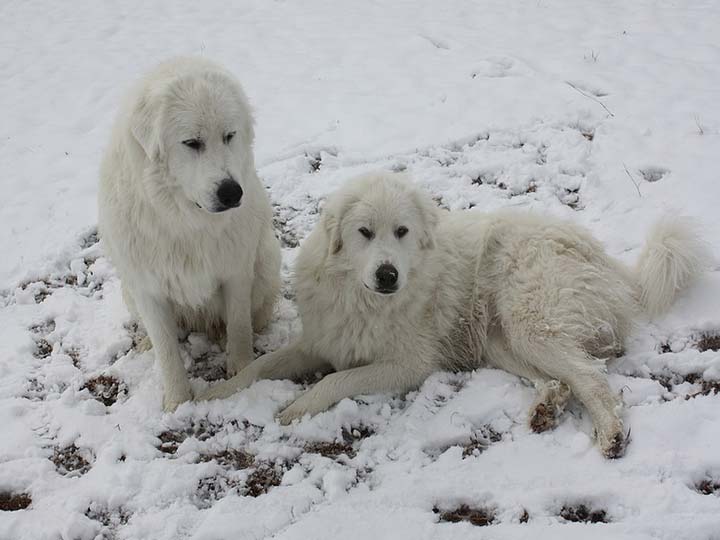
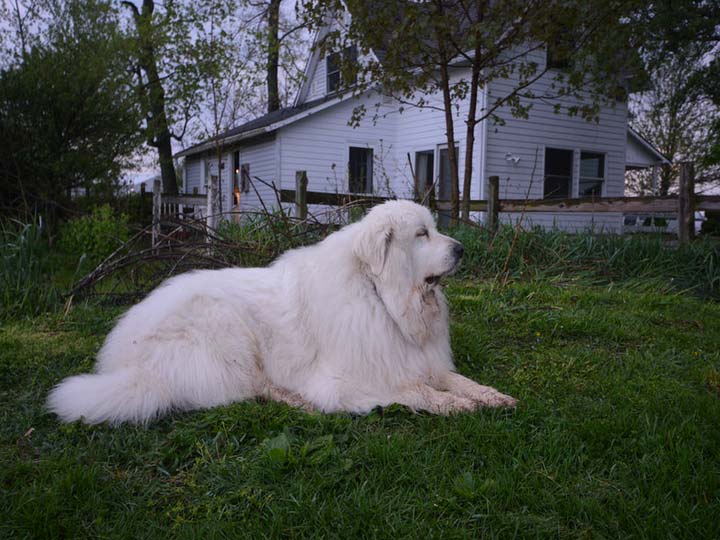
The gallery contains vibrant photos of Great Pyrenees dogs:
Read also:
- White Swiss Shepherd (American-Canadian Shepherd)
- Landseer (European-continental type)
- Bavarian Mountain Hound (Bavarian Hound)


Add a comment