
Panophthalmitis in cats: symptoms and treatment
Panophthalmitis is a purulent inflammation of the tissues of the eyeball. It is a very severe ophthalmological disease, with a high risk of adverse vision outcomes. Panophthalmitis is rarely diagnosed in cats and most cases affect stray animals, although domestic pets can also suffer from this condition.
Content
Causes and mechanism of development
Panophthalmitis can be caused by exogenous or endogenous factors. In both cases, an infection penetrates the eyeball. Pathogens include staphylococci, streptococci, Pseudomonas aeruginosa, and other pathogenic microorganisms. They can enter the eye tissue through penetrating injury (for example, damage to the eye during a cat fight or a glass fragment striking the cornea) or a burn.
Panophthalmitis can also develop against the background of:
- infectious uevitis (inflammation of the vascular membrane of the eye);
- bacterial keratitis (inflammation of the cornea of the eye);
- purulent conjunctivitis;
- chlamydial trachoma.
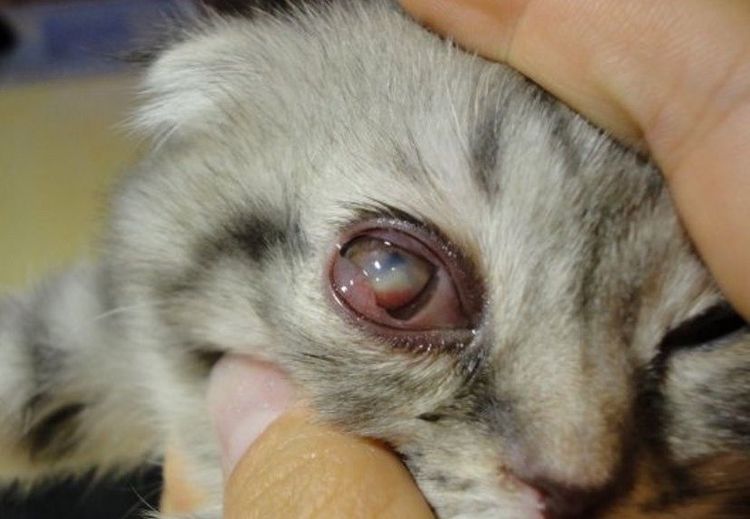
When the pathogen penetrates the tissues of the eyeball, the cat's defense mechanisms are activated. The immune system begins to produce large quantities of E lymphocytes and antibodies, the formation of which is accompanied by a powerful release of inflammatory mediators. However, due to the increased vulnerability of the delicate tissues of the eye, all layers of the eyeball are very quickly damaged, even to the point of complete destruction ("melting"). As the disease progresses, the purulent process also affects the surrounding soft tissues (eyelids, eye muscles).
Symptoms
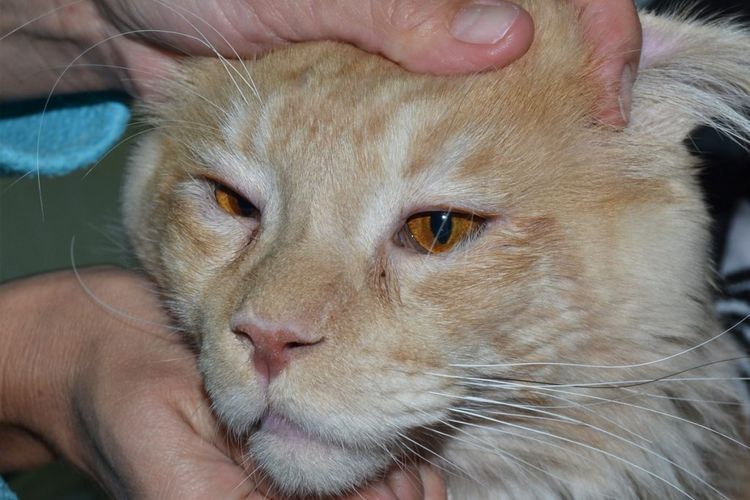
Panophthalmitis develops very quickly, within just a few days. The cat suddenly experiences severe tearing, severe eye pain, and becomes restless, unable to find a place to stay, frequently rubbing the affected eye with a paw, and sleeping and eating poorly. Photophobia, redness, and swelling of the eyelid are observed. The cat's cornea becomes cloudy, and vision is virtually lost. A purulent process then develops: as a result of the disintegration of the iris and cornea, exudate accumulates between the lens and the retina. The eye partially loses mobility, the eyelids involuntarily close, and the eyeball noticeably shifts forward. During this period, the cat may experience fever and an elevated temperature.
Important! If you notice any of the symptoms described above, you should contact a veterinarian immediately. Pathogenic microorganisms that enter the eyeball multiply very quickly, and without prompt treatment, the infection can affect the brain and spread throughout the body. The cat will inevitably die from sepsis. Treating panophthalmitis at home is unacceptable; this condition is treated only in a hospital setting, at a veterinary clinic.
Diagnosis and treatment
When making a diagnosis, the doctor primarily relies on the detected signs of purulent inflammation of the eyeball and a history of acute infectious diseases or eye injuries. To identify the type of microbial flora that caused the pathology, a myringotomy (puncture) of the cornea is performed, and the resulting exudate sample is sent to a laboratory for bacteriological and microscopic analysis.
If the disease is detected at an early stage, conservative treatment is possible. To relieve pain, the cat is given an infraorbital novocaine block. The anesthetic is injected behind the eyeball, penetrating through the skin of the lower and upper eyelids. In some cases, synthomycin or sulfacyl ointment is added to the anesthetic to enhance the therapeutic effect.
In any case, a cat with panophthalmitis receives intensive antibiotic therapy. Broad-spectrum antibiotics are used:
- ampicillin;
- amoxiclav;
- gentamicin;
- streptomycin;
- neomycin;
- biosol;
- bicillin;
- neopen;
- tetracycline.
The duration of treatment depends on the extent of eye damage and the type of pathogen. The minimum course of antibiotic therapy is one week. In most cases, antibiotics are administered to cats by injection, as it is often difficult to get a seriously ill animal to take a pill.
However, panophthalmitis most often requires surgical treatment. There are two types of surgery, and in both cases, the affected eye completely loses function.
Evisceration
Eyeball resection is performed under general anesthesia. During the surgery, an incision is made in the cornea and sclera, through which the contents of the eye are removed with a special instrument (curette). The fibrous membrane of the eyeball is left intact. The sclera and cornea are sutured. After the surgery, hemostasis (bleeding control) is performed, and the sutures are treated with an antiseptic. If necessary, drainage of the eye cavity may be performed. Postoperative sutures are removed after 1-2 days.
Enucleation
This option involves removing the entire affected eye, including the eyeball and intraocular structures, under general anesthesia. The surgical procedure is as follows:
- The eye muscles are fixed with a surgical hook and cut off.
- By pulling the eyeball forward, the optic nerve located behind it is cut off.
- The eyeball, deprived of connecting elements, is removed.
- Stop bleeding with a tampon soaked in hydrogen peroxide.
- The eyelids are sutured with a purse-string suture.
About the prognosis after surgery
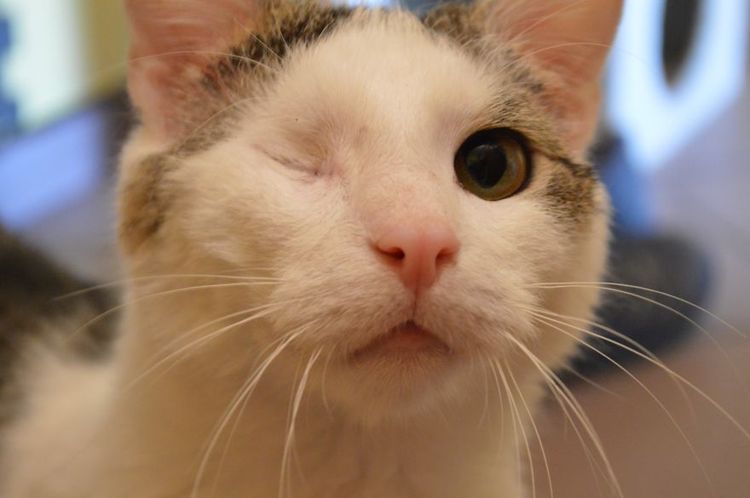
After the blood clot in the eye has resolved, approximately one month later, it will be noticeable that the closed, operated eye is smaller than the healthy one. However, this cosmetic defect does not prevent the animal from living a full, active life.
Preventive measures
To prevent panophthalmitis and other eye diseases in cats, it is recommended:
- Vaccinate and treat all domestic animals against blood-sucking insects;
- Walk cats in safe places, avoiding contact with sick or aggressive cats;
- Treat infectious diseases promptly;
- If an eye injury occurs, seek veterinary attention immediately.
Read also:
- The cat's eye turned white
- My cat has mucus in its eyes: what to do
- My cat has brown discharge from the eyes: causes and treatment


6 comments
Love
My cat has panophthalmitis, and the vet is suggesting removing her eye. But I'm worried that she's 16 years old and might not survive the anesthesia.
Question: if I constantly put medication in my eye, can she live like that?
Now she eats well, behaves well, we put Iris in her mouth.
Daria is a veterinarian
Hello! Panophthalmitis is a condition in which not only the eye itself but also the surrounding tissue becomes inflamed. Therefore, eye drops (especially Iris) are simply like washing the inflamed area with water (the inflammation won't go away). Sooner or later, such an eye will cause significant harm to health. Before agreeing to anesthesia, have your pet undergo a full medical examination to assess the risks to life and health. If your clinic has anesthesiologists and an intensive care unit (plus inpatient care), they will prescribe a very gentle anesthesia for your pet, taking into account its age.
Natalia
Hello! Please help me with some advice for these homeless kittens. They are approximately 1.5 months old. They have problems with their eyes; they are tightly closed, and some of them have a large swelling where the eye used to be.
Daria is a veterinarian
Hello! Strays (or unvaccinated kittens), especially at an age when colostral immunity (acquired by acquiring antibodies to diseases from the mother cat's colostrum, but a stray cat's immunity will be lower than that of a vaccinated domestic cat) weakens, can develop similar eye problems. A 90% chance of this being a viral infection. Simply rinsing the eyes won't do, and eye drops alone won't do the trick either. Ideally, a specific feline serum (it contains ready-made antibodies that will help the kittens' immune system fight viruses), systemic broad-spectrum antibiotics (oral, intramuscular, or subcutaneous), and then eye drops (at least Tobrex or ciprofloxacin-based) should be added. Keep the kitten under veterinary supervision to prevent complications, adjust the treatment regimen, and monitor progress. If left untreated, the eyes will need to be removed.
Lily
My cat's eye was swollen and filled with pus. I rinsed it with boiled water, used chloramphenicol drops, and applied Corngel. The swelling went down, but the eye is cloudy.
Daria is a veterinarian
Hello! Is the vision in this eye intact? Is there a corneal reflex (does the animal blink when a foreign object, such as the same hand, is brought close to the eye)? Does the eye react to light, or is there obvious photophobia (squinting, excessive tearing, or, conversely, excessive corneal dryness)?
Add a comment