
Mongolian Shepherd Dog (Bankhar)
The Mongolian Shepherd Dog, or Bankhar, is one of the most ancient dog breeds, highly valued and revered in its homeland but unknown abroad. The Bankhar is serious, intelligent, and quick-witted, self-sufficient and independent, can be pugnacious and vicious toward enemies, strong and aggressive toward wild animals, but caring and reliable within the family circle. Not only is it a shepherd and protector of the flock, it is also a friend and companion, faithfully guarding family and property. The breed is not yet recognized by any international associations, but enthusiastic breeders are working on this.
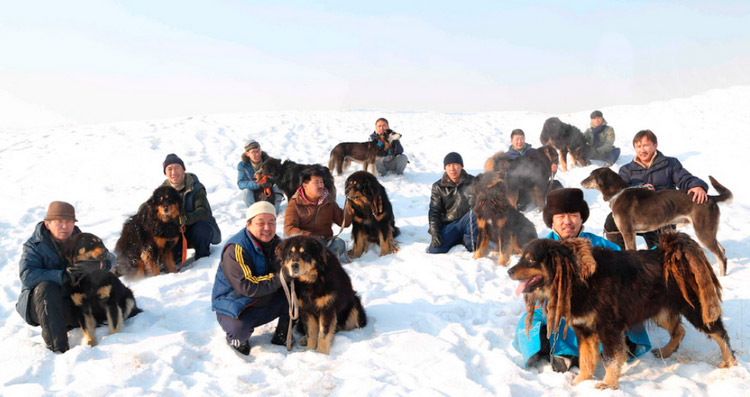
The breed's age has not been reliably established. Based on archaeological excavations in what is now Mongolia, petroglyphs depicting dogs, and the skeletal remains of a dog whose basic skull structure matches that of the Bankhar in many respects, scientists estimate the Bankhar's age to be somewhere between 15,000 and 20,000 years old, beginning with the Middle Stone Age.
Content
History of origin
It is believed that the more ancient a dog breed is, the healthier its physiology, the higher its intelligence, the greater its adaptability, and the broader its range of working abilities. What then can we say about the Mongolian Shepherd Dog (Barkhan), recognized as one of the most ancient breeds. It is considered the ancestor of the Caucasian and Central Asian Shepherd Dogs. The Mongolian name for the breed, Bankhar, means "plump cheeks" or "rich in down." It may derive from the older word "bavgar," meaning "bear-like," but in any case, it accurately reflects the dog's appearance.
Mongolian Shepherd Dogs are very different from Buryat-Mongolian wolfhounds Khotosh, with which they are often confused, and even more from Tibetan mastiffs
Mongolian dogs have been used in all aspects of life for centuries and weren't left to their own devices. They were selected, raised, and trained. These four-legged companions were highly prized and revered, and with the arrival of Buddhism in Mongolia, they even became sacred animals. Cynologist specialists, known in Mongolia as "kayuchi," possessed high training skills and could simultaneously control hundreds of dogs during driven hunts. In the 1930s and 1940s, Mongolian Shepherds served in the Siberian NKVD troops and excelled in guard and tracking duties.
There are five national breeds: Bankhar, Uzemchi, Teiga-Nokhoi, Borz-Nokhoi, and Sharaid. All can herd livestock, but the Bankhar surpasses the others in independence and reliability. Pastoralism remains an important form of agriculture in Mongolia, which has helped preserve the original breed.
What does Banhar look like?
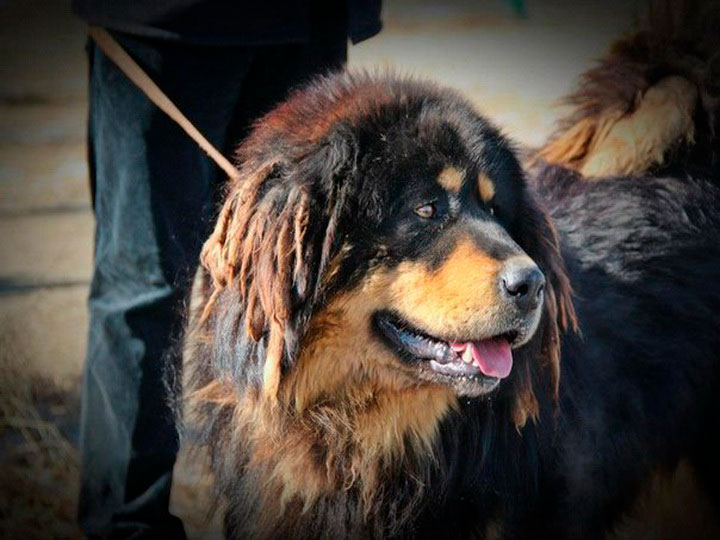
The Mongolian Bankhar is medium to above average in height, with a strong build and a very compact body thanks to well-developed muscles, typically with a square frame. The minimum height limit for males is 60 cm, and for females, 55 cm. A height of 10-20 cm above this limit is not uncommon for these dogs. The owner of the only gene pool kennel in Russia reports having seen MOs as tall as 120 cm. Sexual dimorphism is pronounced, with males noticeably larger and more massive.
The head is elongated and proportionate. The cranium is wide. The cheekbones are well developed but not protruding, the occipital protuberance is smooth, the transition from the forehead to the muzzle is gradual, and the frontal furrow is wide and deep. The muzzle is almost blunt at the tip, equally wide and deep at the base, as well as when viewed from the front and in profile; from above, it has the shape of a trapezoid wedge. The nose is small, neat, and triangular. A distinctive feature of the MO muzzle is its swelling due to the thick fatty layer of the nasal sinuses. The lower jaw is massive and wide.
The lips are dry and tight, forming a fold at the corners. The ears are small, triangular, hanging, and set low (at or slightly below the eye line). The eyes are set obliquely and wide apart, expressive, oval, dark in color, with dry eyelids. The pupils are very small and become dots in the light. The teeth are white, large, and complete. The jaw opens to 160-180°, with a level, scissor, or close bite.
The neck is strong, powerful, arched, and set low. The topline is broad and level. The chest is broad. The ribcage is heart-shaped and fully developed by three years of age. The abdomen is moderately tucked up. The back is straight. The loin forms a slight convexity, the croup is slightly sloping, and of moderate length. The body is solid. The forelimbs are straight, parallel, and set wide apart. The legs are fairly high, their length accounting for 60% of the total height. The hind legs are straight, parallel, and set slightly wider than the front legs. The paws are small, neat, and well-knit. The skin is elastic and thin. The tail is set high and thick; when excited, it curls over the back in a ring, and when relaxed, it is lowered.
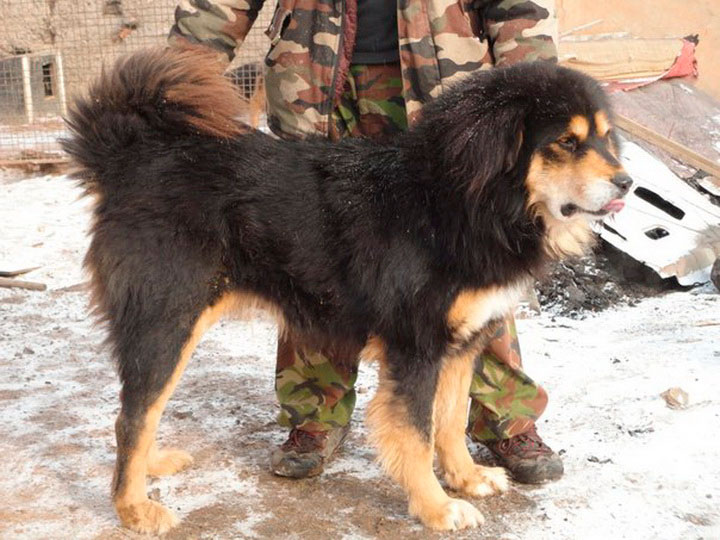
The coat is smooth, shiny, and virtually odorless. The topcoat is fine, coarse, and elastic, straight and does not lie flat against the body. The down coat is dense and light in color. The puppies' coat structure remains relatively unchanged with age. The neck and shoulders are covered with longer hair, which forms a "mane." There are also featherings on the backs of the legs, longer hair between the toes and on the sides of the paws, on the ears, and on the tail.
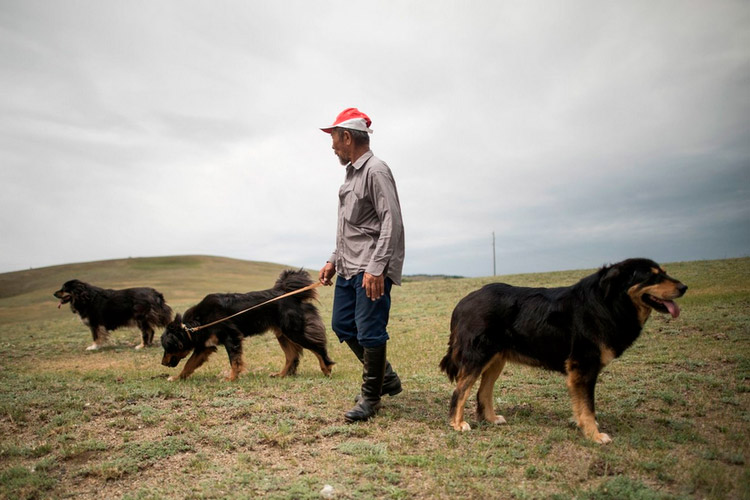
Color: black and tan, black and red. All colors must have a clearly defined white patch on the chest. The first two colors also typically have a reddish-brown tint. A distinctive feature of a true Mongolian wolfhound is its "spectacles"—lighter patches of fur up to 2 cm wide around the eyes.
Mongolian sheep have a unique downy coat that is very soft and fine, ranging from pale ash to light gray with a beige tint. It has a tannin content of 18-19 microns and is 50-100 mm long. During shedding season, a dog can comb out up to a kilogram of down, and 1.5-1.8 kg per year. Clothes made from Bankhar down are considered durable and resistant to felting. Washing them only makes them fluffier and stronger. Furthermore, it has healing properties and helps treat musculoskeletal problems. Bankhar down is virtually odorless, and many owners with allergies report no reaction to it.
Character, behavior and purpose
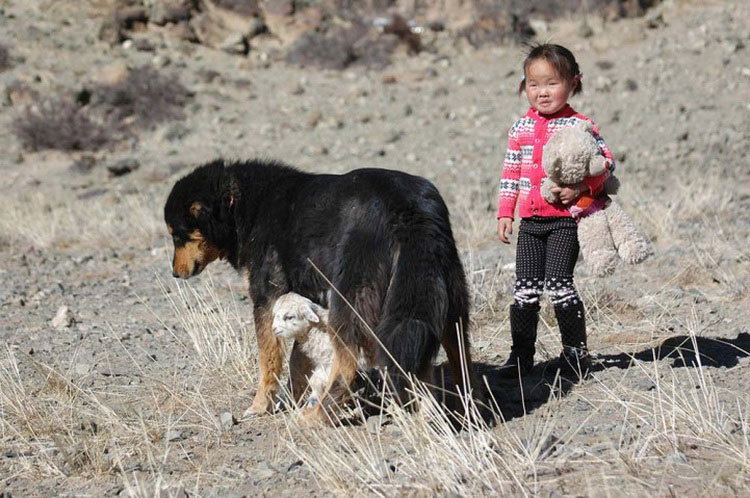
Mongolian Shepherds have a rather phlegmatic and even temperament. They are intelligent and alert dogs, friendly to their own kind and ferocious with enemies. They always carry themselves with a confident demeanor. They are suspicious of strangers, self-sufficient, but not dominant. Bankhars have highly developed communication skills. They are pack dogs that obey their leaders and thrive among their fellow tribesmen. Bankhars are very patient with children and are extremely protective of them. They are calm with other pets, including farm animals, and protect them as if they were family members. Problems may arise when living with other dogs, especially those of the same sex.
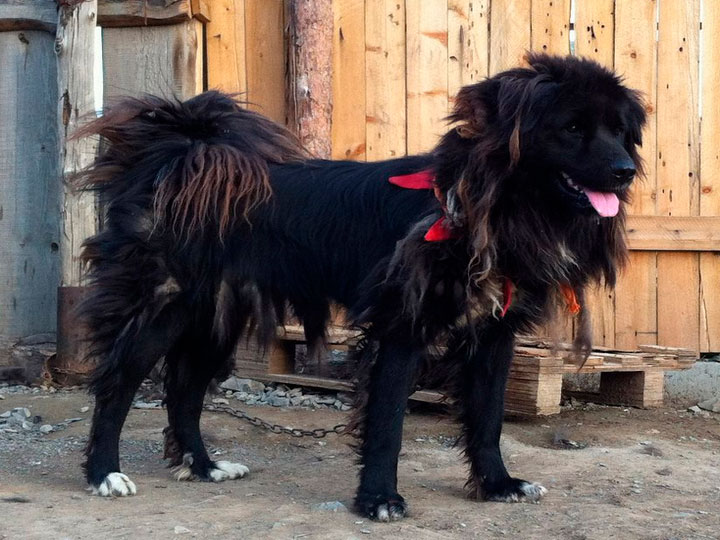
The Mongolian Shepherd's primary purpose is herding and guarding flocks. Interestingly, over the centuries, the Bankhar has developed its own working style. Several dogs form a ring around the animals, leaving no chance for enemies to penetrate the protected area. It is the Mongolian Shepherd that is most often encountered near Mongolian temples. Dogs that live at Buddhist monasteries are more sociable and gentle than the ferocious and unsociable assistants of the Arats. Particularly aggressive dogs were given red bands around their necks. These bands warned strangers not to approach them. No Bankhar would attack a person without good reason. Of course, there are particularly problematic dogs, and these are subjected to a rather unusual punishment: one of their front legs is tied to the collar to restrict their movement during the day.
The Mongolian Bankhar Shepherd Dog has many talents: it is a natural-born herder, a guard of property and territory, a hunter of animals of any size, a tracker, a sled and draft dog, and a bodyguard for all family members.MO Bankhars are highly independent and intelligent, requiring no human assistance or advice. They can independently herd livestock and maintain order, escorting the flock to pasture and watering holes, preventing two herds from mixing. They independently determine the security perimeter and observation point, and behave calmly and confidently while working, only occasionally "chatting" with their colleagues. At night, Mongols are practically sleepless, and during the day they slumber lightly, never leaving their post. This behavior is typical even for young dogs. Upon detecting a stranger, the young dogs rush out to meet them within seconds, while the more experienced dogs remain to guard the home and family, joining the attack only when necessary.
In combat, the Mongols use a characteristic technique: they grab the enemy's muzzle in their mouth and do not let go until he suffocates.
Education and training
The Bankhar requires good training. It can and should be trained, but only through play. Neither the standard OKD system, in which the owner develops conditioned reflexes, nor the American IPO 1-2-3 are suitable for the MO. The Bankhar thinks and comprehends, makes decisions in complex situations, and lives by caring for its pack. MOs are characterized by unique behavior that must be understood and accepted. It gets to the point where breeders refuse to sell Bankhars to people who have previously owned them. Caucasians or Asians, fearing the drill from them and the psychological destruction of an independent dog.
It's ideal for the Bankhar to be involved in all aspects of family life, including shopping trips, vacations, and hiking. It should be given the opportunity to interact with other people and animals—in short, to live in a close-knit community. If not socialized, the dog will be intimidating and bullying to everyone around it.
Content Features
Mongolian wolfhounds are absolutely not suited for apartment living, but they can adapt to life in a private home with a small yard. A farm is their ideal environment. Most of the time, dogs roam freely. In Mongolia, no one builds separate enclosures for them; if they need to be confined, they are chained, separated by a distance so they cannot touch each other. A Mongolian wolfhound's kennel should be raised 20-25 cm above the ground; optimal dimensions are 100 x 100 x 100 cm. The roof should be flat and slightly sloped, allowing the dog to use the kennel as a lookout point. The kennel should face south and its back to the north. The back wall is additionally lined with fiberboard. The kennel is not insulated, as this creates a greenhouse inside, which is hazardous to health. Furthermore, dogs are not given any rags or old sheepskin coats to trim; these are not needed for heating and only contribute to the accumulation of dirt, hair, and parasites.
The Bankhar requires a lot of exercise. In addition to working, the dog needs regular walks, opportunities to run with its fellow dogs, swim, and hunt.
Care
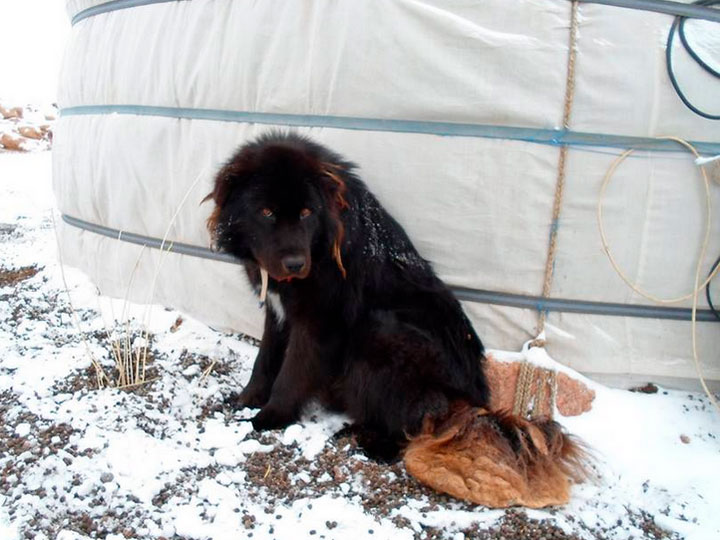
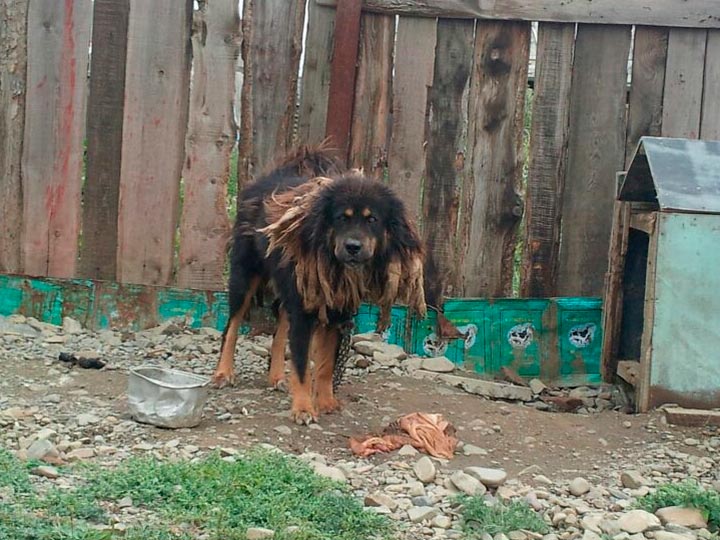
If you look at photos of Bankhars, you'll see that some dogs have ears, necks, and tails completely covered in mats. This might lead you to believe that Mongolians are simply too lazy to brush their dogs. No, the mats protect vulnerable areas from predators, forming an impenetrable wool shield. Not every dog has such adornments, and those that do are much more valuable. In Mongolia, Bankhars are not bathed with special shampoos. Working dogs bathe in bodies of water during the warmer months.
Feeding
Dunes' digestion is better adapted to natural food, but they can be trained to eat high-quality dry food if desired. The diet is selected based on the dog's age, size, and physiological condition. Fermented milk products are the mainstay of puppies' diet, but they are also given cereals, meat, vegetables, and vegetable oil. An egg is given once or twice a week (yolk only, until 4 months). During the period of active growth, vitamin and mineral supplements are essential, and then as directed by a veterinarian.
From 11 to 15 months of age, they are fed twice a day. Meat is always given at night, but in larger quantities (about 0.5 kg), while cottage cheese is given in smaller quantities (150-200 g). Cottage cheese is given twice a week, and meat is given on other days. After a year, they switch to one evening feeding. Once a week, they have a fasting day, giving nothing but water.
Health and life expectancy
Mongolian scientist and agricultural scientist Amgaasediin Osor studied Mongolian Shepherds in the 1980s and 1990s and concluded that they possess a stronger immune system, regenerative system, and adaptability than other breeds. This is likely due to their long lifespan in extreme conditions, a factor scientists call ecological plasticity. The breed developed over millennia in the harsh continental climate of the Gobi Desert, so Mongolian Shepherds can work equally well at temperatures as low as -40°C (-40°F) and +40°C (+40°F). Many Bankhars have a lifespan of 20 years or more.
Choosing a puppy
Mongolians select puppies for the acquisition and subsequent raising of dogs, preferring the physically strongest, those who suckle well, those above average in weight, with a heavy and large head that will eventually return to normal, and those with clearly defined breed characteristics. They are then taken from their families in a special ceremony with profound meaning and traditional norms. For example, a person wishing to adopt a puppy must bring milk, known as "dog's milk," flour, and millet to the home of the chosen puppy's mother dog, cook a stew generously including offal and millet, and feed the mother to her fill. Afterwards, ceremoniously placing a personalized collar on the puppy until the time and day for the adoption comes—a common ritual…
Cynology in Mongolia is quite highly developed, with many working dogs participating in shows and holding titles and local papers. However, purchasing a Mongolian Shepherd puppy can be very difficult unless you travel to the breed's homeland. Even then, it's not guaranteed you'll get a truly good dog, as the population is quite small, Mongolians have a low fertility rate, and demand for puppies has increased significantly, especially recently. This has been fueled by the interest in the breed from some Russian and American breeders, who are involved in breeding and promoting the breed, and are also striving to have the Mongolian Shepherd accepted by the International Cynological Association.
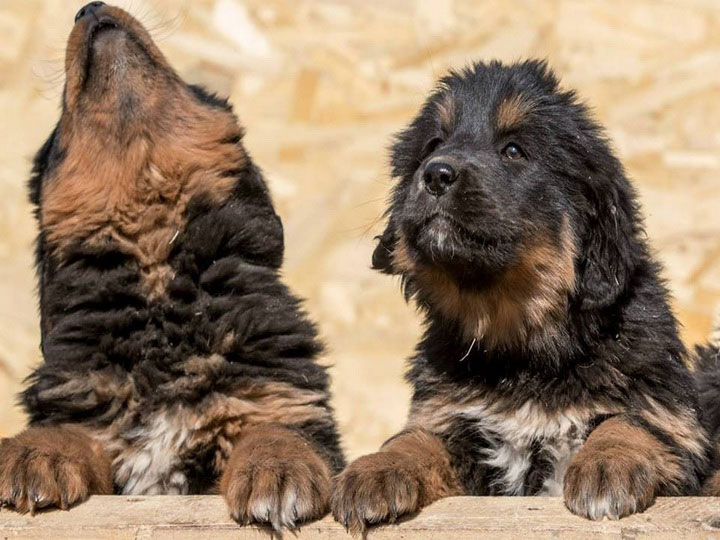
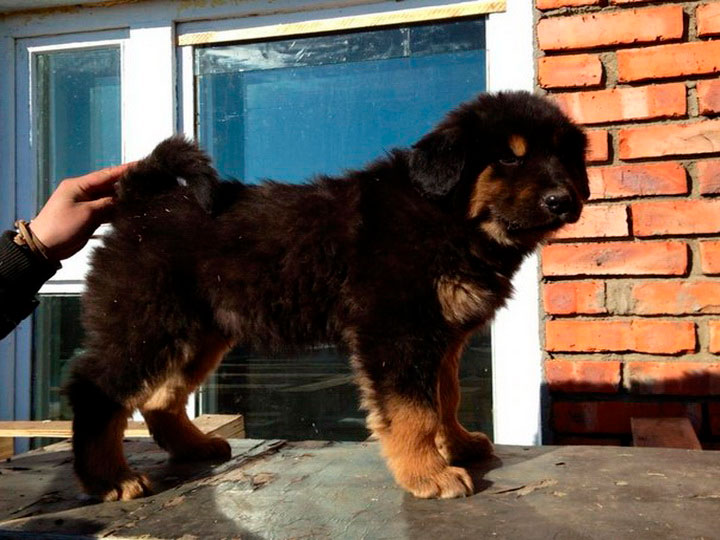
Choosing a good puppy is very difficult. The only real guide here is the working qualities of the parents. These small, plump bears with strong black and tan paws are very similar to Buryat-Mongolian wolfhound puppies and some other similar breeds.
Bankhar puppies give birth once a year. The puppies are almost always born in winter. Interestingly, no insulated kennels are built for the dogs. The birth may take place in a nest dug by the mother in a pile of dung, where the puppies grow and develop, even if the temperature drops well below freezing.
The Bankhar requires a responsible, loving, and consistent owner who can invest the time and money to raise the puppy and take all its needs into account. Furthermore, they should remember that the breed is endangered. Its purity can only be preserved through responsible breeding.
Price
Prices vary widely, primarily influenced by the breeder's geography. In Mongolia, dogs are relatively inexpensive, averaging 30,000 rubles. Sometimes, working-dog puppies are given away for free. In some areas, selling them is still uncommon. In St. Petersburg, the price for a Mongol puppy can reach 70,000 rubles.
Photos
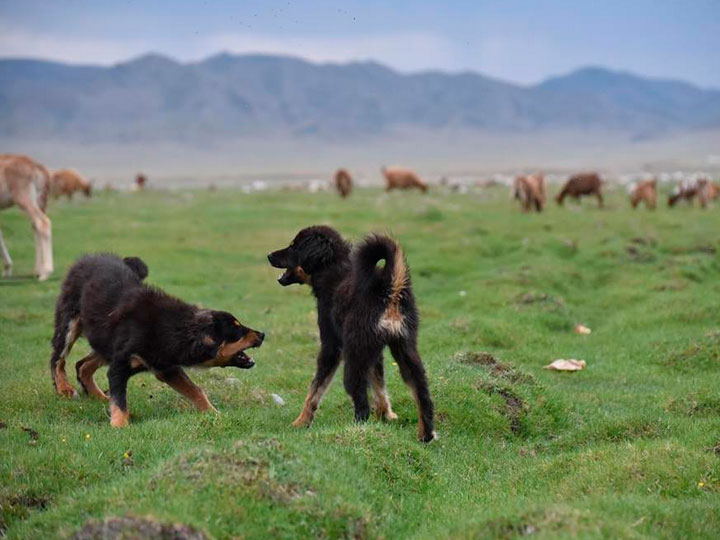
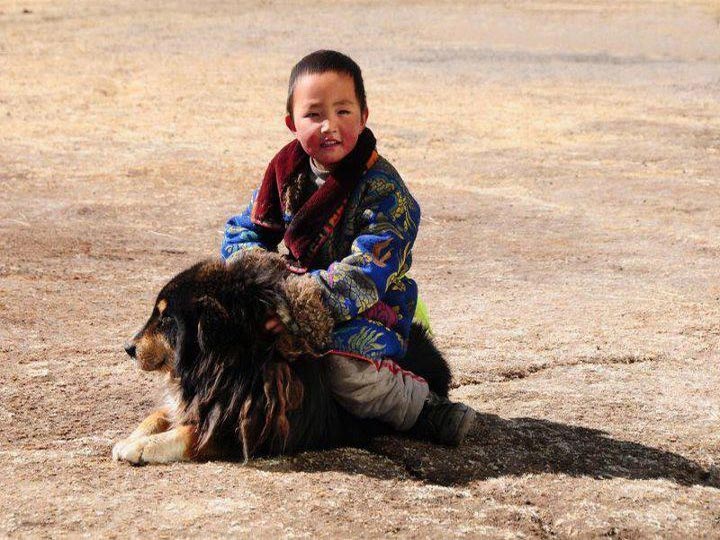
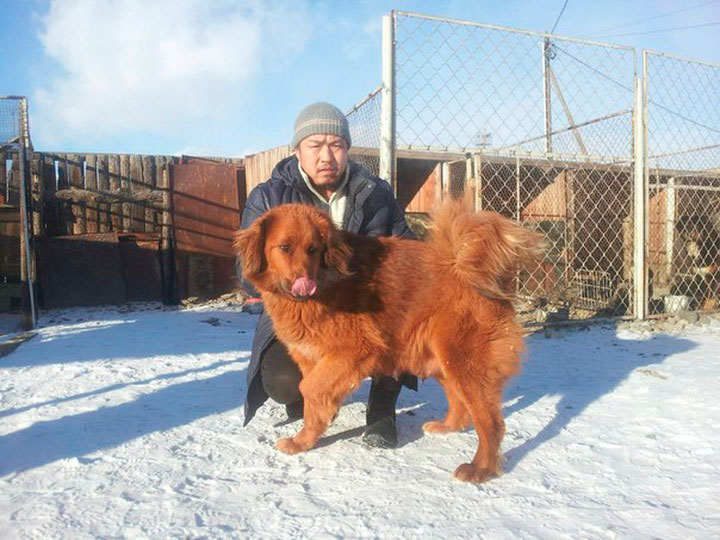
The gallery contains photos of Mongolian Shepherd puppies and adult dogs.
Read also:
- White Swiss Shepherd (American-Canadian Shepherd)
- Maremma Sheepdog
- Bukovinian Shepherd (Southeastern European Shepherd)


3 comments
Olga
Color: black and tan, black and red. All colors must have a clearly defined white patch on the chest.
So, the dogs in the photos at the beginning and end of the article aren't all Bankhars, since they don't have that obligatory spot? How stupid.
Ryabinka1
Olga, it's unclear what exactly you consider stupid? In which photos (other than those with unusual angles) have you not seen dogs with a white spot on the lower chest, almost between the front legs? As far as I can tell, all the photos are of Bankhars, and the first one also shows Mongolian dogs of other types, but there are dogs with a white spot too! This photo was taken for the magazine "Mongolia Today"; the article discussed the restoration of Mongolian dogs and their development as a breed. I doubt the editors would have allowed a photo that didn't match the text.
Yulia Plastinina
IKU SKOR Breeding Center "Beauty of Mongolia" and the National Breed Club "Mongolian Bankhar - SIBERIA" offers for reservation puppies of the breed "Mongolian Bankhar" PUPPIES WITH IKU SKOR DOCUMENTS Contract for the purchase of a puppy, Puppy card, Veterinary passport (Vaccinations according to age). Purchase in installments is possible. b.d. November 24, 2017 from MATURE PARENTS!!! Available: Males: 2 black Females: 1 black 1 black and tan father: Siberian Stars of Mongolia Gombo Baby b.d. January 21, 2014 - color (black) - one of the largest representatives of the breed in Russia. Psychic testing - T-1, General Training Course - OKD-2. Mother: Beauty of Mongolia Bunaya My Joy b.d. - 08.01.2014 - color black and tan, psyche testing - T-1 tel.: 8-923-300-14-18 Yulia
Add a comment