
Renal cat food
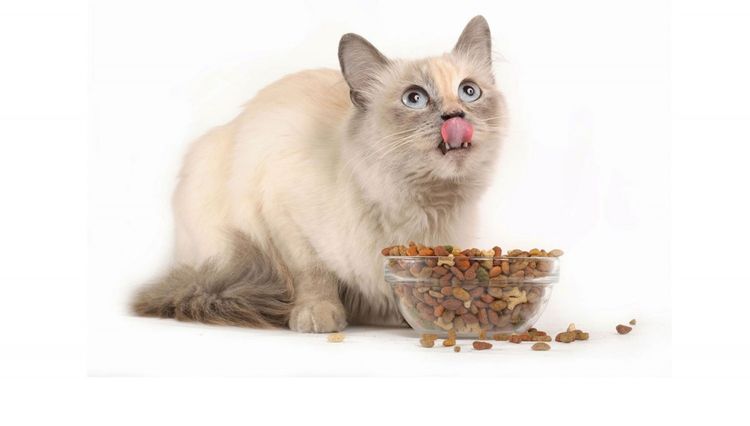
Contrary to popular belief that cats are so healthy that they never get sick or can recover from any ailment on their own, the opposite is true. Unfortunately, pets are susceptible to many illnesses, and according to statistics, a large percentage of these are kidney problems.
In addition to medication, veterinarians prescribe a special food labeled "Renal" for cats with kidney failure—a therapeutic diet that will promote the pet's recovery.
Content
Manufacturers
Not every company that produces prepared pet food offers a line of veterinary diets. Currently, the following manufacturers offer therapeutic pet food on the Russian pet market:
- Royal Canin (France, Russia);
- Eukanuba (Russia, USA);
- Monge (Italy);
- Happy Cat (Germany);
- Purina Pro Plan (Russia, USA);
- Hill's Prescription Diet (USA, Netherlands);
- Farmina (Italy).
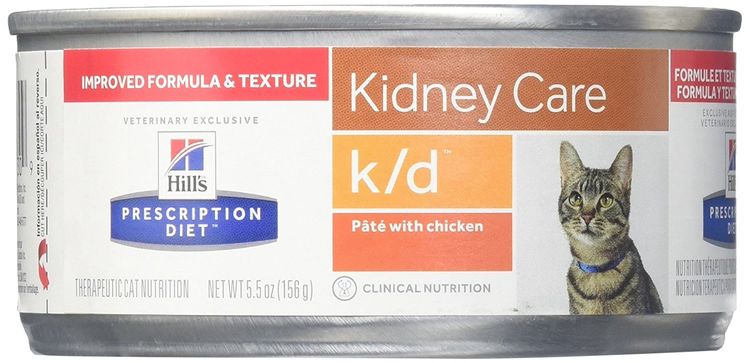
Each of these companies has a professional team of veterinary nutritionists and its own research centers, which closely collaborate with veterinary medicine departments at leading specialized universities. Therefore, any of the above-mentioned diets bearing the Renal label (for the Hill's brand, it's k/d) are guaranteed to be high-quality and effective in the treatment and prevention of kidney disease.
Distinctive features
All the foods mentioned above differ in their ingredient list, kibble shape, color, and size, as well as palatability. However, the fundamental principles that ensure the therapeutic effect of Renal cat food are embedded in each of these formulas, regardless of brand. These principles are the key differentiators between all Renal diets and regular everyday food:
- Reduced phosphorus and sodium levels significantly reduce the burden on the kidneys and slow the development of hypernatremia and hyperphosphatemia, which worsen renal failure.
- Reduced protein levels. Use of high-quality, easily digestible proteins. Helps reduce nitrogen metabolism and inhibits the development of hypertension.
- Functional supportive supplements. Fatty acids – to improve glomerular filtration rate. Antioxidants – prevent cell damage, strengthen the immune system. Prebiotics – to support digestive tract function.
Additionally, each manufacturer adds its own unique complexes and innovative developments to the recipes of therapeutic diets, which are designed to improve the pet's condition.
Caution! Renal diets are contraindicated for pregnant and lactating cats, as well as kittens.
The primary guideline when choosing a brand of dietary food should first and foremost be the recommendation of the veterinarian who is treating your animal.
The most famous brand
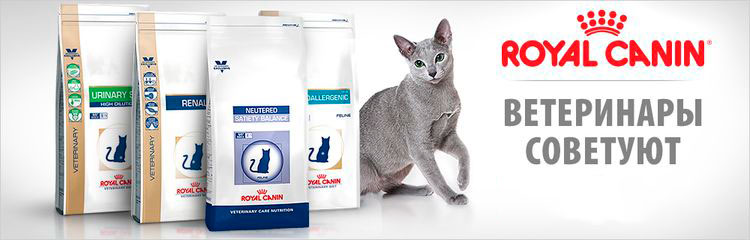
The most popular manufacturer of therapeutic pet food available in our country is Royal Canin. Royal Canin offers three dry formulas for cats with kidney disease:
- Renal RF 23 is a classic food based on soy protein isolate, with a round kibble;
- Renal Special RSF 26 – increased palatability, triangular-shaped granules, contains dehydrated pork;
- Renal Select RSE 24 – increased calorie content, pillow-shaped croquettes, containing dehydrated pork meat.
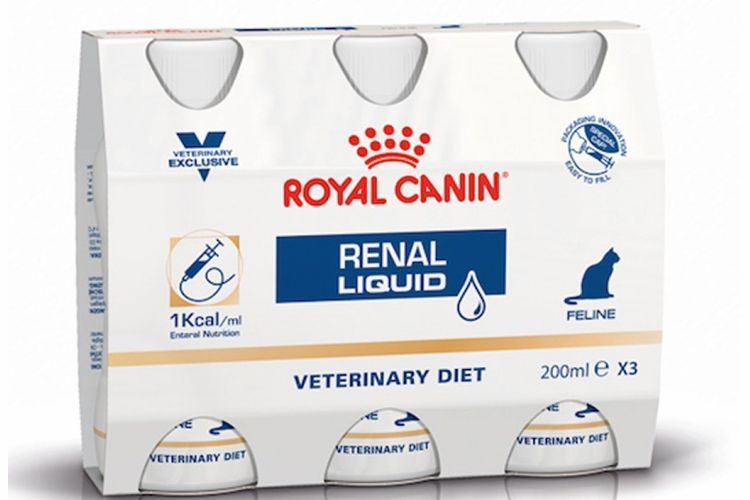
And two types of wet ones:
- A pork, chicken, and fish pâté with healthy additives. Available only in 195g jars.
- Chunks in a three-flavor sauce (chicken, tuna, and beef). Available only in 85g pouches.
Having two types of diets (wet and dry) is a big plus for owners who practice mixed feeding, as the animal will not experience additional stress due to the transition to a new diet and will continue to eat as usual.
Indications for use
Renal medicinal formulas are prescribed as dietary therapy for cats in the following cases:
- in chronic renal failure;
- in the prevention of urate and cystine urolithiasis, due to a decrease in the pH of urine;
- to prevent the recurrence of calcium oxalate crystals in animals with impaired renal function.
Caution! Use medicated foods only as directed by a veterinarian.
Compound
The list of ingredients in the Royal Canin Renal RF 23 diet, which is most often prescribed to cats, includes the following components:
- Cereals and their derivatives – corn, rice, corn flour, wheat and corn gluten;
- Fats – animal, fish, and soybean oil;
- Proteins – soy protein isolate, hydrolyzed animal proteins and dehydrated poultry protein;
- Plant fiber;
- Chicory pulp;
- Medicinal plants and their derivatives: plantain husk and seeds, marigold in the form of an extract;
- Minerals, vitamin supplements and antioxidants.
The composition also contains fructooligosaccharides, which promote the growth of beneficial microflora in the intestines, improve digestion and strengthen the immune system.
Duration of diet therapy
The veterinarian determines the course of therapeutic nutrition based on the pet's condition. In cases of temporary renal failure, the special diet is administered for 2 to 4 weeks.
Important! Feed this food exclusively. Mixing other foods into the special diet will negate any benefits.
In the case of a chronic disease, the course of treatment lasts approximately six months. After this period, all necessary tests and examinations are required to determine the animal's renal function.
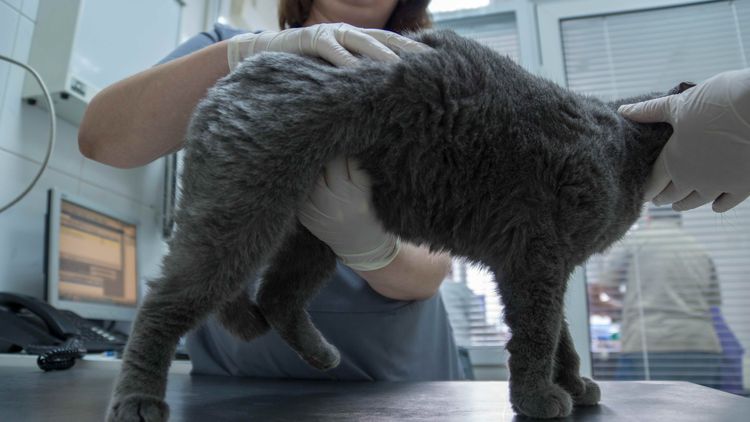
If the diagnosis is that irreversible changes have begun in the kidneys, then the “Renal” diet is prescribed as a permanent diet for the entire life of the pet.
Price
Based on current online prices for Renal cat food from various brands, we present the average price for the most popular brands:
Royal Canin:
- wet in a pouch - from 70 to 83 rubles, in a jar - from 105 to 130 rubles;
- dry 0.5 kg – from 500 to 680 rubles, 2 kg – from 1700 to 2200 rubles;
Hill`sk/d:
- wet in a pouch - from 80 to 95 rubles, in a jar - from 130 to 151 rubles;
- dry 0.4 kg – from 412 to 540 rubles, 1.5 kg – from 1290 to 1370 rubles;
- Purina Pro Plan:
- wet in a pouch - from 65 to 72 rubles, in a jar - from 120 to 139 rubles;
- dry 0.35 kg – from 330 to 368 rubles, 1.5 kg – from 1970 to 1290 rubles;
Monge (dry diets only):
- 4 kg – from 385 to 426 rubles,
- 5 kg – from 1195 to 1370 rubles;
Happy Cat:
- 4 kg – from 950 to 1030 rubles,
- 4 kg - from 2022 to 2210 rubles;
Farmina:
- 4 kg – from 411 to 540 rubles,
- 2 kg – from 1610 to 1800 rubles;
- 5 kg – from 3760 to 3990 rubles;
Eukanuba:
- 5 kg – from 1094 to 1260 rubles, wet, most likely discontinued.
Owner reviews
There are numerous reviews online from people who have firsthand experience with Renal cat food. They've experienced treating their pets for a complex condition like chronic renal failure (CRF) and are sharing their experiences with others:
Alexandra, owner of a British cat:
"Three years ago, when Timka was five, he was diagnosed with urolithiasis, and on top of that, kidney failure. After a course of injections and other treatments, the acute condition was alleviated and he was prescribed a diet. Urinary with regular clinic visits. A month later, we had tests done, and it became clear that his kidney condition was deteriorating. We had to urgently switch him to Royal Renal. He wasn't very keen on it, but he stuck with it for a month. His test results gradually improved, and I bought him some Renal "with improved flavor." And indeed, he liked the new croquette better. After three or four months, everything returned to normal, and now we give him Renal is for prevention only."
Timofey, Ufa:
"I've been feeding my cat exclusively wet Renal from RK for the past six years. Six years ago, she was diagnosed with chronic renal failure. Rosa is now 13.5 years old. Of course, over all this time, she's become quite tired of the food, so she periodically goes on strike and refuses to eat it. She begs for fish, but if I gave in, she would have relapsed kidney problems, so I strictly feed her Renal. It's not a small amount of money: about 3,000 rubles a month, and the price tag is constantly rising. Unfortunately, our manufacturers haven't yet learned how to make dietary food."
Read also:


-550x428.jpg)
2 comments
Ivan
Hello, I need help. This morning, I discovered scarlet urine in my 7-8 month old cat's litter box. She's not bothered by anything, as she's acting normal, running, jumping, eating, and so on. The only thing she doesn't like is being touched in the pelvic area. Thank you in advance. P.S. I'm writing from work, so I can't see a vet right now, so please understand. Thank you.
Dasha is a veterinarian
Hello! Your pet should be taken to the veterinarian for a complete blood count, blood workup, and urine tests. A kidney and bladder ultrasound is also recommended. Is your pet indoors? Have you been bitten by ticks? Is your pet's body temperature normal? Have you had any falls or injuries?
Add a comment