
Royal Canin cat food
Royal Canin cat food is one of the most prominent representatives of the super-premium cat food segment, along with Proplan and Hills. All three foods have rightfully earned popularity in the pet community; each has its own strengths and weaknesses. Today, we'll talk about our French comrades, Royal Canin: specifically, Royal Canin cat food. We'll cover customer and veterinarian reviews, as well as explore the product range and ingredients.
Royal Canin is a brand with a long history. It originated in France. Several years ago, the brand was acquired by Mars Corporation, along with all its production facilities and assets, and since then, the brand can confidently be called American.
In 2004, the company opened a factory in Russia, in the Dmitrovsky district, and since then, the needs of the Russian market have been met by this facility. Simply put, before 2004, the products on the shelves were from Europe, and now they come from Russia. Some experts (and some less so) note that the quality of the food has noticeably deteriorated since then; others, on the contrary, say the products have remained the same, and, in fact, the packaging quality has improved, while the price has dropped significantly.
Content
Basic information
We won't go into detail about the ingredients of Royal Canin cat food, but we'll focus on the key points that buyers should know. What essentially distinguishes super-premium cat food from economy-class cat food? Quality, you might say, and that's true, but the concept of product quality is rather abstract, and it would be helpful to break it down into its components. What constitutes quality at Royal Canin?
All brand products are divided into 2 types:
- Dry pellets are available in various sizes, with ingredients, optimal portions based on the animal's weight, and feeding recommendations listed on the packaging. A small 400-gram package is available for trial, while larger bags are convenient for breeders and kennels.
- Wet food is available in canned form in metal jars and in pouches in soft sachets, with volumes ranging from 85 to 368 g. This category includes meat chunks in sauce or jelly, pâtés, and mousses with a variety of flavors.

The concept of Royal Canin cat food is based on a scientific approach to determining the composition, dosage, components, raw materials, and production technology. For example, other companies prioritize the cat's rapid consumption as a guarantee of quality. Royal, on the other hand, conducts extensive research in its own laboratories before launching a new food, guaranteeing its nutritional properties when creating it.
How is this possible? Just like people, cats are all different: some are passive, some are rustic, some are spayed, some have health issues, some are fluffy, some are purebred, and so on. And depending on their breed or lifestyle, cats need different food. For example, if your cat is spayed and spends all their time sleeping, then food for active cats is unlikely to be suitable, as it contains more calories, salts, and other trace elements that can have a detrimental effect on your pet, leading to obesity or urolithiasis.
Food for different breeds
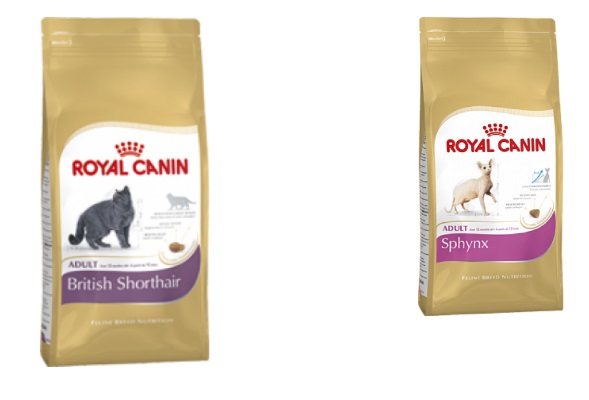
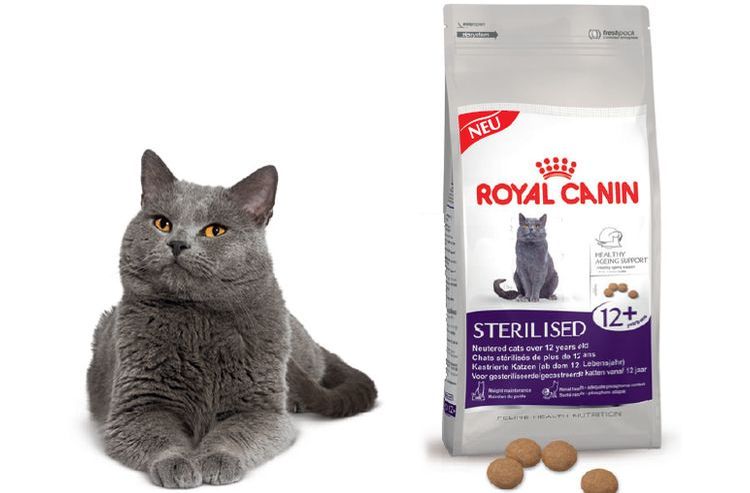
Or, perhaps, the composition of food for different breeds also differs. It's common knowledge that each breed, in addition to obvious physiological characteristics, also has its own specific predisposition to health problems. For example, the fact that British Shorthairs have a relatively large heart and a massive body should be taken into account when choosing a diet for their pet. The combination of ingredients should ensure smooth heart function and strengthen the musculoskeletal system. Royal Canin cat food for British Shorthair cats has received positive reviews from owners of this breed in this regard.
Or sphinxes, which do not have a fur coat, need to produce a large amount of energy for “warming”, so OMEGA 3 and 6 should be added to the food to maintain the function of the skin barrier.
Diets for different ages
The brand's range offers balanced diets that take into account the needs of cats at different ages:
- For kittens and young cats up to one year old. We offer milk replacers, separate diets for kittens up to four months of age (also suitable for pregnant and nursing cats), pates, wet food in sauce and jelly, and dry food with small kibble for kittens of various breeds (British, Maine Coons, Persians), as well as separate formulas for sterilized cats. Special formulas promote immune support, normal growth, and development in these young pets.
- For healthy adult animals, taking into account their breed and other characteristics: with long hair, normal or overweight, sensitive digestive system, active or indoor lifestyle, intolerant to strong tastes and aromas in food, for neutered animals.
Here you can also select diets to address specific needs: maintaining healthy skin and coat, oral care, or removing hairballs from the stomach.
- For individuals over 7 years of age (including sterilized) and over 12 years of age in the form of dry granules, wet food with jelly or sauce.
About the composition
Obviously, Royal Canin cat food has a much higher meat content than economy-class foods. However, this figure is generally on par with other super-premium foods, meaning it's the same in both ProPlan and Hill's.
Plant-based additives such as soy and corn are also present in the food. The sources of glucosamine, lutein, and chondroitin are natural, but the main ingredients (corn gluten and rice flour) are high in carbohydrates, which, according to some owners, has adverse effects on their pets.
Some products list plant proteins first on the ingredients list (for example, plant protein isolate in Adult British Shorthair dry cat food). Compared to animal protein, these proteins are less beneficial for cats, who remain carnivores by nature.
Furthermore, manufacturers often fail to identify the exact sources of individual ingredients, referring to them in general terms. For example, animal fats and plant fiber. The origin and quality of such components remains unknown to consumers, which is therefore a source of concern.
Therefore, based on a comprehensive analysis of the ingredients of Royal Canin foods, it can be concluded that the stated super-premium status does not reflect the reality, as the formula contains questionable ingredients that are, at the very least, harmful to cats. If you can switch your pet to a different food with natural meat ingredients at the top of the list, you may want to stop feeding your cat Royal Canin.
Pros
- Wide range (many types and textures of food, including food for breeds)
- The composition and indications for use of the feed are scientifically substantiated
- Excellent line of therapeutic foods
- You can find it in any pet store, you don’t have to wait long for your order;
- The price is good for a super-premium food.
Cons
- Produced in Russia. If possible, it's better to order European-made products instead of Russian Royal Canin.
- The composition is dominated by vegetable proteins and fats, and also contains components of unknown origin and those that can provoke allergic reactions or problems with the digestive system (corn, yeast, etc.).
- The manufacturer does not indicate the exact percentage of most components.
Royal Canin therapeutic food
Royal Canin's line of therapeutic and dietary cat foods stands out. Only Hill's can compete with it in the therapeutic cat food segment—there are no other comparable products on the market.
Many veterinarians highly value the manufacturer's therapeutic lines for their wide selection and high quality. The dry and wet diets use specialized ingredients and proven formulas designed to prevent chronic conditions, promote recovery after illness and surgery, or serve as a special dietary supplement throughout life.
Important! Therapeutic diets should only be used with your veterinarian's approval, taking into account your pet's condition and the specific illness.
Among the veterinary diets the manufacturer offers the following lines:
- Gastro Intestinal (for gastrointestinal disorders, including chronic pathologies).
- Hypoallergenic (for those prone to allergic reactions).
- Urinary (for pathologies of the urinary system).
- Mobility (for disorders of the musculoskeletal system).
- Renal (for the treatment and prevention of renal failure).
- Recovery (for the recovery period after illnesses and surgeries).
- Hepatic (for liver pathologies).
- Calm (for animals that have experienced severe stress).
- Diabetic (for diabetes mellitus).
Royal Canin offers such a wide selection of therapeutic foods for various purposes that it's impossible to list them all. Furthermore, there's no point in memorizing every option, as cat owners will need to find a specific product for their pet based on the specific problem and their veterinarian's recommendations.
We present to your attention two of them - Urinary and Renal.
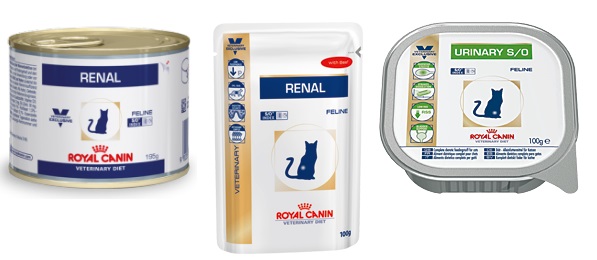
Renal
Renal cat food from Royal Canin is available in both dry and wet forms and is used for the prevention and treatment of renal failure in cats. The minimum treatment period for this product is six months, as recommended by the manufacturer. Please note: this product should not be given to pregnant or nursing cats. Use only with a veterinarian's prescription.
Urinary
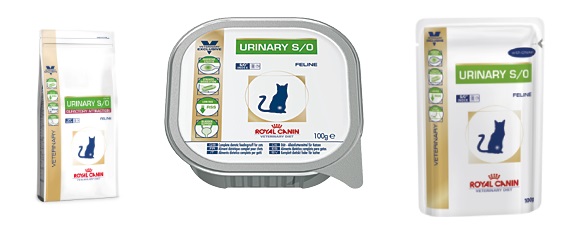
Problems with cats' urinary tracts can lead to urolithiasis. Royal Canin specialists developed Urinary cat food, which has received positive reviews and a certain reputation worldwide. However, owners of sterilized cats often share mixed reviews of this Royal Canin food on Russian forums, claiming that their pets gain significant weight from it. As is well known, this food's purpose, in addition to its direct effect, also has an indirect one: keeping pets in good shape: simply put, to prevent our whiskered companions from becoming overweight. Buyers expect this to be achieved, but that doesn't always happen.
Of course, each case is individual. This may be due to hormonal imbalances and other issues. It's best to follow a specialist's advice and avoid self-medication.
Reviews from cat owners
Marina, Persian cat owner:
"I've been feeding my cat Royal for five years now. I started with kitten food, then switched to adult food. Her digestion is fine, her coat is shiny, and her appetite and activity are always normal. My cat has long hair, so I sometimes buy pouches from the coat-beautifying line as treats. I've also heard from friends about the positive effects of the brand's veterinary diets, but fortunately, I haven't used them on my pet yet."
Victoria, the owner of the British cat:
"We fed our cat Royal Canin for a long time, but over time we noticed a decline in quality, especially after the Russian production facility opened. The ingredients leave much to be desired: a large amount of plant protein and grains, and the percentages of even the main ingredients are unknown. After our cat developed stomach upset from a freshly purchased package of food, we decided to stop using this brand altogether."
Veterinarian Reviews
Veterinarians give excellent reviews of Royal Canin cat food, especially the therapeutic line. They note that the kibble in the dry food supports oral hygiene.
Ekaterina Viktorovna:
"I recommend only therapeutic lines from Royal Canin to my clients, depending on the health issues identified in their pets. They help speed up and consolidate treatment results and have a preventative effect. The main thing is not to make decisions about specific food on your own. An inappropriate food choice can only worsen health issues."
Sergey Igorevich:
"Royal Canin is one of the most popular cat foods, boasting above-average quality and a wide selection. I've never encountered a situation where feeding RK has caused a deterioration in a cat's well-being, appearance, or more serious health issues. The only exceptions are cases of individual intolerance to certain ingredients. The key is to choose a food that suits your pet's needs and, if necessary, switch to a therapeutic diet from the same manufacturer."
Read also:
Read also:



3 comments
Catherine
We have a long-haired cat and have had a problem with hairballs for a long time. Her fur was also a problem—it was dull and constantly tangled, even though we brushed it. We tried buying Royal Canin food specifically for long-haired cats. We didn't regret it. Our cat has transformed in six months—her fur is shiny and tangle-free. I highly recommend this food.
Victoria
I'm happy with Royal Canin; I can say it's one of the best mid-price pet foods! And it's premium, too! My cat eats it well after spaying, and she hasn't gotten fat; she's quite active and gentle. I usually order 2 kg of it online once a month. It's not too hard on the wallet, but I wouldn't feed her anything less!
Alena
Thankfully, there was no need to buy the therapeutic food from this line, but Marsik has been feeding Royal Canin British Shorthair for three years now. Incidentally, our new veterinarian doesn't particularly like Royal Canin, even though we've never had any problems with it, and we constantly argue about it—we both stick to our guns. And since Marsik happily munches on kibble and constantly asks for more, we have no plans to change the food (we tried it once, but it didn't work).
Add a comment