
Conjunctivitis in cats
Conjunctivitis in cats is a fairly common eye condition in pets. It's not that pets are particularly susceptible to illness; conjunctival inflammation is rarely reported as an independent condition. However, as a symptom, it can be. How to treat conjunctivitis in cats? We'll cover this in our article.
What is conjunctivitis in cats (eye photos below)? What types are there? What are the causes? How can you help your pet? And how can you prevent it? Below is a detailed explanation (and as simple and understandable as possible for ordinary pet owners).
Content
What is conjunctiva and conjunctivitis?
The conjunctiva is a thin mucous membrane that covers the entire eye—not just the eyeball but also the inside of the eyelids. On the upper eyelid, it's thicker, like a cushion. The conjunctiva contains ducts for the additional lacrimal glands, which prevent the eye from drying out. Tears also serve a protective function, washing away small foreign bodies. Remember how when a small grain of sand gets into your eye, tears flow freely without your even trying. The grain is washed away without rubbing or interfering.
In addition to the upper and lower eyelids, there's also a third eyelid. It can be seen in the inner corner of the eye. Normally, it's practically unnoticeable, but when the conjunctiva there becomes inflamed, it's extremely difficult to miss. So what is conjunctivitis (in dogs, cats, and humans—it's all the same)?
It's simple. Conjunctivitis is an inflammation of the conjunctiva, the membrane that lines and protects the eye.
Symptoms
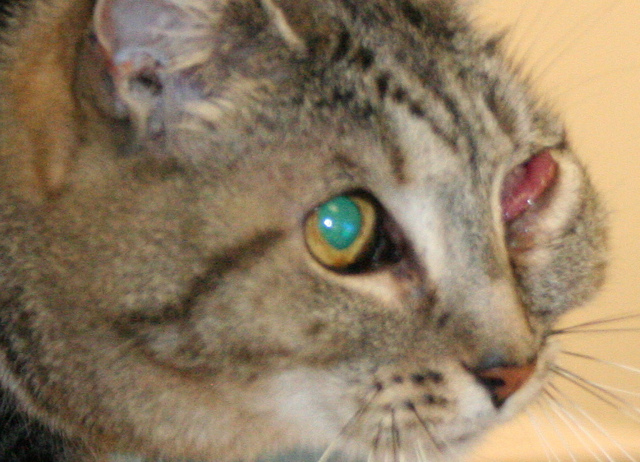
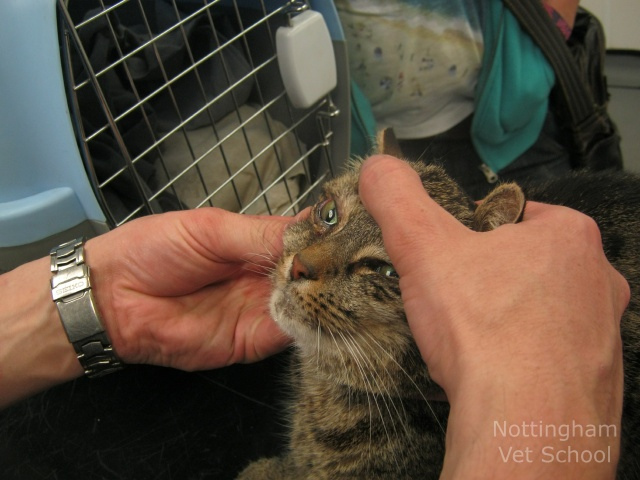
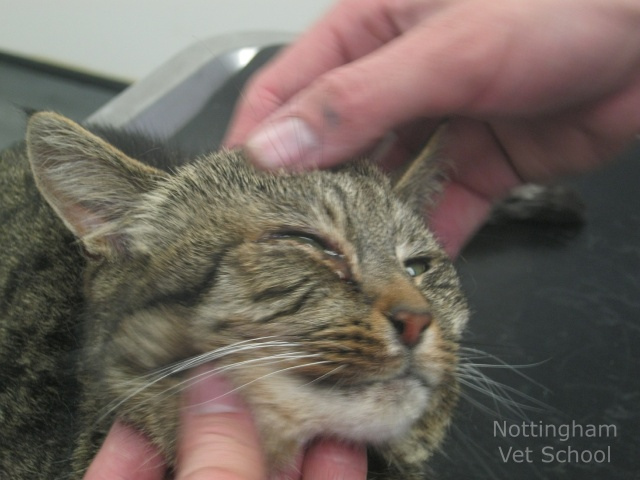
There are general symptoms of conjunctivitis in cats across all species (see also the photo in the article).
- This includes tearing, redness, swelling of the eyelids, and photophobia. The eyes may change color, become cloudy, and lose their healthy glow.
- In addition, the movements of the eyeballs are impaired, and the eyelids are turned inside out..
Types of conjunctivitis
However, let's go over the different types of inflammation of the mucous membrane of the eyelids (conjunctivitis in cats) so you can recognize the condition immediately and begin treating it quickly. It usually begins with catarrhal conjunctivitis, which then progresses to more serious forms. However, treatment and recovery speed (as well as consequences and complications) depend solely on the underlying cause of this seemingly common eye condition in cats and dogs.
Catarrhal conjunctivitis
Catarrhal conjunctivitis in cats is, so to speak, the most "harmless" because it can be cured, but treatment must be comprehensive and supervised by a veterinarian to avoid progression. This type of inflammation indicates the onset of the disease. If left untreated, complications can occur. And the catarrh (mucus, to put it simply) can "turn" into pus. Purulent conjunctivitis in cats, however, is not so easy to overcome. But let's return to catarrh.
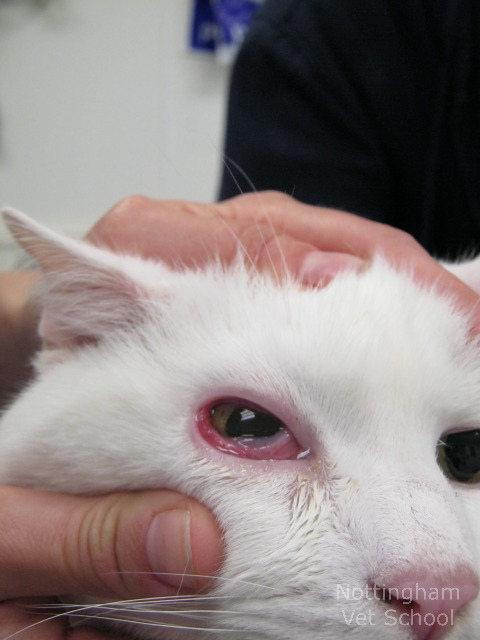
So, catarrhal conjunctivitis in cats is characterized by redness and swelling of the mucous membrane of the eyelids. Sometimes the animal is unable to open the eye. The eyelids are inverted. Tears constantly flow from the eyes. The fur around the eye is wet. Temperature rarely rises above normal, but if the cause is a cold, a fever is possible.
Purulent
Purulent conjunctivitis in cats is easy to recognize. The main (general) symptoms include purulent discharge from the eyes. This may include yellow crusts in the morning (the initial stage of inflammation), as well as obvious pus (yellow, yellow-green). This pus accumulates both in the inner corner of the eye and on the fur under the eye.
In any case, it's impossible to miss purulent conjunctivitis in a cat. The eyelids may stick together. Urgent veterinary attention is necessary. The cause is likely an infectious disease, and inflammation of the mucous membrane of the eyelids is a symptom. If left untreated, serious complications can develop, such as keratitis. panophthalmitis, blindness.
Phlegmonous
Phlegmonous conjunctivitis in cats is very severe. It's not just a simple purulent inflammation. Pus not only leaks outward but also resides in the subepithelial layer of almost the entire conjunctiva. Treating your pet is possible, but very difficult. You can't do it without a veterinarian!
Follicular
Follicular conjunctivitis in cats is characterized by inflammation not just of the mucous membrane of the eyelids, but of the lymphatic follicles located on the third eyelid (on the inner side). These bulge outward. Treatment isn't just lengthy! Because the condition is chronic, you'll need to see a veterinarian repeatedly.Many doctors perform surgery to remove the inflamed follicles and then prescribe antibiotics and special drops to treat acute and common conjunctivitis.
Reasons
There are many possible causes of conjunctivitis in cats, but here are the main ones:
Viruses, bacteria and fungi
Perhaps the most common cause. The eyes are not only a window to the soul, but also an indicator of health. They almost always reveal if someone is feeling unwell. Therefore, conjunctivitis develops with almost all viral or bacterial infections. Fungal infections are more complex. The culprits "settle" in the conjunctiva, seriously damaging it. Fungi are much more difficult to get rid of than viruses and bacteria.
Allergy
And this cause is recorded quite often. In both humans and animals, allergic reactions manifest themselves with similar symptoms. And this is not only runny nose, sneezing, itching, a sore throat or ear, and watery eyes. The conjunctiva becomes red, swollen, and itchy. Tears flow freely. Allergic conjunctivitis in cats only goes away after you help your pet overcome the allergy. This requires identifying the allergen and eliminating it permanently, and treating your pet.
Mechanical damage
Any wound is a gateway for infection. To protect itself, the conjunctiva (or rather, the lacrimal glands) produces large quantities of tears. This reduces the concentration of microorganisms, but doesn't completely eliminate them. Sooner or later, some microbe will find its way into the wound. And there you have it. Conjunctivitis has developed in cats. Any eye injury is very dangerous. It doesn't matter whether the injury is to the eyelid or the eyeball. The risk of vision loss is present in both cases.
Chemicals
In this case, catarrhal conjunctivitis in cats develops not only due to chemical vapors coming into contact with the mucous membranes. Burns to the mucous membranes are far more serious. After all, they can lead to blindness in the animal, so immediate action is required.
Pets are very curious. Leave an open can of paint, paint thinner, or household chemicals and your four-legged friend will be right there, sniffing everything, poking their noses into everything. And if this inquisitive creature gets their hands on laundry detergent, the risk of developing conjunctivitis increases.
There are chemicals and tiny grains here that will act as a foreign body in the eye and can scratch the conjunctiva.
Irradiation
And ultraviolet, and radioactive, and X-ray.
All of this has a negative impact on the animal. Keep away from such radiation sources. It's no surprise that some people have them at home. Those who keep turtles or other reptiles equip their terrariums with ultraviolet lamps, which are dangerous for the eyes (or rather, the retinas) of animals and children (and they won't do any good for adults either). Furthermore, many women buy ultraviolet lamps for curing gel polishes so they can do it themselves at home instead of spending money at a salon. And when this beauty equipment is turned on, the purple light it emits is a magnet for curious pets (and children, too). Looking at this light for too long can quickly lead to conjunctivitis in cats, dogs, and humans.
A slight decrease in vision may also be a "bonus." Think of tanning beds, where they force you to close your eyes. Yes, the lamps there are much more powerful than in a terrarium or mini-dryer, but prolonged exposure to these rays of light still causes some negative changes in the eyes.
Other reasons
| Parasites | Intestinal, external, or even those that manage to "take root" on the eye (some protozoa). This is mainly due to a weakened immune system and the development of an allergic reaction to the toxins that helminths secrete during their life inside the body. |
| Foreign body | This can, of course, be classified as mechanical damage, but we'll discuss that separately. A hairball won't cause any injury, but it will rub against the mucous membrane, causing redness and swelling. |
| Cold | Or any weakening of the immune system. Where there's rhinitis, there's also conjunctivitis. Everything is connected. |
| Transient inflammation from surrounding tissues |
The cornea and nasolacrimal canals may be inflamed. |
Treatment of conjunctivitis in cats
How and what is the proper treatment for conjunctivitis? It's important to proceed gradually and strictly according to your veterinarian's instructions. The first step is to get a diagnosis! Without it, no one will prescribe treatment. Without addressing the underlying cause, it's impossible to completely get rid of the inflammation of the eyelid mucosa. It will constantly recur. So, below we've prepared instructions for treating conjunctivitis in cats at home.
Wash your eyes
Chamomile or calendula infusions are good folk remedies. These herbs have anti-inflammatory and soothing properties. The solution should be warm, not hot or cold.
- Alternatively, you can also drink strong black tea without sugar (of course, there should be no leaves or sticks left).
- The veterinarian will flush the eyes with a furacilin solution (1 gram of powder per 5 liters of water). As you can imagine, you won't use 5 liters at once, and it's difficult to calculate the correct amount in small doses. Using a higher concentration could harm the animal.
- The same applies to advice about potassium permanganate. Many recommend rinsing the eyes with a potassium permanganate solution, forgetting that it is very drying. And even a small (even just one) undissolved crystal can cause a severe burn (especially on inflamed conjunctiva). Therefore, do not use potassium permanganate for rinsing.
Ointment
The next step in treating conjunctivitis in cats is applying a special ointment. Immediately after thoroughly rinsing (which should be done every 3-4 hours), apply an eye ointment. Tetracycline and erythromycin ointments are both suitable (but be sure to use ophthalmic ointments!). They can be purchased at both veterinary and human pharmacies. Do not apply with fingers.
It's best to use a special glass rod (with a rounded tip). Rinse with boiling water before each use. Place the ointment under the eyelid. If the cat resists, apply it to the lower eyelid. When the pet blinks, it will distribute the ointment throughout the conjunctiva.
Drops
There are also eye drops for treating conjunctivitis in cats. But again, they should be applied only to washed eyes, 2-3 drops every 3-4 hours. Yes, this is easier than applying ointment, but the drops also drain out with tears much faster. Ointment is more effective due to its thick consistency. drops are distributed more quickly across the conjunctiva when blinking.
Again, don't self-medicate; ask your veterinarian what's most effective for your pet. Follow the treatment plan exactly. Don't look for shortcuts. Only your patience, love, and, of course, following all your veterinarian's recommendations will help your pet recover quickly and see the world again with healthy eyes (thanks to you).
A video on how to apply drops to a mustache:
Intramuscular administration of antibiotics
For purulent, phlegmonous, and follicular conjunctivitis, intramuscular antibiotic injections are prescribed. Unfortunately, without them, recovery is impossible.
Antihistamines
If the cause is an allergy, the allergen needs to be identified and eliminated, and antihistamines administered. If helminths are the culprit, deworming is essential. Fleas, lice, and chewing lice should also be eliminated. If an infection is the cause of conjunctivitis, the causative agent must be eliminated (specific hyperimmune serum for viruses and antibiotics for bacteria).
Be sure to wash your hands with soap before and after treating a sick animal's eyes! Conjunctivitis is highly contagious, even to humans! This applies to both other animals and humans. Rub your eye after contact with a sick pet? Don't be surprised if yours also becomes swollen and watery. This treatment will be a joint effort.
Prevention of conjunctivitis
To avoid conjunctivitis in cats, it is necessary to follow a number of preventative measures, the basic ones of which are listed below.
- Avoid drafts in the house and do not overcool your pet.
- Maintain your immunity.
- Visit your veterinarian at least once a year for a preventative checkup. Get tested. If your pet has worms, allergies, or a secret inflammatory process somewhere in the body, the blood will definitely reveal it.
- Don't forget about annual vaccinations and quarterly deworming.
- Keep household chemicals away from curious animals.
- Brush your pet carefully to avoid hair falling into their eyes. If your pet is losing a lot of hair, consult a veterinarian to determine the cause.
- Clean your home more often. Daily damp cleaning is best. Avoid stirring up dust if there's a pet in the room. Otherwise, it could get into your eyes.
- Don't allow your whiskered friend to come into contact with stray, visibly sick, or suspicious animals. Conjunctivitis isn't the only contagious disease.
- Do not touch the animal's eyes or your own without thoroughly washing your hands if you have previously been in contact with someone sick (it doesn't matter whether it's a person or an animal, the infection is easily transmitted).
Any questions? You can ask our website's staff veterinarian in the comments below, who will answer them as quickly as possible.
Read also:
- Blepharitis in cats
- Corneal ulcers in dogs and cats
- Keratoconjunctivitis in dogs: symptoms and treatment


30 comments
Nina
My cat is 6 years old. This year he has lost a lot of weight; you can feel his entire skeleton. He's started eating poorly, and he doesn't even finish his favorite food. He seems quite cheerful.
Natalia
Hello, please tell me what to do. My cat's eyes are festering. I washed them with a furacilin solution. But for two days now, I can't open one of them. What should I do?
Daria is a veterinarian
Hello! The advice is simple: go to a veterinary clinic for an appointment. They'll prescribe a broad-spectrum antibiotic, tailored specifically to the animal's body weight. Continue to wipe the eyes, don't rinse. Wipe from the outer corner to the inner corner with a sterile cloth, changing it. Wipe five times a day. Anti-inflammatory medications may be needed. They may also prescribe antibiotic eye drops. In general, the eye needs to be monitored to see if it can be saved.
Alena
Hello, please tell me, I was at an appointment today with my kitten. His eyes are swollen, from morning to night, and are completely blind. They prescribed Anandin, and that's it. Please tell me if antibiotics are necessary?
Daria is a veterinarian
Hello! How old is the kitten? What are its vaccinations? Has it been in contact with other animals? Has it been outdoors? Has anything other than anandin been prescribed? Are there any recommendations for eye hygiene? How and with what should it be cleaned? Yes, if there is purulent discharge from the eyes, antibiotics are recommended, even if a systemic viral infection is suspected, as it is very likely that a bacterial infection has already developed. A proper diagnostic evaluation is essential. Serums, supportive and symptomatic therapy may be necessary, and it is possible that infusion therapy (IVs) should be started if signs of dehydration appear. Monitor body temperature, appetite, and weight. Kittens lose weight very quickly when sick, and this is extremely important to monitor. What is insignificant for an adult cat can be fatal for a kitten.
Maryana
Hello, my Maine Coon kitten is 2-6 months old. His eyes are runny, he's sneezing, and there's crust in his nose. I don't want to take him to Veter Naru, as he's not very cooperative and will be stressed. Could you recommend drops, please?
Daria is a veterinarian
Hello! What does 2-6 months mean? So, the kitten is purebred, but there's no exact age? There's no information about feeding, housing, or treatments (vaccinations, deworming, flea treatment). There's no information about care (shampoos, if used). No one will prescribe eye drops without a diagnosis. Because "runny eyes" is too vague a symptom. It's either a clinical sign of an infectious disease, an underlying medical condition, or an allergy symptom... the treatment for each pathology is different! You can always call a vet to your home if you don't want to take your cat to the clinic.
Marina
Hello!
My three-and-a-half-month-old Maine Coon cat's left eye is inflamed. She constantly rubs it with her paw when she washes herself. The first time we washed her eye with Oftalmoferon, it improved. But after she washed it, it became red and slightly swollen again. What should we do? We're cleaning the apartment.
Daria is a veterinarian
Hello! An in-person examination is necessary (to rule out corneal injury or other pathologies, including those affecting the third eyelid) and additional diagnostics (including testing for infectious diseases; for example, chlamydia in cats often leads to conjunctivitis). Self-medication will only complicate the diagnosis, as the culture will be false negative. After the examination, you will be prescribed drops or ointment, whichever is most appropriate (antibiotics will be selected specifically for the pathogen).
Maria
Hello, please help me with some advice. We live in the countryside, and a stray cat keeps coming to us. He has constant discharge from his eyes, and his upper eyelid is red. We can't take him to the vet, so what can we do to help him?
Daria is a veterinarian
Hello! First, you need to catch the cat. Wipe the eye with a furacilin solution 4-5 times a day, apply eye drops 5-10 minutes after wiping, and then give it intramuscular antibiotics for 5-7 days. I'm afraid the stray will escape after the first day and not return, which will disrupt the treatment. It needs to be kept for about a week to properly treat it.
Alexandra
Hello. Our cat has had eye pain several times. He goes outside. The first time it started, the vet told us it was something viral. We gave him antibiotics and immunomodulators, and it cleared up in three days. Now he's had it every month, three times already. Could you please tell me how often and for how long to administer antibiotics? I think it's better to give him three days of injections than to torture him with rinsing and using eye drops, which makes him unwilling to be handled.
Daria is a veterinarian
Hello! My cat has a virus, and they're prescribing antibiotics? Great... What about antiviral medication? Were any tests done? A simple blood test? What antibiotic was used? Has chlamydia been ruled out in my cat? Don't be alarmed, but in almost 90% of cases, cat eye problems are related to chlamydia or mycoplasmosis (which is specific to cats and cannot be transmitted to humans). How exactly does eye disease progress? Antibiotics are often inadvisable (they can harm the liver, kidneys, heart, and stomach, depending on the drug chosen). And without a clear cause, it's difficult to choose an effective treatment.
Irina
Hello! My cat has started having discharge from her eyes. It looks like dried, dark crusts in the inner and outer corners of her eyes. We went to the vet. Her temperature is normal. He prescribed Oftan Katakhrom, Oftan Dexamethasone, Cornegel, and Ketrin. There was little improvement, but after stopping treatment, all the symptoms returned. Could you please advise on treatment?
Daria is a veterinarian
Hello! Donate blood and undergo tests to confirm or rule out infectious diseases, including chlamydia or mycoplasmosis. If confirmed, a comprehensive treatment regimen will be prescribed (including tetracycline medications), but self-medication is dangerous! This can lead to a false negative result, which will complicate treatment and delay the animal's recovery. Furthermore, the pathogen may develop resistance to a certain group of antibiotics due to incorrect dosage, duration of treatment, and frequency of administration.
Olesya
Hello, I have four cats and three of them are sick. I can't get to the vet. They have runny noses and bloodshot eyes. I bought Anandin and Otrivin Baby. I rinse them first and then apply the drops. It's been four days now. And it's all been going well. What should I do? Please help.
Daria is a veterinarian
Hello! You're using only topical therapy, forgetting that it's necessary to address the entire body, meaning administering antiviral and antibacterial medications intramuscularly to all animals (including the one currently showing no visible clinical signs). I can only speculate that the cats have infectious rhinotracheitis, but this isn't a definitive diagnosis since the animals haven't been examined in person. It's best to use a specific serum against feline viral diseases (use strictly according to the instructions).
Oksana
Hello! My cat got into a fight with a female cat in the entryway yesterday, and she scratched his eye, which started to fester. How dangerous is this for me, since I'm the one treating him? I'm in my third trimester of pregnancy, and I just don't have the money for a vet.
Daria is a veterinarian
Hello! The risk for you is minimal in the case of simple purulent conjunctivitis due to injury. Simply follow safety precautions: wash your hands before and after treating your pet, and even better, wear rubber gloves during treatment. The skin should also not come into contact with medications. However, if I were you, I wouldn't let the cat outside, as the risk of bringing an infection from the outside is extremely high. These include not only viral infections, but also the parasitic disease toxoplasmosis, which is very dangerous for pregnant women. And rabies, which is deadly. Keep your pet indoors if possible. Clean the eye with chamomile tea or a furacilin solution, and use antibiotic eye drops.
Nick
Thank you for the most detailed information and photos.
Daria
Hello! My cat's eye is inflamed, barely open, red, and swollen. The conjunctiva is slightly reddened and covers 1/3 of the eye. He's constantly tearing, and he rubs his eye very hard with his paw. I can't get to the vet for a few days. I'm currently treating the eye with a calendula solution (bought at a veterinary pharmacy), followed by IRIS eye drops (an antibiotic). I was also advised to apply tetracycline ointment behind the eyelid, but I haven't tried this yet! Could you please tell me if I should use the ointment in addition to everything else? If so, how many times a day and at what time? How effective is it for regular conjunctivitis? Is it possible to cure my cat without a vet visit, given this treatment? I'm very worried about my beloved cat... Thank you in advance for your reply!
Daria is a veterinarian
Hello! Tetracycline ointment is not necessary unless there are indications (chlamydia, mycoplasma), especially with young animals, and tetracycline-based ointments should be used with caution. Try switching Iris to Tobradex (an antibiotic and the hormone dexamethasone, which helps reduce inflammation more quickly). Consider adding intramuscular antibiotic injections (or at least tablets) and nonsteroidal anti-inflammatory drugs, such as meloxicam (if you don't change the drops, it will be too much anti-inflammatory). Check for eye or conjunctival trauma.
Daria
Thank you very much for such a quick response!
I examined his eye, and the conjunctiva doesn't seem to be damaged. Today, he's been opening his eye occasionally, but the swelling and tearing persist, and it looks like there's a film over his eye; it seems he can't see through it. Is this normal, given his current condition? Will this film go away after he's fully recovered?
Could you please tell me what the recommended dosage for Meloxicam tablets is? My cat is 1 year and 10 months old and weighs 4.4 kg.
Daria is a veterinarian
Hello again! Meloxicam/Loxicom/Meloxivet/Metacam are available in a variety of forms. Oral suspensions are available in 0.5 mg/ml and 1.5 mg/ml strengths, and injection solutions are available in 2 mg/ml and 5 mg/ml strengths. A "human" formulation is also available for emergencies. The starting (first) dose is 0.1 mg/kg, or in your case, 0.44 mg of active ingredient (1 ml of 0.5 mg/ml oral suspension). Then, once daily (for up to 5 days), the dose is halved (0.5 ml of the product, which contains 0.5 mg of active ingredient per 1 ml of the product).
Svetlana
Tobradex made my cat worse. Brown crust appeared around his eyes. The inflammation did not go away. We visited five veterinary clinics, but to no avail.
Daria is a veterinarian
Hello! Tobradex is not suitable for everyone. It's important to ensure that your pet doesn't have corneal ulcers or deep scratches, diabetes, or pancreatic problems. Otherwise, Tobradex will worsen the condition. This medication contains the glucocorticoid dexamethasone. If your pet doesn't improve, the eye problem isn't the underlying cause, but merely a symptom. It's important to identify and address any underlying systemic pathology, otherwise the eyes will never improve. Symptomatic therapy alone won't achieve success.
Love
Hello! We can't take my cat to the hospital right now! How can I help? His eye is red, watery, and oozing pus. I can send a photo.
Daria is a veterinarian
Hello! You still need to take your pet to the doctor. But even at home, you should first clean the eye with a furacilin solution or at least a chamomile infusion. This will help reduce inflammation and remove pus (wipe from the outer to the inner corner of the eye). Wipe the eye before each use of eye drops, and you can also do this throughout the day if you see purulent discharge. Antibiotic eye drops are essential (I liked the effect of tobramycin drops, but you can check with your local pharmacies). Apply the drops 2-3 times a day for about 5 days. Intramuscular antibiotic injections can be added to enhance the effect of the therapy.
Angelina
What to do if there is no veterinary hospital nearby?
Dasha is a veterinarian
Hello! Every city should have a city-run state veterinary station. If you live in a village, there might be a veterinarian on a farm. They may not have the necessary equipment and may not be able to perform laboratory tests, but they can certainly provide first aid. It all depends on how far you are from a populated area. Many clinics make home visits.
Add a comment