
Classes of food for cats and cats
Lately, when talking about commercial cat food, the topic of cat food grades has been a frequent topic among pet owners. And most, it turns out, have a rather vague understanding of food classification, limiting themselves to formulas like "economy grade is poisonous for the animal," premium — means good, super-premium is simply excellent. Well, if it's canvas, then wow. No one can specify what wow is. Let's try to understand the issue of cat food classes: their features and differences.
Content
Economy class
The name "economy" cat food class speaks for itself. It's the least expensive, and therefore the lowest-quality, food. That's all true and logical. But are they really that bad? There are countless myths about these foods, ranging from the idea that special additives are added to make them addictive (since supposedly a sane animal wouldn't eat them) to the simple excuse that they're poisonous.
Let's be constructive and face the truth. Economy-class cat food is definitely not poison, and no matter how much they want to, the manufacturer can't add "secret" powders to make it more palatable and addictive. Information about the contents of the packaging of any product in the Russian Federation is an extremely important responsibility of any manufacturer. And if even a single component is found to be outside the scope of this law, it faces, at a minimum, a recall of all products, colossal fines, not to mention a hopelessly damaged reputation. After all, the economy category, in this sense, is always under "special scrutiny" from the public in one form or another—just give it a reason.
.jpg)
Ingredients and prices
What about the ingredients? This is the key question. When producing complete, balanced cat food, manufacturers always face a choice between price and quality. And when it comes to the economy segment, the manufacturer follows this principle:
- Ensure the food is complete (meaning that by eating only this food the cat will receive all the nutrients necessary for a healthy life)
- Ensure good palatability of the food (after all, if you make food only from corn, no cat will eat it)
- Ensure an affordable shelf price. We'll cover price in more detail.
How can you reduce the price by looking at the feed composition?
- Buy cheaper raw materials
- Develop a recipe that will be complete, but at the same time with a minimum content of “expensive calories” - meat.
- Buy cheaper packaging for food.
This is where the answer to why economy-class cat food is truly economy-class lies. When it comes to raw materials, they buy lower-quality by-products (i.e., not the stomach, but ears, for example, or worse). When it comes to the recipe, the ingredients will be predominantly grain-based. The same goes for packaging, which is also important—its tightness and integrity are crucial to maintaining the product's quality.
It is important to understand that one of the serious criteria for assessing the class of feed is the cost of “conditional protein” in the feed. The more protein, the faster the cat gets full, and the less food is needed. Economy foods are low in protein, so cats don't eat as well, and on average, they need more food. Therefore, the savings are, in a sense, illusory—if you're really being meticulous, you should use a calculator and figure out what's more cost-effective.
There are also unscrupulous manufacturers who don't care about cats at all and add dyes, flavors, preservatives, etc. to the ingredients. Read the ingredients—it's always there.
List of brands
The following brands can be considered economy class cat food:
- Kiteket
- Whiskas
- Friskies
- Felix
- Gourmet
These are the most well-known representatives of this class. You can also use the shelf price as a guide. If a pouch costs less than 20 rubles, consider it economy.
Premium class
There's probably no point in dwelling on premium cat food for too long. Why? Essentially, it's a rather vague class in terms of positioning. Yes, the food seems more expensive. And the advertising tells us it's special, but in reality, there are few differences from economy class. But! They certainly exist:
- As a rule, there's a wider selection of textures and packaging types. This is important, as cats are known to be gourmets and can't eat the same food for long. Variety is essential, even in textures.
- There are definitely no preservatives, colorings or other unnecessary “chemicals”.
- As a rule, the composition is better balanced in terms of the ratio of proteins, fats, carbohydrates and other components.
- As a rule, higher quality by-products and a wider range of flavors are used.
List of the most common premium cat food brands:
- Sheba
- Perfect fit
- Purina One
- Organix
- Prevital
- Dr. Clauder
In the store, as a guide, a pouch of premium cat food will cost between 20 and 40 rubles.
Super premium class
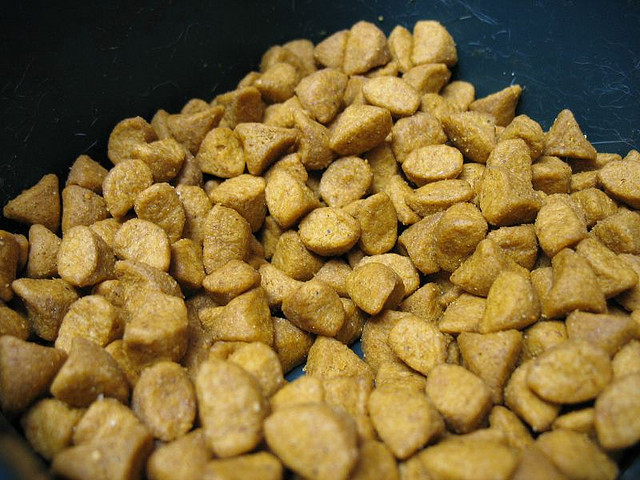
Super-premium cat food is the most common product in pet stores in Russia, as well as professional online retailers. Why do retailers place such a premium on this class? It's simple: it's expensive and high-quality. This ensures good profits and satisfied customers.
How does this class of cat food compare favorably to premium foods? Let's find out:
- Super-premium brands often offer pedigree, therapeutic, and dietary lines. After all, healthy eating is paramount in this class.
- The composition uses only the highest quality by-products, a minimum of grains (or their absence - grain-free), an excellent balance of vitamins, minerals and other components and, naturally, the absence of preservatives and other "chemicals".
- The special structure of the granules in dry food is optimally suited to pets' teeth.
- Typically, the best balance between protein content and price is found. This means that the food in this category is the most nutritious and quickly satisfies cats.
- The best possible packaging.
Some of the most popular brands of super-premium cat food include:
- Royal Canin
- Hills
- Proplan
- Akana
- Origin
- Ekanuba
- Shezir
Holistic class
So, the most mysterious class of cat food of all is holisticEveryone talks about it with bated breath, but few can clearly distinguish between real and super-premium cat foods. This isn't because it's difficult, but rather because there really aren't any significant differences, other than price. The main differences from super-premium cat foods are:
- Detailed composition display—with clear indication of the source of protein, carbohydrates, and fats. In practice, the package will clearly indicate the animal from which a particular by-product originates, as well as the carbohydrate and fat content.
- Elimination of gluten from the composition (although many even economy foods do not contain it).
- The price, they cost an order of magnitude more.
Which manufacturers produce holistic cat food? Evo, Innova, Acana, Felidae, Eagle Pack Holistic.
What to look for when choosing food
Be sure to check the ingredients. The fewer additives, colorings, preservatives, and grain/soy additives, the better. The closer the product name is to the top of the list, the higher the content. What else should you pay attention to when choosing food?
| Look up the abbreviation AAFCO | This certification not only confirms that the product has passed the required tests of the American Association for Feed Quality Control, but also that its nutritional content is balanced. This means that using this food will provide your pet with everything they need without supplementing with natural foods. |
| Protein (its nature) | If you see the word "protein" in the ingredients, check to see if the manufacturer specifies the specific protein they use. Also, check to see if the percentage of protein is included. Reliable manufacturers, who care not only about profit but also about their customers, will always list the percentage and type of protein. |
| Amount of feed | Find out how much food your pet needs. The lower the number, the better the quality of the product. High-nutrient content will provide your pet with the energy it needs. |
| Compound | Avoid foods containing bone meal, large amounts of grains or soy (these should not exceed half of the diet), or a large number of colorings and preservatives. Choose foods that contain not only vitamins (particularly E and C), but also liver and fish. This will provide your pet with iron and phosphorus, which are essential for their skeletal and circulatory systems. |
| Best before date |
Pay attention to expiration dates, as well as where and how the food was stored. |
Read also:


Add a comment