
Iris drops for cats
Iris eye drops for cats are a veterinary medication with bactericidal action. Their primary purpose is to treat ophthalmological diseases in animals caused by harmful bacteria and microorganisms.
The drug is also used as an emergency aid for eye injuries – the substances included in its composition block the spread of infection.
Content
Release form
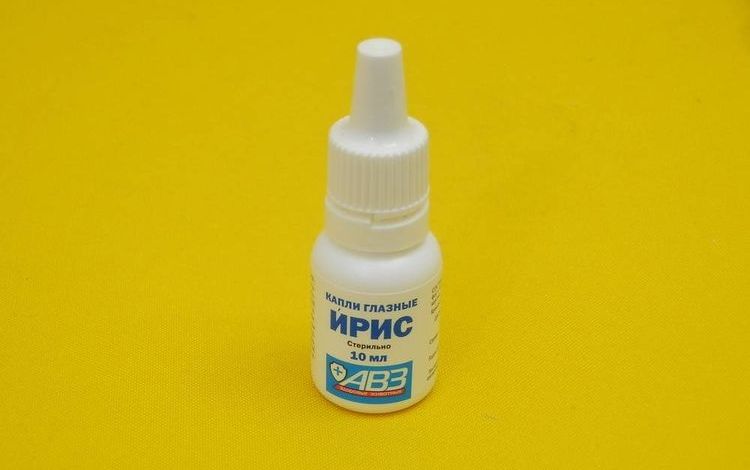
Iris drops are available in 10 ml polymer dropper bottles, sealed with a hermetically sealed rubber stopper with an aluminum tip. They are sold in cardboard boxes. Instructions for use are included inside each box.
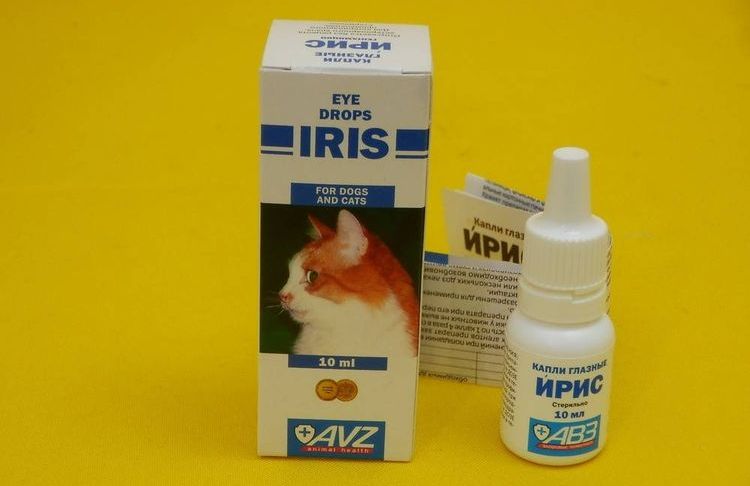
The medicinal solution has a transparent consistency, light yellow color, no heavy impurities or sediment.
Compound
The active ingredient of the drug is gentamicin sulfate. This aminoglycoside is considered a potent broad-spectrum antibiotic.
The composition also includes:
- sodium pyrosulfite technical;
- medium molecular weight medical polyvinylpyrrolidone;
- water for injection;
- disodium salt of ethylenediaminetetraacetic acid.
Price
Iris cat drops are available at pet pharmacies and animal clinics. Prices may vary slightly by region. In Moscow, a 10 ml bottle costs 190-200 rubles.
Operating principle
The active ingredient, gentamicin sulfate, is easily and quickly absorbed by the mucous membrane and penetrates the cornea. Its pronounced antibacterial action destroys pathogens throughout the entire eyeball.
This antibiotic reduces inflammation, accelerating the healing of injuries and infectious lesions of the conjunctiva and cornea. It is highly active against gram-negative and gram-positive cocci, including Pseudomonas aeruginosa.
The advantage of this product over its analogues is that it quickly and completely enters the intraocular environment, where it is distributed throughout the eyeball.
The treatment's effectiveness is achieved through this uniform distribution—the medication reaches all areas of the visual organ, even hard-to-reach areas. Thanks to this property, the drug is prescribed for many ocular pathologies and deep mechanical injuries.
Indications for use
The instructions indicate that Iris cat drops are prescribed to animals diagnosed with the following diseases:
- conjunctivitis, occurring in acute or chronic forms;
- conjunctivitis complicated by purulent discharge from the eyes;
- corneal erosions and ulcers;
- meibomitis;
- blepharitis;
- keratitis;
- a cataract resulting from infection;
- septic iridocyclitis;
- allergies to chemicals and other irritants, accompanied by swelling of the eyelids;
- other diseases.
Veterinarians also prescribe drops during the preparation for surgery and in the postoperative period.
This is important! Treatment will not produce the expected effect if visual impairment is one of the symptoms. chlamydia, peritonitis, mycoplasmosis and other pathologies. In this case, the underlying condition should be treated, and a veterinarian may also prescribe Iris drops.
Directions for use
The dosage of the drug and the duration of its use depend on the purpose of use:
- The prophylactic dose is 1 drop 4 times daily for 3 days. Some cats require 1 drop twice daily. The frequency is determined individually by a specialist, depending on the animal's health and age.
- Treatment for eye conditions lasts 7 to 10 days. Cats should receive eye drops four times daily, with a single dose of one drop, regardless of their weight.
- For inflammatory processes caused by the ingress of foreign objects, Iris is given four times a day, 1 drop at a time.
The veterinary product has a prolonged effect, but you should not skip treatments – eye drops, like most medications, provide a cumulative effect.
It is recommended to take them at regular intervals, ideally at the same time each day. Interrupting the course is not recommended, but if a day is missed for objective reasons, it is advisable to resume treatment immediately. The dosage is the same as before the break.
No specific reactions to the solution have been reported, but individual intolerance to one or more components cannot be ruled out. If your cat's eyes become red or watery, or if purulent discharge appears, consult a clinic.
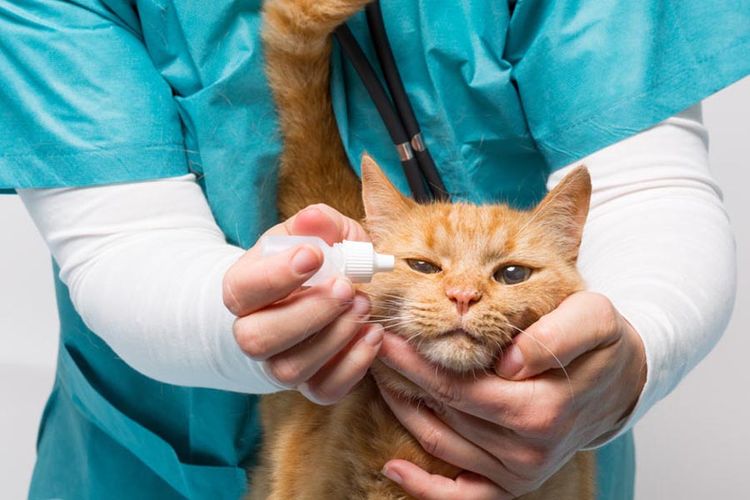
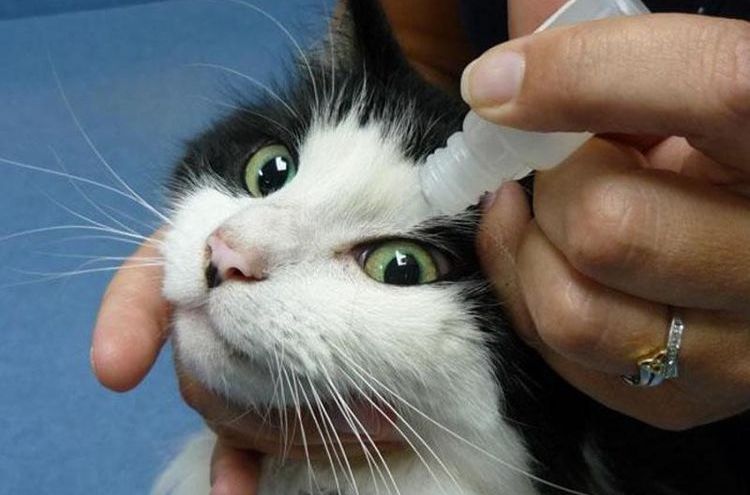
The owner should know how to properly administer the medication to the pet:
- First, wipe your eyes, eyelids, and under-eye area with a cotton swab soaked in a special solution. You can also use a herbal infusion or boiled water.
- The crust, dried discharge and growths are removed gradually - first you need to soak them.
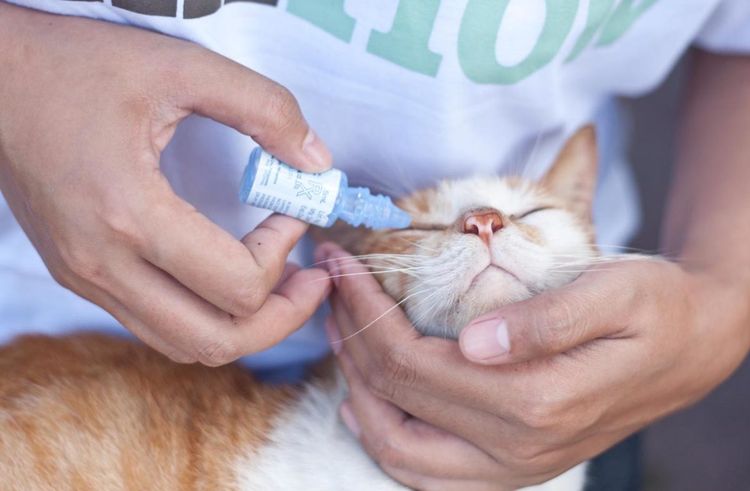
- It's best to have two people administer the drops to your cat's eyes: one person holds the animal while the other administers the drops. The drops should reach the lower eyelid area, which you'll need to do by pulling it back with your fingers and holding it there.
- Immediately after Iris administration, redness and a burning sensation may occur—a short-term reaction to an external irritant. Avoid allowing your cat to scratch its eyes, as this will render the medication ineffective.
- The drops take effect within 3-5 minutes. During this time, owners should calm the animal by petting it and preventing it from trying to escape.
- Afterwards, be sure to wash your hands.
Contraindications
The only absolute contraindication for the eye solution is intolerance to the main or auxiliary substances in the composition.
You should refrain from using it if your cat is pregnant or nursing.
In rare cases, an allergic reaction is possible. If you experience these symptoms, contact your nearest clinic and bring the medication and packaging with you.
The results of clinical trials of Iris have shown that there are no side effects when using it, and it does not enter into chemical reactions with food or other medications.
This is important! The key to recovery is strict adherence to dosage and treatment only as prescribed by a veterinarian. Independently increasing or decreasing the number of treatments can lead to complications.
Storage
A hermetically sealed bottle has a shelf life of 3 years from the date of manufacture. Store in a dark, dry place at a temperature of 18 to 20 degrees Celsius. Once opened, the contents should be used within 10 days, and any leftovers should be discarded.
Owner reviews
Elena, Vitebsk, Belarus:
"Last fall, we adopted a kitten from the street. About a month later, we noticed that one of her eyes wasn't opening fully. We went to the vet. He prescribed Iris. We used the drops three times a day for five days. We noticed an improvement within a couple of days. It's convenient that the drops form quickly, so one person can handle the procedure."
Greta, Tolyatti:
"I noticed that my 5-year-old cat had lumps in the corners of her eyes. This had happened before, but this time they were large and causing discomfort. On the vet's advice, I bought Iris and used it twice a day, and she responded well. What can I say? It's effective; within a week, the problem was gone. The thing that was concerning was that it's an antibiotic and contains additives. Fortunately, our treatment went without complications."
Veterinarian Reviews
Evgeniy, 7 years of work experience:
"Iris eye drops are suitable for cats and kittens. They are usually prescribed for therapeutic purposes; for preventative purposes, I choose gentler medications. While the drops do contain an antibiotic, they act locally—they don't spread beyond the eye. The only adverse reactions I've encountered in my practice are allergies, and even then, they're rare."
Albina, 3 years of work experience:
"Our center is frequently contacted by pet owners with ophthalmological problems. Iris, as practice shows, is one of the most effective and safest medications. It belongs to hazard class 4 (low-hazard substances). If the recommended dosage and other veterinarian advice are followed, there will be no side effects."
Read also:
- Panophthalmitis in cats: symptoms and treatment
- My cat has mucus in its eyes: what to do
- My cat has a watery eye: what should I do?



Add a comment