
Jungle cat (house, swamp cat)
Jungle cat or reed cat They have many other names: swamp lynx, house cat (from the Latin name Felis chaus), Nile cat, and jungle cat. This diversity is explained by the fact that there are several subspecies of this representative of the feline family. It is the reed cat that has recently attracted the attention of exotic lovers. Their popularity stems from their relationship with a recently recognized hybrid breed. Chausie also known as the hausi cat.
Content
Jungle cats and cats in the wild
The jungle cat's vast habitat extends from Western Asia and Asia Minor to southwestern China. In Russia, it is found in the lowlands of Dagestan and further along the Caspian Sea coast. These wild cats inhabit lowland forests along rivers and lakes. They roost on the ground, often in reed beds. For a softer sleep, they make a bed of wool and dry reed stems.
There are nine subspecies of jungle cats. Some, such as the Caucasian jungle cat, are listed in the Red Book and are critically endangered, while other species from northern India and Pakistan are steadily expanding their populations and habitat.
Since ancient times, wild jungle cats have had a reputation as dangerous and unpredictable predators, feared even by dogs. People tried to avoid the Hausi. Furthermore, this animal caused serious problems for villagers in winter, when it attacked poultry in search of food. Hunters, in turn, captured the jungle cats and used their pelts.
In rare cases, people have found orphaned kittens, taken them home, and raised them as pets.
Video: Jungle cats in the wild
Appearance
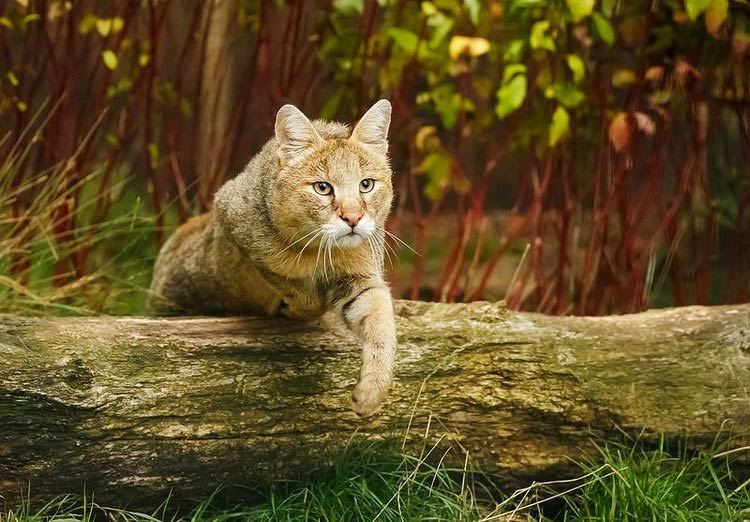
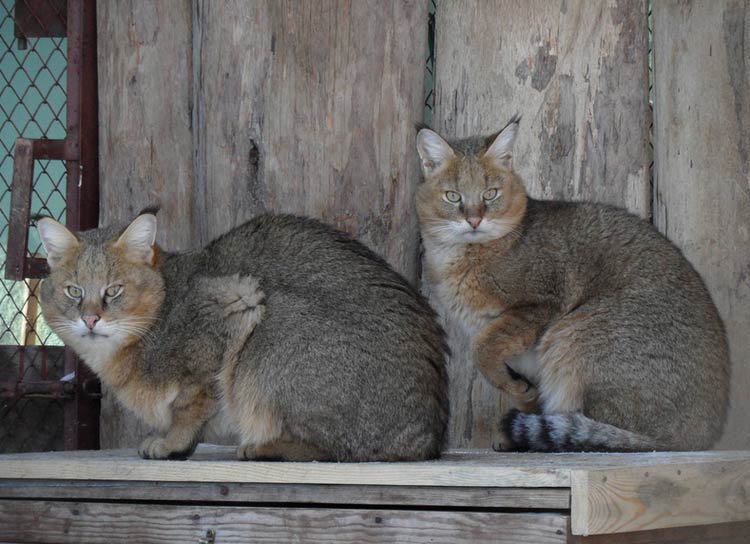
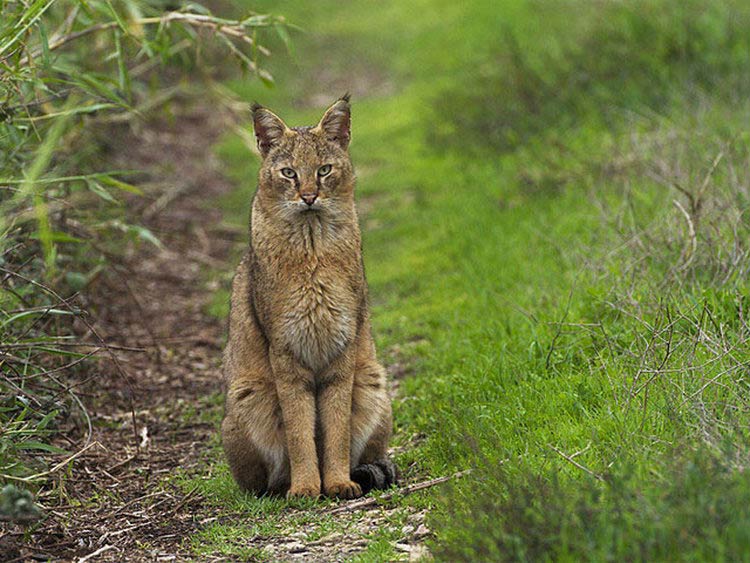
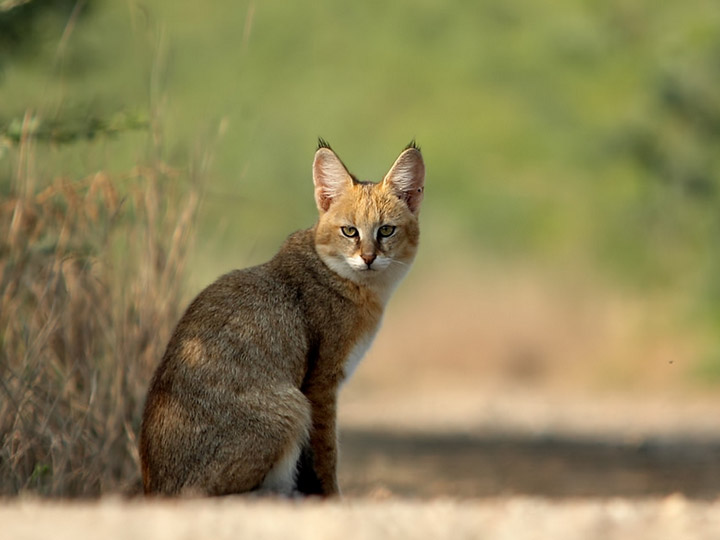
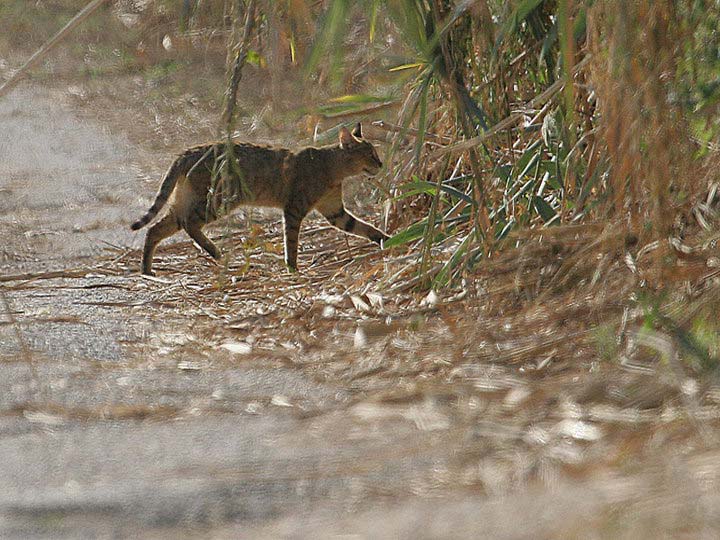
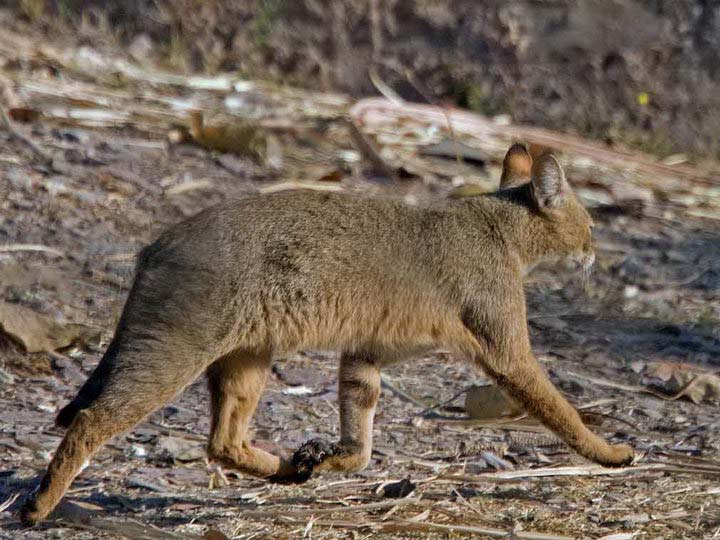
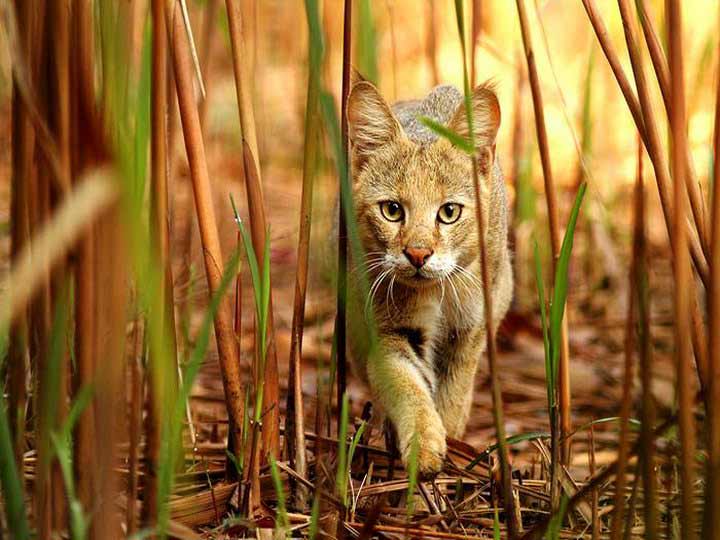
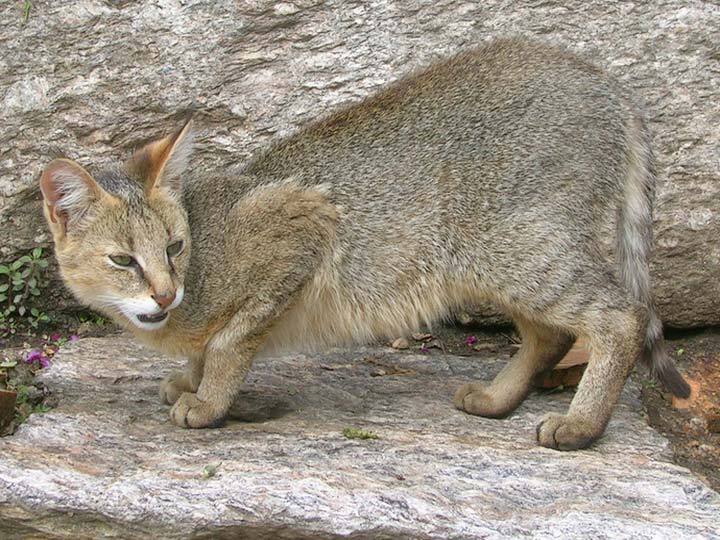
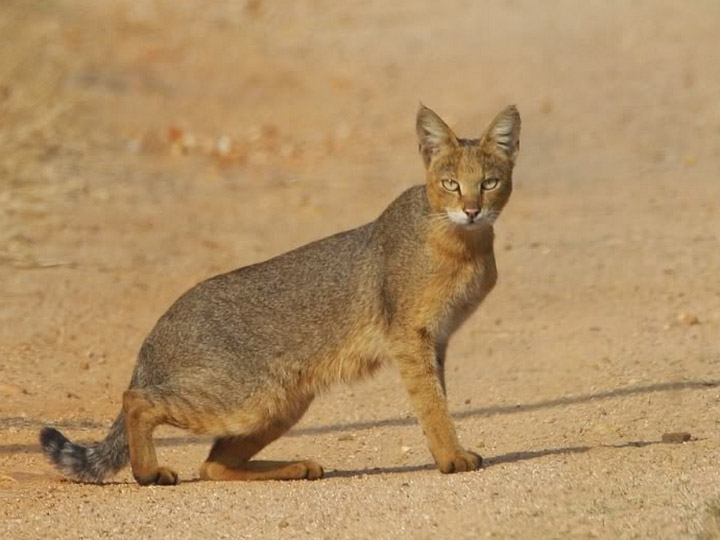
Jungle cats resemble common domestic cats in many ways, but also have some lynx-like features: tufted ears, a broad, slightly square muzzle, high paws, and a wild coloring. The Jungle cat is impressively large. Its body length ranges from 60 to 90 cm, and its height at the withers is approximately 40 cm. Its average weight ranges from 8 to 14 kg. Males are significantly larger and more powerful than females.
The coat is short, and its color varies slightly among species. Reddish-brown is the predominant color, with some areas of the body being lighter. The tail is short, reaching approximately 1/3 of the body's length. The body is robust, with well-developed muscles and long, strong limbs. The body is relatively short. The chest is square and broad.
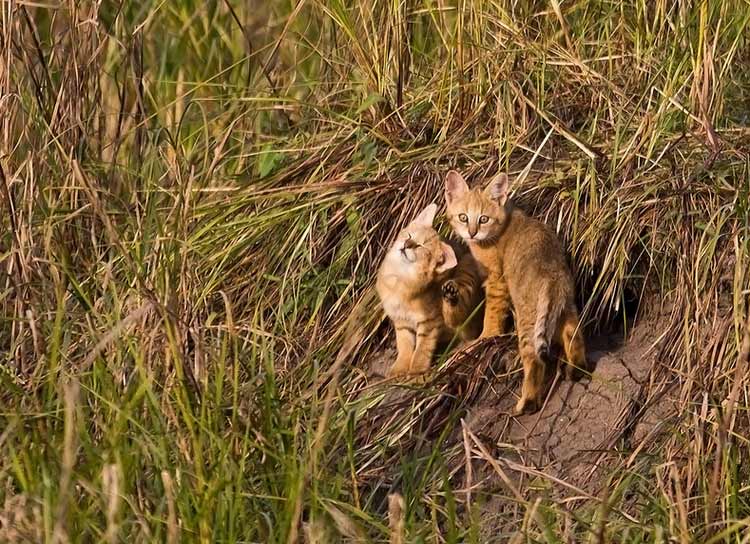
The jungle cat has excellent hearing, and its keen eyesight helps it navigate in the dark. The only thing nature has deprived it of is a sense of smell. While the animal can detect scents, it's much less so than its fellow cats. The photo clearly shows what a jungle cat looks like.
Character and lifestyle
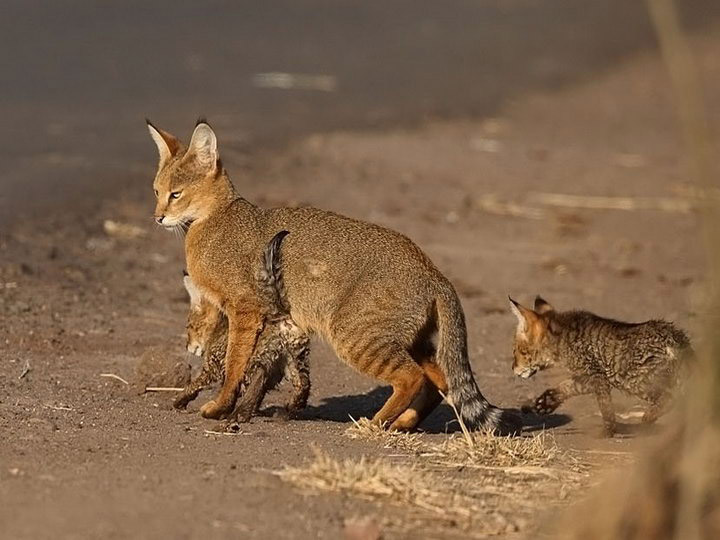
Jungle cats are predatory animals with complex temperaments. They are solitary creatures by nature, but that all changes with the arrival of spring. In February and March, mating season begins, no different from that of our domesticated pets, complete with screaming, fighting, and the search for brides. Several months of family idyll follow. The male and female cats raise their young together, sharing shelter and food. The kittens nurse on their mother's milk for up to three months. At five months, they leave the nest, and the family disbands.
Jungle cats are secretive and cautious, independent and self-sufficient, with a dynamic personality. Their behavior and lifestyle can be summed up in a few words: active, energetic, quiet, and unpredictable. Adult cats can express their needs with a loud, deep meow, although it's worth noting that they are generally quite silent. Kittens only snort and hiss.
Born in captivity, babies are very quickly and easily tamed, have a calmer disposition, but their wild blood periodically makes itself known.
Jungle cats see only one person as their owner. They will obey that person, but in return, they demand a lot of attention. They can be jealous when singling out their owner. Jungle cats are very intelligent and willful, valuing space and freedom. During periods of amorous exploration, they can be aggressive and dangerous, even if they have become accustomed to humans.
Diet
Jungle cats have a varied diet in the wild, including birds, reptiles, insects, fish, and small mammals. They prefer to hunt at dusk or at night.
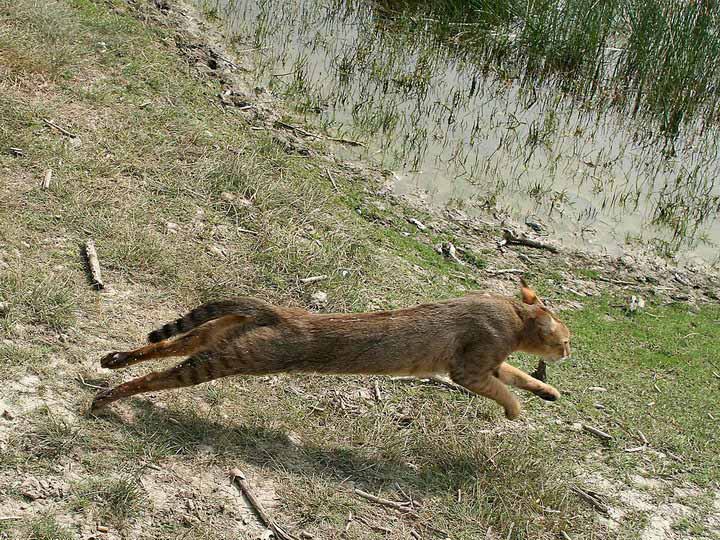
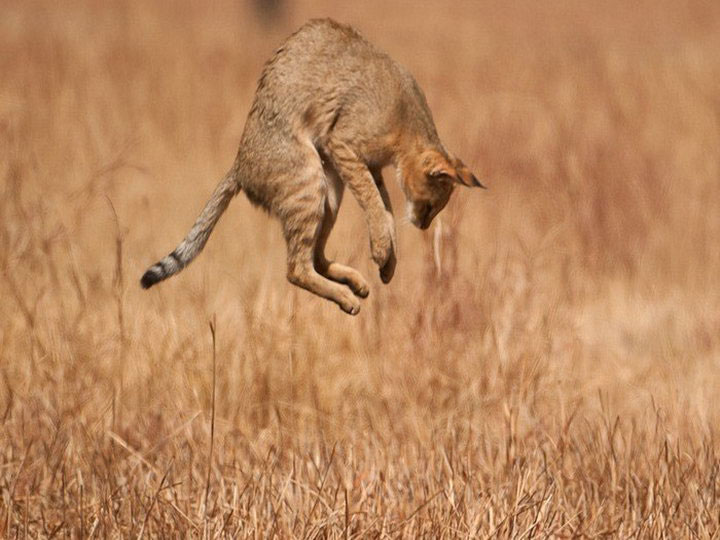
When hunting, these patient cats can lie in wait for hours until the curious face of a small rodent emerges from its burrow. They stalk birds, hiding in thickets, and then catch them as they take flight. Jungle cats often go fishing, employing clever techniques. They gently pat the surface with their paws, imitating the movement of insects, and then snatch the unwary fish with their claws or dive headfirst. If they come across bird nests along the way, they will definitely feast on the eggs or young chicks.
What to feed a domestic jungle cat
It is recommended to feed an adult cat once a day. The daily menu should consist of approximately 200 grams of meat. This can be lean beef, veal, a couple of live mice, or one rat. Chickens and quail are also offered as live food. Fresh or live fish is offered once a week. Fasting days are an important part of the care of this cat. Once a week, the predator is placed on a fasting diet for 24 hours. This is necessary to maintain the cat's health and normal weight. Vitamins and fresh greens are essential supplements. Kittens up to one year old eat twice a day, supplementing their diet with dairy and fermented milk products, calcium supplements, and other micronutrients.
Feral cats have difficulty digesting high-fiber foods, so experimenting with grains and vegetables is not recommended. Commercial dry foods should also be avoided.
Even holistic and super-premium diets contain grains, and their protein composition cannot satisfy the needs of a wild cat or maintain the necessary balance of the microflora of the digestive tract.
Keeping jungle cats in captivity
Keeping wild cats is a laborious and expensive undertaking, and raising kittens is a responsible process that, in addition to patience, requires knowledge of the jungle cat's character, habits, and the basics of animal psychology.
Adult jungle cats caught in the wild do not adapt well to captivity and are not tamed. However, they are sold on the black market for captive use.
The ideal place to keep a jungle cat is a country house. It's important to create conditions that allow the pet to run freely and exercise its instincts.
Living in an apartment or other confined space won't allow them to release all their energy. Initially, this will manifest itself in damage to things, from furniture to trimming. Over time, lack of exercise will lead to health and mental health problems; animals may become nervous, unruly, and aggressive, or even apathetic. Bringing a jungle cat into an apartment isn't the best idea. Their hybrids, the Chausie, are a different story, as they have a gentler nature.
It's worth remembering that jungle cats pose a potential threat to other pets, including dogs. Even a domestic jungle cat can scratch or inflict a painful bite.
A jungle cat lives in the apartment of a worker at the Yekaterinburg Zoo:
Taming and raising jungle cats
To prevent kittens from growing up aggressive, they need to be handled daily and given ample time to interact, play, and pet. Miss even one day, and they immediately become "wild." Young kittens snort and hiss very frighteningly, and may even extend their claws, but even this is no reason to cage them. Often, cats grow up quite calm, allowing themselves to be hand-fed and cuddle, but do not tolerate petting well.
Health
House cats are in excellent health, strong and resilient, and handle sudden changes in humidity and temperature well. They are recommended to receive standard cat vaccinations according to the same schedule and regularly be treated for internal and external parasites.
Where to buy a jungle cat: price and choosing a kitten
Purchasing a jungle cat isn't easy, but it's certainly possible. Several breeders breed and sell the kittens. There are also companies that sell wild cats, among other exotic animals.
Purchasing a jungle cat should be legal for at least two reasons. First, the animals must have documentation of their origin and health, which may be required of the new owner. Second, purchasing kittens or adult cats caught in the wild by poachers is unlikely to end well. As already mentioned, the animal will remain wild and can only live in an enclosed enclosure.
Unfortunately, even in breeders, no one can guarantee the character a cat will grow up with. Will it truly become tame or will it remain wild despite all attempts to domesticate it?
Now let's move on to the question: how much does a Haussy cat cost? The price of a Haussy cat kitten in Russia ranges from 100,000 to 150,000 rubles. If cats are sold for significantly less, be wary. Some scammers pass them off as Haussy kittens of similar coloring.
Photos
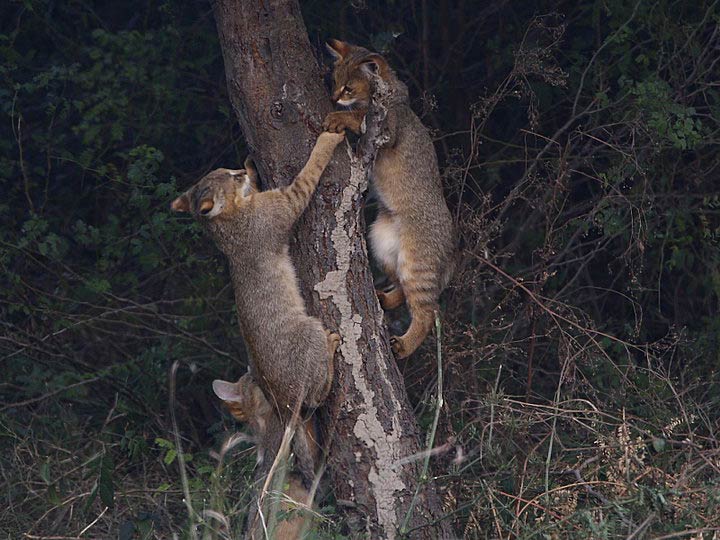
The gallery contains photos of wild jungle cats, male cats, and kittens.
The Chausie is a domesticated relative of the jungle cat.
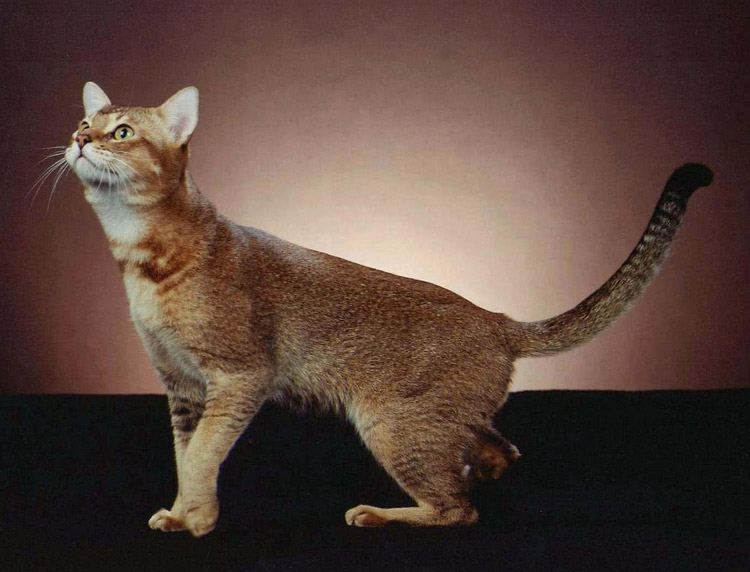
Often people use the name jungle cat to refer to the Chausie breed of domestic cats, which are hybrids of wild swamp cats and Abyssinian catsAmerican breeders began developing the breed in the late 1960s. The new breed inherited the toned, muscular body, coloring, and large size of its wild relatives, but retained the character of a domestic cat. Today, Chausie cats are quite rare and among the most expensive. The photo below shows that Chausie cats are very different from their wild relatives, but similarities in appearance are still evident.
The trend of keeping various exotic animals at home isn't always wise or justified. People often follow an emotional impulse, but forget the most important thing: raising and keeping a wild animal is actually very difficult, expensive, and troublesome. It's not only bad that the animals ultimately die for various reasons or are sent to zoos, but also that keeping them often leads to tragic accidents.
Read also:
- The caracal is a big cat for exotic lovers.
- Viverrid fishing cat (speckled cat, fishing cat)
- African black-footed cat (ant tiger)


Add a comment