
How to teach a dog the command "Attack"?
When we get a dog, we all want our pet to be intelligent and obedient, and to obey all the owner's basic commands. While an animal's intelligence cannot be influenced, obedience and command performance are achieved through training. One of the first things everyone tends to focus on is teaching the attack command. But it's important to know that the command to attack is not a basic command, but a specialized one. First, your pet needs to complete a general training course with an instructor before asking how to teach your dog the attack command.
Content
What do you need to know before teaching your dog the "attack" command?
As soon as your puppy arrives, you should behave in a way that helps your dog understand who's boss and establish a proper pecking order. Around two months of age, your pet is quite ready to learn basic commands, such as "sit," "lie down," "heel," "come," "voice," and, of course, "no!" Dogs learn these commands quite quickly.
Now, if you've decided it's necessary, you can begin training your dog to attack. Attack is a command your dog must follow to attack another person, whether it's an aggressive passerby or an intruder trying to break into your home. It's important to remember: training your dog to attack is entirely your decision, and you, and no one else, are ultimately responsible for the consequences of your dog's aggression.
If you're wondering how to teach your puppy the "Attack" command, the best option is to work with a professional dog trainer. After completing a general obedience course (OKD), the instructor will help you teach your dog the "Attack" command. Doing this alone is quite challenging; you'll still need a partner to help.
The basic technique for teaching the FAS command
How do you teach a dog to "attack"? The owner must be 100% confident in their pet's obedience, because in addition to the question of "how to teach a dog to "attack," it's important to remember that the owner must be able to stop the animal's attack at any moment. And if you're unsure about mastering the "no" and "come" commands, it's best to practice these commands first until they're perfect.
The very first training session should be conducted in a location familiar to your pet. Also, make sure there are no extraneous noises or distracting sounds—if we're teaching the dog the "attack" command, these will distract it from working. The training area should have a shelter for the helper and a tree to which the dog can be securely tied (any securely attached object will do).
Before the trainer arrives with the dog, the assistant hides behind a shelter and dons a protective sleeve. They should hold a rag and a rod, which they will use to provoke the animal. At the trainer's command, the assistant emerges from the shelter, tapping the rod on the ground to attract the dog's attention. They wave the rag, irritating the dog, and when the animal displays aggression, the trainer loudly and clearly states the command. When the command "Attack" is given and the animal behaves aggressively, the trainer should reward the dog with words like "good" or "well done," depending on the individual dog's habits.
The handler should apply gentle blows with the rod along the animal's body, further angering the dog. When the dog attempts to attack the rod, a rag is substituted. The handler should pull the rag toward themselves, as if trying to take it from the dog. The trainer should encourage the animal with cries of "good" and periodically repeat the command "attack." After a few minutes of struggle, the handler should run away, and the handler should praise the dog with petting and vocal praise. This exercise is repeated several times, helping both to teach the dog the command "attack" and to awaken its natural aggression.
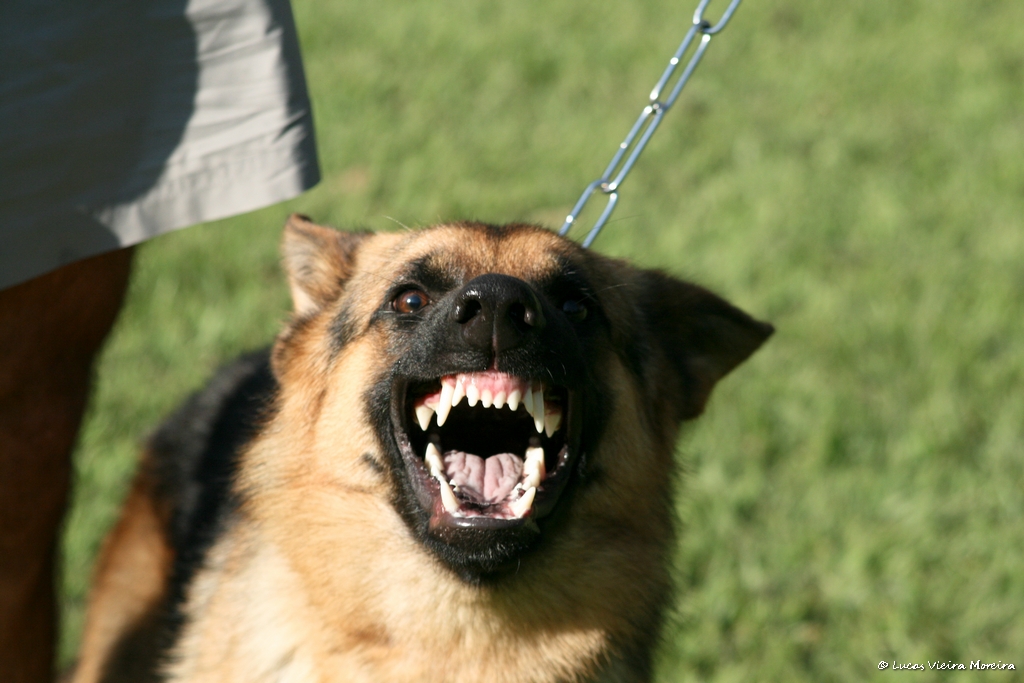
It's important to remember that the helper shouldn't hit the rod too hard, as this can trigger a negative reaction—the animal will become frightened and refuse to obey commands, trying to hide as quickly as possible. The consequence of such a mistake could be that the dog's response to the "Attack" command will be inappropriate, and changing this will be very, very difficult!
Another serious mistake in this training method is using the same helper for training. This approach can lead to aggression toward a specific person. It's also important to rotate the helper's clothing to prevent the dog from becoming accustomed to a single color or style, as this could also lead to attacks on random people in the future.
Other ways to teach the faz command
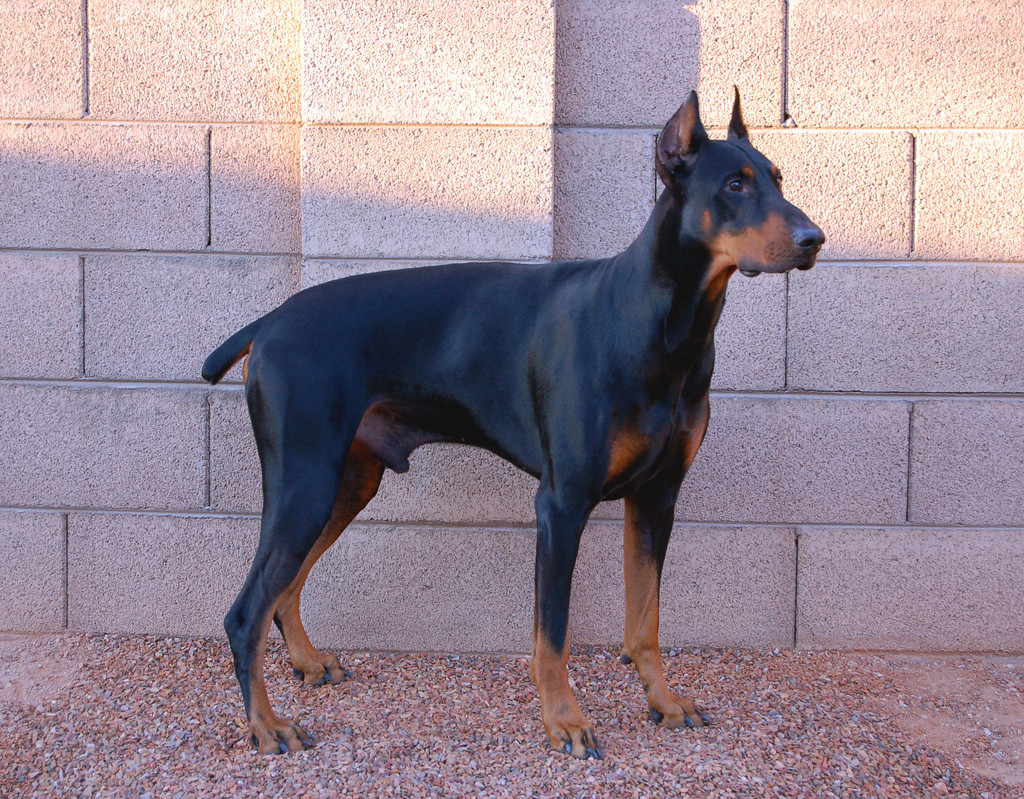
There are several other ways to teach a dog the attack command. Of course, service breeds learn much faster than others, and dogs like a German Shepherd or a Doberman are easily trained to attack a person—it's in their genes. For example, a dog like German The shepherd command "Fast" is very easy to learn – in just a few lessons you will see the desired result.
It's more challenging with calmer and more peaceful breeds like Labradors and spaniels, but even these good-natured animals can be taught the basics of aggressive behavior. The answer to the question of how to teach a Labrador the "attack" command is simple: through training, and nothing else. Even the kindest and most docile dog can be trained, which means all you need is a good trainer and patience—the process can be quite lengthy.
Let's look at three more ways that will help owners of four-legged guard dogs quickly and effectively teach any dog attack commands.
Method 1
One common method for quickly learning the attack command is to have the dog stand next to its owner on a soft leash, performing the "heel" command. A handler, positioned in a hiding place, emerges and begins slowly moving toward the owner and dog, tapping the ground with something and provoking the dog in every way. The handler repeats the word "stranger," encouraging the dog. If the animal behaves aggressively, the handler praises it verbally. The handler, when within a few steps of the dog, turns and attempts to run away. The handler then releases the dog from the leash, loudly and clearly giving the command "attack." The dog then chases the handler, and as soon as it catches up and attacks, it should be recalled immediately. By repeating this exercise, it is easy to quickly teach a dog the attack command, with the effect noticeable after just the first day of training.

Method 2
If your dog is naturally aggressive, another method for training the "attack" command is provocation with food or a favorite toy. The method involves placing the dog on a leash, and placing either its food bowl or favorite toy in front of it. A helper passes by and pretends to take the food or toy. The dog naturally begins to defend its possessions, reacting aggressively. At this point, the trainer should clearly pronounce the command "attack" several times in a row. This method works well with reserved, vicious animals that are aggressive either naturally or due to life circumstances. How to train a dog to "attack" using this method is a personal choice. You can get your dog to simply obey the command, or you can suppress its natural aggression by learning to completely control your pet.
Method 3
The third method for training a dog to obey the "attack" command is a method that teaches the dog to guard the house or yard even when the owner is not present. In this case, training dogs to obey the "attack" command proceeds as follows: the dog is in the yard, and a helper makes noise behind the fence, attracting the dog's attention and provoking a response. When the dog begins barking and showing aggression, the owner, who is in the yard, verbally praises the dog.
The handler can also slip a jacket or rag through the slightly open gate to further irritate the animal. After no more than 4-5 minutes of this training, the dog is put on a leash and led outside the fence, where the handler attempts to escape. At this point, the handler releases the dog, loudly and clearly commanding "attack." The dog begins to chase and attacks the handler. At the first sign of bites, the dog should be called back, and this exercise should be repeated until the dog obeys unquestioningly. This method is suitable for all working dog breeds—the question of how to teach a German Shepherd to "attack" is resolved quickly and effectively.
Breed characteristics of dogs
When starting training, it's important to consider your pet's personality and breed characteristics. If, for example, the goal is to evoke anger in a small breed, it's likely to be straightforward—small dogs are naturally aggressive and show results very quickly. Teaching a German Shepherd to "attack" is also straightforward—these dogs have been conditioned for decades to be aggressive toward people, so attacking is normal for them. Larger animals are much calmer—teaching a Newfoundland or a diver to "attack" will require considerable effort.
What about breeds that are not supposed to be aggressive towards humans? For example, fighting dogs, bred specifically for combat, were carefully culled during the breeding process if they showed even the slightest anger towards humans. Do they need the "attack" command? How can we teach them to obey orders against their instincts? There's no definitive answer to this question. Everything depends on the owner and their decisions, but it's important to remember that there are breeds for which aggression towards humans is unnatural, and training such a dog to attack can damage the animal's psyche, which could lead to tragedy in the future. Treat your pet responsibly.
Read also:
- Guide Dog: The Best Breed
- Guard dog breeds for private homes
- UGS for dogs: what is it and what does it include?


Add a comment