
Interesting facts about dogs
The friendship between humans and dogs is long, sincere, and mutual—that's beyond any doubt. And it seems we know everything about our four-legged companions: what to feed them, how to care for them, train them, treat them, and so on. They even sleep next to us in bed—well, at least with many of us. Statistics show that about 50% of dogs "rest" on their owners' beds. But there are still some facts that animal lovers are still unfamiliar with. And while they may not be particularly valuable from a scientific or educational standpoint, they are very vivid, vivid, and interesting to experience.
Content
20 Interesting Facts About Dogs
-
Dogs have a dominant paw.
Just like humans have a right or left hand, dogs also have a dominant paw. This can be determined by which paw they most often use to reach for a toy or initiate movement. -
Dogs sense the Earth's magnetic field
Research shows that when defecating or sleeping, they often align themselves in a north-south direction. The mechanism behind this behavior is not fully understood. -
They can recognize people's faces in photographs.
Even without smell or voice, dogs can recognize their owner or a familiar person on a phone or TV screen. -
Dogs can recognize up to 250 words.
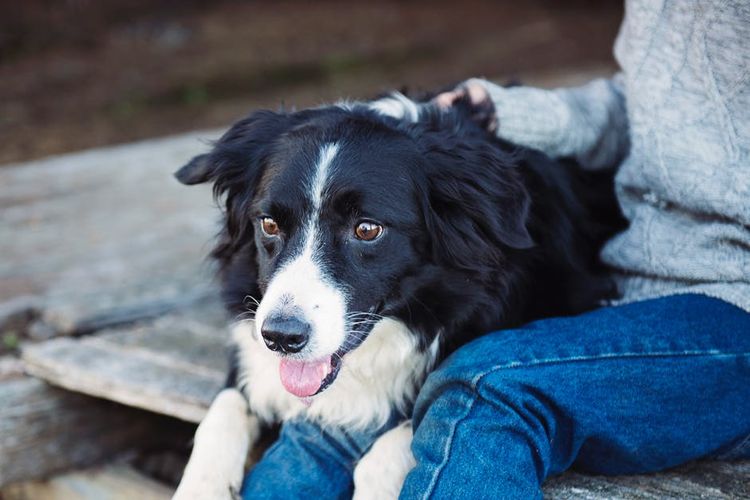
Particularly trainable breeds, such as the Border Collie, exhibit a level of intelligence comparable to a two-year-old child. -
Hearing is 4 times better than human hearing
Dogs can detect high-frequency sounds (up to 65 kHz) that are inaudible to the human ear. -
The sense of smell is 10,000 to 100,000 times more sensitive
They can detect a single odor molecule in a huge mass of air—this is the basis for the use of dogs in medicine and rescue operations. -
Dogs can "smile"
A dog's smile is not just a behavior, but a form of imitation of a person and a sign of affection. -
They can only sweat through their paws.
Unlike humans, dogs do not have sweat glands on their bodies; they cool themselves through breathing (frequent "tongue breathing"). -
Dogs have a sense of time.
Dogs are actually able to sense the difference between 10 minutes and 3 hours, based on smells, light levels, and the rhythm of the day. -
Dogs can distinguish music
They react differently to styles: classical music is calming, while hard rock can cause anxiety. -
Dogs can be colorblind, but not completely.
They see blue and yellow shades, but have difficulty distinguishing red and green colors. -
The tail is a means of communication, not just emotions
The direction, angle and speed of tail wagging convey information to other dogs: joy, fear, aggression. -
Dogs are capable of learning from video.
Some animals can learn behavior by watching recordings of other dogs. -
Dogs can tell lies
If a person repeatedly deceives a dog (for example, pretending to throw a ball), the animal may stop trusting him. -
Dogs can distinguish quantities
They are able to visually distinguish 1 from 3 or 2 from 4 objects - this has been confirmed experimentally. -
Dogs prefer the left side of people.
Instinctively, they are more often located on the left - hence the training rule "dog at the left leg". -
Every dog has a unique "nose print"
Just as humans have unique fingerprints, no two dogs have the same nose patterns. -
Puppies are born blind, deaf and toothless.
The eyes and ears open only 10–14 days after birth. -
Dogs sense the onset of an epileptic seizure
Their sense of smell can detect changes in body chemistry, and they begin to warn the owner in advance. -
Dogs remember events better than they think.
They remember places, people, smells, associations and can relate them even months later.
Physiological features
It's well known that dogs distinguish colors, tastes, and smells, and possess impressive intelligence. If their mental abilities were compared to those of humans, the average potential would be equivalent to that of a two-year-old child. Other interesting observations include:
- Dog nose prints are as unique as human fingerprints. This fact is actively used in forensic science to investigate crimes involving both humans and animals. All breeders are also required to keep nose prints of their dogs in case their pet needs to be identified or insured.
- Dogs' dreams can be just as vivid as human ones. Moreover, puppies and "senior" dogs dream about movies far more often than middle-aged dogs. And they dream of both good and bad dreams. Surely every owner has plenty of stories of their pet smiling, squinting, twitching its paws, or wagging its tail with its eyes closed, or, conversely, whining, trembling, and then waking up completely disoriented.

- Not only humans but dogs sweat too. However, the sweat secreted by dogs is not located under the arms, but on the pads of their paws. You can confirm this by observing your dog outside or in a stuffy room during the summer—they will leave wet marks on the floor or ground. A slightly salty odor, vaguely reminiscent of corn chips, also serves as evidence.
- Dogs also boast the ability to fall in love, forming genuine bonds with people and other animals. When in contact with a desired "object," their brain releases the love hormone oxytocin. The subsequent process is identical to human emotions—the more hugs and kisses, the more butterflies, joy, and pleasure they feel.
The depths of history
It turns out that dogs played a major role in the exploration of the North and South Poles. Their help made it possible to conduct various scientific research and conquer the snowy, cold, and inaccessible Arctic expanses. Many interesting discoveries can also be "dug up" from the distant past, thousands of years ago. For example:
- In ancient Egypt, not only cats but also dogs were idolized. So much so that the animals were even depicted in numerous drawings, both in their purest form and as humans with dog heads. After the death of a dog, its owner would often shave his eyebrows, smear his hair with mud, and walk around like that for a while, showing his grief to those around him.
- In ancient China and Japan, Pekingese were especially prized, often serving as personal servants. The small dog cost a fortune, and only the wealthiest and most influential members of the court—including the emperor, of course—could afford to keep one. A better gift than a long-haired, comical dog was hard to come by in those days.
- Frantic love sometimes gave way to unbridled hatred. Thus, during the fall of Rome, dogs were credited with magical powers—in the worst sense of the word. The poor animals were considered werewolves, hunted, cursed, and hated with every fiber of their dark and troubled Roman souls.
Emotional intelligence and empathy
Dogs have subtle emotional abilities:
-
They detect fear by the smell of sweat and react to the owner’s anxiety.
-
Their yawning can be contagious to humans—a sign of emotional connection.
-
Levels of the hormone oxytocin, associated with trust and bonding, increase in dogs when in contact with humans.
These facts reveal that canine empathy is not only intuitive but also physiological.
Cognitive abilities
Dogs demonstrate remarkable intellectual skills:
-
Some Border Collies can remember hundreds of toy names.
-
They can learn new commands and remember objects by name.
-
They understand people's gestures and facial expressions and show signs of "theory of mind": they look at the owner if they cannot solve a problem.
-
Street dogs remember people who feed them regularly and recognize them from a distance.
Organism and anatomy
A table of little-known anatomical features of dogs:
| Indicator | Description |
|---|---|
| Sweat in the paws | Streams are secreted only through the paw pads - helps cool the blood |
| Third eyelid | The protective membrane moisturizes the eye and protects against impurities |
| Patterns on the nose | Every dog's nose print is unique, just like human fingers. |
| Sense of smell | Thousands of times more sensitive than humans, it allows us to recognize diseases and emotions |
| Color vision | They sense blue and yellow shades, but don't see everything in black and white. |
| Night vision | A special surface in the eye reflects light, improving night vision. |
| Sleep and dreams | They see dreams, and in their sleep they can move and make turning sounds. |
Interesting behavioral facts
-
Some breeds, like the Basenji, do not bark, but make soft sounds.
-
Some northern breeds have extra toes called "horns" to provide stability on uneven ground.
-
Dogs have a sense of time and can sense their owner's return.
-
Some hounds are capable of running marathons—ice races for dogs are held in the Urals and Siberia.
Riddles and clues about breeds
Many things in our lives are accepted without question or doubt, based on the principle that things should be this way and not another. But if you dig deeper and show curiosity, you can discover tons of fascinating information. The topic of dogs is no exception.
- It's generally accepted that the French poodle's birthplace is France. But no, it's Germany! The word "pudel" itself, translated from German, means nothing more than "splashing dog." It's a cliche, but it's true. Another myth—that these curly-haired beauties were bred to grace the living rooms of the wealthy—has been debunked. These dogs were actively used for hunting, and to prevent their fur from getting tangled while swimming across bodies of water, they were shaved almost bald. The famous haircut poodles Initially, it had a completely different purpose - some of the wool was left to retain heat.
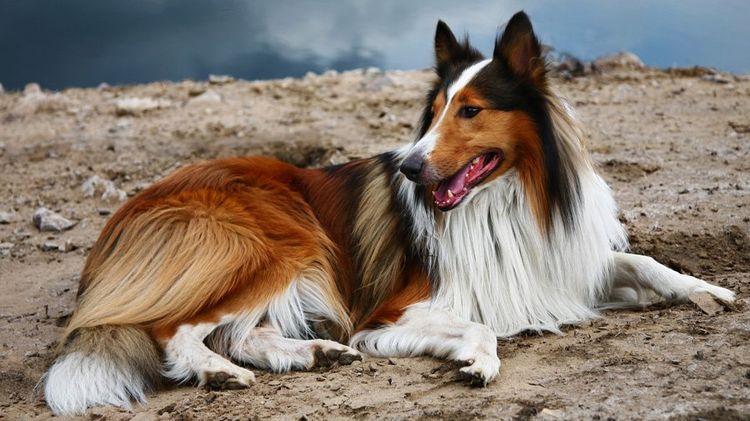
- Today collie is on the list the smartest dog breedsBut in ancient times, it was the other way around—animals were considered vicious and talentless. And all because these dogs have Scottish roots, and the Scots had long been considered poor and uneducated. This changed when Queen Victoria, inspired by her love for the breed, introduced collies into fashion in the 19th century.
- Boxer dogs are rightfully considered among the strongest and most resilient. They often serve in police forces, working alongside their two-legged counterparts. The breed's name is often attributed to the dogs' distinctive fighting style with their front paws, reminiscent of a boxing match.
The very best
For some reason, no one has yet thought of creating a dog book of records, and it's long overdue. There's plenty of information about record-breakers:
- London-born English Mastiff Aikama Zorba holds the title of "world's largest dog" - he weighs 160 kg and stands 94 cm at the withers.
- Sylvia, a Yorkshire Terrier, became the smallest representative of her breed. Although she has long since passed away, her record-breaking measurements remain unchanged: 8.9 cm in length and 6.4 cm at the withers.
- Giving birth to 23 puppies at once is no joke. Several recent cases of this phenomenon have been recorded. The record-breakers were: the St. Bernard named Carefree Ann from Missouri (1975), the Irish Setter named Settrina Baroness Medina from Yorkshire (1974), and the foxhound named Lena from Pennsylvania (1944).
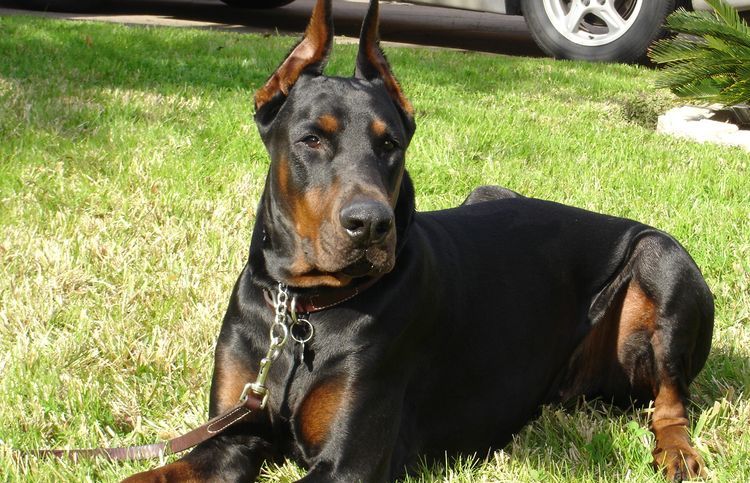
- Sauer, a Doberman Pinscher, earned recognition in police service, becoming a living legend of criminal investigation in the 1930s. The dog tracked a dangerous criminal by scent over a distance of 160 km—a unique sense of smell.
- She can safely be called an award-winning actress. Scottish Terrier Brae-beris (Florida, USA). Her collection includes 203 Best in Show medals.
- Gunther III, a male dog, inherited a whopping $373 million after the death of his owner. Despite his devastating condition, the dog couldn't bear the separation and loneliness, dying just a month after the Countess. However, his descendants didn't grieve, and today Gunther IV is considered the most pampered dog in the world. He was incredibly lucky, as the will stipulated that all money would be passed down the canine line.
The stories about dogs' lives can be long and colorful. Some may find them strange, others implausible, or, conversely, funny and harmless. But one thing is certain: no one will remain indifferent to what they read.
Read also:


Add a comment