
A hybrid of a dog and a wolf
The hybrid of a domestic dog and a wild wolf has several names – wolfdog, a wolfdog and a half-wolf. This breed, never officially recognized by canine communities, was only finally developed in the 20th century and was intended to meet the needs of intelligence agencies in need of tireless, hardy assistants with strong immune systems.
Content
Archaeological finds
The first evidence of wolfdogs, hybrids of wolves and dogs, dates back to the Upper Paleolithic. At that time, these animals were aggressive and incapable of domestication and training. The fossilized skeleton of the very first wolfdog was found in what is now the United States of America. The remains were dated to be approximately 10,000 years old.

Burials of half-wolves, which in life settled near human dwellings, have been discovered in European lands, but they date back to the 22nd-24th centuries BC. Unfortunately, it's impossible to consider them true hybrids: artificial selection was unlikely to have existed in those distant times, and the fact of their natural origin and development in the wild can no longer be accurately established due to the passage of time.
In 2010, in the city of Teotihuacan, located 50 km from the Mexican capital, depictions of half-coyotes, half-dogs, and half-wolves were discovered. Archaeologists determined that they appeared there over 2,000 years ago. This assumption is supported by existing evidence that in the second century BC, the city was the regional center for all nearby territories. However, scientists were unable to conclude whether the hybridization was intentional.
Stages of experimental study
Zoological experiments began to flourish in Germany. As early as the 1370s, the Germans managed to breed as many as 200 crossbred specimens! However, it later became clear that not only were none of the animals trainable, but they were even incapable of socialization. The animals panicked at any attempt at training and became aggressive when approached by their fellow animals and strangers. Only those who regularly fed them were able to approach them. A subsequent mating between a wolf and a poodle also proved unsuccessful.
Another hybrid experiment was undertaken by the British, who in 1766 crossed a female dog, resembling a shepherd, with a male wolf. The nine resulting puppies were named "Pomeranian dogs." These unusual creatures, completely unsuitable for use at the time, were given away to menageries and sold to the wealthy. Unfortunately, the British were not destined to repeat their success. All subsequent crossbreeding attempts failed.
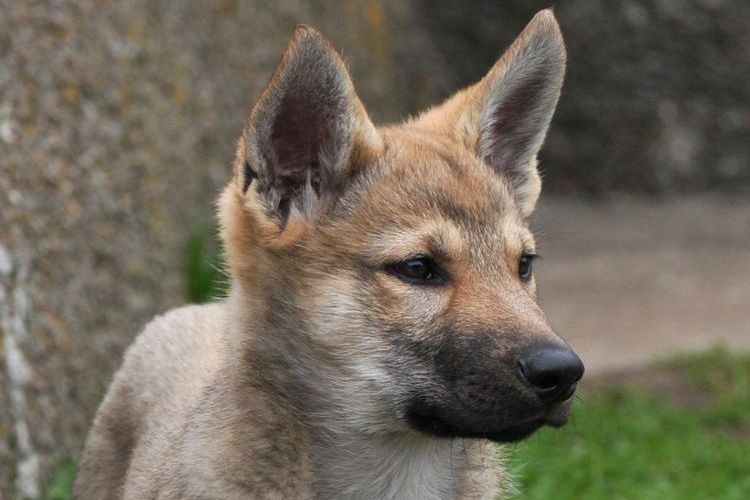
The half-wolf pups, first recognized by the Fédération Cynologique Internationale in 1981, were born from the mating of a female wolf named Fleura, who had been raised in close proximity to humans, with a male German Shepherd. This occurred in the Netherlands in 1925. The work was led by Dutchman Lander Saarloos. Eight months after the initial experiment, the scientist selected some of the puppies and continued breeding experiments.
In 1962, the male Saarloos wolfdog, named after its "discoverer," was again crossed with the domesticated predator Fleura. However, after some time, the Dutch half-wolves were deemed untrainable and were given away to zoos, despite the fact that they contained only 10% of their wild ancestors' blood!
The work in Czechoslovakia was successfully completed in 1955. Karel Hartl, collaborating with the Libejovice military kennel, developed the "Czech Wolfdog"—a breed that was similar in physical appearance and appearance to a wolf, but still had the character of a German Shepherd.
While the first litter died shortly after birth, the second litter performed exceptionally well. The puppies, 50/50 wolf, proved themselves to be well-behaved and docile. Today, the wolfdog, sold under rather strict conditions in four Czech zoos, remains a distinct variety of wolfdog and is even considered the country's national breed.
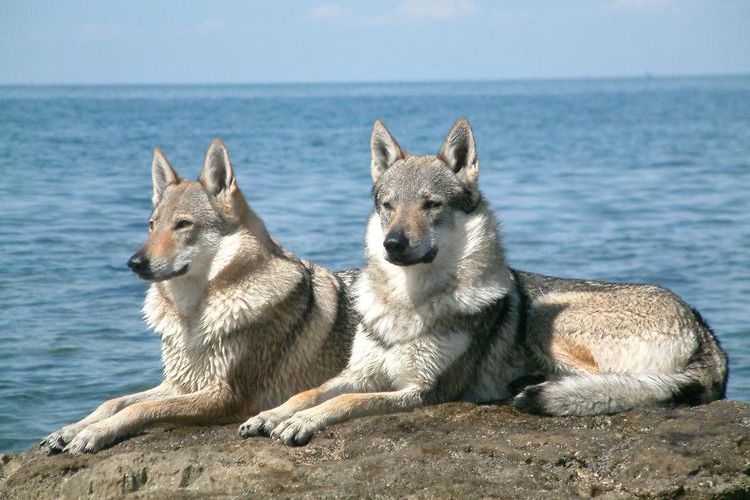
In 2003, a Russian experiment led by Vyacheslav Makhmudovich Kasimov was successful. Perhaps the mating was successful because it lacked the artificiality of a laboratory: the she-wolf Naida independently chose a mate after four years of diligent searching. She and a male German Shepherd gave birth to puppies that resembled their mother in appearance and their father in personality. They were successfully socialized, resulting in the worldwide recognition of the "Russian (Perm) wolfdog" breed.
Canine breeders who breed these unique animals still adhere to the cardinal rule of crossbreeding: the wild predator must be accustomed to both human and canine companionship from puppyhood. Otherwise, these gray "forest orderlies" may simply kill their partners, as they instinctively view dogs of both sexes as enemies.
Appearance and physical characteristics
Photos of dog-wolf hybrids show that as adults, they share the coloring and appearance of their wild ancestors, but are much smaller. An adult male weighs only 40-50 kg and stands 55-60 cm tall. Females typically weigh around 35-40 kg and stand 50-55 cm tall.
Regardless of gender, these animals have a strong, albeit lean, build, with strong jaws and long, sinewy limbs. In the photo, the wolf-dog hybrids have gray fur, which is quite natural: this coloring is indeed typical of most individuals. If a German Shepherd was used in the mating, the pups will likely be dark, almost black, while if a Laika or Husky was used, the litter will be gray or even white.
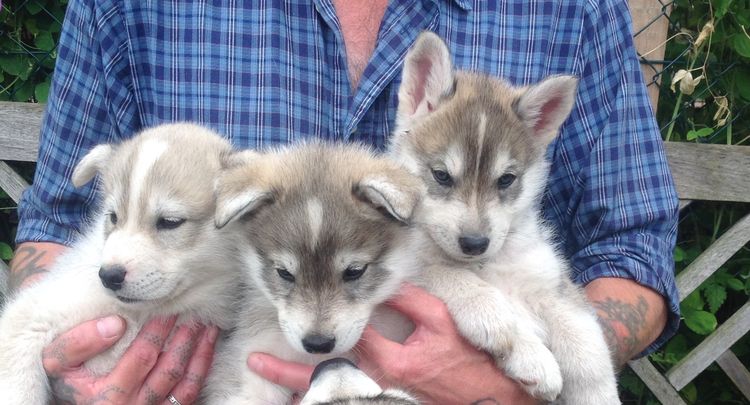
A hybrid breed can live from 16 to 18 years according to actual statistics, and up to 25-30 years according to theoretical estimates, while human four-legged pets only occasionally reach 20 years. Half-wolves are virtually immune to hereditary diseases and other pathologies (gastric torsion, dysplasia, etc.). They possess high intelligence, a keen sense of smell, energy, and titanic innate health.
Character
Although the behavior of semi-wild animals isn't directly related to the percentage of carnivore blood they contain, humans still avoid critically high levels. So, if a wolfdog's wolf blood content doesn't exceed 15-20%, a professional shouldn't have any problems training it.
Important! Wolfdogs should only be bred by qualified dog handlers, as even an initially docile animal risks becoming uncontrollable in inexperienced hands.
Typically, problems that arise are not related to aggressiveness (this trait is quite rare, solely due to irresponsible owners), but rather to timidity. A normal individual is characterized by sociability, a stable psyche, and a lack of strong attachment to one person.
Content
The price of a wolf-dog hybrid in Russia ranges from 20,000 to 30,000 rubles, with the puppy's price depending on its origin, sex, and color. Currently, there are no official breeders of these animals in the country, as they are used only for field trials. Owners who raise them know that the half-wolf breed is strictly prohibited:
- Keeping in an apartment. These animals will only thrive in a spacious country house with a private, fenced enclosure. They can be allowed indoors, but should still spend most of their time outdoors.
- Feed prepared food. The diet should include porridge cooked in organ meat broth, fresh meat, liver, kidneys, lean fish, vegetables, and dairy products. The main rule: protein should outweigh carbohydrates.
- Keep with other pets - cats or dogs, especially of the same sex.
- Chaining. An animal restricted in movement can go berserk, sick, or insane at any moment. Furthermore, it will howl incessantly and mournfully.
- Raising a wolf is difficult for someone who isn't particularly strong-willed. Every half-wolf still retains memories of life in a pack, so they need a strong leader.
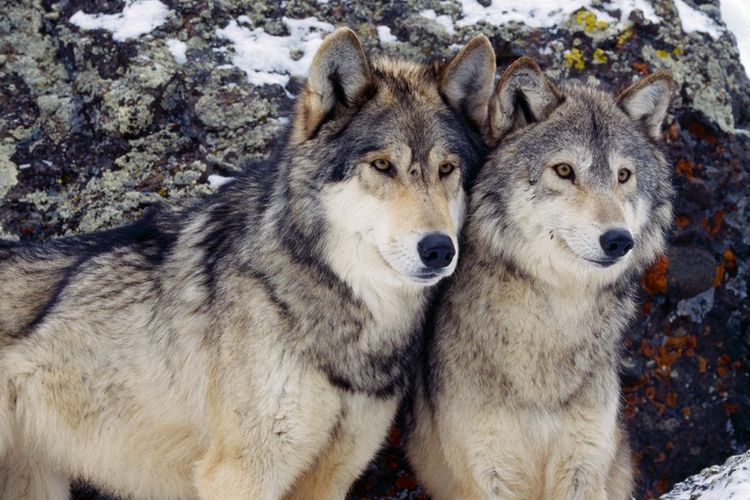
If you follow all the care recommendations, even such an unusual creature can be raised to become a tireless helper, an excellent guard, and a loyal friend for many years.
Read also:


Add a comment