
Doberman is a breed of dog
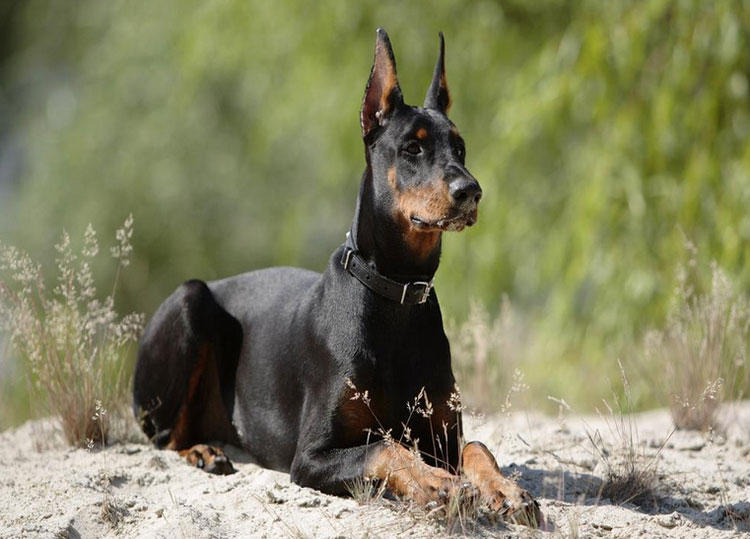
The Doberman is a dog with a beautiful appearance, a keen intelligence, lightning-fast reflexes, sensitivity, fearlessness, and loyalty—to name just a few of its virtues. Many believe that Dobermans are very aggressive, but this is not true. These dogs only display their fighting spirit when their family or property is in danger. In many countries around the world, Dobermans are among the most popular breeds.
Content
History of origin
The Doberman is a relatively young breed, having only been registered in 1880. It emerged thanks to the efforts of Friedrich Doberman, a policeman from a small German town.
Friedrich Louis Dobermann was born in 1834 in the city of Apold. He was a rent and tax collector. His work required him to always have a reliable four-legged companion by his side. Disillusioned with many Dobermann breeds, he decided to develop his own. Friedrich dreamed of creating the ideal companion—a medium-sized dog with a sleek coat, quick reflexes, a keen mind, and a balanced ferocity.
Breeding work began in 1860. Unfortunately, no records survive. Many experts considered the Doberman a presumptuous amateur, but his work, in the form of large, smooth-coated dogs with cropped ears and tails, quickly gained popularity. It is believed that many other breeds were involved in the development of the Doberman, including bosseron, Old German Pinscher, Rottweiler and some hunting dogs.
It is interesting that Dobermans were initially called Thuringian Pinschers, and only after the death of Friedrich Doberman was the breed given the name of its founder.Dobermans first appeared as an independent breed at a show in 1863 in Hamburg, Germany. A stud book was established for them in 1876. In 1894, the breed was renamed from the Thuringian Pinscher to the Doberman Pinscher. And since 1949, the dog has simply become the Doberman.
Video review of the Doberman dog breed:
https://youtu.be/pJTVbdgYRGA
Appearance and breed standards of the Doberman
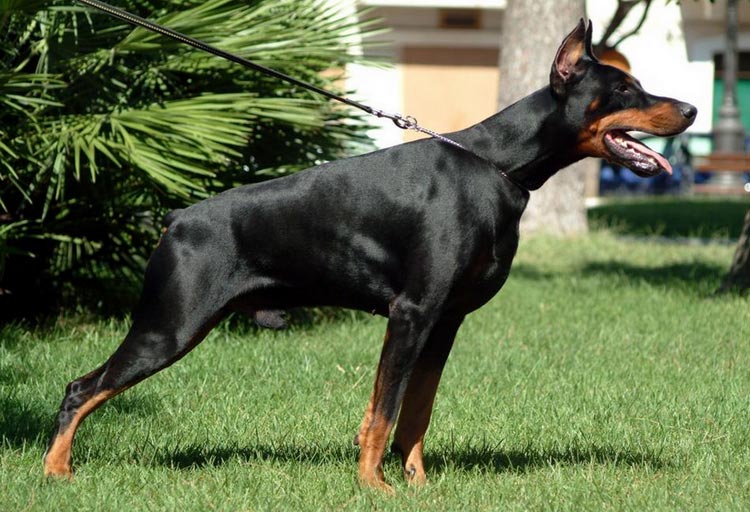
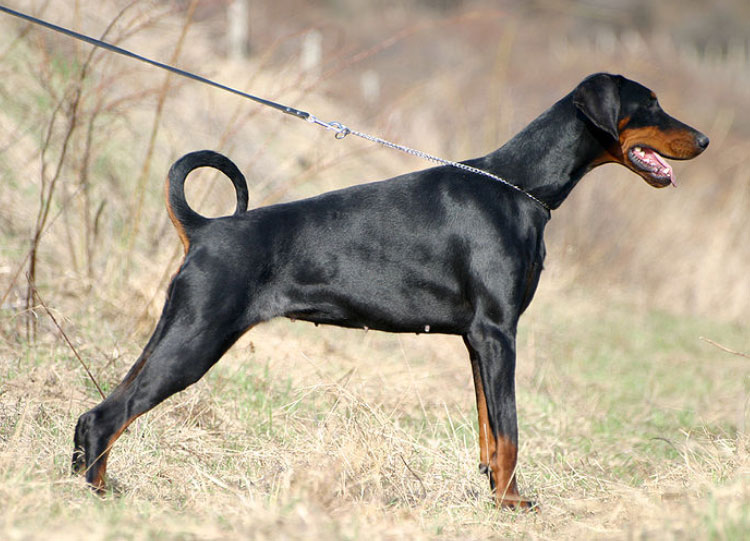
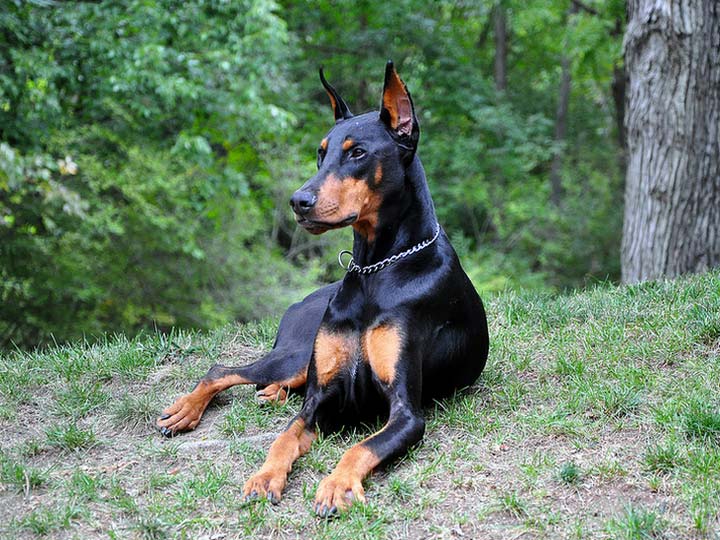
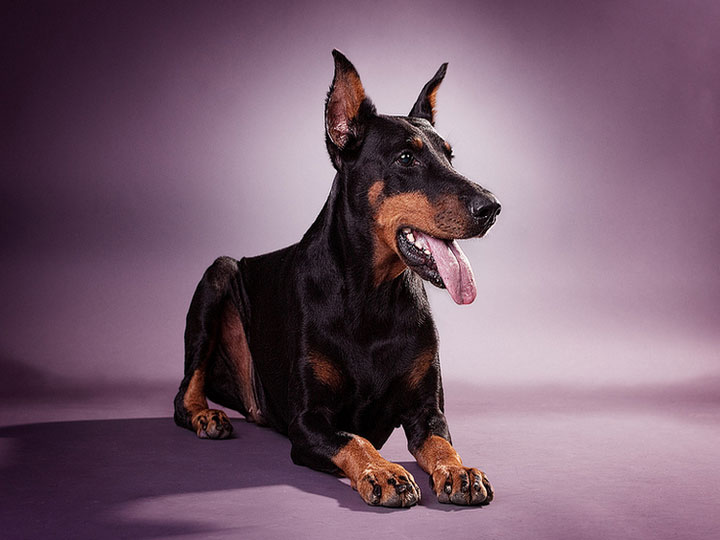
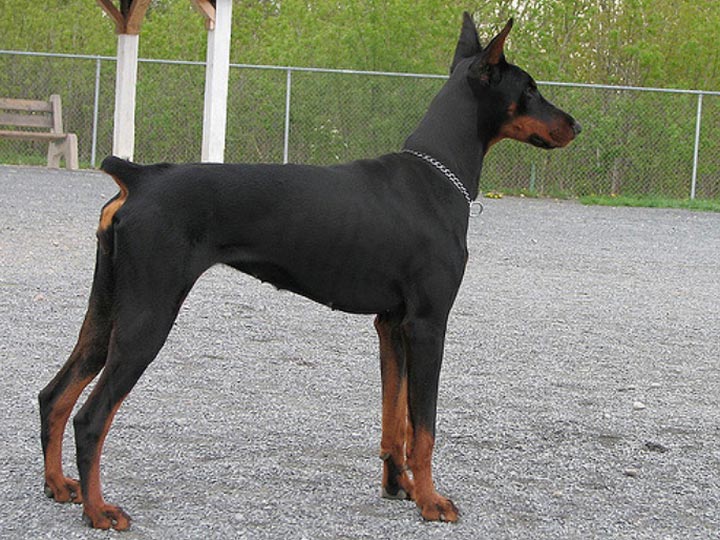
The Doberman is a medium-sized dog with a proud posture and a strong, muscular build, without being overly bulky. Dobermans stand 63-72 cm at the withers and weigh 32-45 kg.
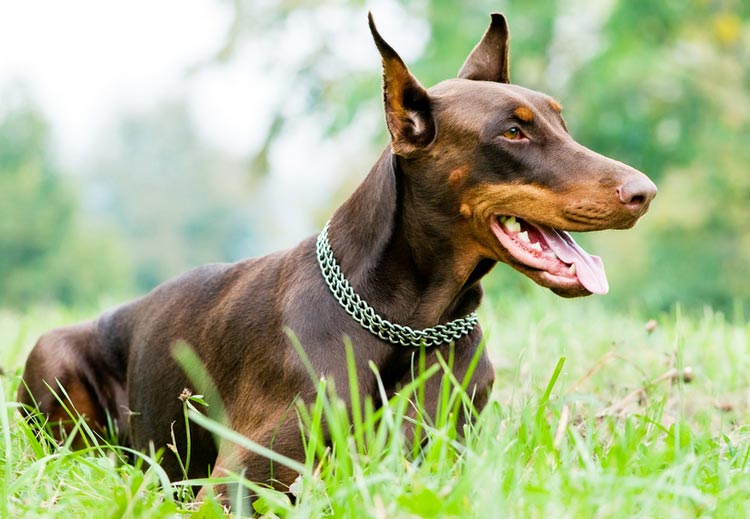
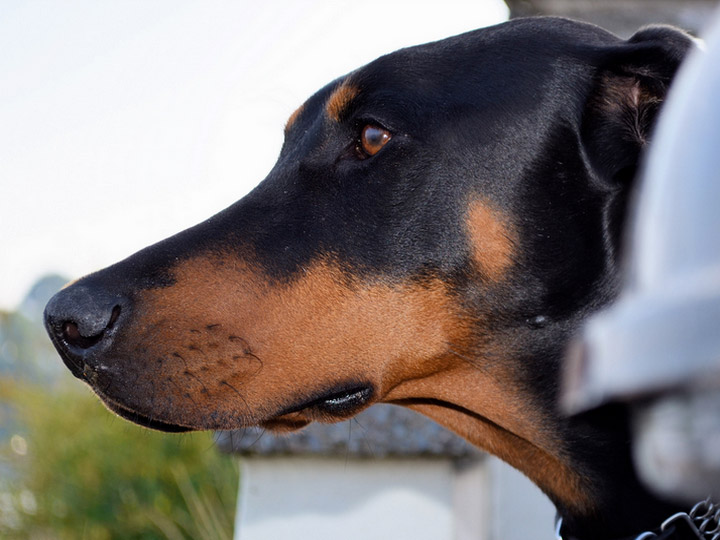
Viewed from above, the Doberman's head resembles a blunt wedge. The crown line should be horizontal. The nose is well-formed, wide, and black or brown depending on the coat color. The lips are flat and tightly fitting to the strong jaws. The teeth are complete. The bite is correct. The eyes are medium in size, oval in shape, and dark in color. Only brown dogs may have lighter eyes. The eyelid rims are slightly drooping. The ears are set high and cropped; if undocked, they are of medium length and drooping.
The neck is long, muscular, and dry, with a beautiful nape line that blends smoothly into the withers. The chest is oval. The withers should not protrude. The back is strong and short. The croup tapers noticeably toward the base of the tail. The length and width of the chest are in good proportion to the length of the body. The ribs are slightly sprung. The underline is noticeably tucked up. The tail is set high and docked short. When undocked, it is long and saber-shaped. The limbs are well developed, muscular, and straight. The paws are well closed, the toes are arched upward, and the nails are short.
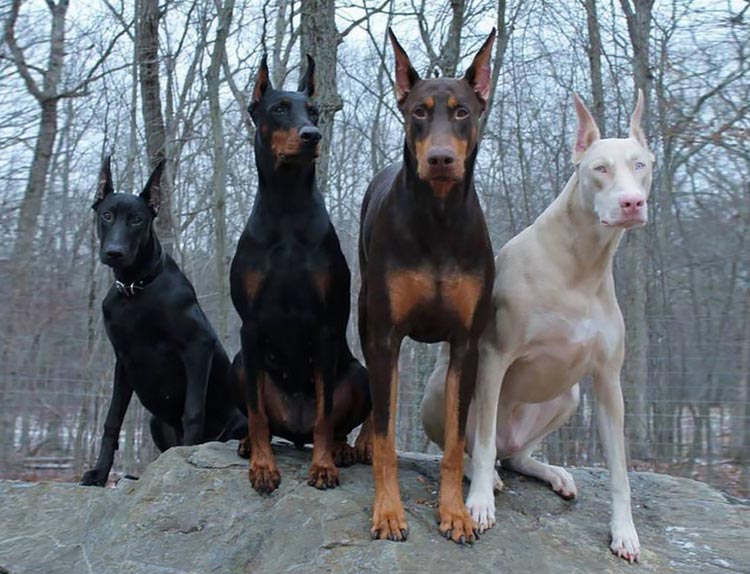
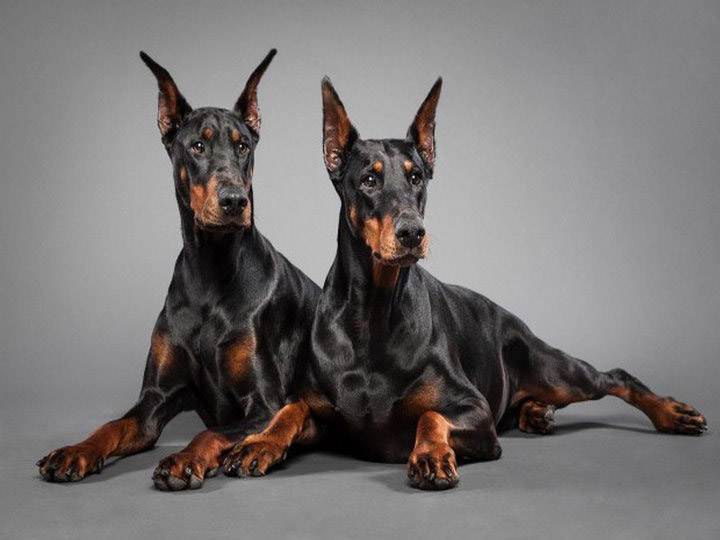
The coat is straight, short, and harsh to the touch, lying close to the body and having no undercoat. The skin is elastic and wrinkle-free. The recognized color variations are brown and black and tan.
Character
The Doberman has a very distinctive character, unlike many other breeds. He will protect his owner with his life, but can also be sentimental. He is aggressive, always vigilant, and ready to fight at any moment, yet he can also happily fool around in the meadow with the neighbor's puppy. He is a reliable, intelligent guard dog and a completely devoted friend and companion.
Anyone entering the house while their owners are away is viewed as a potential enemy. Dobermans are fiery and impatient, always ready for a swift attack, but they are also aware of their strength and possess a keen intellect, able to analyze and differentiate situations. Dobermans are very sensitive to moods and are rarely pushy. This is a fairly temperamental breed, but they are not prone to sudden mood swings.
A well-trained Doberman is not a bully, he is not timid, but he will not show aggression unnecessarily.
A Doberman is a ferocious, quarrelsome, and vicious dog when it's not well-wishing, but within the family, it's a good-natured, sweet, and affectionate creature who treats children well and tenderly. This is provided, of course, that the dog has been familiar with children since puppyhood and is well socialized. Dobermans form very strong bonds with their "pack," but it's important to consider and respect their interests.
It's worth noting that Dobermans can vary greatly from one another. One dog may be attached to a specific person, while another will be family-oriented. Some Dobermans, depending on their upbringing, may be more aggressive, while others are the opposite. Much depends on the environment in which they were raised and, of course, their upbringing.
Education and training
These dogs are distinguished by their remarkable work ethic, excellent sense of smell, exceptional intelligence, and obedience. Dobermans are very easy to work with. As befits a service dog, they quickly learn and follow commands and are very people-oriented. A Doberman, at any age, does not tolerate being hit; they are first and foremost a friend, not a servant. From the very first day, the dog needs to be taught who is boss, but this must be done wisely, not by force. Proper upbringing and training will make a Doberman a reliable guard dog and a devoted, affectionate companion.
Dobermans are dogs for energetic people who can and will devote a lot of time and energy to raising, training, and walking their spirited friend.
Dobermans are often used for military and police work, and are considered excellent tracking dogs. They are also excellent watchdogs, alert and fearless.
Maintenance and care
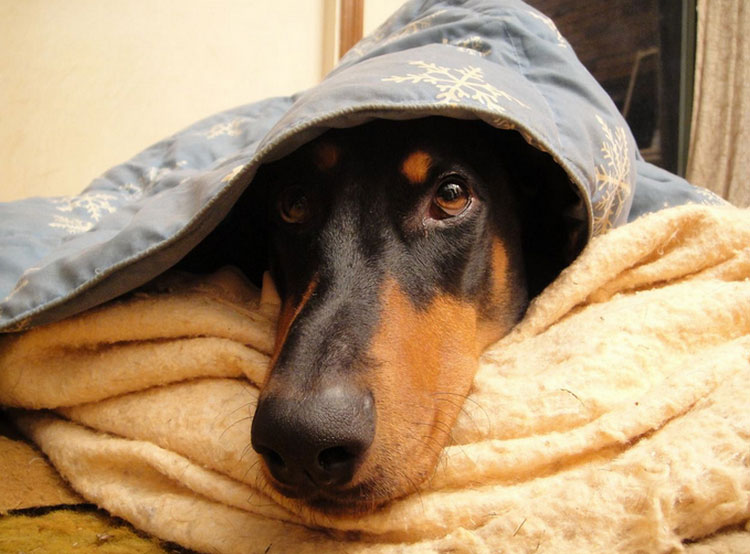
Dobermans thrive in city apartments, but they can also thrive in a private home. However, they should never be chained, as Dobermans simply cannot live without human interaction. They generally get along well with other pets, especially if they were raised together.
To keep a dog healthy and happy, they need plenty of physical activity. Dobermans enjoy jogging and walking with their owners. Dobermans are also excellent competitors, as this not only helps them stay in excellent physical condition but also develops and maintains their mental abilities.
Dobermans are considered very easy to care for. Their short coat requires minimal grooming. Furthermore, Dobermans are naturally very clean and shed very little. Grooming requires only weekly brushing with a fine-bristled brush and wiping with a damp towel. Bathing is only necessary when the dog becomes very dirty, and after bathing, simply pat the pet dry with a dry towel.
Nutrition
Dobermans are relatively easy-to-eat. If you choose to feed them a natural diet, don't forget about meat, which is their primary source of protein. Meat products should make up half of their diet, and in some cases (due to increased physical activity, cold weather, etc.) up to 75%. Groats alone are essential for raising a healthy and active dog. Vegetables, fruits, greens, dairy products, eggs, and fish are essential. Another option is to feed a balanced dry food. Portions should be calculated based on each dog's weight.
Health, disease and life expectancy
In general, Dobermans are very strong and hardy dogs, unless they suffer from any breed-specific health issues. Along with long-known defects such as malocclusion, pigmentation defects, and deafness, which were easily eliminated through selective breeding, Today, two serious diseases are very common in the breed: gastric torsion and cardiomyopathy.
Among other, less common pathologies, the following can be noted:
- Hypothyroidism;
- Von Willebrand disease;
- Wobbler syndrome (slipping of the cervical vertebrae);
- Intermittent claudication;
- Narcolepsy (sleep disorder).
- Many Dobermans suffer from food and other allergies.
Life expectancy is on average 12 years.
Choosing a puppy and price
Temperament is paramount for this breed, and the more inexperienced people breed them, the more defective puppies appear on the market: unbalanced, aggressive, stubborn, with other character flaws, and not always with good health heredity. Therefore, it's important to choose the parents, not the puppy. Both parents must have certificates in general obedience training and guard dog training. They must be outwardly healthy, with a normal temperament and a balanced psyche. This can only be determined by interacting with the dogs, not by the breeder's words.
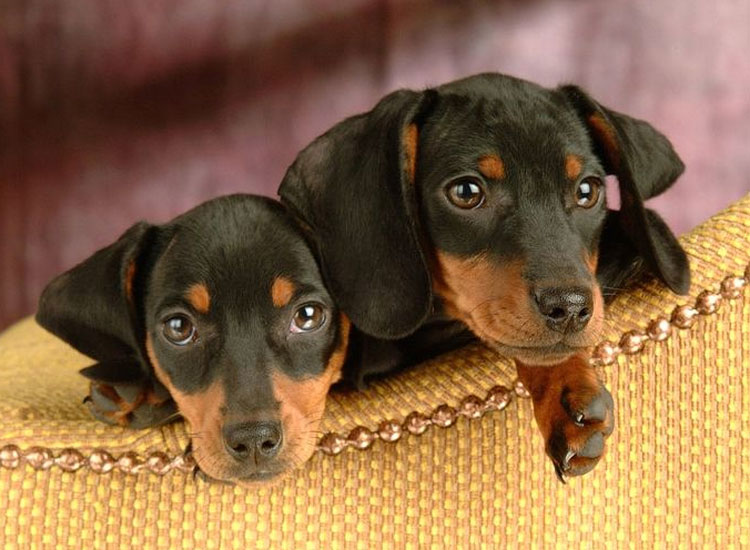
Puppies' docked tails should be completely healed by 1.5 to 2 months of age. They should be vaccinated against the main infectious diseases of dogs, healthy, active, with a good appetite and sound sleep. A good puppy has strong bones, a broad back and chest, a fairly long neck, a nearly square body, strong jaws, sharp white teeth meeting in a correct bite, dark eyes, and a rich tan color.
The breeder must provide documents on the dogs' pedigree, working diplomas and the results of genetic tests, among which the absence of cardiomyopathy in the breeding stock is of particular importance.
Of course, it's best to choose puppies with a pedigree and all the necessary documents. Today, the average price for a puppy from a breeder is 15,000-45,000 rubles. A small Doberman can be purchased secondhand for as little as 8,000 rubles, but they won't guarantee the puppy's health or mental well-being.
Photos
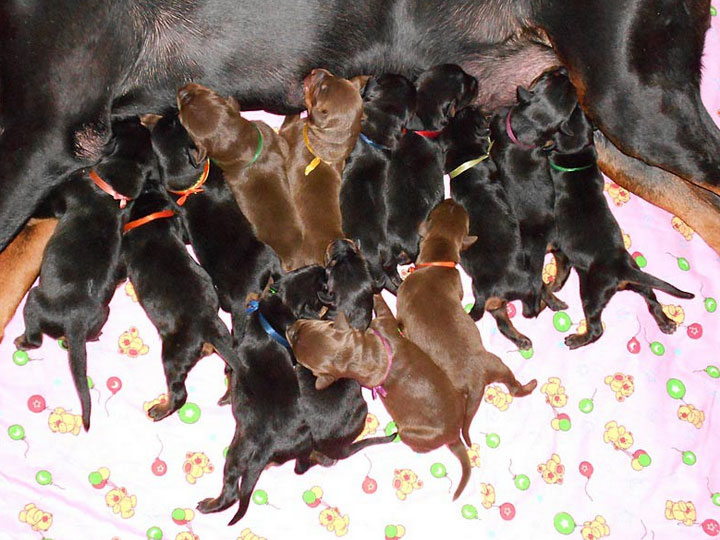
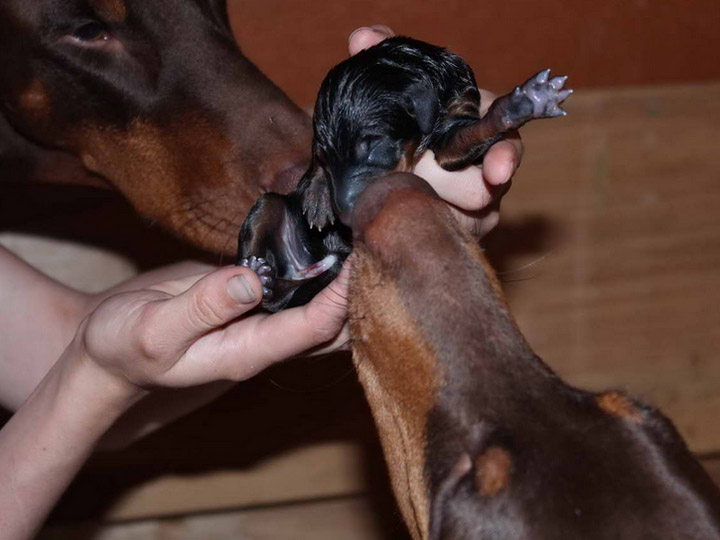
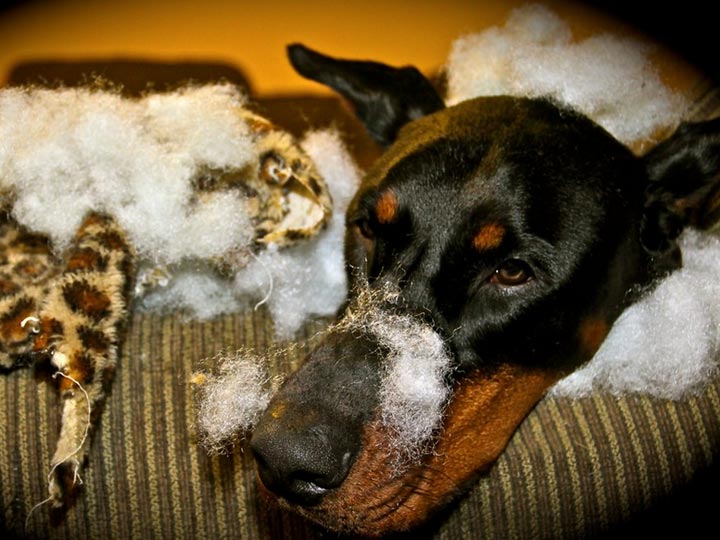
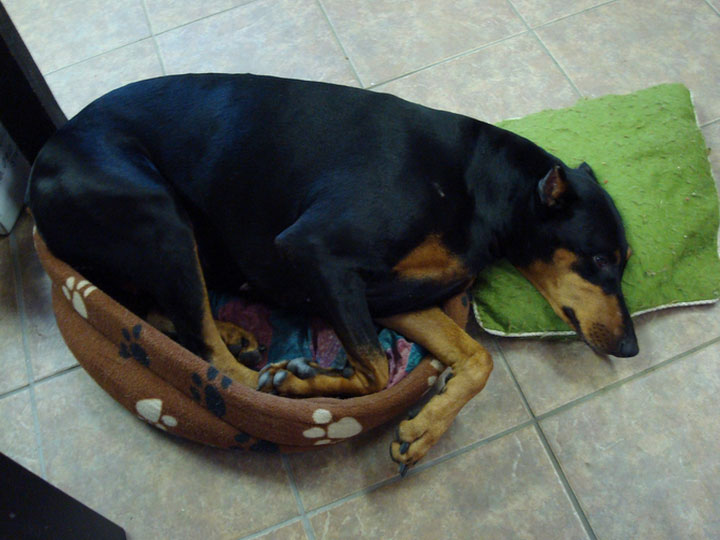
Photos of Doberman puppies and adult dogs in the gallery:
Read also:


Add a comment