
What to feed a 1-month-old kitten
Proper nutrition for a kitten early in life is the foundation of its future health. A mother cat typically nurses her kittens for 1.5 to 2 months. However, if she has little milk or has given birth to a large litter, they may not be fully fed, and then it makes sense to start feeding them supplements as early as 3 to 4 weeks of age. Feeding a newborn kitten left without a mother, you'll have to take full responsibility. Feeding a month-old kitten is entirely possible if you know how to do it and what you can feed it.
Content
Feeding regimen for kittens
A one-month-old kitten weighs between 250 and 500 grams. For every 100 grams of body weight, it requires approximately 50 grams of food. Regarding the energy value of food, hairless breeds (Sphynx, Devon Rex, Ukrainian Levkoy) require a higher calorie diet, as hairless cats expend more energy maintaining optimal body temperature than their furry counterparts.
Kittens aged 1 to 3 months are fed 5-7 times a day, based on their behavior: well-fed kittens are calm, while hungry ones will squeak, crawl, and try to suck on an outstretched finger. The main indicator that feeding is going well is regular weight gain. Until 2 months of age, it is recommended to weigh kittens daily (a kitchen scale is ideal for this).
Kittens in infancy don't yet have the ability to control their appetite and can easily overeat or eat too frequently when food is constantly available. Overfeeding is harmful, as it can cause gastrointestinal problems. Therefore, if you're nursing a month-old kitten, don't try to make them look like a fluff ball; a tummy tightly packed with food is not a sign of health.
What to feed a 1 month old kitten
Giving cow's milk to a one-month-old kitten is strictly not recommended, as their body does not digest lactose well, which is found in large quantities in cow's milk. The best food option is a milk replacer for cats, which can be purchased at a veterinary pharmacy or specialty store. Before feeding, warm the prepared milk mixture slightly to just below the surface. You can feed the kitten from a bottle with a nipple or with a syringe without a needle.
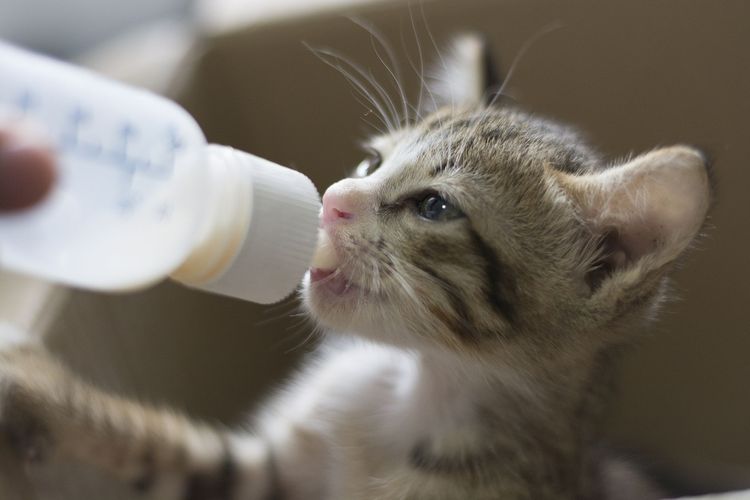
Sometimes the formula you bought for your pet isn't suitable: it doesn't taste good or causes diarrhea. In this case, consult your veterinarian to recommend a cat milk replacer made with different ingredients.
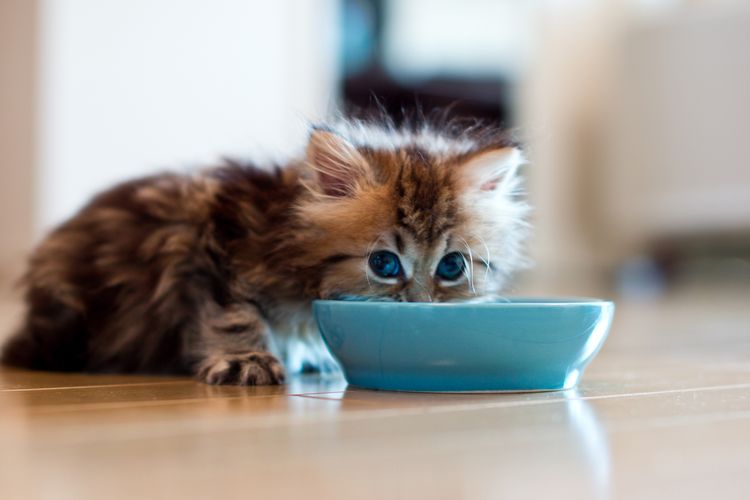
After a few days, you can introduce your baby to drinking from a saucer, and then gradually add wet food or baby meat and semi-meat purees to the liquid formula. By the age of two months wet food The kitten can be given it as a separate dish, without milk.
Many companies produce nutritionally balanced wet food for kittens aged 3-4 weeks. Veterinarians advise against buying economy-class food, as these canned foods may contain additives (preservatives, flavorings) that are harmful to the animal's health.
The best wet foods are considered to be:
- Babycat Instinctive Wet Royal Canin (France). Holistic food, mousse for cats from 1 to 3 months "Bebiket Instinctive" contains meat, cereals, plant products, vitamins and minerals.
- Nutrо Choice (USA). Nutro Choice premium canned food for kittens in the first months of life contains chicken broth, chicken meat and liver, egg powder, fish meal, vegetable oil, chicory extract, vitamins, and trace elements.
- Innova (Natura Pet Products, USA). A line of holistic wet food for kittens aged 1-3 months – meat and liver pates, meat in jelly.
- Go! Natural (Canada). Elite canned food for kittens made with ground turkey, chicken, or rabbit in vegetable broth. Contains a range of vitamins and minerals.
- Babycat Whiskas (kMARS company, USA). Pates and meat stews with vitamin and mineral supplements, premium diets for kittens in the first months of life.
- Purina Cat Chow (Poland). Premium wet food for kittens 1-3 months old. Available in the form of meat chunks in jelly, ground meat with vegetables, or grains. Contains a vitamin and mineral complex.
1-month-old kittens You can also feed your pet homemade food, but it should be liquid or semi-liquid and made only from approved ingredients. New foods should be introduced into your pet's diet in small doses, one at a time, with at least 2-3 days between each.
The recommended diet for a kitten from 1 to 3 months may include:
- goat milk diluted with boiled water;
- fermented milk products;
- low-fat cottage cheese (an essential source of calcium for a growing body);
- egg yolk mixed with milk (once a week);
- liquid porridge cooked in goat's milk, milk formula or broth;
- boiled vegetable puree;
- boiled chicken, rabbit, beef meat chopped in a blender;
- chicken or beef liver pate (no more than once a week);
- boiled lean fish chopped in a blender.
When feeding your pet homemade meals, it is recommended to add vitamin and mineral supplements to them; your veterinarian will advise you on the name and dosage.
For kittens aged 1 month the following is prohibited:
- whole cow's milk;
- raw meat and fish;
- sausage, smoked meats;
- fried food;
- potato;
- bakery products;
- sweets;
- any dog food (they contain a range of nutritional components that are completely unsuitable for kittens).
Caution! Month-old kittens' immune systems are not yet strong enough, and they are easily susceptible to infections. Therefore, be sure to wash your hands with soap before feeding your pet.
How to train a kitten to eat on its own
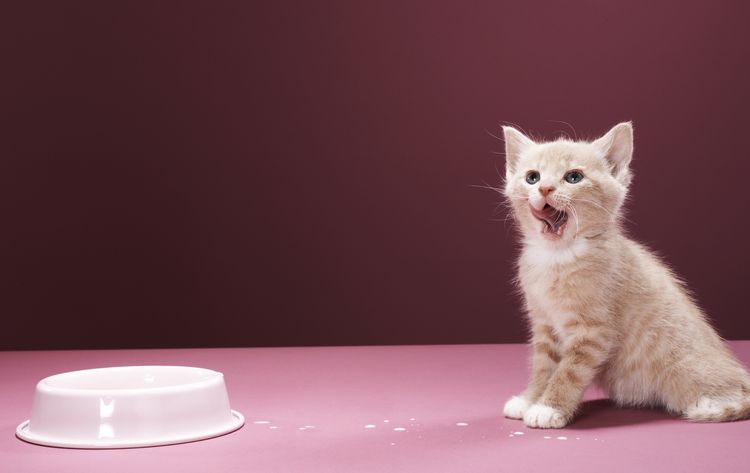
Kittens show an active interest in food as early as three weeks old, so teaching them to eat on their own is easy. Usually, it's enough to pour some warm formula into a bowl and hold it close to the kitten's face, or dip your finger in the bowl and apply a drop of milk to the kitten's mouth.
Of course, a kitten won't be able to successfully lap from a bowl on the first try: they'll splash food, choke, paw at the bowl, or spill it on the floor. No problem, help them by holding the bowl, patiently removing their paws over and over again, and then finish feeding them from a bottle. Try again after a few hours.
To help your kitten quickly get used to the "dining area," keep the food bowl in the same place every day. It's best to mix the cereal, pâté, or puree into the formula at first, so your little cat gradually gets used to the unfamiliar food. After about a week, you can try offering a spoonful of this food without the milk.
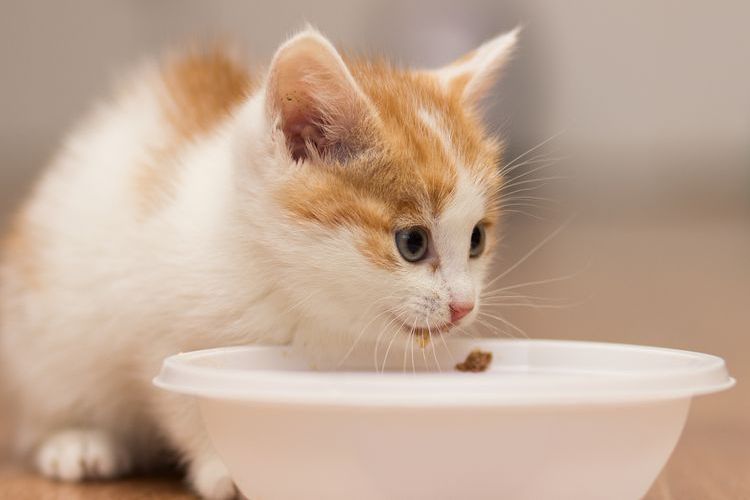
In just a short time, you will see how your fosterling happily eats on his own, licks the dishes dry, gains weight well and looks healthy and cheerful.
Read also:


Add a comment