
Do cats have moles?
Moles are benign growths. They are present on the skin of almost every human. Pets are no exception. However, not all cat owners care about whether their cats get moles. Those who are much more attentive to their pets are more concerned about something else: whether harmless marks can become malignant, and how to prevent this.
Content
Causes of occurrence
The debate over why moles appear on cats continues to rage. Those who support their point of view offer fervent arguments, but neither side has yet managed to sway their opponents. Two theories are the most prominent.
| Theory |
Cause of occurrence |
What's happened |
|
1 |
Hereditary defect |
Congenital formation |
| 2 |
Heredity and solar radiation |
1. A DNA trait 2. It appeared as a result of increased exposure to ultraviolet rays. |
Proponents of the first theory believe that pigment spots are present even in newborn kittens. They're simply so small that the naked eye can't discern these tiny features. Subsequently, environmental factors cause the markings to increase in size, leaving pet owners with no doubt that cats have birthmarks.
Proponents of the second theory believe that heredity isn't the only factor. Because ultraviolet light "helps" melanocytes migrate toward the epidermal layer of the skin, pigment spots begin to appear. Stress, illness, and hormonal imbalances contribute to their growth and proliferation.
Moles
These benign growths on the skin's surface are formed by melanocytes, which are pigment cells that have undergone certain changes. Generally, they pose no danger to a pet's health, so there's no need to worry too much about moles in cats.
They can be:
- congenital and acquired;
- flat and slightly raised above the surface of the skin;
- black and brown - other shades are extremely rare;
- pigmented and vascular;
- small, medium and giant.
To dispel any doubts about the spots, consult a veterinarian. They will make an accurate diagnosis based on the signs and symptoms, prescribe tests, reassure you if there's nothing to worry about, and prescribe treatment if needed. There are many similar defects, which only a highly qualified specialist can diagnose.
For those just beginning their practice, it can be difficult to distinguish benign lesions from much more dangerous ones. Inexperienced specialists sometimes confuse hematosarcomas and even tick bites with common pigmented spots.
Trying to save money on professional care can lead to a sharp deterioration in your pet's health or even death. It's best to have the tumor removed at a reputable clinic.
Lentigo
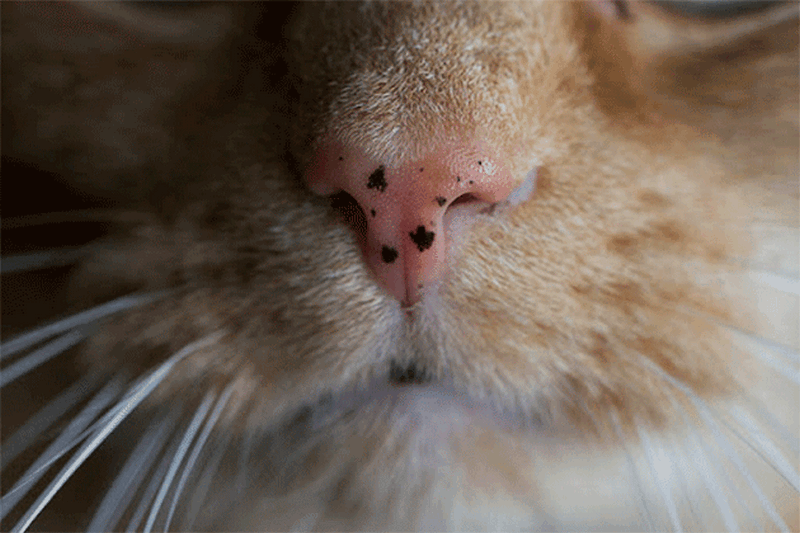
This skin defect is characterized by the appearance of medium-sized dark spots, similar to pigmentation. They most often appear in ginger or tortoiseshell cats around one year of age. They have distinct edges and are usually located on the lips and eyelids, although they can also "jump" to the nose.
Vitiligo

It's already clear whether cats can have moles. However, there's a downside: sometimes individual patches of pigmentation disappear completely. This doesn't happen in young kittens; the condition begins to manifest itself closer to adolescence. The depigmented spots typically "attack" the animal's face. Vitiligo doesn't pose a threat to the pet's health or life.
Lipoma
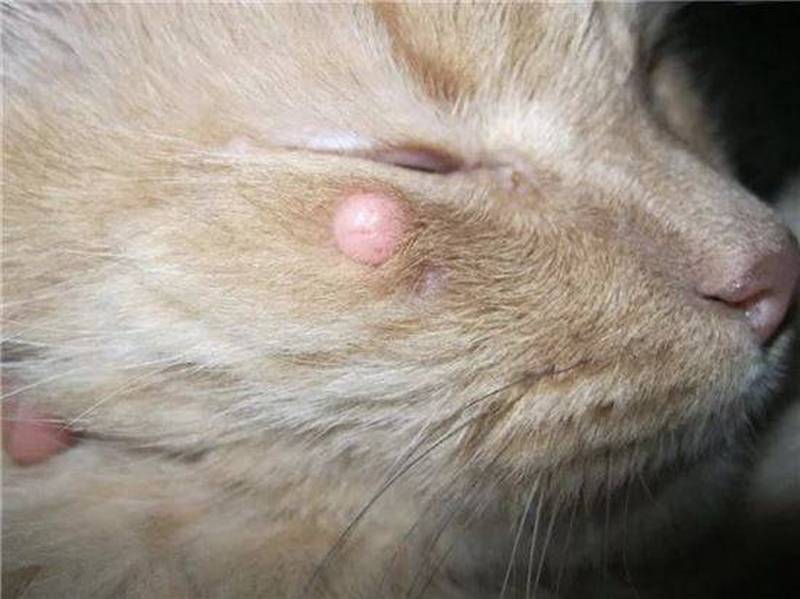
New pet owners often wonder if moles on cats can be movable and soft. In this case, it's most likely a benign lipoma. Lipoma is essentially fatty tissue. If the tumor doesn't grow, there's no need to worry: cats are not in danger.
Nevus
This skin defect is characterized by hyperplasia affecting one or more skin components. Nevi can be congenital or acquired, although the mechanism of their formation has not yet been fully elucidated. Scientists are inclined to believe that the appearance of a nevus is often caused by disruptions in the normal development of the embryo.
Papilloma

This viral disease is characterized by the appearance of benign, black tumors 1-3 cm in diameter, resembling warts. The culprit behind these unpleasant symptoms is the human papillomavirus. Warts appear on the animal's body two months after infection. They appear uneven and porous. The site of infection is the head, and this is considered a relatively safe option. papillomas If they appear in the mouth, it's possible they could become malignant. They'll likely need to be removed immediately, as simple brilliant green or ointment won't be enough.
Melanoma
It's fortunate that this insidious malignant tumor rarely develops in cats. It's aggressive, easily invades deep tissue, and damages bone structures. Both therapy and surgery are almost never successful. There is a chance, of course, but only if the disease is detected at its earliest stages.
Hemangiosarcoma
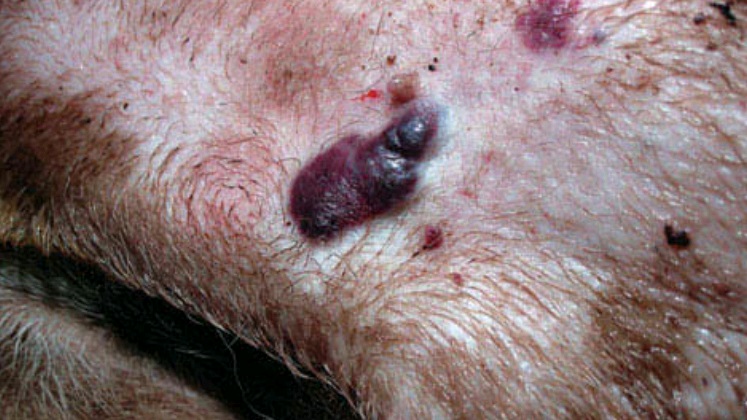
A dark red, almost black growth. The tumor is malignant, aggressive, and prone to metastasis. It is most often found on the scalp, which is understandable: this part of the body is most exposed to direct ultraviolet radiation. Prolonged sunbathing is more harmful than helpful to pets.
Carcinoma
One of the most aggressive types of cancer, it primarily affects skin epithelial cells and internal organs. It spreads rapidly, can be very aggressive, and can cause numerous metastases. Squamous cell carcinoma begins in the ears and nose. Its development can be triggered by severe sunburn. Short-haired pets with white fur are at particular risk.
Prevention and treatment
Common moles don't require any special care. However, it's highly advisable to avoid damaging them. If your cat can't be saved, the healing process should be closely monitored. It shouldn't take long, but if this is the case, consult a veterinarian immediately.
To avoid causing your beloved pets additional suffering, it's important to know from the outset whether your cat has moles. This will help you plan the best possible care.
If large areas of skin become pigmented, it's important to protect pets from prolonged sun exposure. Direct UV exposure can cause benign pigmentation to develop into cancer. Whether cats have moles isn't as important as whether they pose a threat to their health and life.
By creating comfortable living conditions for your pet and taking them for regular checkups, the risk of developing dangerous diseases will be significantly reduced, while the quality and overall lifespan will increase. Love, care, attentive attention to their needs, and a kind owner—that's what any living creature needs.
Read also:


Add a comment