
Dogue de Bordeaux (French Mastiff)
The Dogue de Bordeaux, or French Mastiff, is a dog of immense strength, ferocious in appearance, and intimidating in size. It is naturally endowed with guarding qualities, which it performs with courage and confidence. But the secret of the Bordeaux is that its appearance largely belies its nature.
A well-trained dog will become a calm, balanced, loyal companion and a reliable protector for the entire family. This is one of the most sociable and affectionate breeds of its size and purpose—of course, only with its own kind. Another name for this breed is the French Mastiff or Aquitaine Mastiff.
Content
History of origin
The Dogue de Bordeaux is a relatively young breed that was developed in France, but the history of their ancestors, direct descendants of Molossians, goes back much further; it can be assumed that it goes back centuries, but where, when and how they appeared is difficult to say.
The first written mention of French Molossian-type dogs appears in a 14th-century hunting book. It describes hunting dogs that were crossbreeds of sighthounds and Molossians. They were called Alans and were further divided into three breeds: the Alan Gentil, a heavy-headed sighthound; the Alan Vautre, three times stronger; and the Alan de Boucherie, distinguished by their yellow coat with dark gray or black stripes, broad heads, and pendulous lips. They were used for baiting boar and bears. The French word "Alan" was later replaced. English "mastiff"".
After the Revolution in the 18th century, many dogs were destroyed along with their owners or exported abroad, and the remaining ones were crossed with other breeds. The French Mastiff survived only because dog fighting remained popular in southern France until the early 20th century. A reputable German author claims that the Bordeaux Mastiff is a direct descendant of the Dogue de Aquitaine, which lived in isolation in the mountainous regions of Aquitaine and remained relatively pure.
The modern history of the Dogue de Bordeaux began with its first exhibition in Paris in 1863. It was a review of France's entire canine population, and eight Molosser-type dogs were exhibited, but only one, the Dogue de Bordeaux, caught the eye. The name stuck, and over the next 20 years, enthusiasts actively bred it, adhering only to their own opinions and lines. Consequently, bloodlines were introduced, particularly from the English Mastiff. The breed was officially registered in 1883.
Appearance and standards
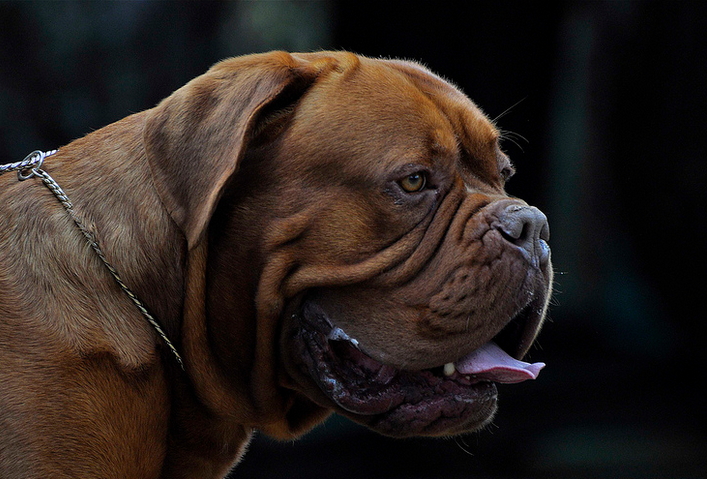
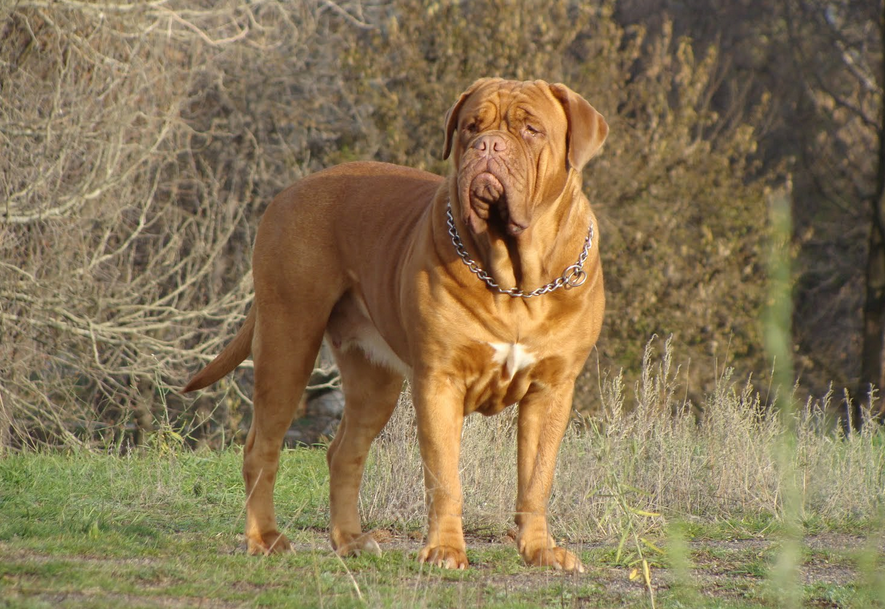
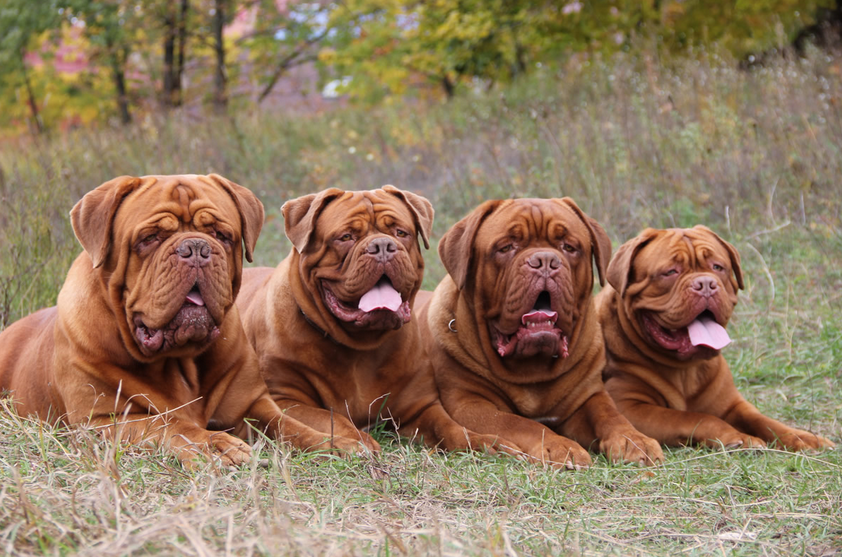
The Dogue de Bordeaux is a typical Molossian dog, brachycephalic, stocky, athletically built, and muscular. This breed has a wide range of heights, ranging from 55 to 70 cm. Males should weigh at least 50 kg, and females at least 45 kg.
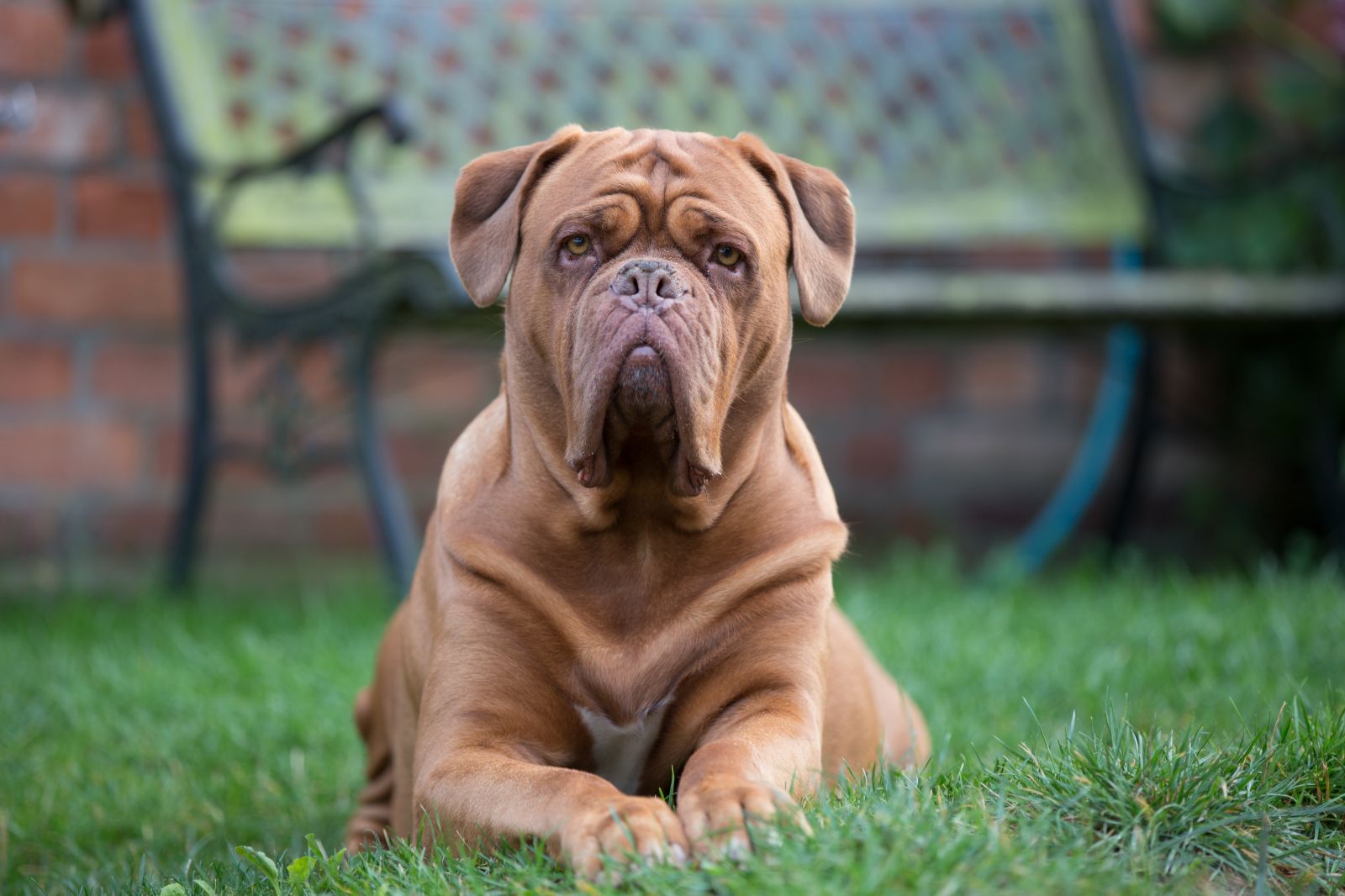
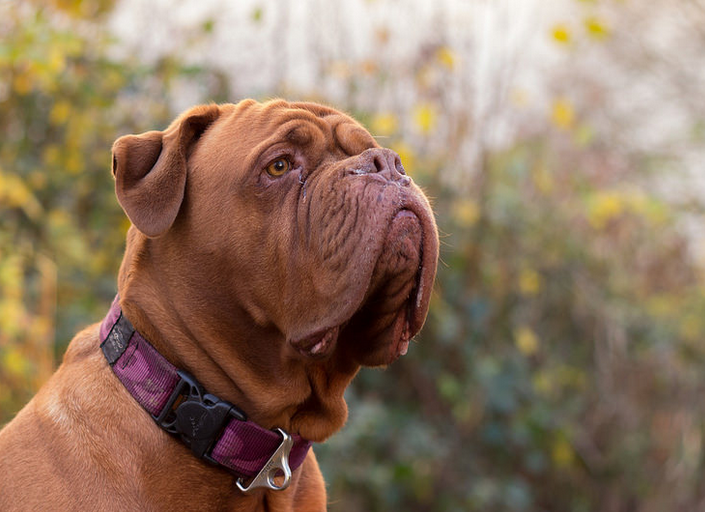
The head is broad, full, fairly short, and angular. The muzzle is broad. The nose is pigmented to match the mask color; too light a pigment is undesirable. The nostrils are wide open. The jaws are wide and strong, with a full set of teeth. The bite is undershot.
The lips are tight and drooping, forming jowls. The eyes are oval and set wide apart. The skin of the eyelids should not be excessively loose or completely expose the conjunctiva. The iris is brown. The ears are small, raised on cartilage, set high, and accentuate the width of the skull. The neck is powerful, almost cylindrical, and muscular, with a transverse fold of skin between the neck and head.
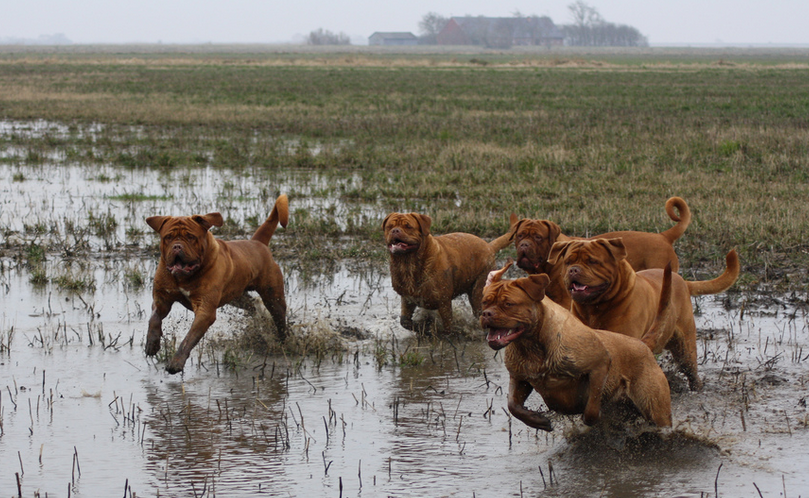
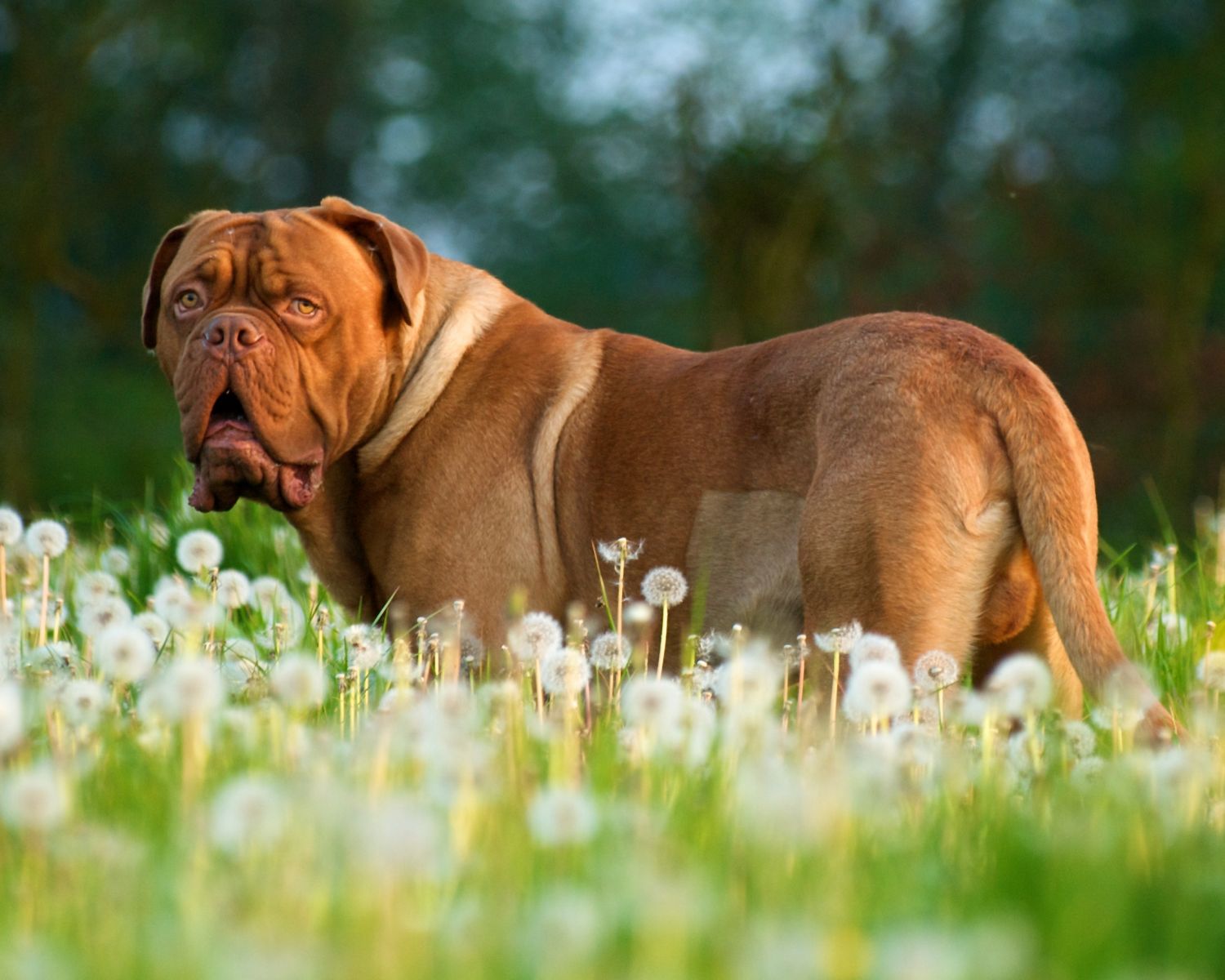
The back is broad and muscular. The chest is deep. The croup slopes slightly toward the tail. The tail is thick at the base and tapers to a point. When relaxed, it is carried low, reaching the hock, and when active, it rises to 90-120°, without twisting or kinking over the back. The legs are strong, straight, and parallel.
The skin is thick and lies loosely against the body. The coat is fine, short, and soft to the touch. The guard hairs are no more than 2 cm long. The undercoat is short and sparse. The coat is solid in all shades of red, with white spots on the legs and chest permitted.

Training and education
Training a Dogue de Bordeaux begins literally from the first day a puppy arrives home. However, it's important to remember that these dogs are very sensitive to harshness and injustice, which can make them insecure or embittered. The breed loses its key positive qualities, becoming uncontrollable and dangerous. It's important that a Dogue de Bordeaux obeys its owner unquestioningly from puppyhood, especially if the dog lives in an urban environment. Any behavior modification is only possible during puppyhood; trying to correct an adult dog with a fully formed psyche is futile. Therefore, it's best to immediately select a canine center and an expert who specializes in fighting breeds for training.
Strictly speaking, the Dogue de Bordeaux is not a service dog, like a German Shepherd, which must learn and obey a specific set of commands. The primary requirement for a Dogue de Bordeaux is a stable personality. This dog should be balanced and obedient, not frightened by loud sounds or calls, and indifferent to other animals. Its natural protective and guarding qualities should be expressed moderately, but without excessive aggressiveness.
French cynologists believe that the Dogue de Bordeaux does not need to be trained for guarding, but rather to be taught to distinguish between friend and foe.
These dogs don't require vigorous physical activity. Furthermore, during the first year and a half of life, excessive exercise and prolonged training can harm the fragile musculoskeletal system. Typically, two hour-long walks a day are sufficient for Bordeaux.
Character and psychological portrait
The Dogue de Bordeaux is calm and balanced, highly intelligent, and dignified. Its actions are always deliberate and noble. It won't pay attention to a minor dog fight or bark over trivial matters. However, it has excellent guard qualities and is capable of protecting not only its owner but also their property from intruders.
The Bordeaux Dogue de Bordeaux requires constant human contact, and in return will offer boundless devotion, love, and trust. These dogs are good with children, patient and understanding. However, this only applies to proper training. A Bordeaux dog owner must be an experienced dog handler with a firm hand, capable of serving as a leader and mentor for this serious dog.
A well-trained French Mastiff is calm with other pets, including dogs. If their fellow dogs aren't aggressive, they'll be friendly with them; they'll likely ignore small, vocal dogs, but will quickly react with aggression to an aggressive dog.
Maintenance and care
A Bordeaux dog is best kept in a large apartment or private home. Living together in a small space presents a number of challenges: the dog needs its own resting area, and it's worth noting that it needs a large one. Bowls will take up space in the kitchen, and the breed is also quite prone to drooling. Bordeaux dogs are not suited to living outdoors year-round.
Grooming a Dogue de Bordeaux's coat is easy. Brushing it periodically with a special rubber glove helps remove dead skin and hair. Bathe the dog as needed, usually every few months. A key part of grooming is daily cleaning of the facial folds. Dirt and dust should be removed to prevent irritation and infection. Eyes, ears, and teeth should be cleaned regularly. Nails should be trimmed every 2-3 weeks.
Diet and health
Nutrition is a crucial factor in a dog's health. It's important to remember that these are carnivores, and the majority of their diet should consist of protein-rich foods: beef, lean fish fillets, dairy products, cartilage, organ meats, eggs, and butter. Plant-based foods include vegetables, fruits, and grains. If the dog's diet is based on natural foods, vitamin and mineral supplements are added. A Bordeaux dog can also be fed a premium-quality, ready-to-eat food that meets its physiological needs. Particular attention is paid to feeding puppies. Clean drinking water should always be freely available.
Despite its age, the breed is virtually free of any genetic diseases. A predisposition to hip and elbow dysplasia is noted, but this condition plagues most large breeds and is often associated with improper puppy rearing or an unbalanced diet. Adult dogs are prone to cancer. Females may experience difficulties during whelping due to the large heads of their puppies. Their lifespan is 8-10 years.
Choosing a Dogue de Bordeaux puppy and its price
A Dogue de Bordeaux shouldn't be purchased lightly; raising one to be a successful dog won't be easy. Therefore, while you're researching breeders, kennels, and familiarizing yourself with the breed and its standards, consider whether this is the dog you truly want to have by your side for the next 10 years.
Of course, it's important to decide in advance what you need a puppy for. They are generally divided into three classes. The most expensive show or breed-class puppies have excellent conformation and promise; they are likely to win prizes at shows and be used for breeding. Pet-class puppies, of course, must also be purebred, but their appearance is less stringent. Some breed-specific flaws (color, ear size, bite, etc.) are allowed, but these are less important if the dog is only intended as a companion.
When you arrive at the litter viewing, you should ensure the litter is kept warm and clean, and check the documentation of the breeders and the puppies. Only then can you examine the puppies. They should be mentally and physiologically healthy, with no injuries, lameness, bald spots, or dirty areas on the skin or coat. If you plan to participate in shows or breed your dog, it's best to consult an independent breed expert for assistance.
The price of a Dogue de Bordeaux puppy depends on its pedigree, class, and kennel, and fluctuates over a fairly wide range – from $500 to $1,000 and up.
Photos
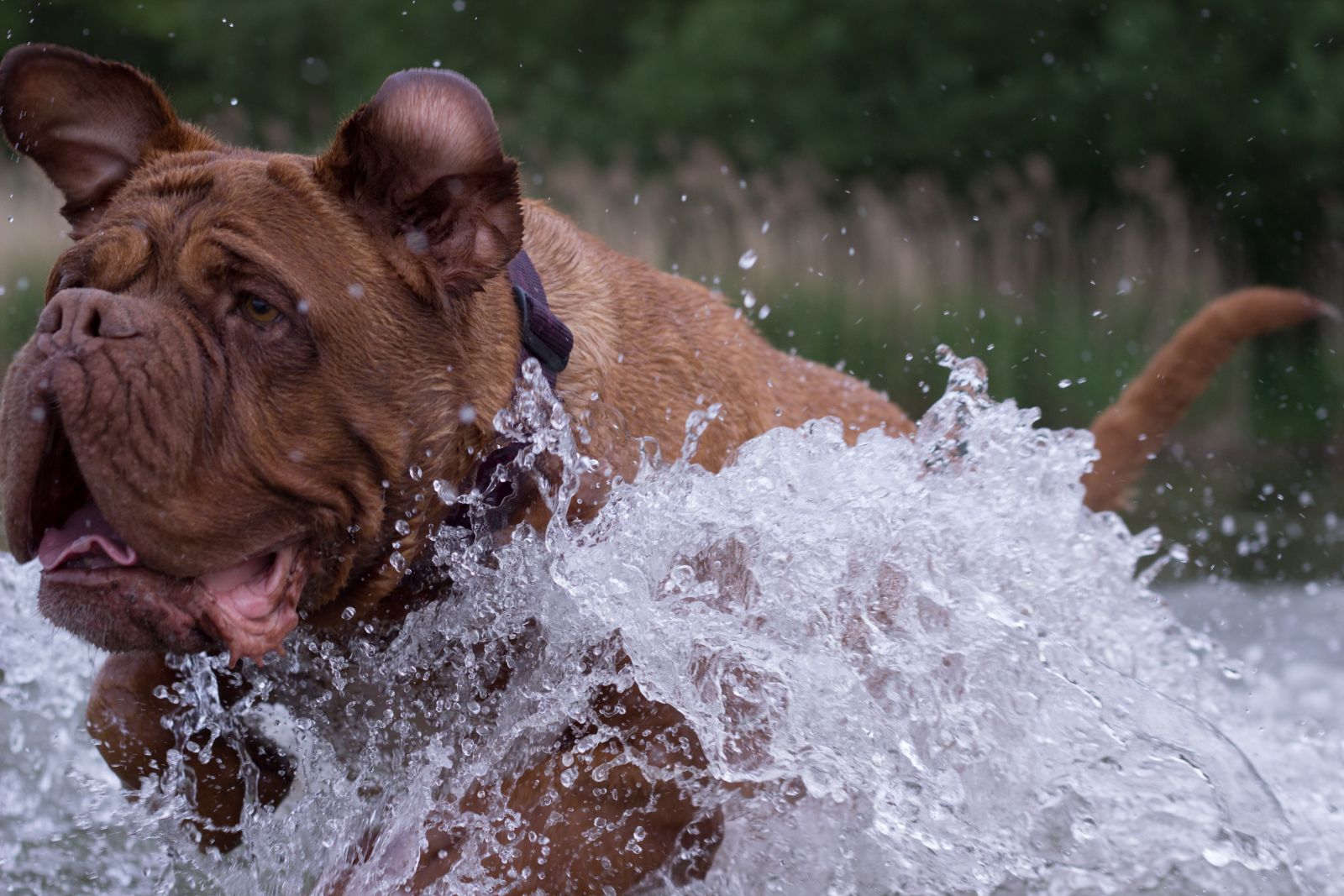
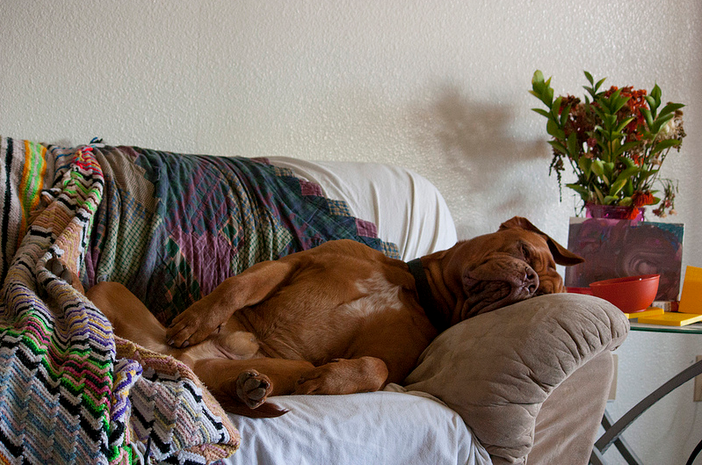
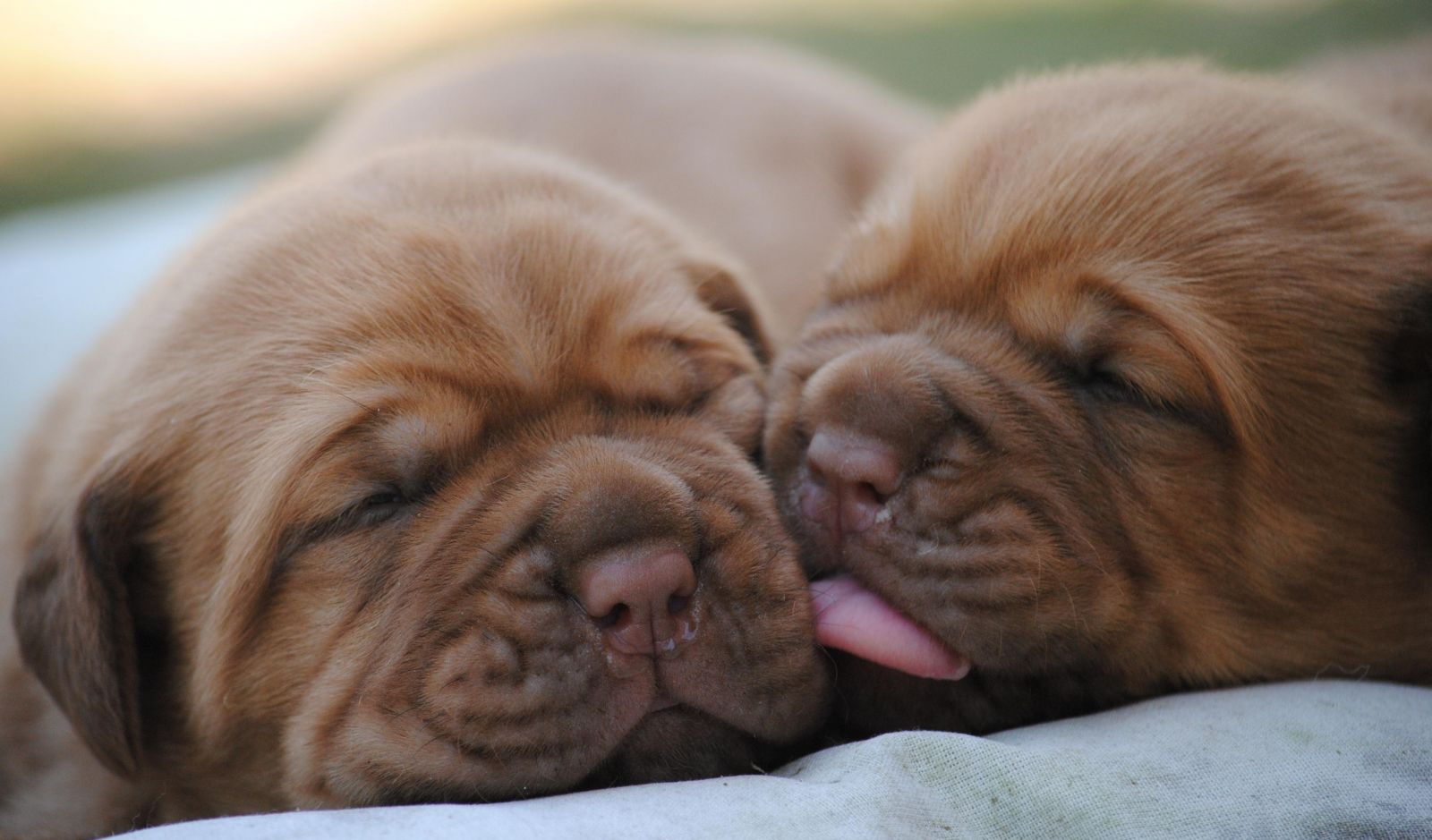
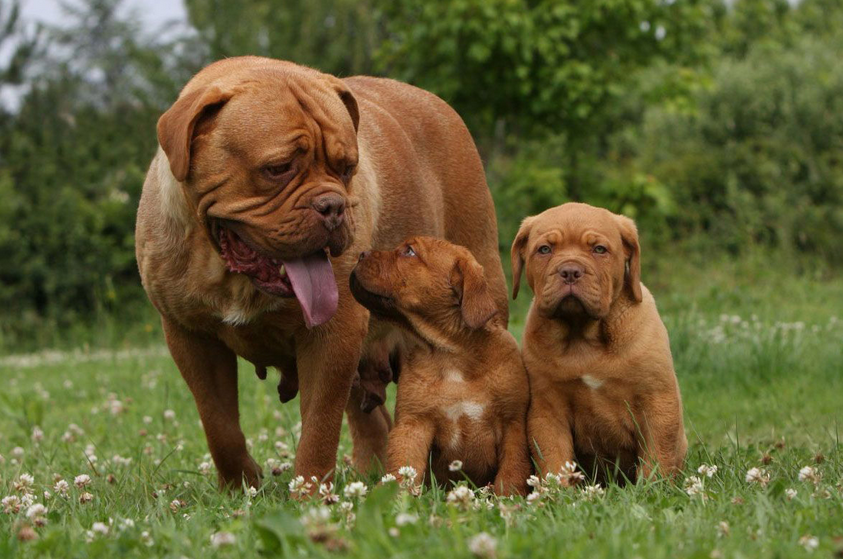
Photos of the Dogue de Bordeaux (French Mastiff):
Read also:


Add a comment