
Australian Kelpie
The Australian Kelpie is a small, energetic herding dog, well-known and beloved in its native land, but rare abroad. Energetic Kelpies are primarily working dogs, bred for herding sheep.
Content
History of origin
The history of the Australian Kelpie breed began in the early 19th century, when the wool industry began to flourish in Australia, sheep numbers increased, and farmers needed four-legged helpers. Since most of them were from Great Britain, English and Scottish dogs began to be imported to the mainland. There are reports that they were bred with local breeds. dingoSuch matings were prohibited by law, as was the keeping of wild dogs. However, herders saw this as the only way to quickly adapt imported shepherds to the local climate, making them more resilient and aggressive. Here in Australia, they had to not only round up sheep but also protect them from dingoes, eagles, and monitor lizards. Local dogs were constantly mated with new imports, and by the end of the 19th century, they were so different from their British counterparts that they could be designated as a separate breed.
In the late 19th century, a female dog named Kelpie was born on a farm. She excelled in working skills and passed them on to her offspring. The puppies were highly prized by farmers and were initially known as "kelpie puppies." Over time, the dog's name became the breed's name. In the early 20th century, Australian Kelpies were exported to many other countries, where their abilities as flock handlers were appreciated. In the 1920s, the dogs reached America and Canada, where they proved invaluable to farmers in western states (Texas, Arizona, New Mexico, and Oklahoma). Kelpies not only adapted to colder climates but also excelled in working cattle.
A Kelpie named Coco played the lead role in the film Red Dog (Australia, 2011), which was based on the novel of the same name by the English writer Louis de Bernières.
The first Kelpies were brought to Russia in 1987. These were 30 puppies from three leading Australian kennels (Wyreema, Avenpart, and Elfinvale), purchased for work on farms in the Stavropol Territory and southern regions of Russia. Kelpies are used not only for herding sheep and goats; they are also successful in rounding up any type of poultry.
Video about the Australian Kelpie breed:
Appearance
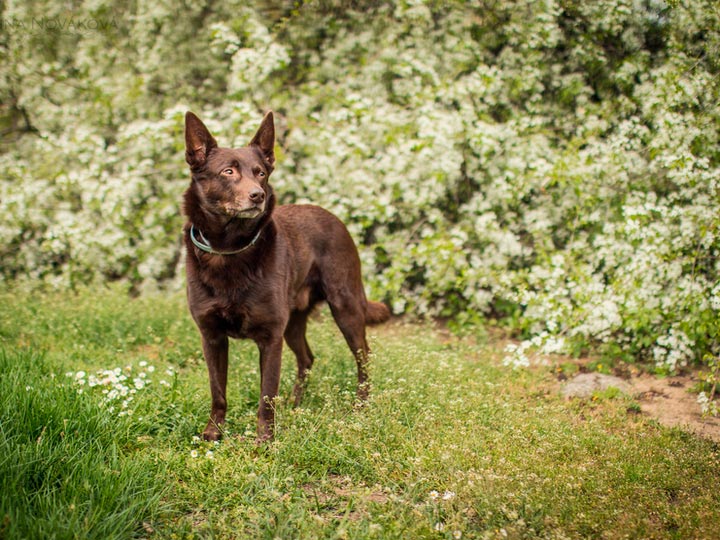
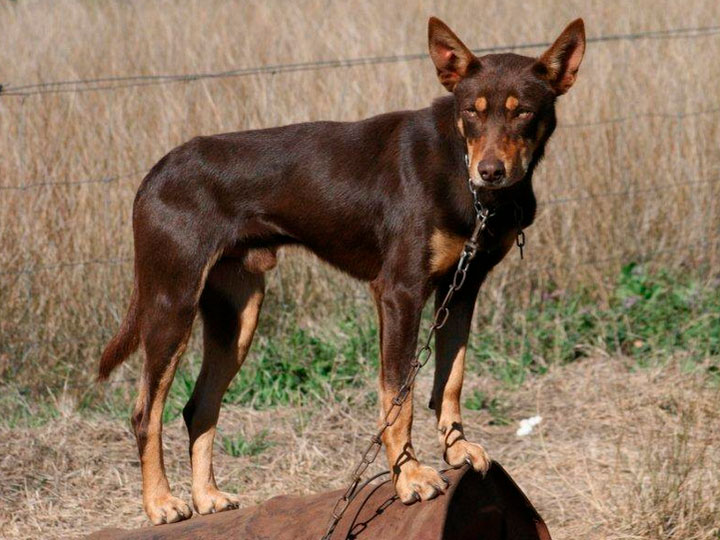
The Australian Kelpie is a small, active dog with an excellent combination of muscular strength and flexibility. This suggests exceptional endurance and tirelessness. There should be no hint of lightness in the build. The height at the withers is 43-58 cm. Weight is not specified in the standard; the main thing is that the dog is proportionately built. On average, it ranges from 18-22 kg. Sexual dimorphism is moderate.
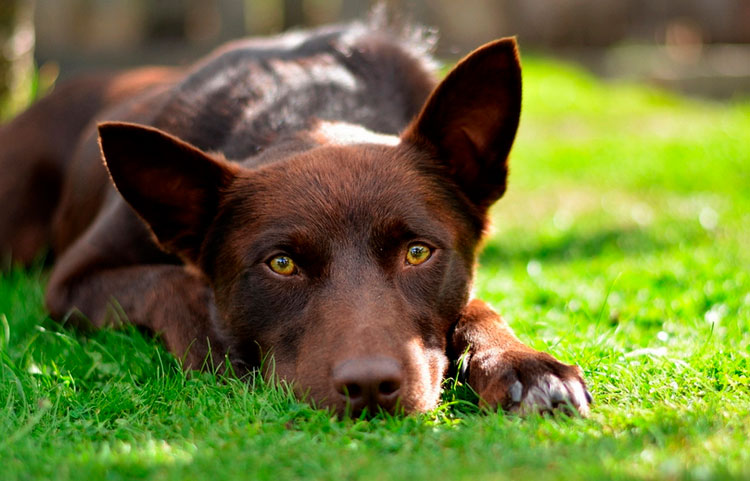
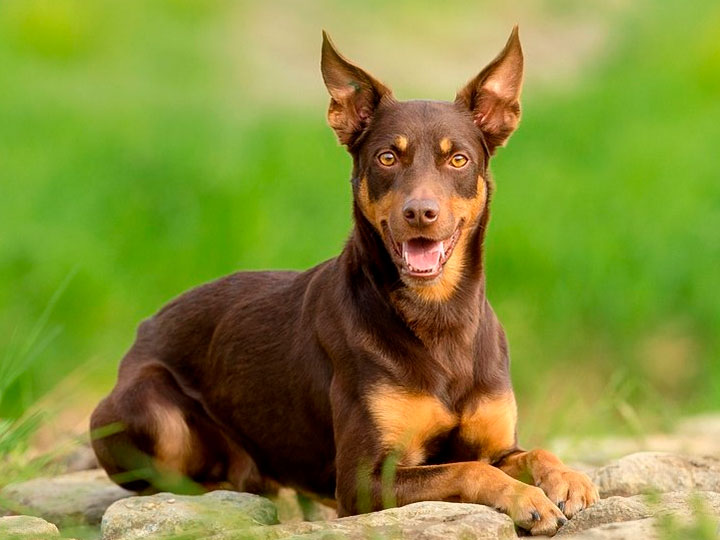
The head is proportionate to the body, rounded, and wide between the ears. The stop is pronounced. The cheekbones are not prominent, but rounded. The muzzle is somewhat shorter than the cranial part. The lips are thin and taut. The color of the earlobe matches the coat color. Overall, the contours of the muzzle create a fox-like expression, softened by intelligent, almond-shaped eyes. The eyes are clearly cut and are brown or blue. The ears are erect, pointed, set wide apart and tilted forward. The auricle is thin and medium in size. The inner surface is abundantly covered with hair, and the tips of the ears are slightly curved. The teeth are strong and healthy, meeting in a scissor bite.
The neck is strong, medium length, slightly arched, without dewlap, but with a thick ruff. The forelegs are strong; when viewed from the front, they are straight and parallel. The shoulder blades are sloping, approaching each other at the withers. When viewed from the side, the pasterns are slightly sloping. The hind legs are broad and strong, with a well-defined stifle angle and well-disposed metatarsus. When viewed from the rear, the legs are straight and parallel. The paws are round, tightly closed, with well-arched toes with short nails and thick pads. The chest is deep rather than wide. The topline is straight. The groin is noticeably deep. The length to height ratio is 10:9. The ribs are well sprung. The tail is carried low at rest and raised when moving.
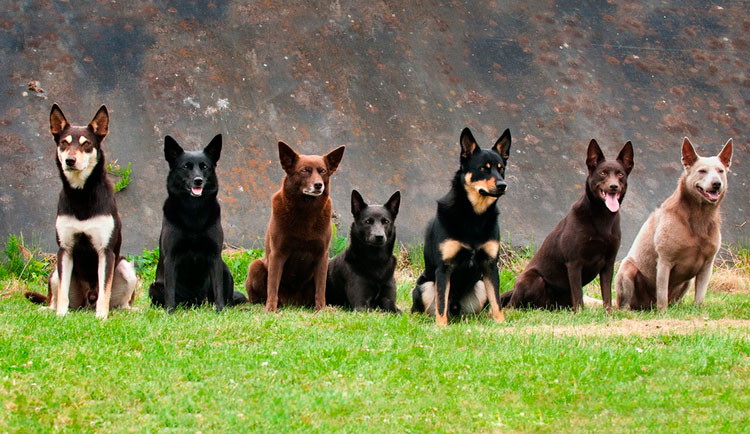
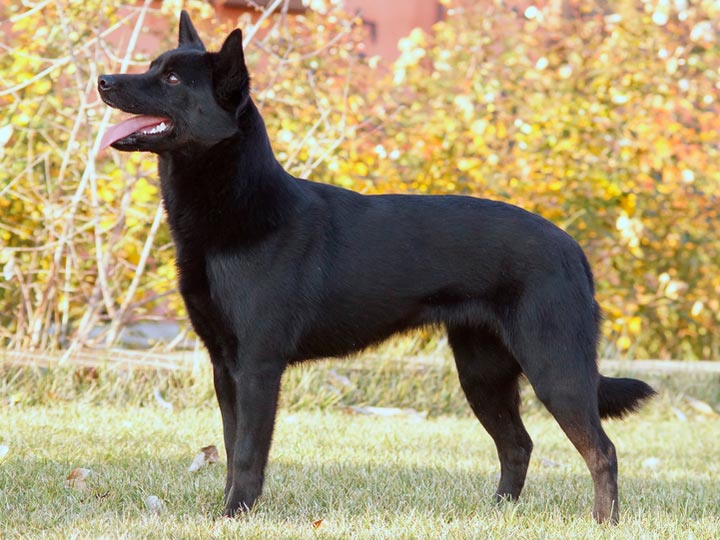
The coat is double. The outer coat is straight and harsh, lying close to the body and impermeable to moisture. The undercoat is thick and short. On the upper legs, the hair is longer, forming trousers. On the lower legs and paws, it is short. A thick ruff is noticeable on the neck. The coat averages 2-3 cm in length. The tail has long, decorative hair. Several colors are permitted: black, black and tan, chocolate, fawn, red, red and tan, and smoky blue.
Character and behavior
Working Kelpies are hardworking and tireless, independent, and possess exceptional intelligence. This is beyond doubt for anyone who has seen them at work. Their desire to herd is instinctive, but they acquire basic skills at a young age by imitating the actions of more experienced adults. Kelpies are considered one-owner dogs; they are friendly with other family members, but do not form strong bonds.
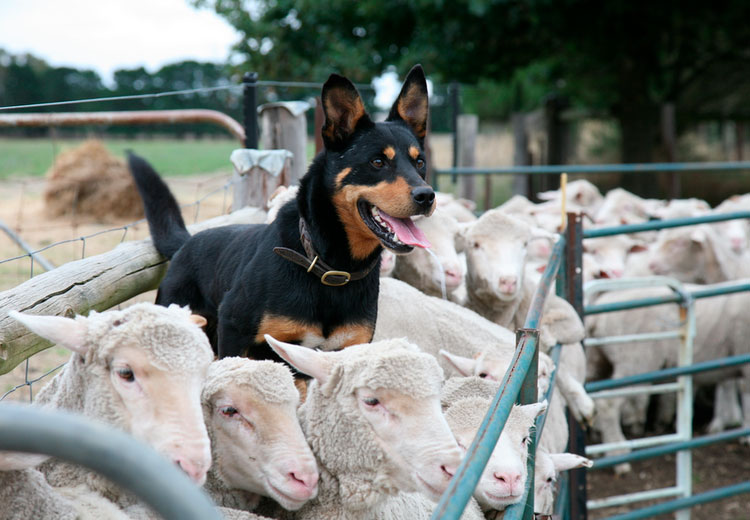
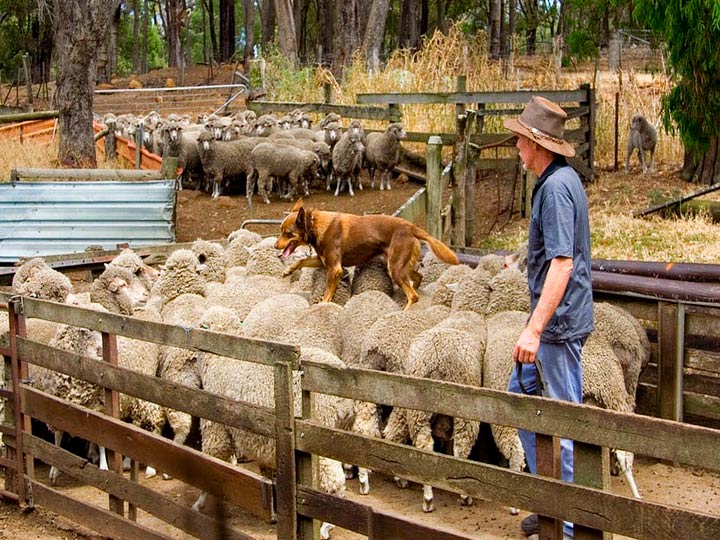
On a farm, a Kelpie performs a variety of tasks, including catching or gathering a flock of sheep, leading them, and keeping them together, preventing any sheep from straying. If a flock needs to be redirected or sheep stuck in a chute need to be turned, a Kelpie can easily leap onto the animals' backs, thereby turning them around or shortening the route from one end of the flock to the other. A Hungarian breed known as the Kelpie is known for this type of herding tactic. bullets.
Kelpies are not known for territorial aggression. While they are certainly protective of their home and family, they are not considered a watchdog because they are small and not aggressive enough. Most Kelpies are tolerant of children, but are not good companions for small children. They often play rough, but their biggest problem is that they can bite during play, much like they might nip at a sheep's legs. This is instinctive, not aggressive.
Kelpies form close bonds with other dogs they work with or live with. Conflicts within a pack are rare. They are often aggressive toward strangers, attempting to establish dominance. This is especially true for males. Kelpies are primarily adapted for working livestock, but with early socialization, they can work with any other animals or birds. Kelpies can be harmful to small animals. If the dog is not socialized and trained, its herding instinct can turn into predatory pursuit.
Education and training
Kelpies are considered one of the most intelligent and easily trained shepherd breeds. Although their intelligence hasn't been adequately studied, many owners believe these dogs can rival those recognized as intelligent dogs worldwide: border collie And poodlesIn rare cases, kelpies have even been used for search and rescue services.
For experienced owners who are knowledgeable in training, training a Kelpie is a simple matter. Without knowledge of how to train a working dog, it's unlikely you'll be able to control a headstrong animal.
When working, the Kelpie is very alert and independent, striving to think and make decisions independently, but will also follow commands given by its owner. Herding dogs are typically trained to a whistle. Australian Kelpies will obey only those they consider superior in the pecking order. The dog will quickly determine whether the owner is superior, and if not, the owner will experience significant difficulties due to the dog's problematic behavior.
Content Features
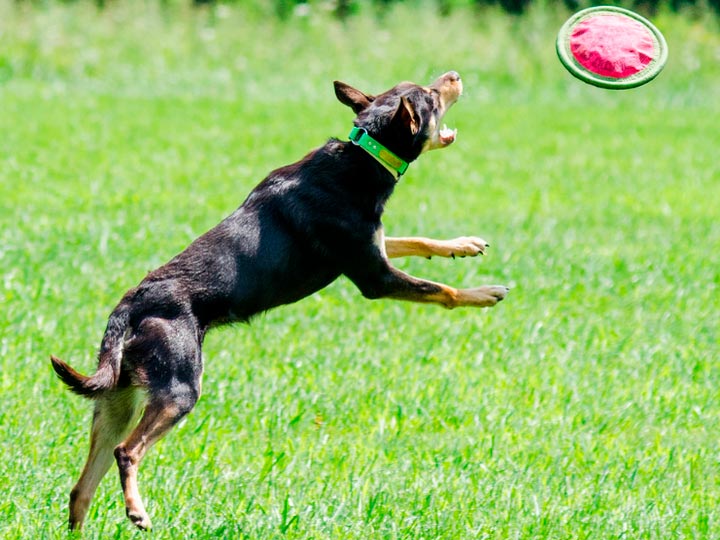
Kelpies are very difficult to maintain as companions or family dogs. They are tireless and extremely active. Running around 30 km a day is no problem for them. Without adequate physical and mental stimulation, a hyperactive Kelpie will drive their owner crazy with obsessive and destructive behavior. The Australian Kelpie is a fanatical worker and needs to be allowed to work. An alternative to herding is sports. Kelpies excel in agility competitions (flyball, frisbee, and, less commonly, agility). Kelpies require ample space to thrive. This breed is absolutely not suited to confinement. Even a fairly spacious yard will feel cramped, let alone a kennel or apartment. Their love of freedom makes them prone to escapism, and they can easily scale a two-meter fence.
Kelpies are very hardy and adapt well to a variety of living conditions, except for confinement in an apartment. They can work in both hot and cold temperatures. They remain highly active into old age.
Care
Farmers in the Australian outback wouldn't keep a dog that required special care, or any care at all. This means that Kelpies are completely low-maintenance. Occasional brushing during shedding season is all they require. They typically bathe themselves during the warmer months. The only regular check Kelpie owners make is for injuries and other damage at the end of the workday. Kelpies are not immune to minor scratches; they often go unnoticed and heal on their own. They also receive vaccinations and are regularly treated for external and internal parasites.
Health and life expectancy
The Australian Kelpie is considered an exceptionally healthy breed. This is largely due to the broad gene pool from which it was developed. Unlike other breeds, which are bred according to a written standard, Kelpies are bred based on temperament, intelligence, and health. Their lifespan is typically 12-15 years.
One of the most common problems among purebred Kelpies is progressive retinal atrophy. This condition is genetically inherited, has no cure, and is found in most breeds. Dogs approved for breeding must also be tested for hip dysplasia. A complete list of health issues common in the breed is as follows:
- Progressive retinal atrophy;
- Hip dysplasia;
- Patellar dislocation;
- Knee dysplasia;
- Cryptorchidism;
- Deafness;
- Cerebellar abiotrophy;
- Injuries sustained while working or in car accidents. Kelpies are often sensitive to moving vehicles and are often killed by cars.
Choosing an Australian Kelpie Puppy
Those considering buying a Kelpie puppy should remember one thing: they are exclusively working dogs, highly intelligent and resilient, and do not adapt well to urban life. This is one of the reasons why Kelpies are so rare and unknown in the world.
The two main factors people consider when choosing a puppy are working ability and health. Standard compliance is of secondary importance. For private farmers looking for a helper but with little experience training herding dogs, it's recommended to first get a female dog. She's more docile, but still has the same working qualities as a male.
Kelpies are rare in Russia, but their specialized nature means they are inexpensive. A Kelpie puppy without papers from working parents can be purchased for 5,000-10,000 rubles. A pedigree Australian Kelpie puppy typically costs between 20,000-30,000 rubles.
Photos
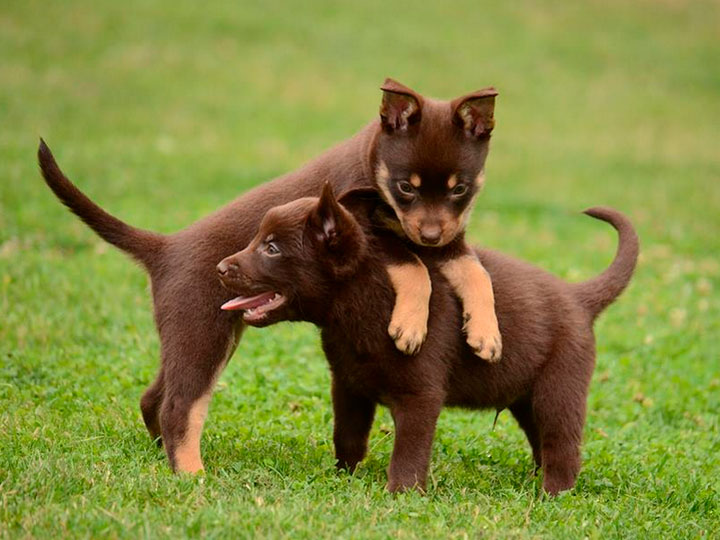
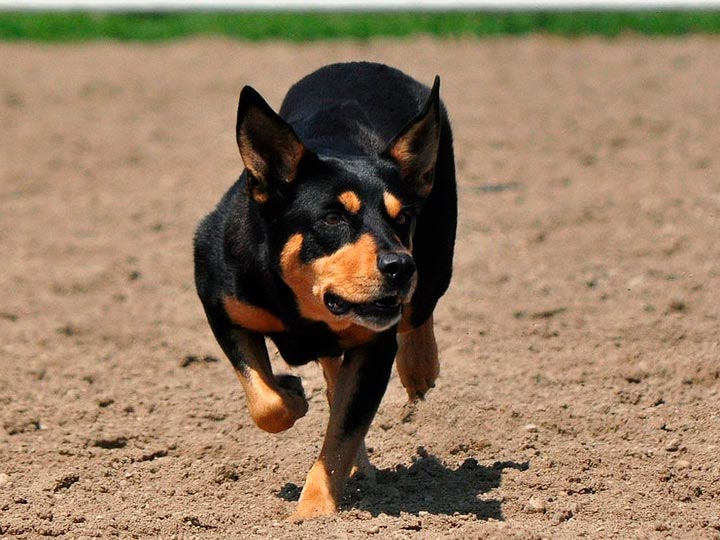
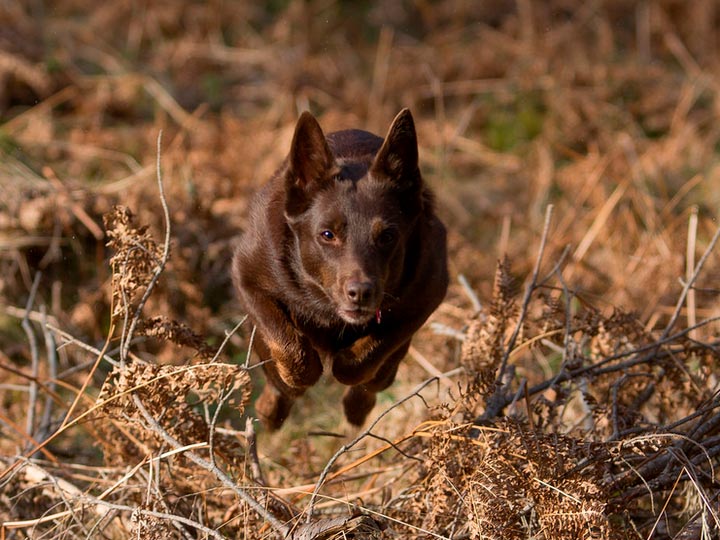
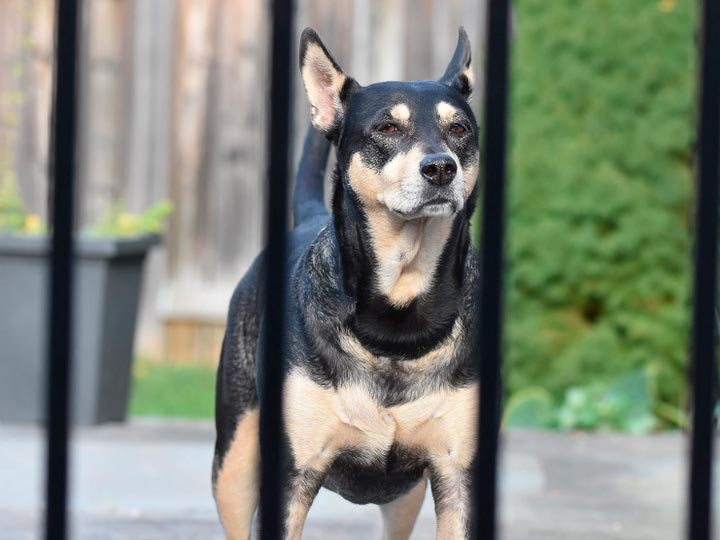
The gallery contains photos of adult Australian Kelpie dogs and puppies.
Read also:


Add a comment