
Sounds for cats
Cats' hearing differs significantly from that of humans. This is because these animals are predators, so hearing acuity is one of their primary means of securing food in the wild. This is why some of their auditory perceptions and reactions amuse, surprise, or baffle their owners.
Content
Features of hearing
Any cat's environment is filled with a variety of sounds, which are detected by their locator ears. For humans, the eyes are the determining organ, while for cats, it's the ears and whiskers. This ability is determined not only by the structure of the auditory system but also by the specific features of the corresponding part of the brain. If a human were to be bombarded with the same sound barrage that a cat constantly hears, nothing good would happen. At best, it would result in a severe headache, similar to the overabundance of odors in a small space.
Cats' hearing range is much wider than humans': while humans' hearing range extends to 19,980 Hz, cats' hearing range reaches up to 60,000 Hz. This sensitivity has not only obvious advantages but also certain disadvantages.
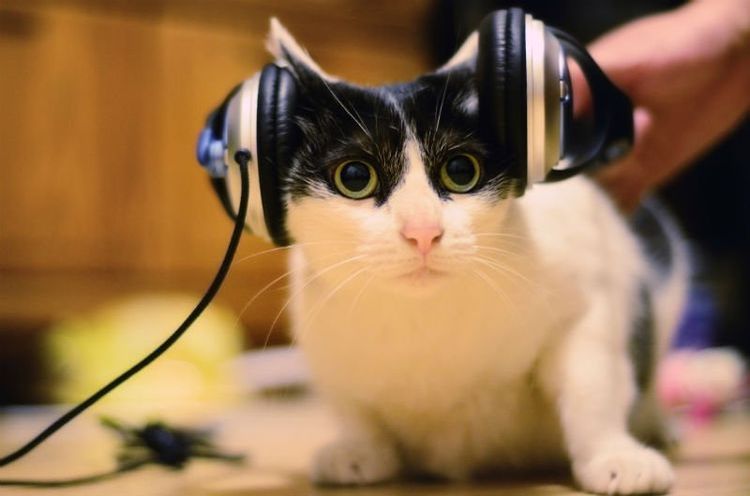
Unpleasant sounds
Any unfamiliar sound can frighten a pet. Their instinct tells them to stay away from anything unfamiliar or unfamiliar. It's not surprising if the sound of a new appliance (refrigerator, microwave, washing machine) causes them to retreat to another room.
Such reactions largely depend on the cat's temperament: if it's naturally timid, it will take a long time to get used to a new source of sound waves, while more inquisitive cats may overcome their fear and approach to investigate after they're sure there's no danger.
Most cats dislike the sound of foil. Many owners take advantage of this, for example, to protect furniture while they're away.
Volume
In the wild, any increased volume signals danger: it could be a natural disaster, a sudden attack by a predator, etc. This reaction to sudden, loud sounds is not unique to cats; fear in response to such sounds is characteristic of all higher animals.
Many owners know that their pets are frightened by thunderstorms and the sound of construction tools. A running vacuum cleaner truly terrifies many cats, so they dart around the house in vain, hoping to escape this terrifying machine. It's impossible to train a cat to tolerate these sounds, as they are driven by a simple instinct for self-preservation.
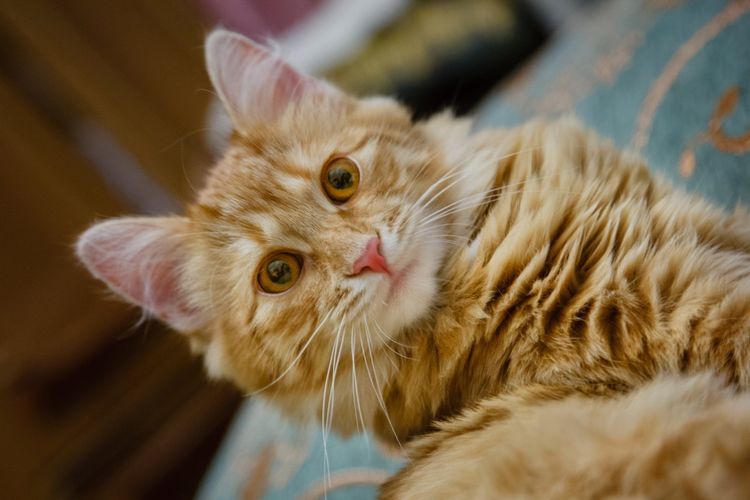
Sometimes owners use this trait to their advantage. For example, to protect items from scratches, they attach balloons to their surfaces. Once exposed to the loud sound of a balloon popping, the pet will be discouraged from ever encountering it again.
Ultrasound
Ultrasound is extremely unpleasant for cats. The discomfort is so severe that these sound waves are used to repel wild animals from their territory. Humans won't hear anything, as this frequency is beyond their hearing range, but the cat will actually suffer from it. This often explains sudden changes in the cat's behavior, which the owner can't explain.
Not only ultrasound but also other high-frequency sounds can cause discomfort for cats. For example, whistling can be painful, and the animal will immediately try to flee to a secluded area.
Age-related changes
Numerous studies have shown that cats become increasingly sensitive to unpleasant sounds as they age. In addition to the sound of foil, they also become increasingly irritated by the clatter of spoons and forks on ceramics, the clinking of glasses, the clicking of computer keyboards, and the jingling of keys and keychains. The older the animal, the less sensitive it becomes to these sounds. In the best-case scenario, the pet began to show signs of anxiety, while in the worst-case scenario, they developed a condition similar to an epileptic seizure, convulsions, and loss of consciousness. The duration of the sound stimuli has the greatest impact on the severity of the reaction.
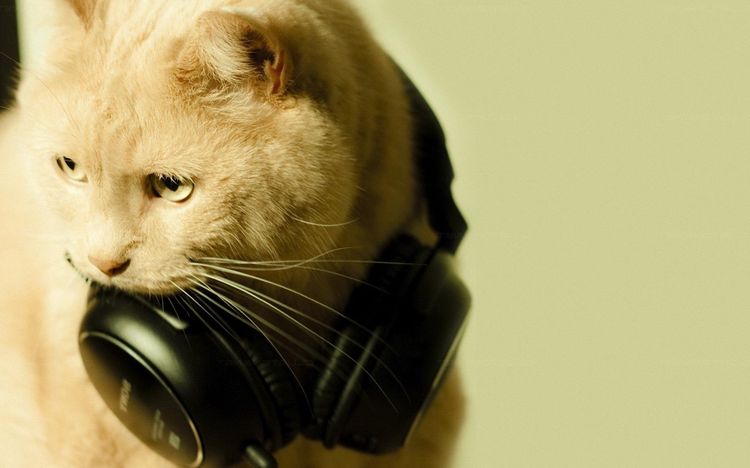
Pleasant sounds
Cats' auditory world isn't filled with only unpleasant and irritating sounds. Some sounds are very pleasing to pets. Like people, they enjoy hearing their name and being called affectionately. The sound of food being poured into a bowl or the purring of other cats, which they associate with their mother, evokes a surge of enthusiasm.
These findings inspired National Symphony Orchestra musician David Teie, in collaboration with University of Wisconsin professor Charles Snowdon, to create a project to write musical compositions that sound pleasant to cats.
For this purpose, a special virtual instrument resembling an organ was created. Its sound production partially mimics the purring mechanism of these animals. Studies show that such compositions actually do encourage cats to remain within earshot for longer. Therefore, it's possible that concerts for pets may soon become a reality.
Relaxing music for cats: listen with your favorites
https://youtu.be/vABnCGBqjKY?si=jdB5KDIABc1KVDLT
Purring Sounds That Will Calm Cats:
Read also:


Add a comment