
Golden Retriever
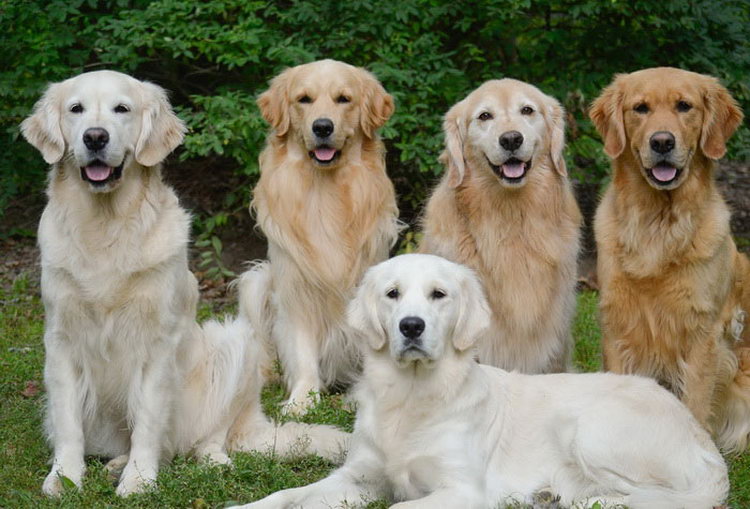
Golden Retriever The German Shepherd has gained near-universal recognition as a companion dog and an excellent sitter for children, although it was originally bred in England for duck hunting. It is said to be a golden-haired dog with a golden character. Despite all its positive traits, such a precious animal is not for everyone.
Content
History of origin
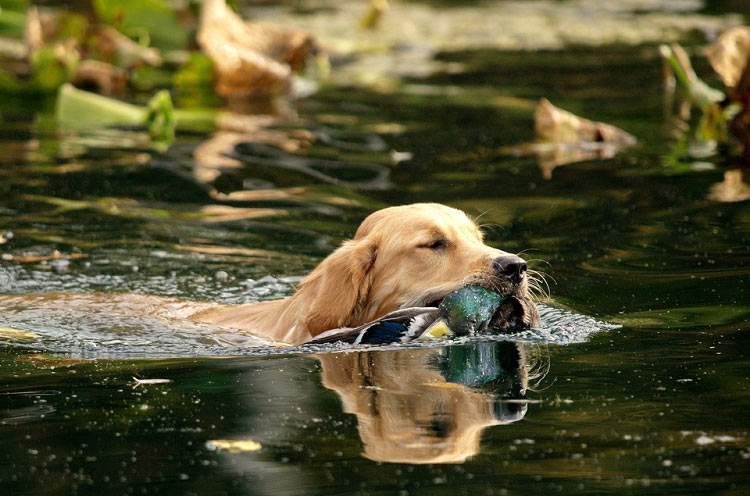
Golden Retriever Originating in England, a country where hunting was an all-consuming, fashionable hobby, and the key to success was having reliable four-legged companions. The word "retriever" (when applied to a dog) means to find and retrieve game. Until the late 19th century, retrievers weren't a distinct breed; their name indicated their function.
Many hunters bred and selected dogs themselves, then jealously guarded their "breed." One such amateur breeder was Lord Tweedmouth, whose efforts led to the development of the Golden Retriever. He worked on the breed from the late 1860s to 1890. By his death in 1894, his legacy had already spread throughout England. Many dogs became honorary studs at various kennels, including Culham and Noranby (they are where most of the pedigrees originate).
For a long time, it was believed that the breed originated with several circus dogs from the Caucasus. The breed was presented at the Crufts show in 1913-1915 under the name Russian Yellow Retrievers. In 1952, Tweedmouth's descendant, the Earl of Ilchester, published an article that completely debunked the circus legend. It turns out that his uncle had a stud book with detailed records, but apparently he was unwilling to share them. The pedigree of the first Goldens extends back to a vast number of breeds: water spaniels, Irish setters, flat-coated retrievers and Labradors. Later, the blood of bloodhounds and sometimes mongrel or crossbreed dogs was added.
In 1913, Noranby's owner, Mrs. Charlesworth, founded the first Golden Retriever Club and developed a breed standard. Since then, golden retrievers have been considered a distinct breed.The first retrievers were dark. Over the decades, the coloring became more varied. In Europe, almost white Goldens are found, while in the United States, the emphasis is on breeding dark-colored dogs.
Video review of the Golden Retriever dog breed:
https://youtu.be/CEIyjjY_9DU
Appearance and standards
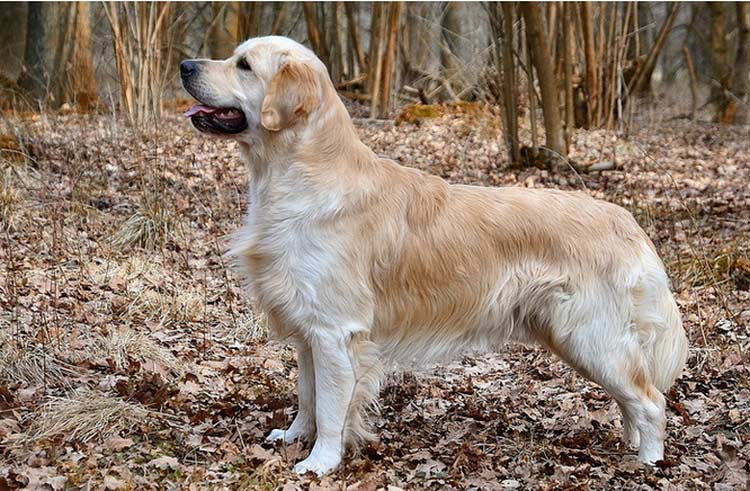
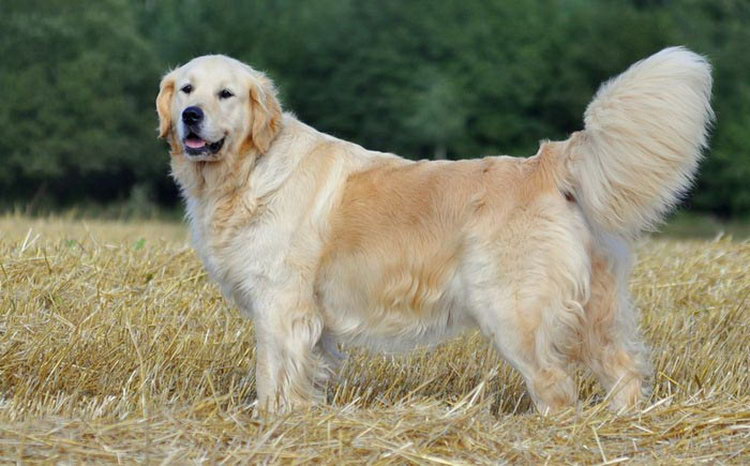
Golden Retrievers are harmoniously built, strong and robust, with balanced gait and a friendly expression. They stand 50-60 cm at the withers and weigh 25-35 kg, with males being noticeably larger and more powerful. Their gait is free and straightforward, with good drive.
Head
The head is proportionate to the body, with all lines well defined. The muzzle is broad, its length approximately equal to the distance from the occiput to the stop. The jaws are strong, and the bite is correct. The eyes are set wide apart, the eyelids are dark, and the iris is dark brown. The hanging ears are set at eye level and are medium in size. The stop is clearly visible. The nose is pigmented.
Frame
Goldens should be harmoniously built, graceful rather than massive. The body is somewhat elongated. The height at the withers is approximately equal to the distance from the shoulder blades to the tail. The chest is deep. The back is level, and the loin is short. The long tail continues the line of the back. The limbs are massive and set well under the body. The paws are rounded, reminiscent of a cat's.
Coat and colors
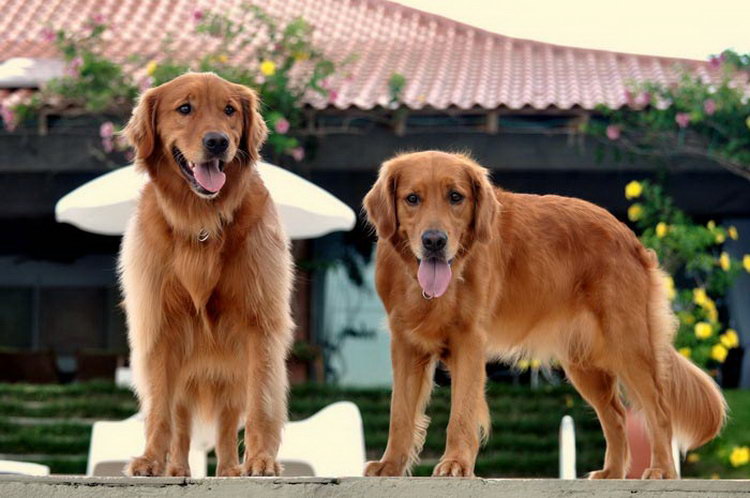
The retriever's coat is medium-length, straight or wavy, with feathering on the chest, ears, paws, and tail. The undercoat is dense and waterproof. The coat can range in color from dark gold to light cream, almost white. A few white hairs on the chest are acceptable.
Character and psychological portrait
Golden Retrievers are intelligent, kind, and calm dogs who rarely bark and love nothing more than to spend time with people. They are completely unprone to dominance or aggression, making them excellent babysitters. Cheerful and energetic, they bring a positive vibe to everyone around them.
Dogs with their good-natured appearance and devoted eyes are natural actors. They starred in films like "Napoleon," "The Road Home," "King of the Air," and others.Golden Retrievers don't choose just one owner; they love all family members equally. They are very loyal, but not jealous. They are highly attuned to family moods and adapt to their family's rhythm. They are friendly and trusting toward strangers. Golden Retrievers are excellent friends and companions; they can be excellent hunters, but they will never become guard dogs. Even if their owner is in danger, the Golden Retriever is unlikely to rush to their defense. Only their powerful appearance and deep bark can come to the rescue. Golden Retrievers get along well with other animals, whether cats, dogs, or rodents.

Education and training
Training a puppy is essential from the first day it arrives home. Goldens are deservedly considered highly intelligent dogs; they have remarkable memories, so once allowed, it's hard to stop them in the future. Many problems are related to walking.
In urban environments, it will take considerable effort and patience to train your pet to stop picking up trash and scraps from other people's feasts and to prioritize your owner's commands. The key when working with a retriever is non-violence and patience.From the first months of life, pets are taught simple commands: "come," "sit," "stay," etc. Golden Retrievers are highly trainable and pick up commands quickly, but they are not always quick to follow them if they have found a more interesting activity.
From 7-9 months, it's recommended to take your puppy through General Training or an equivalent course, such as a controlled city dog, and then maintain the acquired skills or advance to the next level. Goldens are successfully trained in freestyle, agility, and other sports. A guard dog course is pointless.
Physical activity
Golden Retrievers are very active and require increased physical and mental stimulation. Starting at two months, puppies are walked up to six times a day for 10-20 minutes. Over time, the number of walks is reduced and the exercise intensity is increased. Adult Golden Retrievers are walked at least twice a day. The first walk lasts about 30 minutes, and the second walk is a full walk, lasting about two hours, including playtime and exercise. These breeds make wonderful companions for morning bike rides or jogs.
If a dog does not receive sufficient physical exercise, its character changes for the worse, and its behavior often becomes destructive.
Maintenance and care
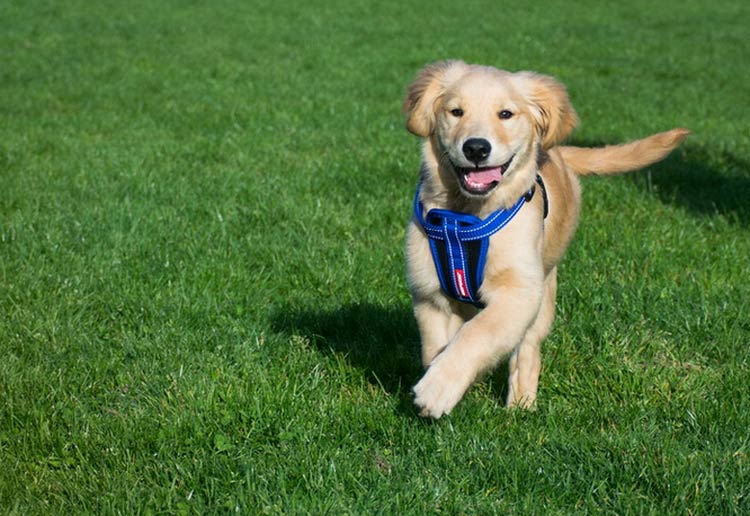
A Golden Retriever can thrive in an apartment if it gets enough exercise on walks. Brushing should become a daily ritual. A more suitable option for both owner and dog would be living in a private home with unlimited access to the property.
Grooming
It's recommended to brush your Golden Retriever daily; if that's not possible, the more often the better. Use fine-toothed and wide-toothed combs, special mittens, and, during shedding season, a slicker brush or furminator. Frequent bathing is not recommended. Bathing with shampoo, conditioner, and lotions is recommended no more than five times a year. Frequent bathing can negatively impact the condition of the skin and coat. Summer swimming in ponds and washing the paws and belly after walks do not count.
Claw trimming, hyena eyes and ears
With sufficient exercise, nails will wear down to the required length on their own. Otherwise, they need to be trimmed to prevent them from interfering with walking or causing injury. Regularly inspect the ears for dirt or signs of infection, especially during warmer months. Clean the ears as needed using special lotions. Ensure tear ducts are clean and dry.
Diet
At any age, the diet should be balanced and portioned. Dogs should not eat ad libitum, as this can lead to obesity. Feeding a pet natural or prepared food is a personal decision. Goldens are generally not picky eaters, so the choice is up to the owner. From 3 months to 6 months, puppies are fed 4 times a day in small portions. By 7 months, they are fed 3 times a day, and by 18 months, they are fed twice a day.
Health, breed diseases and life expectancy
Golden Retrievers are hardy, energetic dogs with robust health. However, there are a number of health conditions to which they are particularly susceptible, some of which are hereditary:
- Epilepsy;
- Progressive retinal atrophy;
- Von Willebrand disease (a hereditary hemorrhagic disorder that causes excessive bleeding);
- Joint dysplasia;
- Diabetes;
- Atopic dermatitis, other skin diseases.
- Predisposition to otitis due to poor ventilation of the auricle;
Regular veterinary examinations will help to identify the disease early and begin treatment at an early stage.
Every dog needs routine vaccinations to protect against the most dangerous viral diseases, regular deworming, and treatment for external parasites.
Average life expectancy is 10-12 years.
Choosing a puppy and price
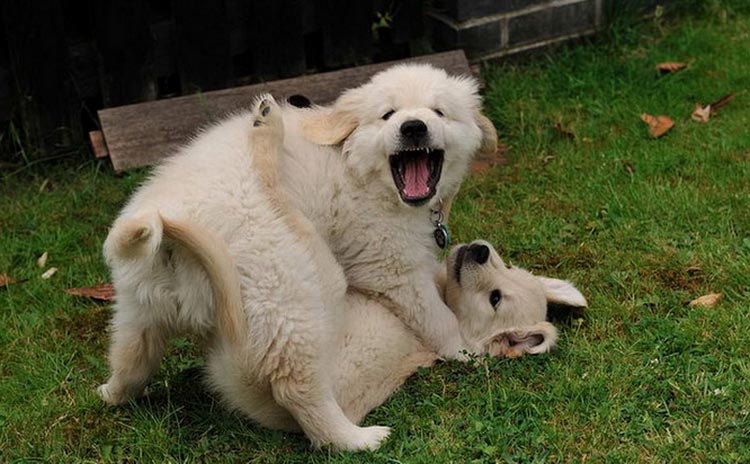
Buying a Golden Retriever puppy from an ad is easy. There are many options, and each litter varies in quality, but most were bred specifically for sale. As a result, it is very difficult to assess a dog's genotype, appearance, personality, and the presence of hereditary diseases. The litter's value is always enhanced by the pedigree of the sire and dam, as well as the kennel's name.
It's important to decide what class of puppy you need. Puppies are generally divided into three types. Pet-class dogs are not dogs with defects or flaws. These are normal puppies that will become worthy representatives of their breed, but are unlikely to receive high marks at shows and are not allowed for breeding. Breed and show-class dogs are always significantly more expensive and are valued as future producers and champions.
The best option is to choose a Golden Retriever puppy from a reputable breeder. Often, you'll need to reserve a puppy in advance. When you arrive for a viewing, it's also worth paying attention to the parents and the living conditions. All puppies should be healthy, active, and have a good appetite.
A good breeder will never give away a puppy before 3 months of age without a full set of vaccinations and will always evaluate future owners, and not just advertise their dogs.
Price of a Golden Retriever puppy
Golden Retriever prices vary widely. Unpedigree dogs can cost up to 10,000 rubles. Retriever puppies from reputable breeders sell for 20,000-45,000 rubles. Some show and breed-class dogs can cost significantly more.
Photos
Photos of Golden Retriever puppies and adult dogs


Read also:
- White Swiss Shepherd (American-Canadian Shepherd)
- Nova Scotia Duck Tolling Retriever (Toller)
- Curly-Coated Retriever


1 comment
Paul
Very good dogs.
Add a comment