
Entropion in dogs: treatment
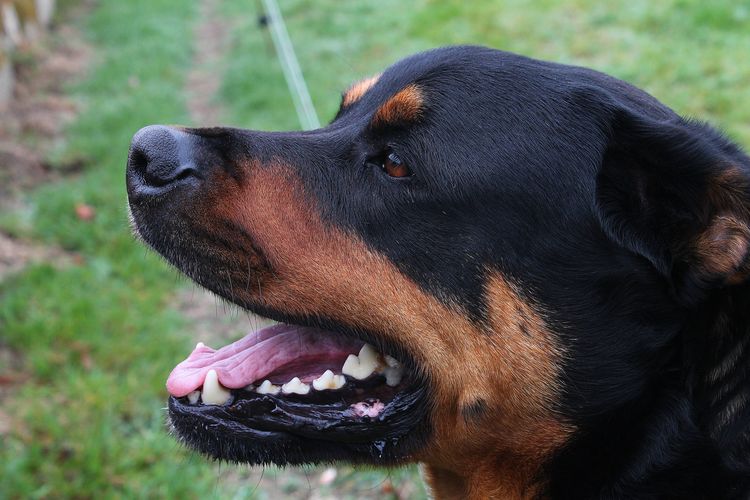
Entropion, or inversion of the eyelid, is a condition in which the cartilage supporting the eyelid loses elasticity, causing the edges of the eyelid to curl inward toward the eyeball. Dogs with many folds of skin on their heads are most susceptible to this condition, including Shar-Peis, Basset Hounds, Bulldogs, Rottweilers, and St. Bernards. pugs, mastino, PekingeseThis disease does not pose a threat to the dog's life, but it can cause a number of serious complications and even lead to complete blindness.
Content
Causes of development and possible complications
The disease can be primary or secondary. Primary (congenital) entropion is considered hereditary. Secondary (acquired) entropion can be caused by eye diseases (such as follicular conjunctivitis), trauma, infection, and certain internal organ pathologies. In older animals, the disease can develop due to muscle and ligament degeneration.
Constant contact of eyelashes with the mucous membrane of the eye leads to its irritation, which may further develop keratitis (inflammation and opacification of the cornea). In some dog breeds (for example, pugs and Pekingese), corneal melanosis, a common complication of entropion, is the development of black pigment spots on the corneal surface. These complications can lead to vision loss.
Symptoms
The main clinical manifestations of entropion are:
- Eyelid spasm. The dog constantly squints and blinks frequently, as if something is in its eye.
- Photophobia. The animal tries to avoid light, and when entering a brightly lit area, it turns away and closes its eyes.
- Increased lacrimation; as the disease progresses, mucous or purulent exudate is released from the eye; the conjunctiva is inflamed.
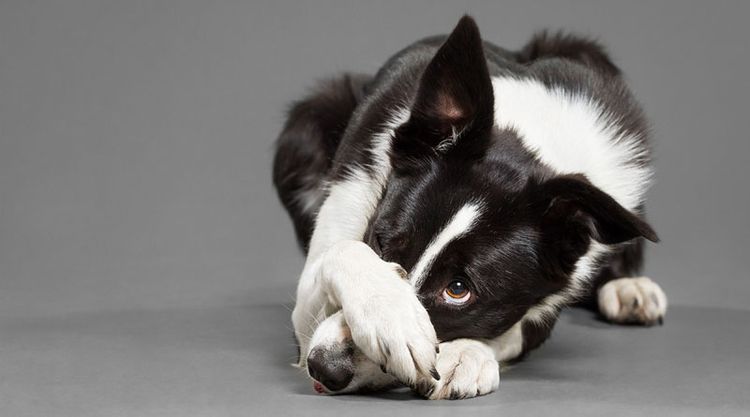
- It is clear that the dog is in pain: it constantly rubs its sore eye, trying to relieve the condition.
Important! Similar symptoms—a foreign body sensation in the eye, excessive lacrimation, photophobia, and eye redness—can also be caused by a condition that has the opposite mechanism of entropion. This condition is called ectropion, or eversion of the eyelids, where the edge of the eyelid does not adhere to the eyeball but instead droops and turns outward. In dogs, the lower eyelid is typically affected. The natural predisposition to this condition is the same as for entropion, but there is only one treatment for entropion: blepharoplasty.
Diagnostics
A veterinary examination is usually sufficient to diagnose entropion in dogs. However, determining the treatment method requires assessing the severity of the condition and identifying its cause.
For this purpose, an ophthalmological examination is performed using a special slit lamp. To eliminate discomfort, anesthetic drops are placed in the dog's eyes, and fluorescent solutions are applied to the mucous membrane of the eye to precisely identify the affected areas. A narrow beam of light is then directed at the iris to examine the depth of the damage and detect the presence of corneal ulcers and erosions.
If absolutely necessary, biomicroscopy of the anterior segment of the eye can be performed, but this procedure is performed under anesthesia, since it requires the patient to remain completely still.
Treatment
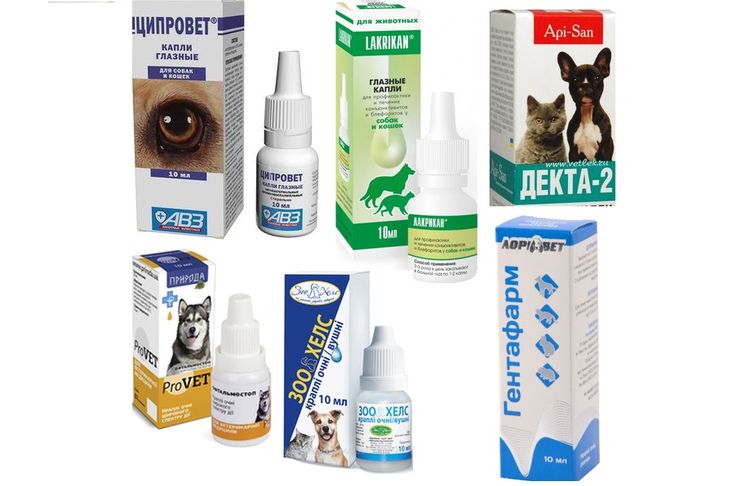
Medication for entropion in dogs is used when the condition is not in advanced stages and is caused, for example, by acute pain associated with conjunctivitis (the so-called spasmodic inversion of the eyelid). In such cases, the underlying condition is treated: the dog is prescribed eye drops, which have analgesic, antiseptic and anti-inflammatory effects (Tsiprovet, Lacrican, Decta-2, Oftalmostop ProVET, Zoohels), as well as drops with antibiotics (Gentapharm).
In most cases, entropion is corrected surgically. Before surgery, the animal is fasted for 10 hours. The blepharoplasty plan is individualized and depends on the examination data regarding the severity of the condition and the animal's overall condition. Premedication, anesthesia, and postoperative medications are also individually selected.
The surgery involves removing the portion of the eyelid that is causing it to invert. After the excess tissue is removed, sutures are placed to secure the ligaments in the correct position. Self-absorbable sutures are often used for this purpose; these sutures do not require removal.
In the postoperative period, antiseptic treatment of the eye socket area is carried out, and if necessary, medications are prescribed to accelerate recovery. damaged cornea (Korneregel, Solcoseryl, Adgelon, Thiotriazolin). The decision to prescribe antibiotics is made by a doctor. To prevent accidental damage to the sutures, the dog is given a special protective collar for 1-2 weeks.
The cost of entropion correction surgery in dogs depends on the complexity of the blepharoplasty procedure and the animal's size, and ranges from 600 rubles for toy breeds to 6,000 rubles for dogs weighing over 10 kg. In some cases, multiple surgeries may be required to fully strengthen the eyelid muscles and ligaments.
Important to know: Eyelid surgery is not performed on dogs under 6 months of age, as there is a chance that eyelid function will improve on its own as they mature. In cases of severe inversion of the eyelid in puppies, veterinarians recommend temporary sutures to hold the eyelid in place.
Forecast
With timely treatment, the prognosis after correction of entropion in dogs is positive. Eyelid function is fully restored, and the animal's quality of life improves significantly. However, if the condition is advanced and complications include corneal ulceration or perforation, a rather complex microsurgery may be required. Full recovery in dogs can take several months. Therefore, it is recommended to consult a veterinarian as soon as possible if this condition is detected.
Read also:
- Dry Eye Syndrome in Dogs: Causes and Treatment
- Keratoconjunctivitis in dogs: symptoms and treatment
- Treatment for a Dog's Eye Spot


Add a comment