
Intestinal volvulus in cats: symptoms and treatment
No animal is immune to intestinal volvulus. It can happen even to the most caring owner, who closely monitors their pet's health and does everything possible to ensure their pet is active and healthy. Therefore, it's important to know the symptoms and signs of this dangerous condition, as well as understand the appropriate steps and treatment options to effectively help your pet.
Since all the symptoms of intestinal volvulus develop quite quickly, causing a sharp deterioration in the condition, which often ends in the death of the pet, it is necessary to be able to recognize and quickly respond to this pathology.
What is it?
The esophagus and stomach are connected to each other by special ligaments called mesenteries. These ligaments maintain the intestines' proper position within the abdominal cavity, allowing them to function normally and maintain their natural blood supply. If the mesentery twists, a volvulus occurs, blocking the main artery supplying blood to the intestines.
Intestinal obstruction is often confused with intestinal volvulus, but these are completely different conditions. Obstruction occurs due to the closure of a slit in the intestine, which can, with varying degrees of probability, impair blood flow. A volvulus completely cuts off the intestine's blood supply, which quickly causes tissue necrosis.
If the main artery is completely compressed, the smooth epithelium dies within minutes. Ischemia causes rapid inflammation of the abdominal cavity and peritonitis.
Provoking factors
Veterinarians cannot pinpoint a definitive cause for this condition in cats. However, factors that increase the risk of developing intestinal volvulus are known:
- the appearance of a malignant tumor in the digestive system or in organs located in the abdominal cavity;
- vigorous physical activity immediately after a heavy meal;
- mechanical impacts (compression, impact, bruise);
- endocrine disorders that cause increased elasticity of the ligaments;
- entry and sticking of foreign bodies into the intestine;
- various gastrointestinal pathologies (tumors, infections, inflammations);
- helminthic infestations in advanced stages.
The following categories of cats are at the highest risk:
- Very old animals, in whom pathological processes more often develop and the elasticity of the ligaments is impaired.
- Kittens and young animals up to 1 year old. Firstly, their digestive system is very fragile; secondly, they are overly curious and can swallow various objects; thirdly, they are very active and often overeat, which poses a risk of bloat.
Symptoms
Intestinal volvulus is always accompanied by severe pain, so it's fairly easy to notice that something is wrong with your pet. The main signs of this condition are:
- A plaintive meow that may be weak or may sound like a scream.
- Uncharacteristic changes in behavior. The cat may be apathetic and seek solitude, not responding to its name and wanting to hide, or it may constantly run around trying to find a comfortable spot or attract attention.
- The cat most often loses its appetite, refusing even its favorite foods, because after each meal its health worsens.
- Frequent vomiting or the urge to vomit. The vomit often contains blood.
- The cat refuses to allow its abdominal wall to be touched, as this aggravates the pain. Usually, a docile pet may scratch or bite its owner if its abdomen is probed.
- The animal experiences pain when stepping on its hind legs, so it may drag its hind legs when moving.
- The abdomen becomes swollen and hard.
- Gas production increases significantly, causing a loud rumbling sound in the intestines. The cat may roll on the floor to relieve the excess gas.
- Lack of bowel movements. This symptom is also accompanied by constipation, And intestinal obstruction, and intestinal volvulus, but in the latter case, the animal is unable to urinate for an extended period. Stagnation of food masses causes severe intoxication of the entire body, which is why body temperature often rises.
- Severe dehydration is observed, so the pet rapidly loses weight, the nose becomes dry, and the eyes become cloudy.
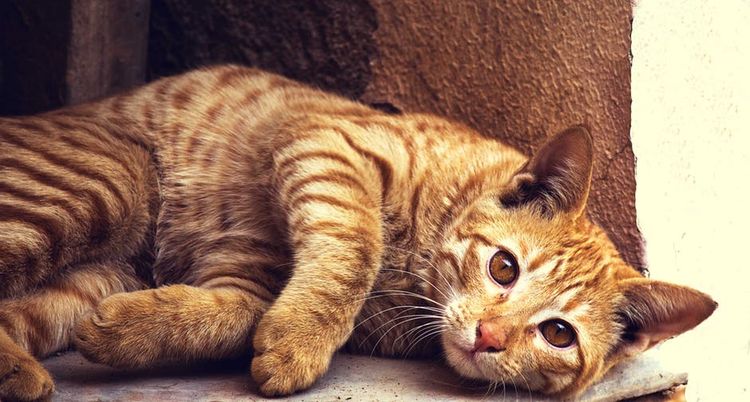
The most severe symptoms, indicating a serious situation, are shock and loss of consciousness. In such cases, every minute counts, so it's essential to seek medical attention immediately.
If you notice such signs, it is strictly forbidden to give your pet food or laxatives and medications to stop vomiting. Such actions can cause intestinal rupture and rapid death.
Diagnostics
A complete diagnosis and accurate identification of this dangerous condition can only be performed in a modern clinic. Even the most experienced and highly qualified veterinarian cannot diagnose intestinal volvulus at home; they can only make a preliminary diagnosis and refer the cat to a clinic for a definitive diagnosis.
The difficulty with diagnosis lies in the fact that frequent vomiting can make it difficult to obtain data. The main methods for determining intestinal obstruction are:
- An X-ray using barium contrast agents shows the location of the obstruction, the level of fluid and feces in the intestine, and the location of the loops.
- To differentiate the disease from an intestinal infection, a bacteriological analysis of vomit and feces is carried out.
- In most cases, the cause can only be accurately determined during surgery. In veterinary clinics equipped with the necessary equipment, this is performed laparoscopically, with minimal damage to the abdominal tissue.
If the disease progressed rapidly and the cat died during transportation to the clinic, the diagnosis is established by autopsy.
Treatment
The only treatment for intestinal torsion is surgery. This allows the veterinarian to accurately assess the extent of the injury and take all necessary measures to save the cat's life. During surgery, the surgeon returns the twisted section of intestine to its natural position and removes any necrotic tissue.
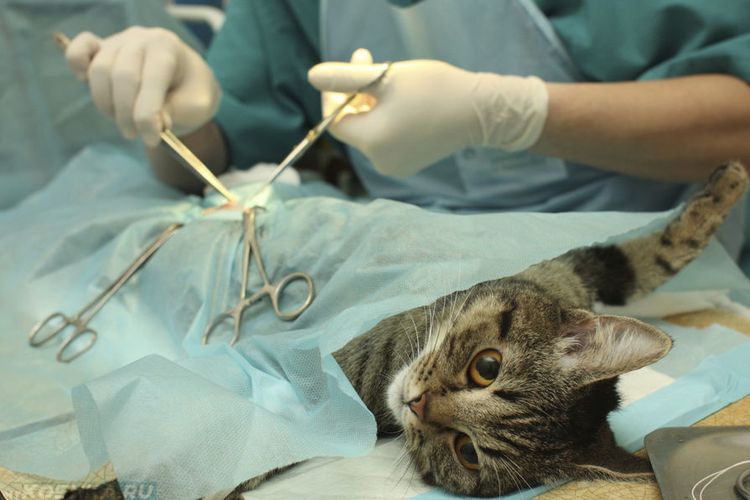
After surgery, the cat is restricted from eating on its own for some time. One of two feeding methods is chosen:
- An elastic latex tube is inserted through the nasopharynx, through which nutrients are delivered to the stomach;
- they make an artificial one in the belly fistula, through which food is delivered directly into the intestines.
After surgery, the cat will need to remain in the clinic until its condition stabilizes. The following treatment will be administered after surgery:
- reception antibiotics;
- administration of painkillers;
- IV drips with saline solutions for dehydration.
To restore your pet's body over a certain period, you will need to give it probiotics to improve digestion and follow a special gentle diet.
Recovering an animal from a volvulus is a long and complex process that can only be accomplished by a very responsible, loving, and caring person.
Read also:
- Massage for cats and kittens during constipation
- My cat has trouble walking on its hind legs: what should I do?
- Gastritis in cats


Add a comment