
Window protection against cats falling out
Cats are highly intelligent animals, but we can't expect them to fully understand the dangers lurking in the human-made world. Their pet's safety falls entirely on their owners. One important aspect of care is ensuring that cats don't fall from heights while living in high-rise buildings. For this purpose, special window guards are installed.
Content
The existing danger
The psychological age of a two-year-old cat, compared to a human, is equivalent to the intellectual development of a twenty-year-old. However, when it comes to their own safety, these animals cannot boast the same level of intelligence, as they are much more active than humans.
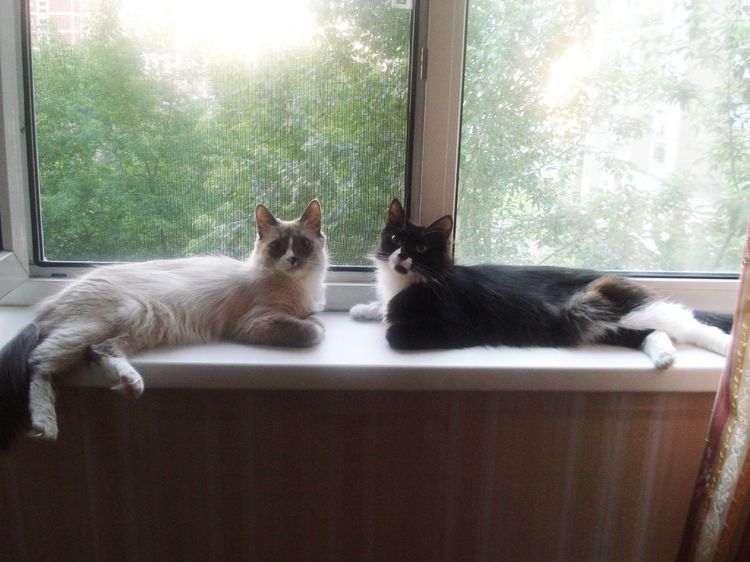
The view outside the window certainly attracts these animals: they love to watch the world outside, just as people love to watch television. But there's a real danger inherent in their nature—the hunting instinct. Any passing bird or even insect can cause them to leap forward without thinking. A cat can't resist this impulse—at such a moment, it's driven by its natural instinct, and all its aspirations are focused solely on the hunt.
Another potential cause of trouble is fear. Cats are very graceful, easily walking along the thinnest corners or windowsill edges, but if a loud sound or sudden movement startles them, they can easily jerk and fall.
The idea that cats always tuck themselves in mid-flight and land successfully on their feet is untrue. Tucked up is far from always successful, and when falling from a great height, even landing on their feet can result in multiple fractures or internal organ injuries.
Mosquito nets
Many owners try using mosquito nets to protect their pets from falling out. This tactic doesn't work for two reasons. First, the material used for mosquito nets is quite elastic, and a cat lunging at a window will push through it, causing its body to move forward and its center of gravity to shift. Second, mosquito nets aren't securely fastened, so even the slightest mechanical pressure will cause the net to pop open.
The situation is aggravated by the fact that the owners arrive with the firm belief that their pet is reliably protected, so they do not interfere with its dangerous position on the windowsill.
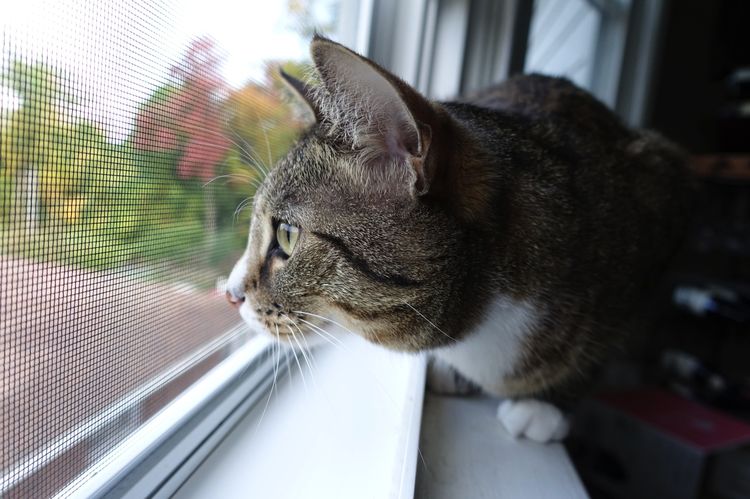
Anti-cat
There are special devices to prevent hair loss, which are often called anti-catsThe main difference from a standard mosquito net is that it uses a more durable material, capable of withstanding the weight and force of an adult cat's leap. The mesh size of these devices is larger than that of mosquito nets, allowing for effective air exchange while remaining relatively lightweight and allowing light to enter the room. They are typically made of fiberglass coated with PVC.
Additionally, anti-cat devices have more powerful metal fasteners that attach to a reinforced profile. In addition to the main fastener, additional fastening elements are used on the sides.
The downside of cat-proof curtains is that they still reduce sunlight exposure in rooms. For those with south-facing rooms, this is actually an advantage, but for those with west-facing windowsills, you'll have to turn on the lights more often.
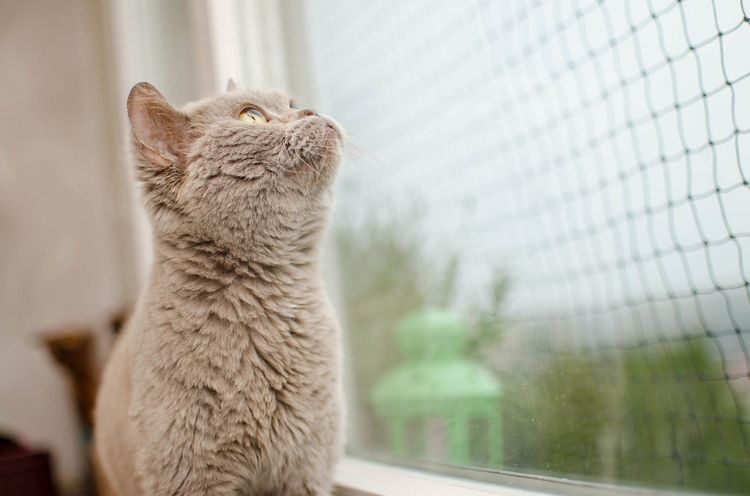
The safety level of such window protection depends on the reliability of the fastening, so it's not a good idea to skimp on this aspect: if you're unsure of your own skills, it's best to hire professionals to avoid paying for the savings later with your pet's life. Some designs don't require special fastenings; they're equipped with locks that lock easily during installation.
Balcony mesh
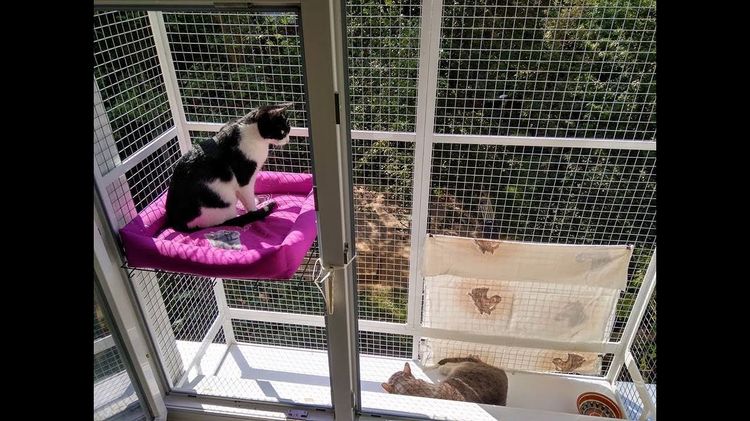
This fall-out protection is a makeshift loggia, transparent on all sides. Cats love to sit in it, creating their own private corner, off-limits to everyone else. It's a reliable structure, but only professional fasteners can install it.
Protection for a tilt-and-turn window
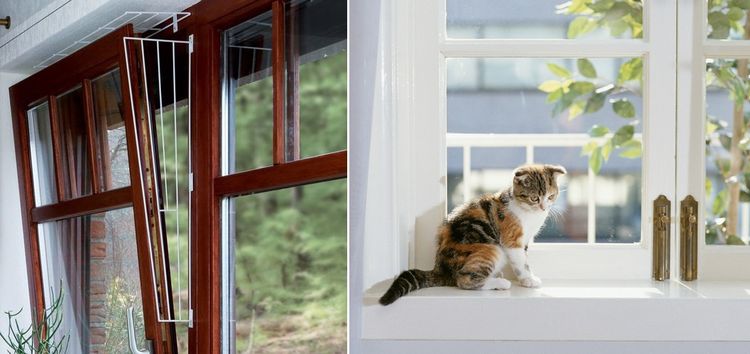
Besides a regular window, cats are at risk of getting stuck in structures that open vertically for ventilation. Unfortunately, many animals are injured this way. Once stuck, the animal struggles to escape, but only worsens its situation by squirming into an increasingly narrow space. This can lead to serious internal damage and often death.
To prevent this from happening, a special protection system was developed that is installed each time the room is ventilated. While this may be a bit of a hassle, it does prevent a potential tragedy.
Where to buy
The simplest method is to buy a ready-made anti-fall screen. If the window is a standard size, you can use a ready-made design. For non-standard windows, you'll have to order a custom design and wait several days for it to be manufactured. For this purpose, surveyors will come to your location and measure everything needed.
When ordering online, you can calculate the cost of hair loss protection using an online calculator. Be very careful when doing this, as even a minor error can lead to skewed results.
You can buy netting at a pet store or bird market, and there are plenty of options online. Prices range from 1,100 to 6,000 rubles. Anti-fall screens for casement windows from manufacturers such as Trixie, Kot-stop, and others start at 600 rubles.
Do it yourself
Those with the skills and tools can make their own anti-fall protection system. To do this, you'll need to purchase mesh, which is sold by the linear meter. Before purchasing, measure your existing windows and share them with the salesperson, who will be able to advise you on the appropriate amount of material.
You can choose black or white material, depending on your preference. White doesn't darken as much, but it gets dirty quickly and requires periodic cleaning. The cost depends on the roll height and the quality of the metal. Prices start at 500 rubles per linear meter.
Sometimes it's recommended to use garden netting as a fall-out guard. This solution has obvious drawbacks: plastic can be damaged by ultraviolet rays, so you can't be sure the structure will be secure by the end of the season, much less use it the following year. Some cats may chew on plastic netting. This material isn't as durable as metal, so it's recommended to use this method only for inactive and calm cats, just to be on the safe side.
The first step is to make a wooden frame to fit the window. The wood needs to be painted or varnished to prevent it from turning to dust next season. Using metal shears or regular scissors, the required piece of mesh is cut and secured with brackets and screws to the corners of the frame.
The workpiece is attached to the profile with screws. Don't skimp on the number of screws; it's better to use more attachment points to prevent the animal from falling out.
How to make an anti-cat net yourself: video
Read also:


Add a comment