
Pinched Nerve in Dogs: Symptoms and Treatment
A dog's nervous system consists of the brain and spinal cord, the latter located in the spinal canal formed by the vertebral arches. When the spinal elements are displaced or the surrounding muscles and tendons become inflamed, the spinal nerve roots become compressed. When a nerve is pinched, the dog experiences severe pain, and if the compression is not relieved, paralysis may develop. Therefore, this condition is considered dangerous and requires immediate treatment.

Content
Reasons for development
Depending on the part of the spine where the compression occurs, a distinction is made between cervical (neck), thoracic, or sacral (sciatic) nerve compression. Nerve root compression is most often a consequence of spinal pathologies: intervertebral hernia, spondylosis, osteochondrosis. Pinched nerves in dogs can be caused by:
- injuries that caused displacement of the vertebrae;
- increased loads on the spinal column;
- the presence of a tumor in the spinal area;
- calcium metabolism disorders;
- frequent hypothermia.
Age and genetic predisposition also play a role. In older dogs, bone regeneration is slower, and vertebrae are more easily deformed and can become displaced under even minor stress, pinching a nerve. Large, stocky dog breeds (mastiffs, Dogue de Bordeaux, and St. Bernards) are prone to developing this condition, as are short-legged, long-bodied dogs such as dachshunds, basset hounds, and bulldogs.

Clinical manifestations
Symptoms of a pinched spinal nerve in a dog can be immediately detected: severe pain causes the animal to whine pitifully, curl up, refuse walks, and avoid unnecessary movement. The dog reacts aggressively to any touch on the affected area of the spine and may even bite.
Possible changes in your pet's behavior also include:
- stiffness of movement;
- periodic claudication;
- dragging of the hind legs when walking;
- when trying to lie down, the dog takes a long time to find a comfortable position;
- when standing up the animal hunches its back;
- The dog sleeps restlessly.
A pinched spinal nerve can cause paralysis of the limbs or the entire lower body of a dog. This symptom requires immediate hospitalization; in advanced cases, paralysis and paresis in dogs are very difficult to treat.
Diagnostics
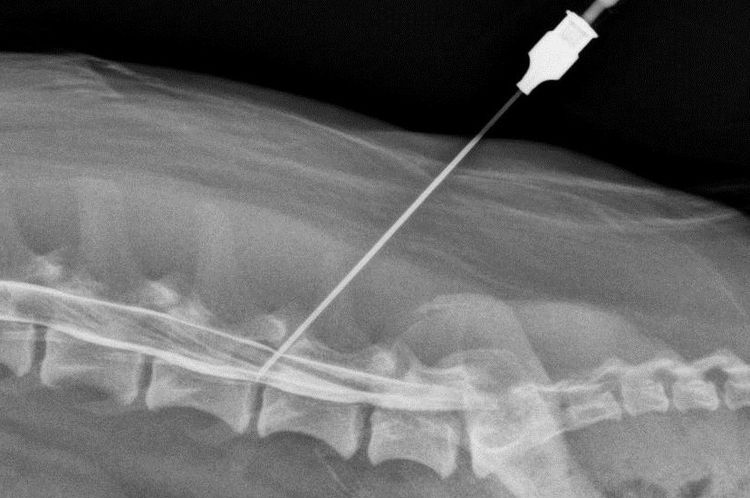
A veterinarian makes a preliminary diagnosis of a pinched nerve based on the symptoms described by the dog's owner and those found during a neurological examination. Determining the exact area of damage and assessing its severity can be difficult, as the pain associated with a pinched nerve is diffuse. To determine the location of the compression area and the depth of the spinal nerve conduction disturbance, diagnostic imaging techniques are used. These may include magnetic resonance imaging or myelography (an X-ray using a contrast agent injected under the spinal cord membrane). These tests can detect areas of spinal cord compression or the presence of spinal deformities.
Treatment
A course of treatment for a pinched spinal nerve typically includes:
- Pain relief and anti-inflammatory drugs - analgesics and non-steroidal anti-inflammatory drugs Dexamethasone, Carprofen Ketonal, Ketoprofen, Rimadyl, homeopathic medicines Traumatine, Traumeel.
- Sedatives such as NoviPet, Baldecchi Syrup, and DA-BA RELAX PLUS help dogs spend more time asleep or semi-asleep and experience less pain.
- Drugs for the restoration of nerve conduction: Myostigmine, Proserin.
- Chondroprotectors, such asArthroglycan, Chondrocan, Hondartron, Stride.
- To increase vascular and tissue permeability, the dog may be prescribed injections of lidase, which is administered subcutaneously into the area of the affected nerve.
- Additional treatments include vitamin therapy and physical therapy, such as massage, blue lamp therapy, acupuncture, or electropuncture.
Until the pinched nerve is completely relieved, your pet should be given complete rest. Avoid long walks, engaging in active play, or forcing them to climb steep stairs.
Surgical treatment of a pinched nerve is performed if the cause of the pathology is a neoplasm localized in the spine, an intervertebral hernia, or destructive changes in the vertebrae that cannot be eliminated by therapeutic methods.
Preventing pinched nerves
Basic preventative measures to prevent spinal nerve impingement in dogs:
- Your dog's physical activity should be moderate, especially during training sessions.
- It is essential to ensure the animal's safety—even a minor injury from a fall or impact can later lead to spinal problems, including a pinched nerve.
- A dog's diet must be properly organized; its diet must contain sufficient amounts of proteins, fats and carbohydrates, as well as substances that help strengthen bone and cartilage tissue (vitamins, macro- and microelements).
If your dog is over 6 years old, or belongs to a breed at risk, all of the above recommendations should be strictly followed.
Read also:
- Broken front and back legs in dogs: symptoms and treatment
- Dog dragging its hind leg: causes and treatment
- Vestibular syndrome in dogs: symptoms and treatment


1 comment
Lydia
My puppy is 9 months old. The veterinarian diagnosed him with transparent bones and osteochondrosis. We bought him from a breeder when he was 1 month old; the paperwork said he was 3 months old.
Add a comment