
West Siberian Laika (WSL)
The West Siberian Laika is the most popular and numerous hunting dog breed in Russia, due to its natural beauty and excellent working abilities. The West Siberian Laika is hardy, versatile in hunting, undemanding, and has a pleasant disposition, an innate ferocity toward animals, and a lack of aggression toward humans.
Content
History of origin
The West Siberian Laika was developed by hunters and cynologists from several local breeds: the Khanty, Ostyak, Mansi, and Vogul Laikas, primarily found in northwestern Siberia and the Northern Urals. These dogs have long been renowned for their large size, attractive appearance, and working abilities. However, a more significant role in the breed's development and establishment was played by centuries of rigorous selection for working qualities in the harsh taiga. Hunters did not keep parasites and tried to keep their best breeding stock, protecting their nests and sometimes even hiding them.
One of the breed's founding parents was a male named Grozny, who belonged to the Sverdlovsk Service Dog Club. He was born in 1930 and left behind many excellent offspring. The Sverdlovsk group remains one of the strongest, although it has recently fallen slightly behind the Moscow group.
Of all the stud-bred Laikas, West Siberian Laikas already represented a well-defined breed group by the late 1950s. Moreover, breeders did not resort to inbreeding, but sought to consolidate desirable traits by selecting similar breeding stock of different bloodlines, which had a positive impact on the health of the herd and its genetic potential.
Purpose
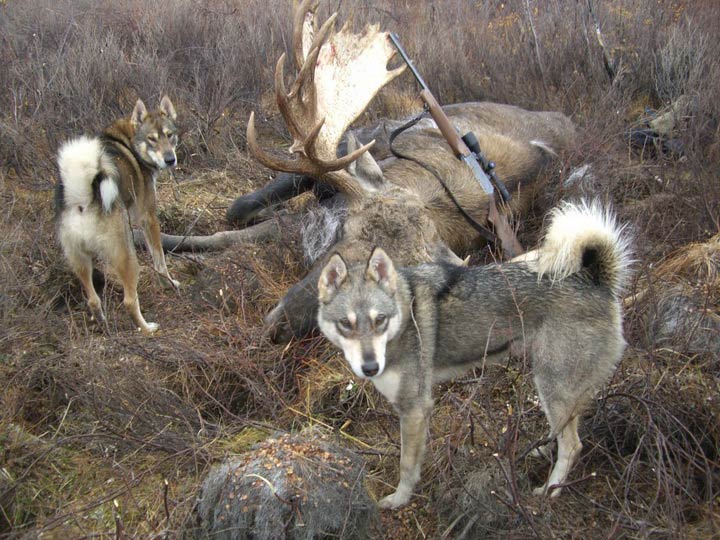
The West Siberian Laika's primary purpose is hunting. It is suitable for working any type of game. It can pursue large ungulates as well as hounds, and readily works on predators. It is known as one of the best bear hunters. It also successfully locates and brings down small fur-bearing animals, such as marten, sable, and squirrel. It is also suitable as an assistant in waterfowl hunting. It effectively locates and brings birds to a good start. The West Siberian Laika is characterized by its excellent search and recovery skills, its ability to maintain contact with its owner, and its ability to simultaneously use its hearing and upper senses, which means it requires virtually no special training.
Among West Siberian Laikas, dogs are often found that excel at hunting a specific type of game. This is due to extensive selective breeding. Dogs that were good at hunting different types of game were culled based on the requirements of commercial hunting. Modern breeders strive to diversify the breed, and for the most part, they have succeeded.
The ZSL possesses the exceptional hunting qualities of the wolf. In other Lycoid breeds, these qualities are often linked to an innate mistrust of humans, but in this case, they are combined with loyalty and sociability.
Video about the West Siberian Laika dog breed:
https://youtu.be/QjdE6Xuy1jE
Appearance
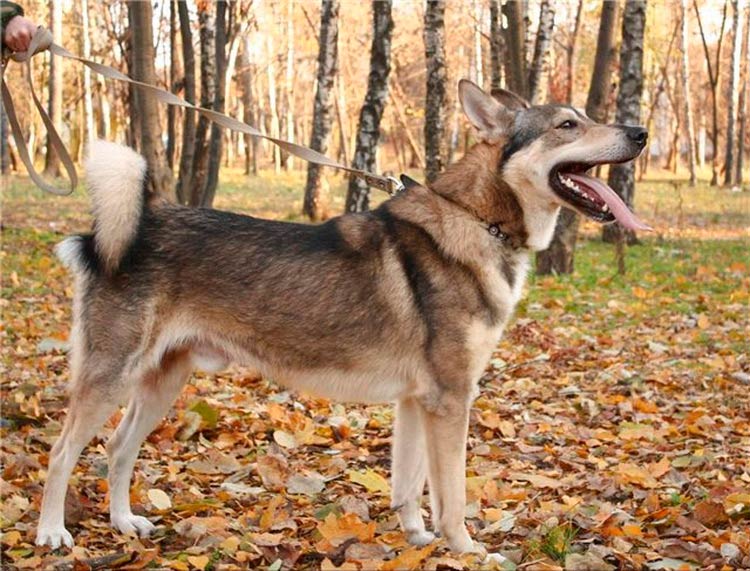
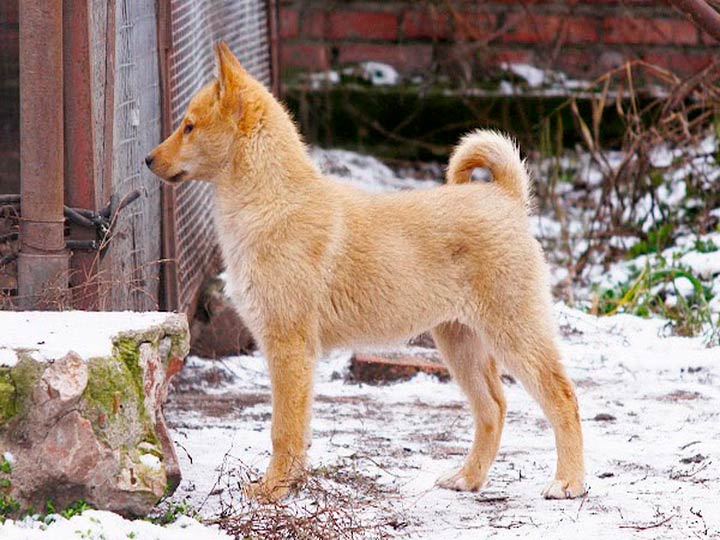
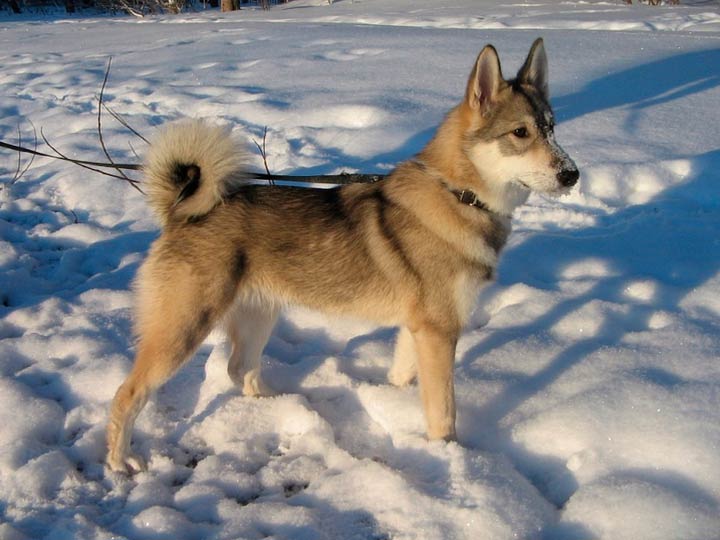
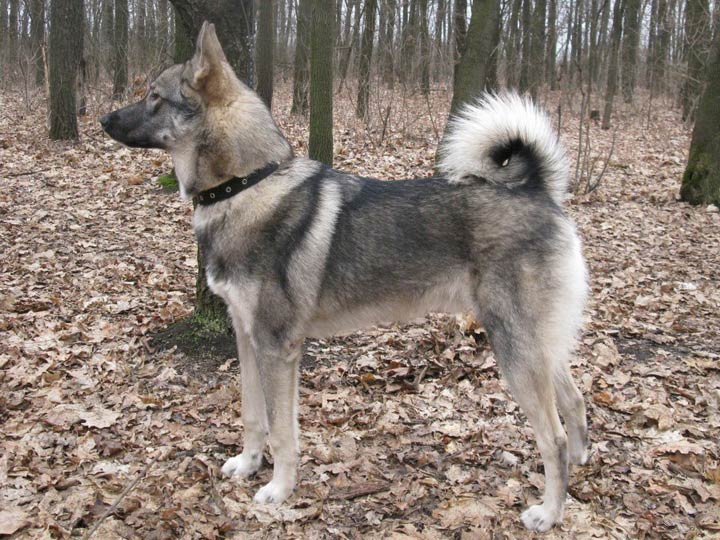
West Siberian Laikas are medium to above-average sized dogs with a strong, lean build. The height at the withers for males is 55-62 cm, and for females, 51-58 cm. The height at the sacrum for males is 1-2 cm lower than the height at the withers, while for females, it is equal to or 1 cm lower.
The head is dry, wedge-shaped, and the skull is wide. The muzzle is elongated, pointed, but not too narrow, widening slightly toward the canines. The stop is distinct but not sharp. The topline of the forehead and muzzle are parallel. The occipital protuberance and parietal ridge are clearly visible. The lips are tight and dry. The ears are set high, mobile, and elongated triangular in shape, carried erect. The eyes are small, oval or almond-shaped, set slightly deeper than those of other Laikas, and are brown in color, regardless of coat color. The teeth are strong and white, with a scissor bite.
The skeleton is strong. The wrist circumference is 11-12 cm in males and 10-12 cm in females. The neck is dry and oval in cross-section. The withers are well defined, the back is straight and wide. The loin is slightly arched and short. The croup is moderately long, slightly sloping. The chest is deep and wide, fairly long, and oval in cross-section. The stop from the chest to the tucked-up belly is slightly defined. The limbs are high, dry, muscular, straight and parallel when viewed from behind and from the front. The paws are oval, with tightly pressed toes, the middle ones slightly longer than the outer ones. Dewclaws It's undesirable to leave them; they're often removed immediately after birth. The tail is curled over the back or lies on the side; it can also hang down like a sickle, but in this case, it always touches the back. When straightened, it should reach the hock.
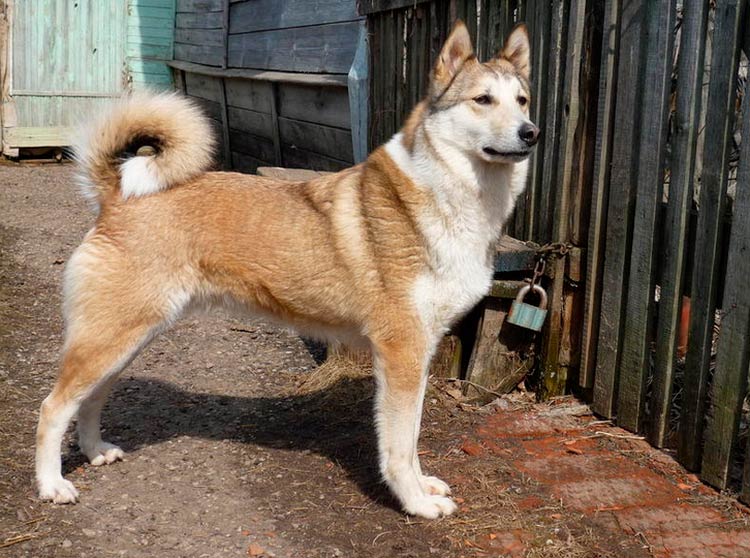
The skin is dense and elastic, without folds. The coat is double, formed by a stiff, straight outer coat and a soft, dense undercoat that lifts the outer coat and creates the appearance of a uniformly profuse coat. The hair on the ears and head is slightly shorter. On the neck and shoulders, it forms a ruff, and where it meets the hair behind the cheekbones, it forms sideburns. At the withers, it is slightly longer, especially in males. The legs are covered with short hair in front, slightly longer on the back. The hind legs form feathering, with tufts between them. The tail is well-furred and without a feathering. The coat coloration includes white, red, gray, and brown of all shades, as well as zonal (wolf) and piebald.
Character
The West Siberian Laika is a balanced, self-assured dog with a lively temperament and a well-developed sense of direction. It is generally not as adventurous as, for example, Russian-European, however, this does not affect the performance.
The West Siberian Laika is friendly and sociable with people, but can become protective of family members if circumstances require it. It is calm with large pets it has grown up with or lives with. It usually pursues small, unfamiliar, or wild animals with innate viciousness.
The West Siberian Laika is more people-oriented than other Laikas and primitive breeds. It has a dignified, somewhat protective demeanor, but is distinguished by its affection and loyalty.
The ZSL is a confident, energetic dog, stubborn and freedom-loving, yet friendly and sensitive. Despite its independence, it thrives on companionship, bonds with all family members, and is sensitive to changes in its surroundings. Attentive and intelligent, it has a well-developed social instinct and leadership qualities.
Education and training
A significant amount of literature has been devoted to the training and education of Laikas, as working with them presents numerous challenges and problems. Laikas are highly independent and require discipline rather than strict, in-depth training. Furthermore, if owners emphasized training and complete obedience, the dogs' search and exploration behavior deteriorated. The Laika's stubborn, willful nature and the fact that pressure and physical force should not be used complicate the training process somewhat.
A Laika requires contact with its owner, who, in turn, must accept it as a fully-fledged individual. If the necessary bond is established with the dog, it will only need to know the bare minimum of commands to become a manageable and comfortable companion.
Training a Laika isn't just preparation for hunting; it's part of the educational process that strengthens its natural qualities, developing endurance, ferocity, and obedience. Success depends largely on the dog's background. As is well known, courage, ferocity, tenacity, and many other qualities essential for hunting are inherited genetically. Puppies' first encounters with game can occur at 4-5 months, and sometimes even earlier, when they are given the opportunity to lick and sniff the hunted animal. Training on small game can begin when the puppy is 6-7 months old. As it matures, it moves on to larger prey. Bear training should only begin when the dog has attained full physical strength, not before the age of one and a half years.
Content Features
A very active and energetic dog, the West Siberian Laika requires plenty of free movement and vigorous exercise. Ideally, it should be kept outdoors, in a crate, or chained. Such measures are necessary primarily for the dog's safety. Following their instincts, Laikas easily overcome any obstacles and run away, often so far that they never return. While they can adapt to apartment life if necessary, they find it very difficult to live in a city, with too many temptations and few opportunities outside. The West Siberian Laika thrives in almost any climate, is unpretentious, and hardy. It sheds very heavily. Apartment dogs shed almost year-round.
Care
Laikas don't require any special grooming. It's enough to brush the dog periodically and monitor its condition and well-being. If necessary, clean its ears and trim the dewclaws. Laikas are usually bathed during the warmer months. This doesn't apply to apartment dogs, which require bathing and brushing much more frequently. Hunters who keep Laikas for work rarely bother with specific grooming procedures or choosing cosmetics; in terms of hygiene, these dogs are often left to their own devices.
Nutrition
The West Siberian Laika boasts an exceptionally efficient metabolism, allowing it to withstand hunger and digest unhealthy foods much more easily than many other dogs. Due to their close relationship and similar physiology to wolves, Laikas are recommended to be fed raw meat regularly. Adult dogs are fed once a day. During periods of intense physical activity during hunting, the caloric intake and frequency of feedings can be increased by 30-50%. After a snack, even the most exhausted Laika quickly regains strength.
Health and life expectancy
The West Siberian Laika is a healthy, robust dog that rarely gets sick. No serious genetic abnormalities have been reported in the breed. Most Laika owners encounter injuries, cuts, and bites sustained while hunting. It's worth noting that these wounds heal quickly and rarely cause complications.
A strong immune system doesn't eliminate the need for animal vaccinations, especially against rabies and leptospirosis, dangerous diseases that can be contracted from wild animals. Dogs should be regularly treated for internal and external parasites. Their lifespan is typically 14-15 years.
Choosing a West Siberian Laika Puppy and its Price
When looking for a puppy, pay attention to the working lines and qualities of the parents. The West Siberian Laika is not generally considered an apartment dog or a companion for a child; it is primarily a working breed that will thrive only in the hands of a caring, passionate hunter.
Puppies from reputable parents often need to be reserved in advance. Help with choosing can be provided by the breed club and at the breeding events. Most hunters participate in shows only a few times, and then only to obtain a hunting passport, so they can't boast of numerous cups and medals, and they usually don't need them. The scores obtained in working trials are more important. When choosing a puppy from a litter, pay attention to its conformation to the standard. As for character and skills, you can seek help from an expert or rely on the breeder's experience.
The price range is wide. On average, a puppy from working parents sells for 15,000-25,000 rubles. Dogs without a pedigree, which would be problematic for legal hunting, as well as young dogs that haven't proven themselves in working dogs, are sold for less.
Photos
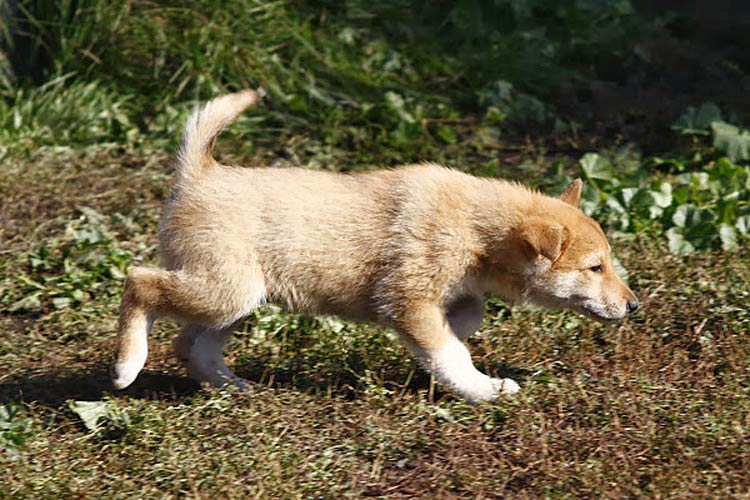
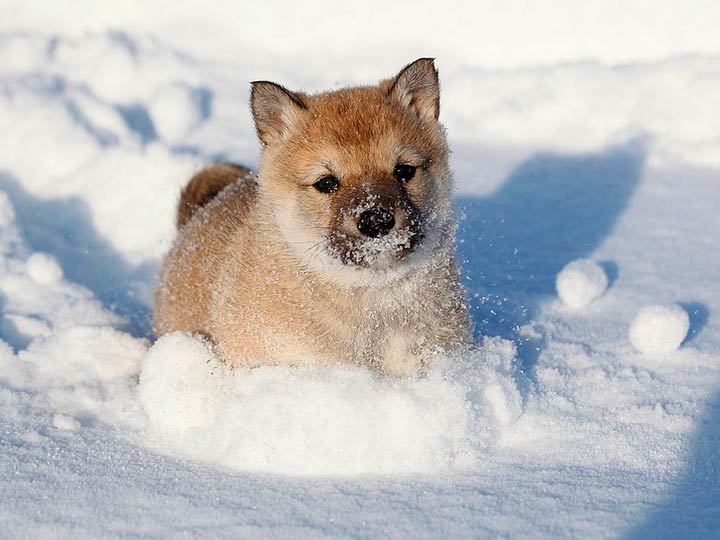
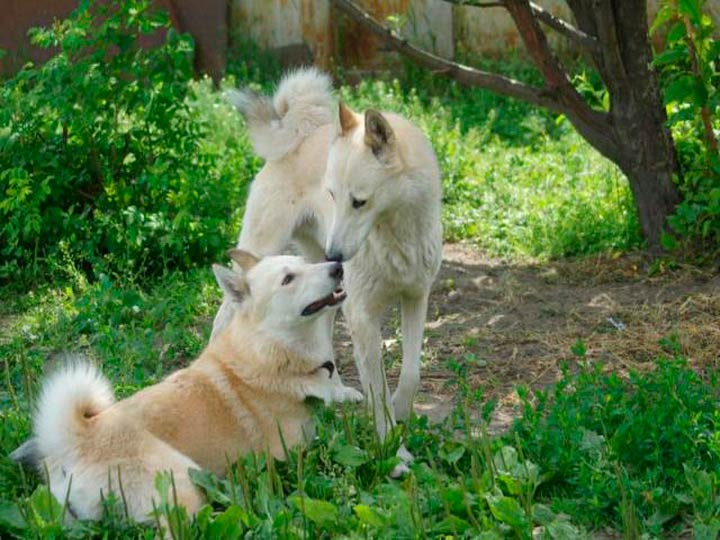
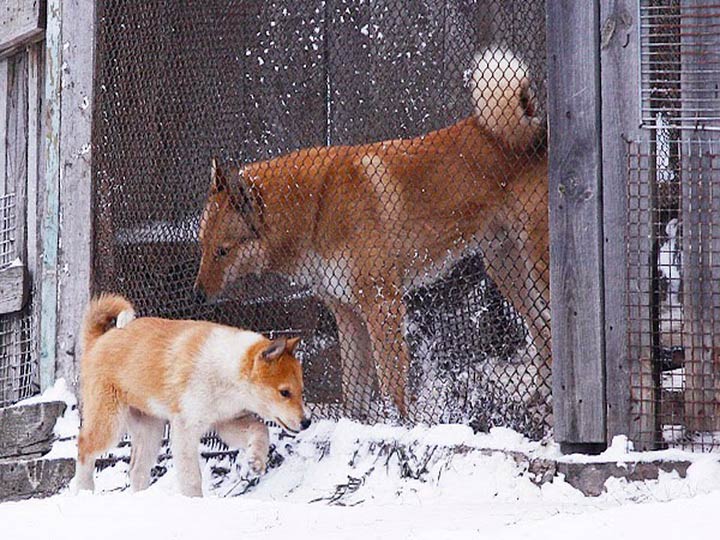
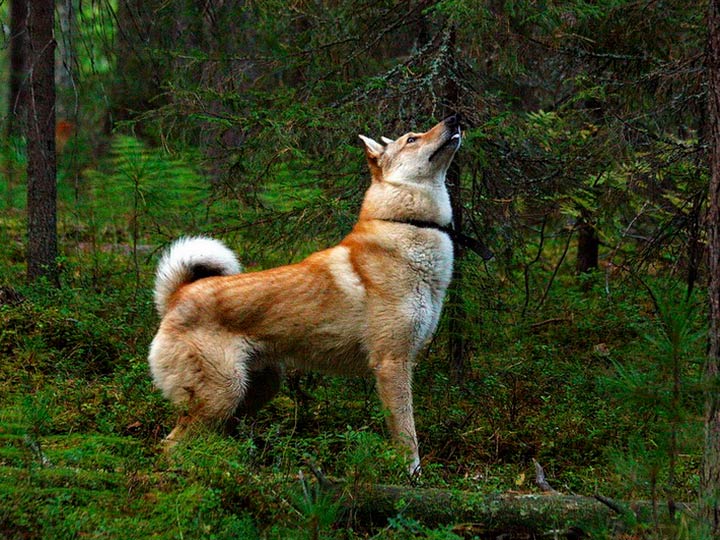
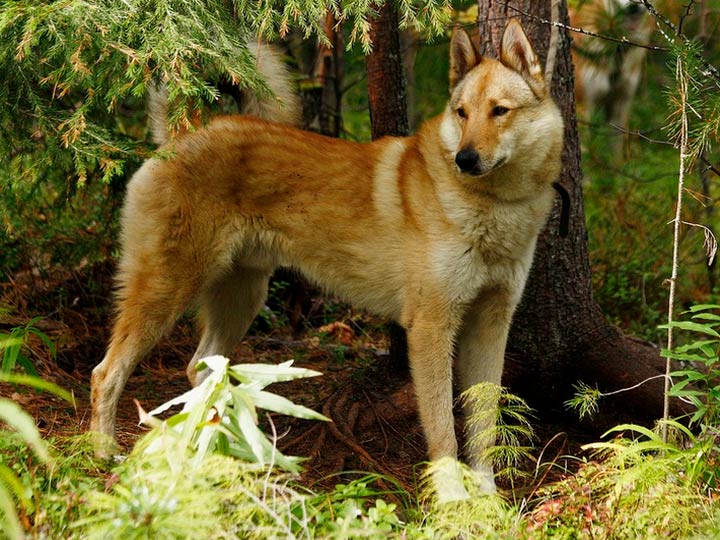
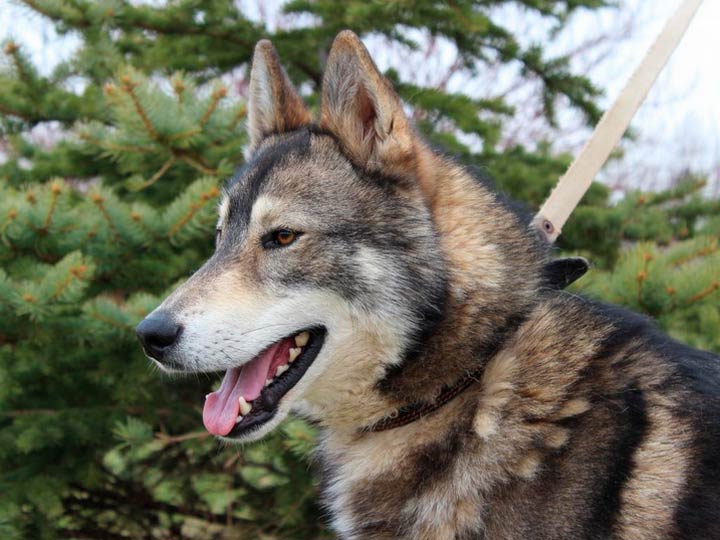
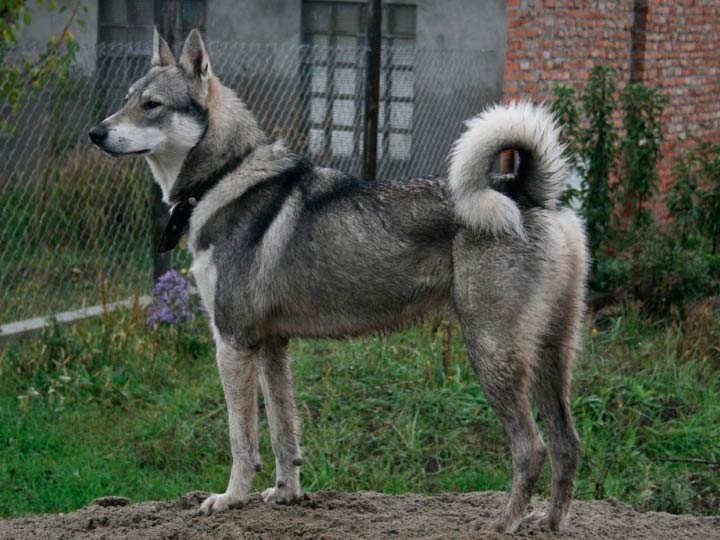
The gallery contains photographs of adult dogs and puppies of the West Siberian Laika breed.
Read also:
- Jagdterrier (German hunting terrier)
- Norwegian Elkhound
- Nenets Laika (reindeer herding Laika, Nenets Spitz)


Add a comment