
The South African Boerboel is a dog breed.
South African Boerboels are strong, powerful, and hardy dogs with a strong guarding instinct, but without excessive aggression. Their primary purpose is to guard and protect their families, but in South Africa, Boerboels were also used for hunting small game. These dogs are obedient, intelligent, and unwaveringly loyal to their owners. Boerboels are an indigenous African breed with European roots and are currently not recognized by the FCI.
Content
History of origin
The breed name "Boerboel" translates as "farm dog" or "farmer's dog." In South Africa, until the 1980s, they were simply called "buli," which means "dog." The breed developed among European settlers: in the 17th century, they arrived in South Africa and founded a Dutch colony, bringing with them Bullenbeiser dogs. Crossbreeding these dogs with local breeds resulted in the formation of the Boerboel.
In 2002, the South African Kennel Club began officially registering the Boerboel as a distinct native breed, but it has not yet received recognition from the FCI. However, the Russian Cynological Federation recognizes the breed, allowing Boerboels to participate in shows and other events within the RKF-FCI system.
Appearance and standards
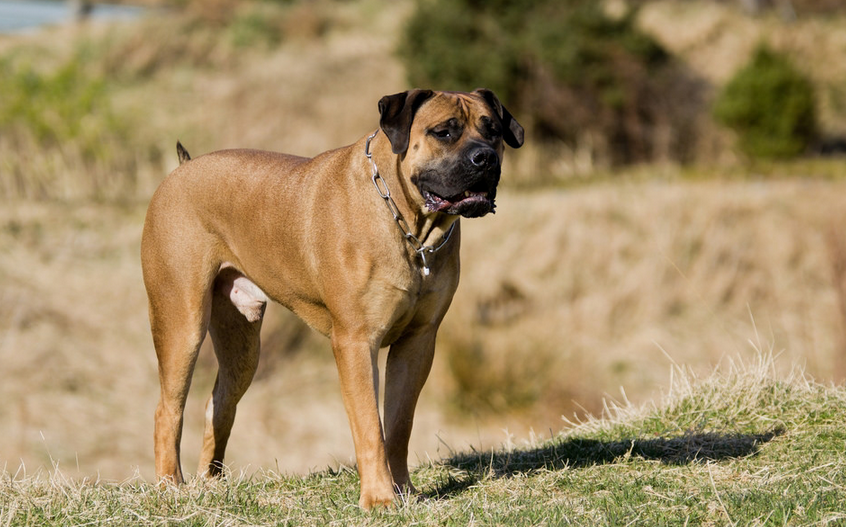
The South African Boerboel is a well-built, large dog with strong bones and well-developed muscles. Sexual type is clearly defined, with females being significantly lighter and smaller than males. Males stand 66 cm (not less than 60 cm) at the withers, and females 55 cm (not less than 50 cm). Weight ranges from 60 to 90 kg.
The head is rectangular in outline, broad, with well-developed muscles, and relatively short. The parietal region is almost flat. The transition from the forehead to the muzzle is smooth. The interorbital furrow is shallow. The muzzle is broad, well filled under the eyes, and tapers toward the nose. The nose is black with large, wide-open nostrils. The jaws are strong, wide, and taper slightly at the front. The teeth are complete, white, and strong, with a scissor bite. The upper and lower lips are fleshy, forming moderate flews. The eyes are medium in size, rounded, and set straight. The color of the eyes is as dark as possible. The eyelids are strong and well pigmented. The ears are triangular, hanging, and set fairly high and wide apart. They are wide at the base, tapering toward the tip, and have rounded edges.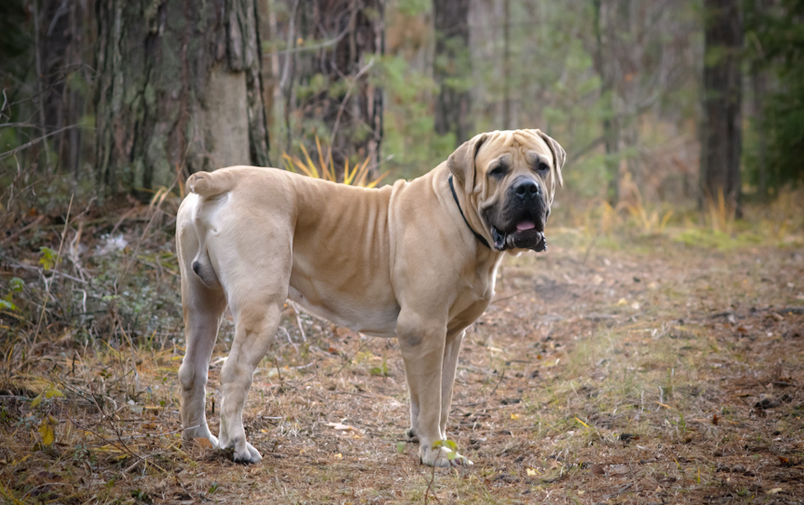
The neck is powerful, with a slight dewlap permitted. The Boerboel's body is rectangular, broad, and strong. The back is straight. The ribcage is long and deep. The loin is short and straight. The croup is wide and flat, blending smoothly into the tail set-on. The tail is straight and powerful. It is usually docked at the 3rd or 4th vertebrae; dogs with undocked tails are permitted. The limbs are strong, with well-developed muscles and healthy joints. The skin is thick and flexible. When the dog is interested, small wrinkles appear on the forehead.
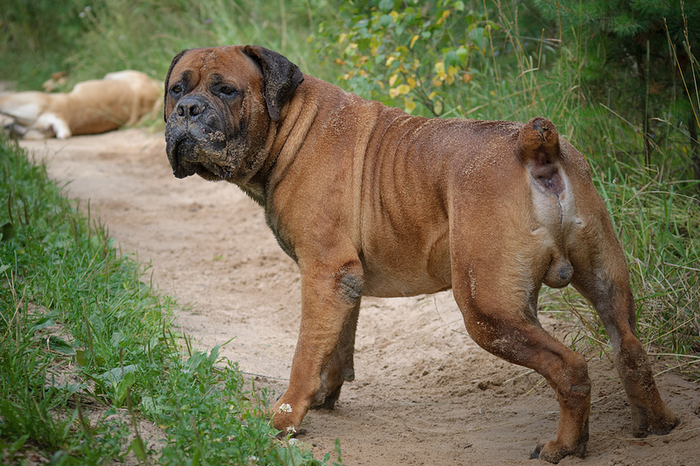
The Boerboel's coat is smooth, dense, and short. Its coloring can be solid red, fawn, or brindle, with or without a dark mask. Small white markings on the chest or legs are permitted, but such dogs are discouraged from breeding.
Training and education
The Boerboel is an intelligent, trainable, and manageable dog with a strong guarding instinct and a loyal attitude toward all family members. This requires proper upbringing and training, which begins from the puppy's first days in the home. The emphasis is primarily on obedience and socialization.
The puppy is accustomed to walks and interaction with other dogs. It's important to avoid any signs of aggression, as the Boerboel is a dog with instant reactions and the ability to switch from playful to combative in a split second. General obedience training can begin at six months. Then, assuming absolute obedience, the puppy moves on to closed-knit training, which will unlock the dog's natural potential and channel it. It's important to remember that training a Boerboel is not a one-time event, but a daily process.
A Boerboel requires a good amount of exercise. If kept in an apartment, the dog is walked twice a day, covering approximately 5 km per walk. Walking is always complemented by training and active play. Participation in draft sports is also possible.
Character and psychological portrait
The Boerboel's character is its greatest asset. These dogs become devoted and loyal companions, intuitively sensing their owner's feelings, fear, and threat. These qualities are evident even in puppyhood. Balanced, with a strong sense of self-worth and exceptional courage, Boerboels require constant human contact. They recognize more than one owner; they sincerely love all family members and will defend them with their own lives. Boerboels get along well with other animals and are very affectionate and attentive to children.
Maintenance and care
As many dog owners have shown, Boerboels adapt easily to any living conditions. They can live in an apartment or house as part of the family, or spend almost all year round in the yard outdoors. When kept outdoors, they should have free access to a heated, draft-free area with a temperature of at least 14 degrees Celsius.
Grooming the Boerboel's short coat is simple: brush the dog once a week with a special brush for smooth-coated breeds or a mitten. Slightly more frequent brushing is needed during the shedding season. Bathe as needed. From puppyhood, the dog should be accustomed to hygiene procedures, including ear, eye, and teeth cleaning. Boerboels' nails are usually not trimmed; they should wear down naturally. If this doesn't happen, the dog isn't getting enough exercise.
Diet and health
The South African Boerboel can be fed both natural and commercial foods. Natural food is preferable, but only if the owner is able to follow a properly formulated, balanced diet with 40-50% meat. The dog also needs fermented milk products, fish, eggs, cereals, vegetables, and fruits.
Regarding prepared foods, it's worth noting that only super-premium foods can meet the needs of a growing puppy; adult dogs can be transitioned to premium foods. It's important to remember that young puppies fed dry food cannot regulate their water intake, so dry food should be slightly moistened. Adult dogs should choose foods labeled "Adult," while those prone to obesity should choose "Light." Regarding "Energy" or "Active," they contain a lot of protein, so it's best to consult a specialist first. Dogs with allergies should choose "Sensible" or "Hypoallergic." It's important to carefully dose dry food, as its volume increases fivefold in the stomach. Regardless of the feeding method, Boerboels require mineral supplements and chondroprotectors.
Musculoskeletal problems (hip and elbow dysplasia, meniscus, ligament tears, arthritis, and bursitis) are the most common ailments in this breed. Allergies, dysbacteriosis, and ear infections are also common. Female dogs often experience vaginal prolapse due to weak vaginal walls.
Life expectancy is 11-13 years.
Who is this breed suitable for?
The Boerboel is a breed that is an excellent choice for dog owners dreaming of having a pet:
-
large sizes;
-
with short hair that does not require frequent brushing;
-
sporty and active;
-
with a pronounced instinct of a guard and protector;
-
rarely speaking.
However, the breed is not suitable for those who:
-
not ready for long walks and active activities with the dog;
-
plans to keep the dog year-round in an enclosure without close contact with the owner.
A Boerboel requires an owner who can become a confident "pack leader." The owner must be consistent, calm, and able to ensure their demands are met. This breed is prone to dominance, so it's important to show the dog who is the leader of the family from an early age; otherwise, the pet may begin to ignore commands.
Boerboels should be taken on regular and long walks. To maintain their physical fitness and balanced behavior, owners should devote at least 1.5 hours a day to walks, combining them with exercise.
A Boerboel can be owned by a single person or a family. The dog is equally devoted to all family members and is especially affectionate with children.
Choosing a Boerboel Puppy and the Price
Choosing a puppy is a difficult and responsible task. You should only buy a pet from registered breeders who provide an RKF puppy card along with the puppy, which can then be exchanged for an RKF pedigree.
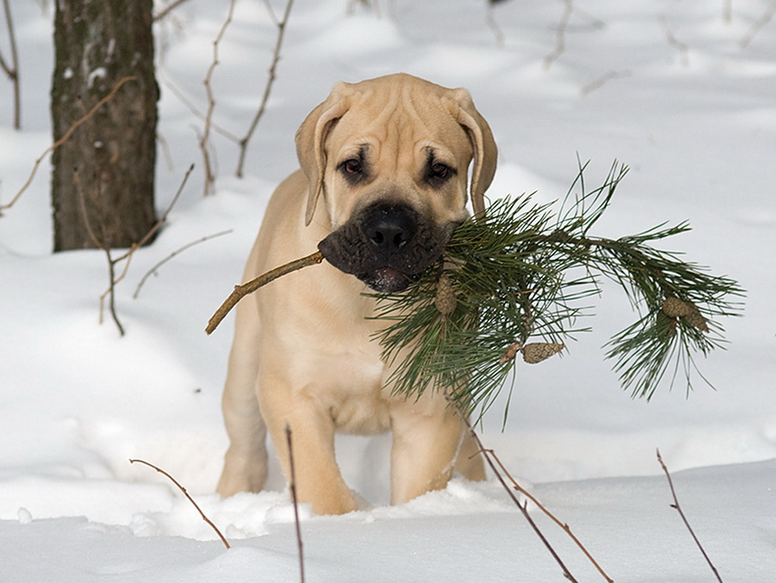
Be sure to examine the parents, familiarize yourself with the family tree, and, of course, objectively evaluate the offspring. A two-month-old puppy's teeth will still be changing, but the bite should already be scissor-shaped. If the lower lip covers the upper lip, there's a risk of developing an underbite later in life. Pay attention to the tail set; it shouldn't be crooked or curled. It's also important to ensure the puppy is well-balanced, has strong muscles, and shows no signs of any health issues. Both testicles in males should be descended into the scrotum. The color and other basic characteristics should match the breed standard.
Before purchasing a puppy, it's important to thoroughly discuss the breeder's activities and don't be shy about asking questions. You should find out how many puppies were in the litter, what they are fed, whether they have received the necessary vaccinations and parasite treatments, the conditions in which the puppies are raised, and how they are cared for from the first weeks of life.
Be sure to assess the mother's condition. A healthy South African Boerboel bitch appears well-groomed, alert, and confident, and should not be excessively thin or tired. Any signs of exhaustion, apathy, or aggression may indicate health problems or improper housing conditions. Puppies, in turn, should be active, well-fed, with clear eyes and ears, a smooth coat, and no signs of inflammation or discharge.
A responsible breeder doesn't just hand over the puppy; they always stay in touch with the new owner. They're ready to provide advice on feeding, care, and training, recommend trusted dog trainers and veterinarians, and offer advice in any challenging situation. This kind of support is a key indicator of a professional and conscientious approach.
Furthermore, breeders who truly care about their puppies' future will inquire about their future living conditions. They ask about the size of the home, whether the puppies have a yard, the family composition, children, other pets, and their experience with dogs. This approach demonstrates their commitment to ensuring the puppy goes to a suitable and responsible family.
The price of a South African Boerboel puppy varies from 200 to 750 USD.
Photos
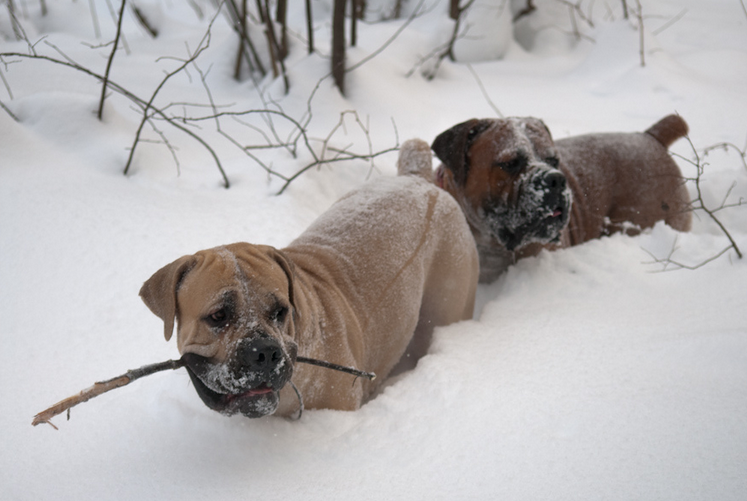
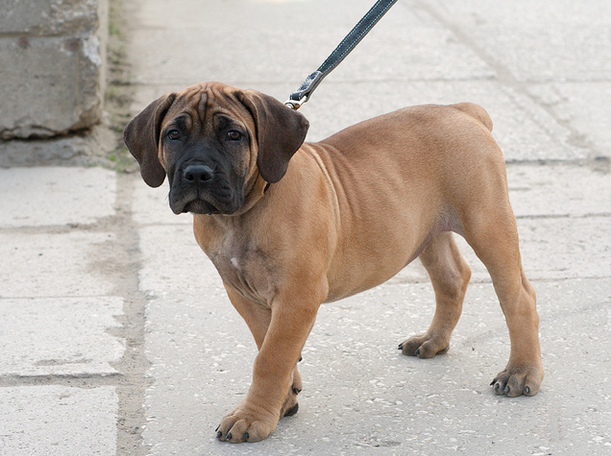
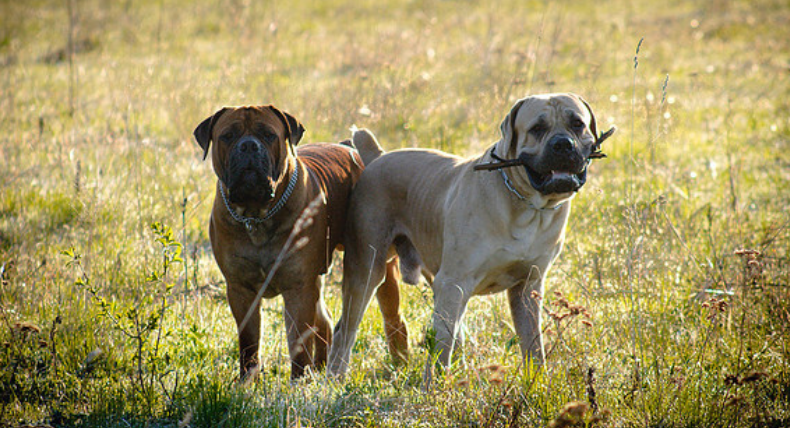
Photos of the South African Boerboel:





Read also:


Add a comment