
Yorkshire Terrier
Yorkshire Terrier The Yorkie is a miniature dog breed with a long history, gaining incredible popularity thanks to its compact size, striking appearance, and playful nature. If you're dreaming of such a small dog, be sure to inquire about the care requirements for Yorkies, as these little ones require much more attention from their owners than other miniature breeds, such as the Chihuahua or Russian Toy.
Content
- 1 Breed characteristics
- 2 History of origin
- 3 Exterior (external data)
- 4 Varieties of York
- 5 Character
- 6 Features of maintenance and care
- 7 Education and training
- 8 Diet and nutrition
- 9 Health
- 10 Choosing a puppy
- 11 The price of York
- 12 Nurseries of Russia
- 13 Photo of a Yorkshire Terrier
- 14 Video about the breed
Breed characteristics
- original title – Yorkshire Terrier;
- origin – Yorkshire County (England);
- weight – 2.3-3.2 kg;
- height – 15-17 cm (not limited by standard);
- life expectancy – from 12 to 15 years;
- character - brave, determined, inquisitive, playful, sociable;
- appointment – companion, decorative dog.
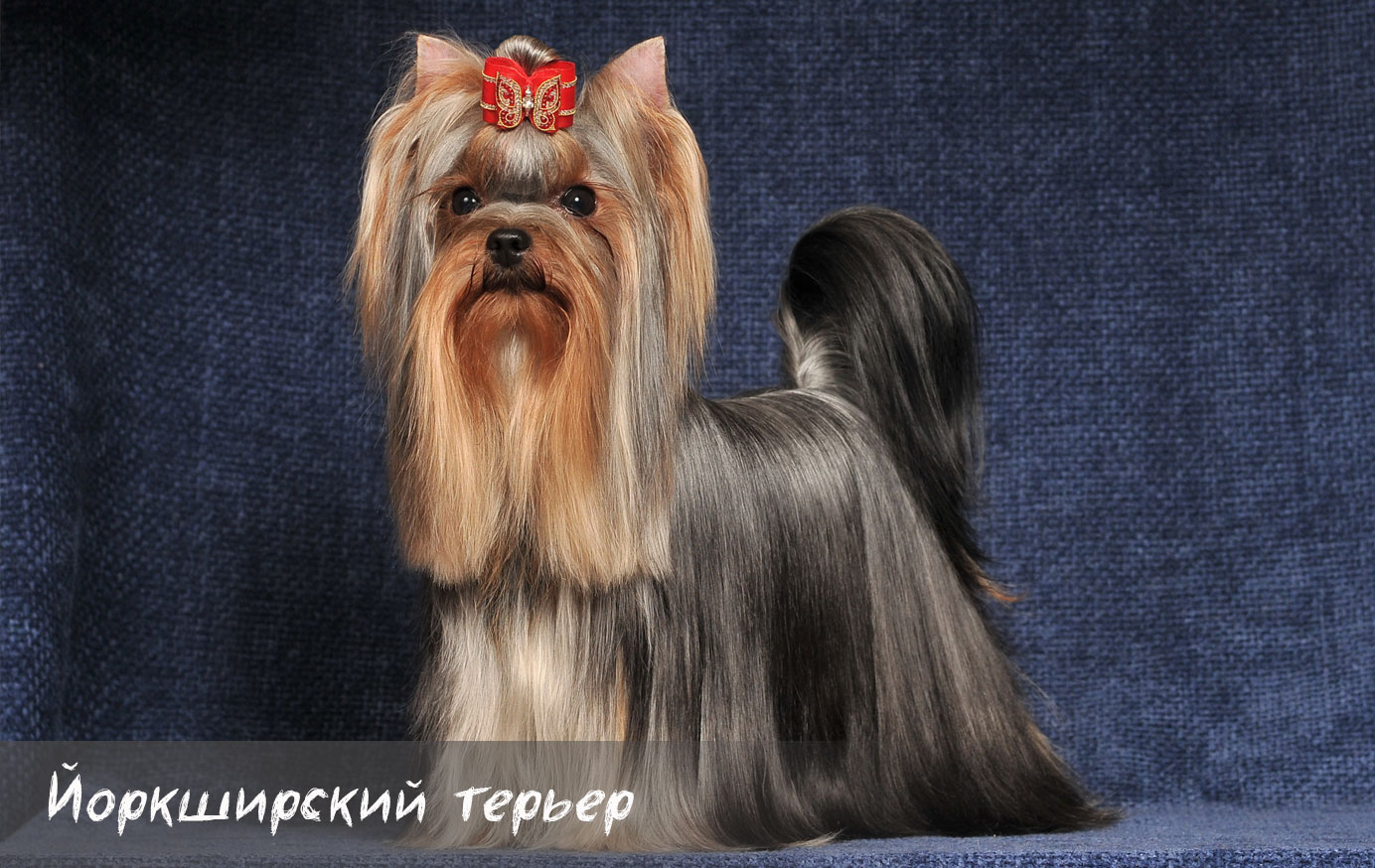
Based on feedback from Yorkshire Terrier owners and breeders, we've compiled a table of 5 levels that provides a detailed description of dogs of this breed:
|
Very low |
Short |
Average |
Above average |
High |
|
aggressiveness molting attitude towards loneliness |
noise in the house |
health activity trainability security qualities |
intelligence difficulty of care cost of maintenance |
friendliness
|


History of origin
The Yorkshire Terrier breed is believed to have originated in the counties of Yorkshire and Lancashire, located in the north of England.
The ancestors of the miniature decorative dogs of the Yorkshire Terrier breed are various types of English terriers, whose main purpose was hunting:
- Small terriers were kept by local farmers to hunt rats, which were a major nuisance to residents of villages and towns in England (at that time, farmers were prohibited by law from owning medium-sized dogs, so that they could not hunt on their owners' lands).
- The larger Waterside Terriers, which also left their mark on the Yorkie's genetics, were excellent fox hunters and were bred on manor houses.
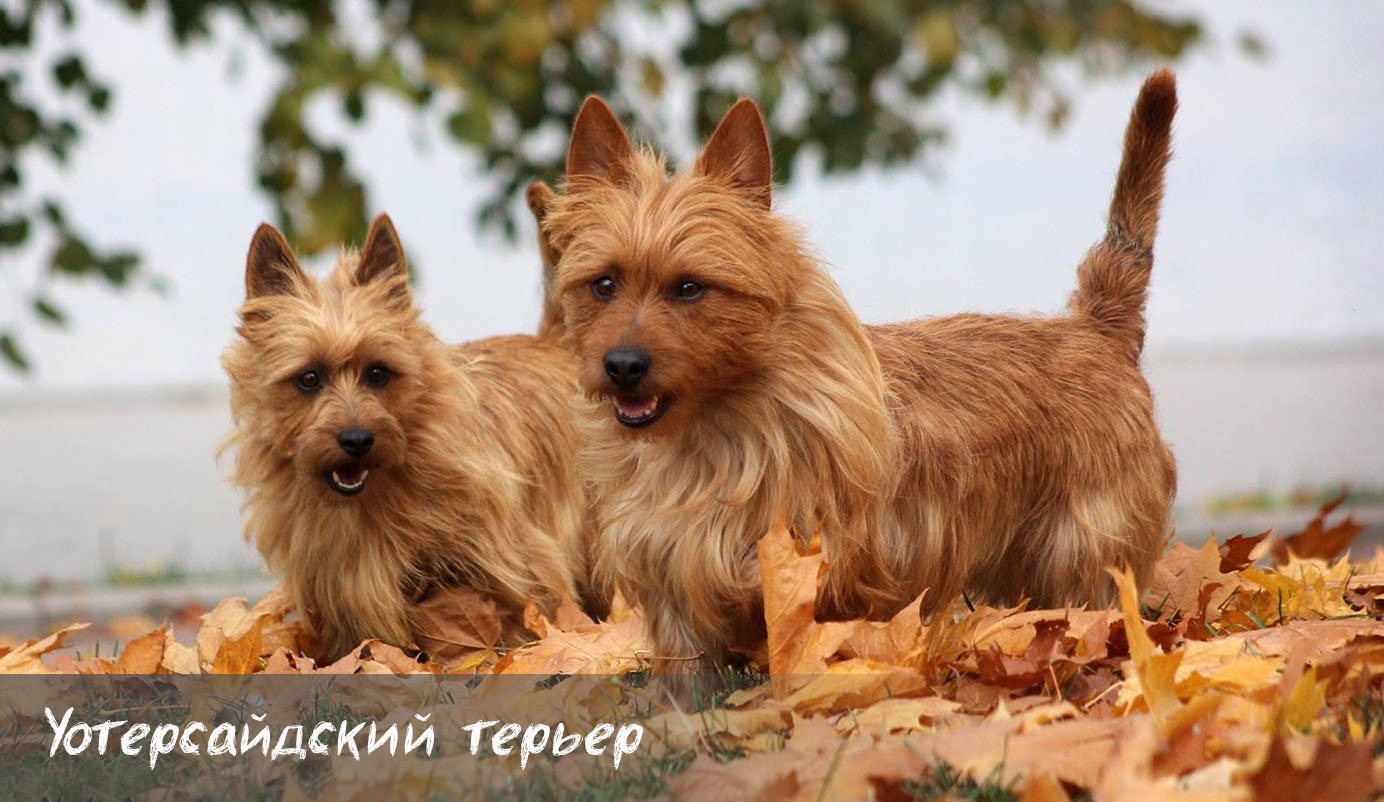
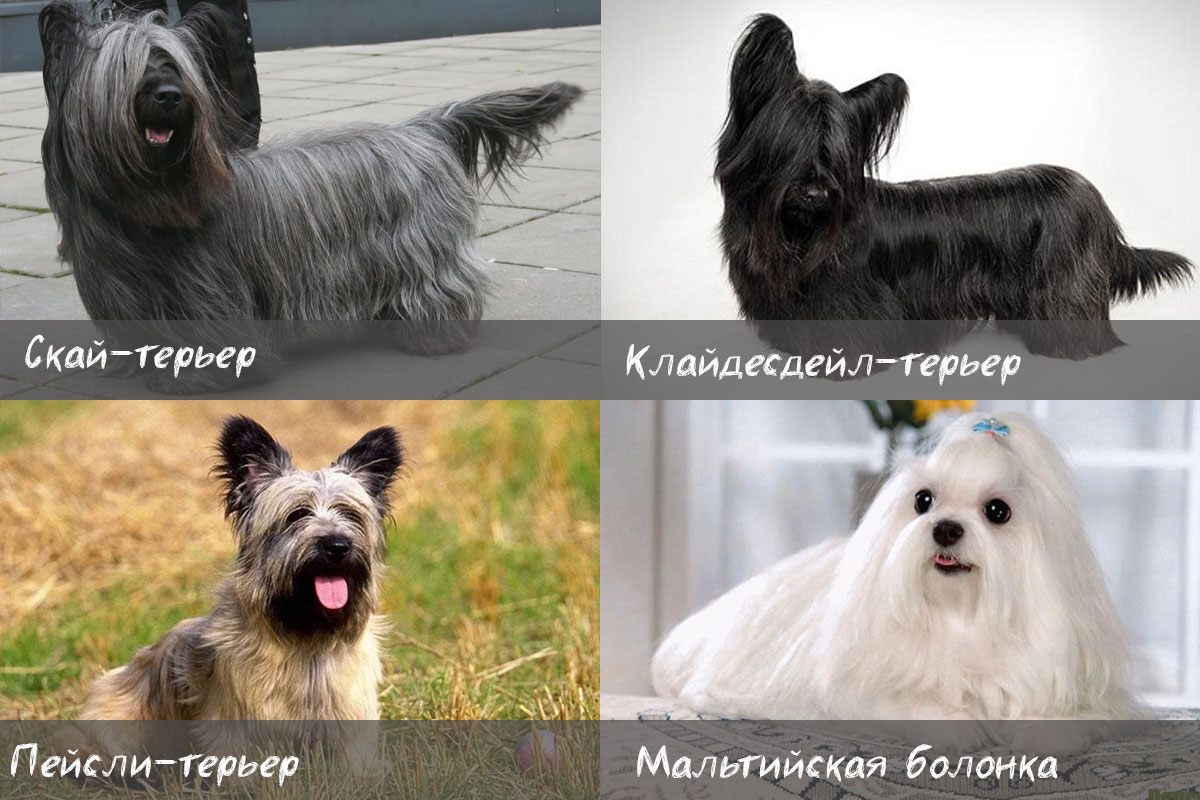
Although no official information has been preserved, experts are inclined to believe that at various stages in the formation of the Yorkshire Terrier breed, genes were infused from such popular dogs in England as:
- Skye Terrier;
- Clydesdale Terrier;
- Paisley Terrier;
- Cairo Terrier;
- Maltese lapdog.
Interesting fact! The Paisley Terrier and Clydesdale Terrier were never recognized by the English club, and they are currently not officially bred.
The Yorkshire Terrier breed's development began in the second half of the 18th century, when these small, playful terriers became incredibly popular as companions. Historical documents provide detailed descriptions of these relatively small, blue-gray dogs, weighing up to 6-7 kg. Because the smallest specimens were in demand as companions, breeders worked to reduce the size of these popular dogs and improve their appearance. As a result, by the 19th century, a distinctive breed of compact companion dog emerged, boasting a luxurious blue-gray coat with sandy-red tan markings.
The name Yorkshire Terrier appeared in 1874, but the breed was not included in the Kennel Club stud book until 1886. The official standard for Yorkies was developed in 1898 and remains relevant to this day.
Exterior (external data)
You may find photos of dogs with very different exteriors online, labeled "Yorkshire Terrier," but in reality, the official standard sets very specific restrictions for the breed, which not all dogs meet.
FCI standard
|
Size |
|
|
Physique |
compact, elegant |
|
Scull |
small, flat (not very convex) |
|
Muzzle |
not too long |
|
Nose |
small, always black in color |
|
Eyes |
medium, non-convex, dark, shiny |
|
Ears |
small, erect (sometimes hanging on the cartilage) |
|
Neck |
good length |
|
Frame |
compact |
|
Back |
straight |
|
Breast |
moderately arched |
|
Small of the back |
well maintained |
|
Paws |
straight, covered with hair (the golden tint extends no higher than the elbows) |
|
Tail |
abundantly covered with hair, docked to mid-length (the standard is not considered mandatory in many countries), undocked curls over the back |
|
Wool |
long, straight (no waves), silky texture, not fluffy |
|
Undercoat |
absent |
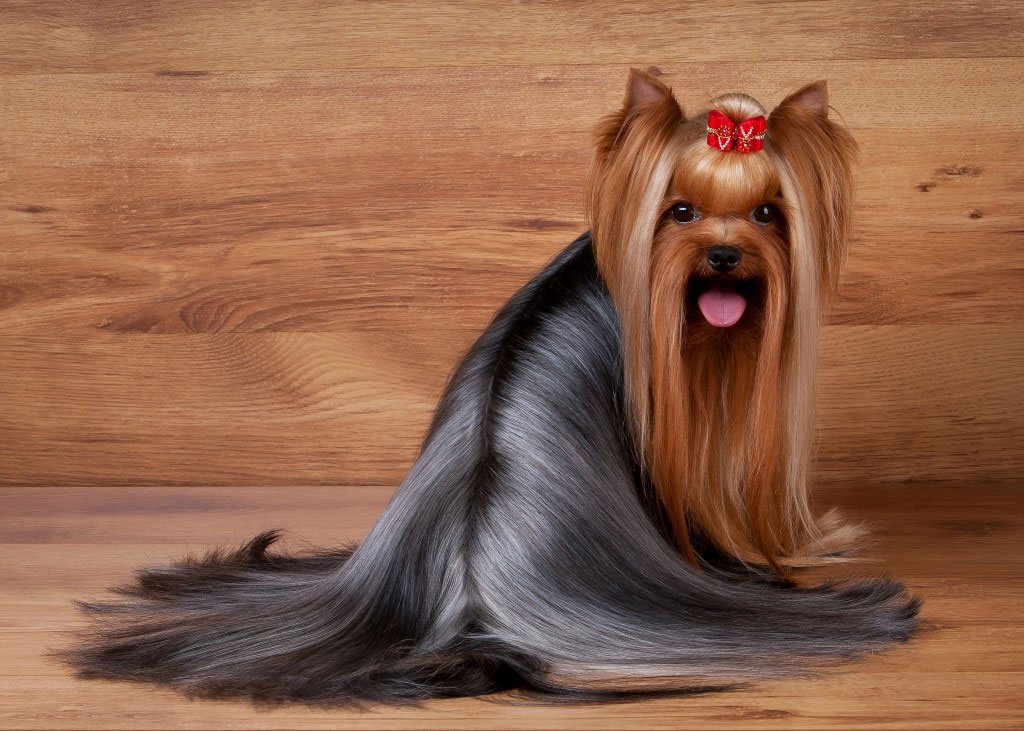
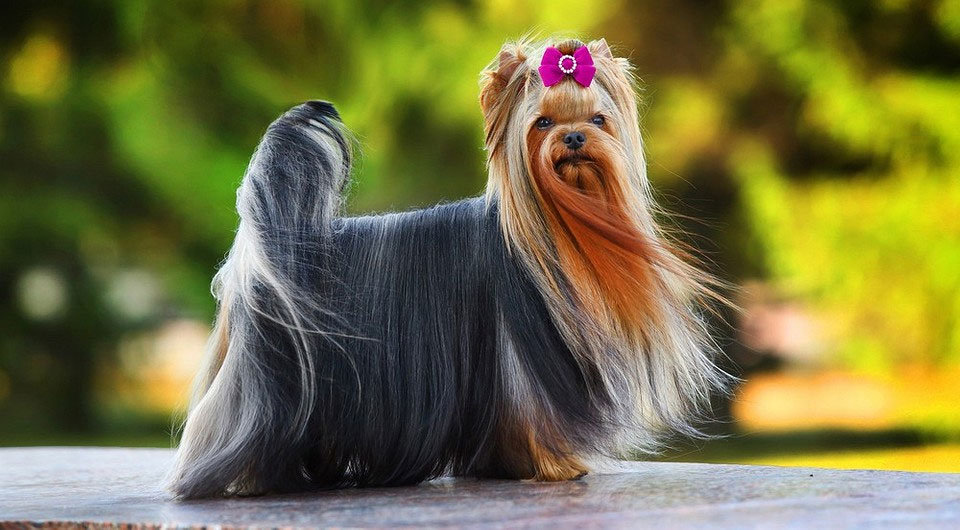
The Yorkie's signature feature is its silky coat, which has a special texture that is often compared to hair.
Unlike other breeds, the Yorkshire Terrier's coat grows continuously, without stopping at any specific length, which is what dictates the care requirements we'll discuss below.
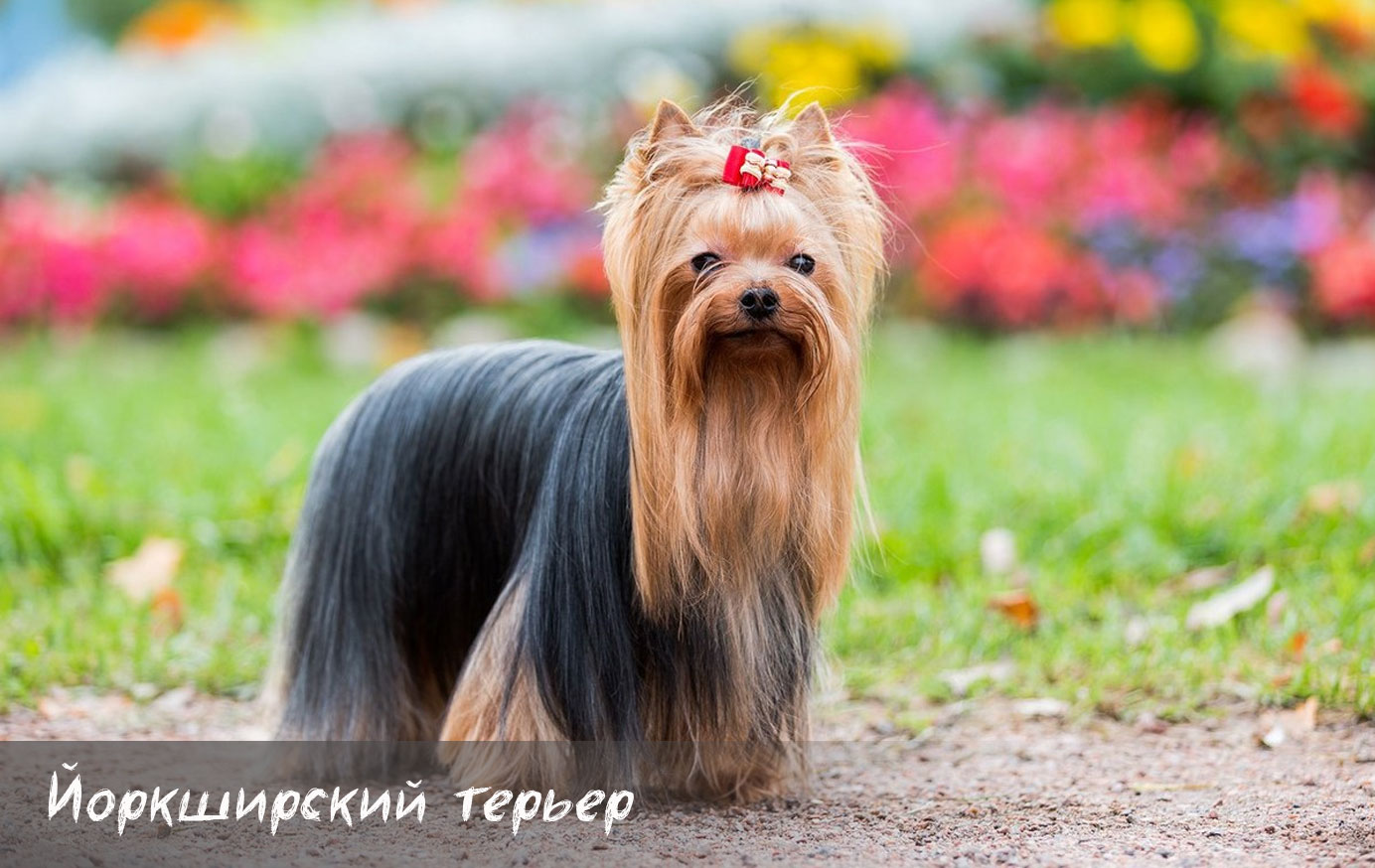
The color of the Yorkshire Terrier breed is described in the standard as follows:
- "dark blue-steel" color (not silver-blue, as one often hears) extends from the back of the head to the base of the tail without admixture of hairs of other shades;
- the tail is of a darker shade;
- The red tan can be of varying intensity and is located strictly on the muzzle and paws up to the elbow joint (the tan coat is darker at the root and lighter at the tips).
All other options, although no less luxurious, will be considered a color defect at the exhibition and will simply not receive high marks for this item:
- too light a shade, described as “pearl” (the coat is shiny, of correct structure, but has too light a shade, the tan is sandy, almost not expressed);
- absence of color change - so-called "black" or "red" Yorkies (the coat often has an irregular structure, the body does not acquire a silver tint but remains black as in a puppy, while the tan takes on an intense orange tint).
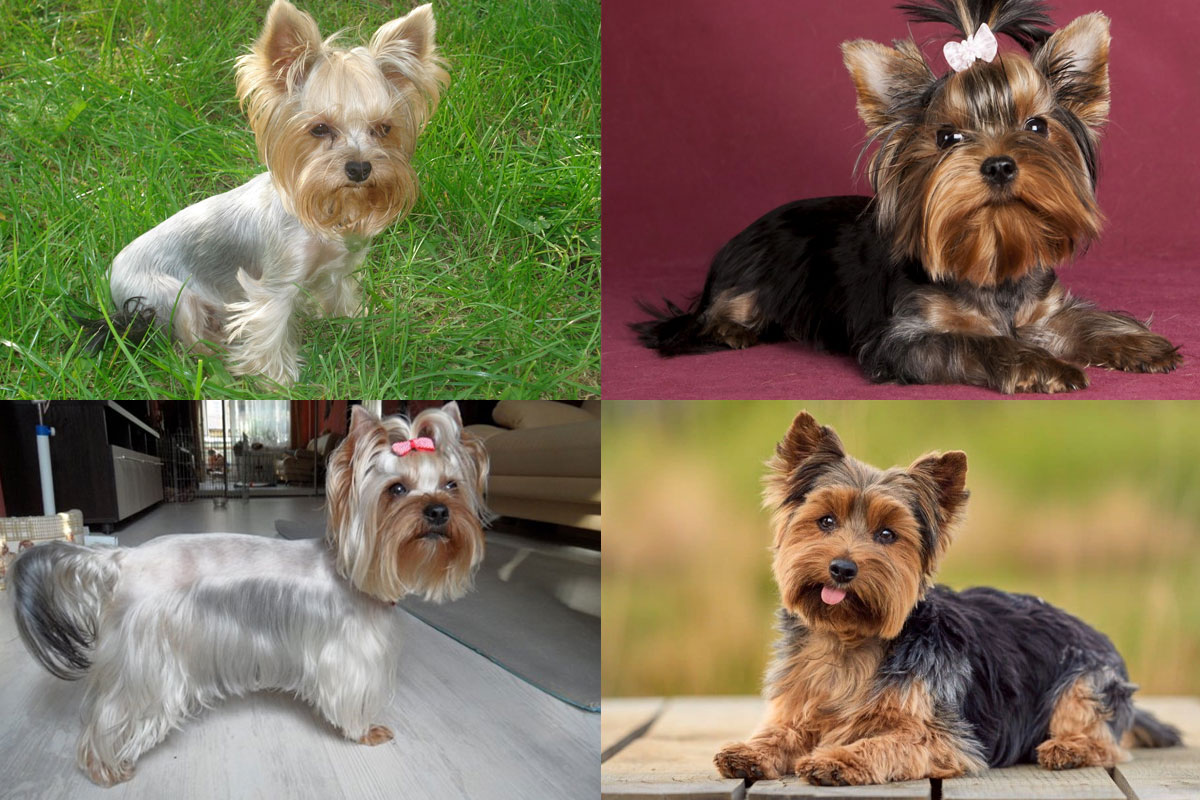
York's "Rebloom"
Fun fact! All Yorkshire Terrier puppies are born with short, black fur and a bright red tan marking.
The change in coat color begins at approximately 3 months of age, so if you buy a puppy at 2 months (without signs of the beginning of "changing color"), neither you nor the breeder can know what color the baby will acquire in adulthood.
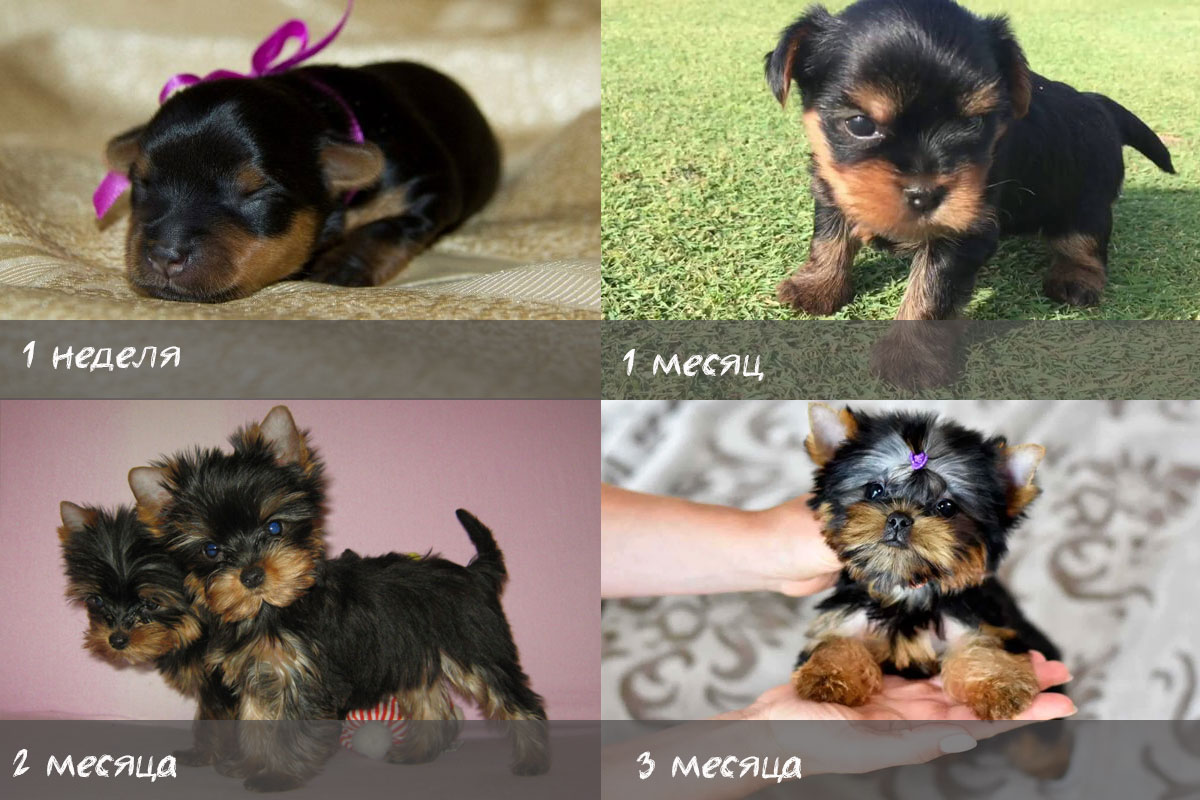
There are only certain signs:
- the correct “change of color”, promising a rich, stylish shade of fur in adulthood, is barely noticeable at 3 months (the shade at the roots is a rich steel color);
- very intense and early “overcoloring” (roots of an almost gray shade) may indicate that the coat tone of an adult dog is too light;
- the absence of a hint of the beginning of “change of color” at 4 months may indicate that the dog will remain black (although there are cases when “change of color” begins at 8-9 months);
- Uneven lightening at the root may indicate that your pet will have uneven color in the future.
Interesting fact! Late color change usually indicates the correct shade and is observed in dogs with silky coats. However, few puppies remain with the breeder until they are four months old, when their show potential can be assessed.
The coat color changes gradually, so we can talk about the dog’s “adult” color after 1.5 years (and in some cases only after 2 years).
Coat color is determined by genetics, but each puppy in a litter will develop its own color. The color of males and females born to the same parents can also vary significantly. The main guarantee that a puppy will acquire the correct color and coat texture is the absence of "incorrect-type" dogs in the parents' lineage (needless to say, unscrupulous breeders often conceal such facts).
Wool structure
One of the most important factors in forming the correct exterior of a Yorkie is the structure of the coat.
Breeders describe the parameters of a correct silky coat as follows:
- smooth, without waves;
- shiny;
- growth rate of 1.5-2 cm per month;
- reaches sex at approximately 1.5 years;
- does not fluff.
Interesting fact! Hair growth rate is determined by the dog's health and can slow down during teething or illness.
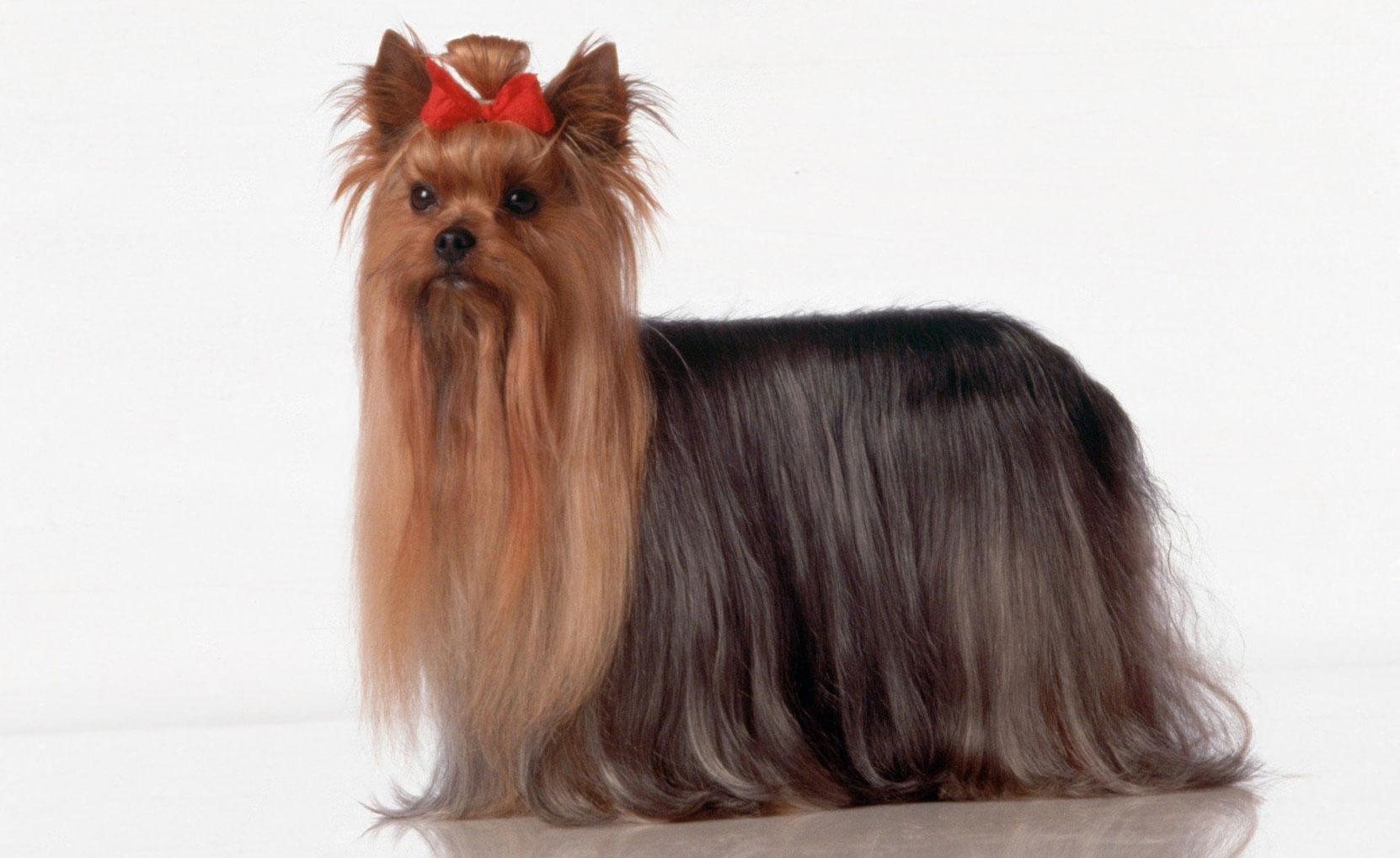
To buy a puppy with the right coat and the potential for a good color in the future, it is necessary to consider puppies at 4 months of age, since at 2-2.5 months it is still impossible to assess what the dog's coat will be like when it grows up.
The following types of wool structure are distinguished:
- silk (optimal) - the coat is smooth, straight, shiny, fairly heavy, falls without waves, has a steel tint and grows at a normal rate;
- cotton (undesirable) - looks like cotton wool, fluffy, does not shine, but grows quite quickly, usually has a dark slate shade;
- tough (unwanted, but often appears after 6 months) - hard to the touch, looks untidy (as if damaged), grows very slowly (splits and breaks off), has a very dark (often almost black) shade;
- black dull (the most undesirable) – thick and soft, without shine, may have waves at the ends, grows very quickly.
Dog size
The Yorkshire Terrier breed standard does not specify a size or weight for the dog, but breeders generally divide adult Yorkies into three categories:
- standard (2.1 – 3.2 kg);
- mini (1.5 – 2.1 kg);
- micro (up to 1.5 kg).
Important! Females in the "mini" and "micro" categories are not allowed to participate in breeding! For such miniature dogs, pregnancy and birthing are life-threatening.
If you're considering a miniature pet, consider how much the little one you're considering weighs:
|
Age |
standard |
mini |
micro |
|
1 month |
0.72 kg |
0.5 kg |
0.5 kg |
|
2 months |
1.26 kg |
0.8 kg |
0.6 kg |
|
3 months |
1.4 kg |
1.0 kg |
0.65 kg |
|
4 months |
1.62 kg |
1.3 kg |
0.8 kg |
|
5 months |
2.0 kg |
1.5 kg |
0.9 kg |
|
6 months |
2.5 kg |
1.6 kg |
1.1 kg |
|
1 year |
up to 3.2 kg |
up to 2.1 kg |
up to 1.5 kg |
The parameters given in the table are very approximate, but they clearly demonstrate the differences in weight depending on age. Each puppy develops at its own pace, so even if you buy a 3-month-old puppy weighing 1.0 kg, you can't be sure it will grow into a miniature. However, if the puppy weighs 1.5 kg at 3 months, it's clear it won't be a miniature.
It's also worth considering that standard-sized dogs generally enjoy good health, while mini and micro Yorkshire Terriers can have a number of problems that you should be aware of before getting one.
Varieties of York
In addition to the classic Yorkie described in the FCI standard, other varieties have been developed today, differing primarily in color and coat quality.
Beaver York
Biewer Yorkshire Terrier The Biewer breed is a distinct breed that emerged in the 1880s. The first colored puppies were bred from standard Yorkies in the kennel of Werner and Gertrude Biewer, which is where the breed later received its name.
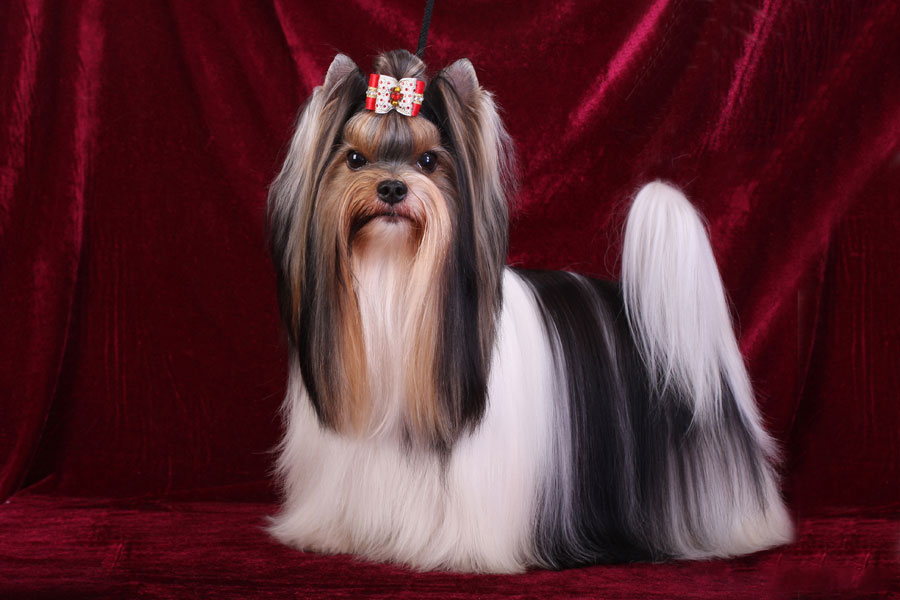
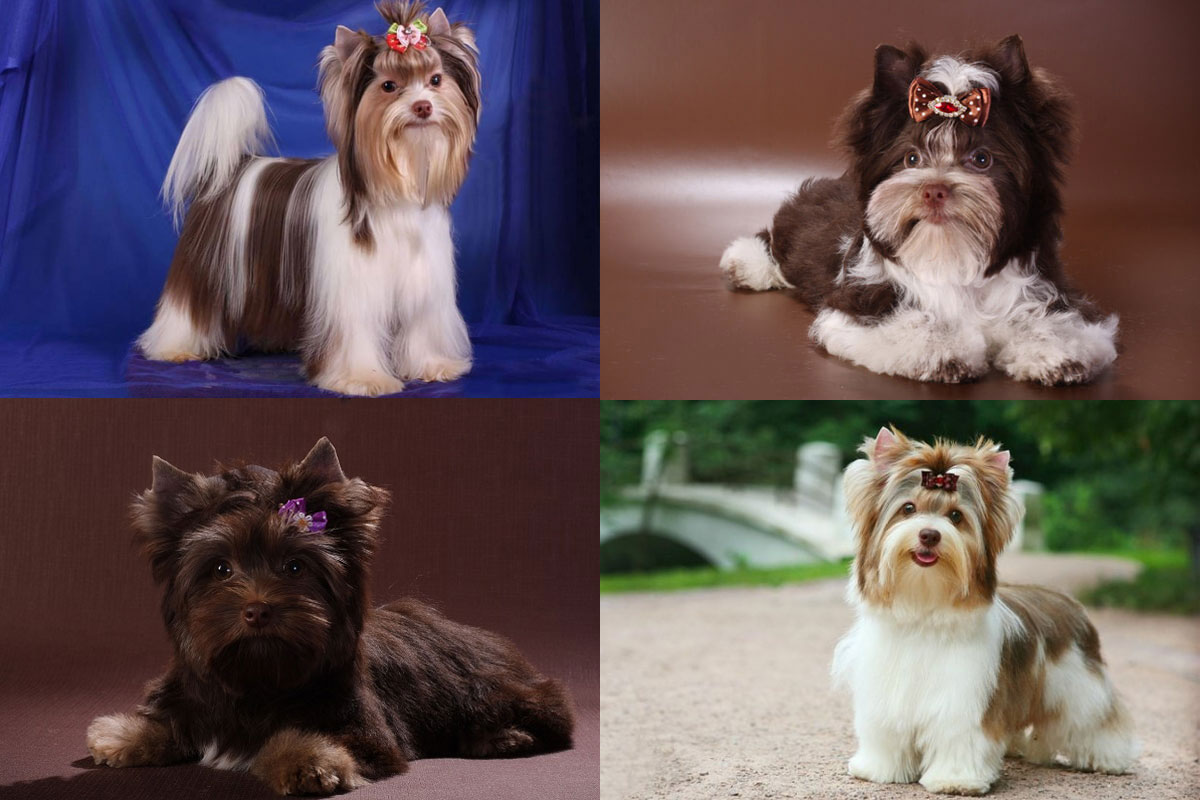
The Biewer Yorkie's coat always includes three colors. The classic colors are white (the base, dominant color), blue, and gold, but in recent years, other variations have been developed (white + black + gold or white + black + bright red).
Biro York
Dogs Biro They originated from the Biewer York breed, but are not currently recognized by any international cynological organization.
The Biro's distinctive feature is a beautiful chocolate shade (instead of grey or black), which is usually combined with a predominantly white base, but there are also completely chocolate dogs.
Goldust
Golden Yorkie – another young branch of the Biewer York breed, which is gradually winning the love of exotic lovers in different countries of the world.
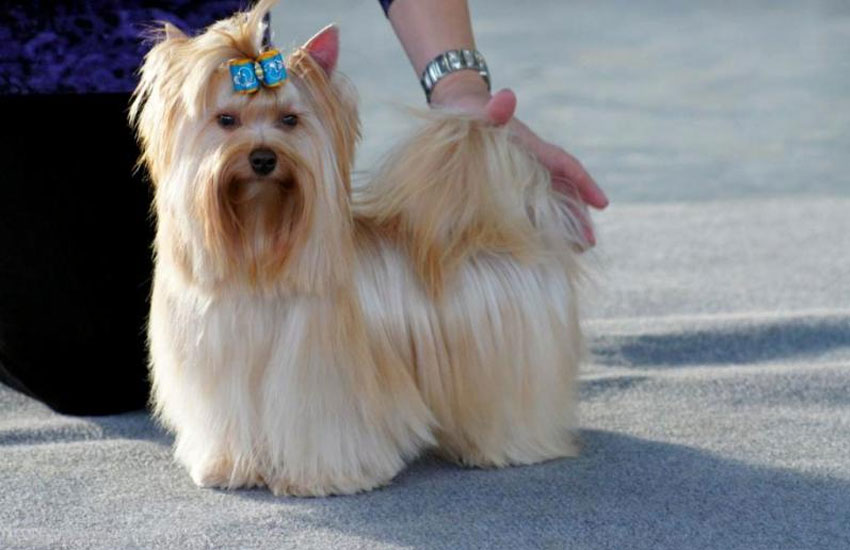
A unique feature of Goldusts is the presence of a rare gene that causes certain mutations in the skin and the appearance of the pigment phaemelanin.
Interesting fact! Not every Golddust passes on their unique traits, making breeding these babies an extremely challenging task, accomplished by only a few breeders.
Character
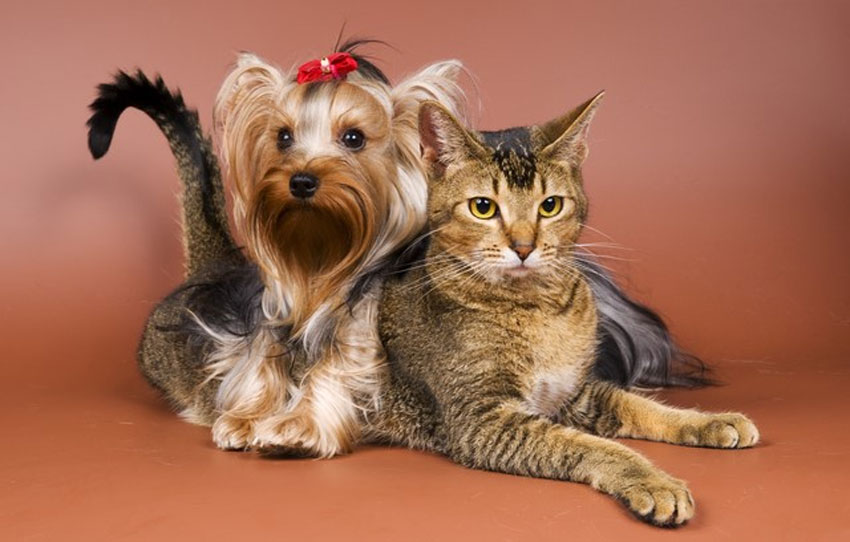
The Yorkshire Terrier is an active, inquisitive, and friendly dog. These little guys get along well with other pets and can even get along well with a cat. However, it's worth remembering that small animals (mice, rats, guinea pigs, parrots) can awaken the Yorkie's deeply dormant hunting instinct.
This breed, like most miniature breeds, is not recommended for families with small children! A child playing with a fragile Yorkie can easily injure it.
Attitudes toward other dogs are formed through socialization, so a wide range of behaviors are possible, from absolute good nature and a willingness to play to open aggression. It's worth noting that, at heart, a Yorkie considers himself a "big shot." Cowardice isn't in his nature, so he can start a fight over territory that has attracted a lady or his owner's attention, whether with a dog his own size or with significantly larger rivals.
Features of maintenance and care
The Yorkshire Terrier is compact and thrives even in a small apartment. These little dogs adapt to their owners' activity levels, making them suitable for people of all ages.
If you can't take your pet for regular walks, you can train it to use a special pad or litter box (similar to a cat's litter box at home). However, it's important to remember that for a dog's well-being and psychological well-being, it needs to be outside, explore the world, and interact with other dogs. Dogs who spend their entire lives confined to apartments suffer from depression and often become nervous, aggressive, or, conversely, withdrawn, distrustful, and fearful.
Yorkies don't shed, which is a definite advantage for apartment living. However, the idea that the breed is "hypoallergenic" is a myth. It all depends on what exactly is causing the allergic reaction (fur, dead skin particles, skin secretions, or other factors).
Grooming
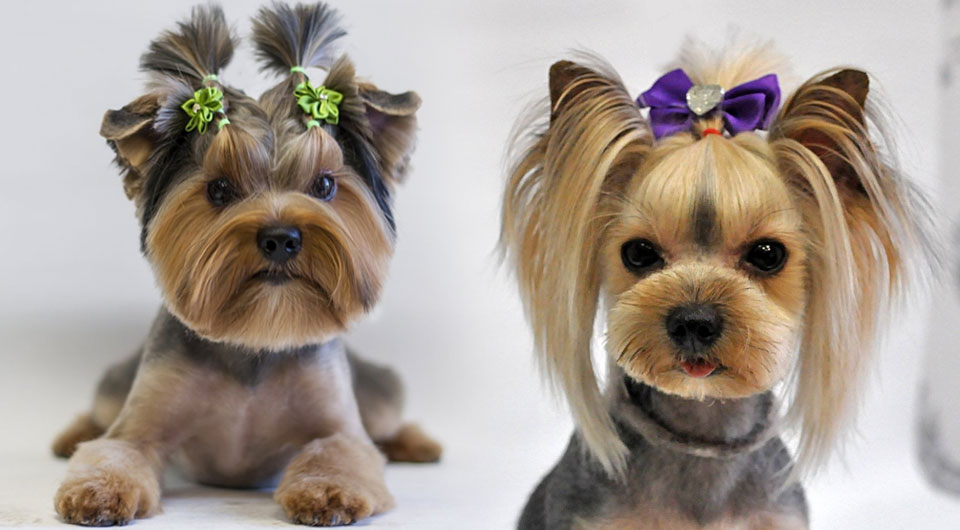
When looking at photos online, you might wonder why Yorkshire Terriers look so different in photos:
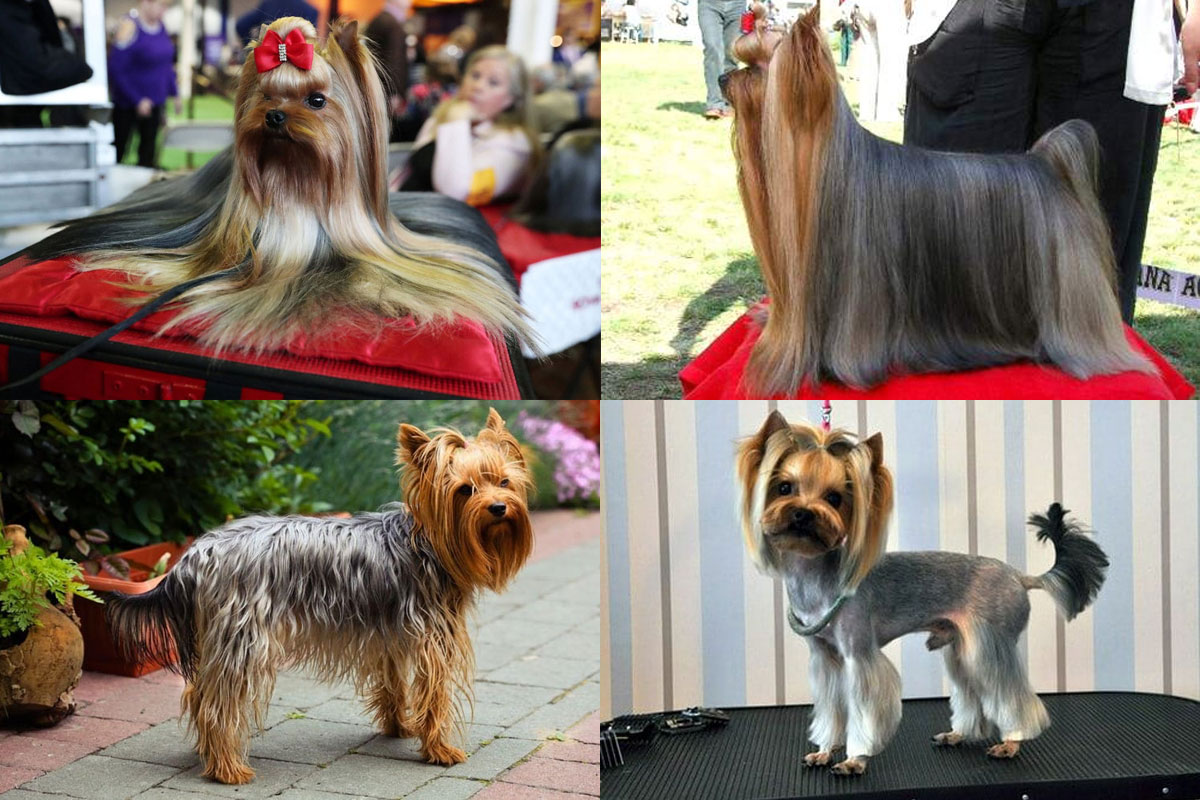
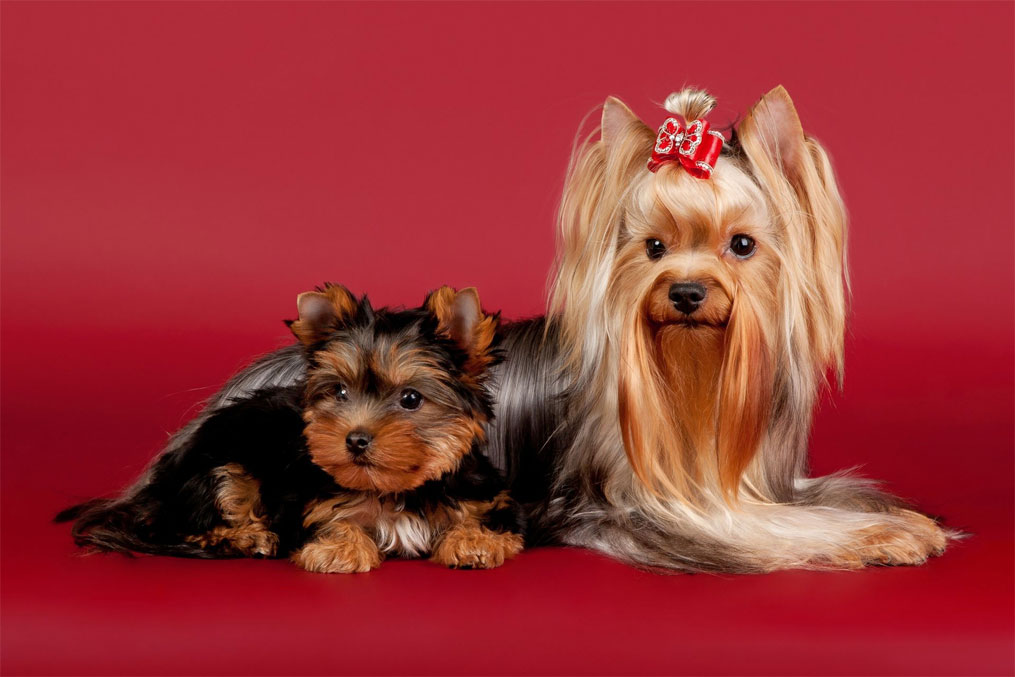
- A show dog, as a rule, has a long, perfect coat, which often exceeds the height at the withers;
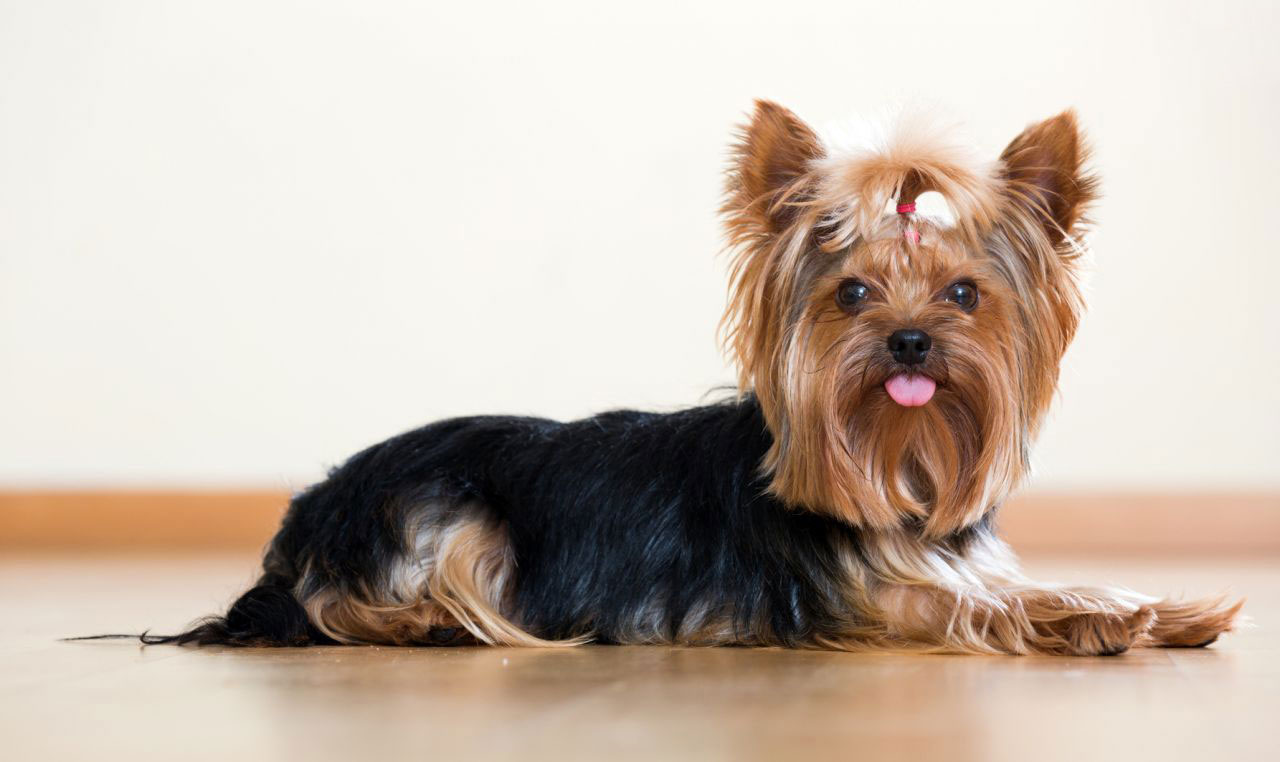
- Regular pets, photographed by their owners in natural settings (on a walk or playing at home), look slightly disheveled and their fur is almost always short or medium length.
The answer is simple: the Yorkie's luxurious coat is both the breed's pros and cons.
Regular visits to the groomer, or a whole range of grooming procedures for a Yorkie, are a prerequisite for the beauty and health of such a dog.
Grooming a show Yorkie is a routine daily procedure that includes:
- daily combing (at least once, but more often is possible);
- oil masks;
- regular washing with special shampoos (on average once every 2 weeks);
- blow-drying;
- curling papillotes.
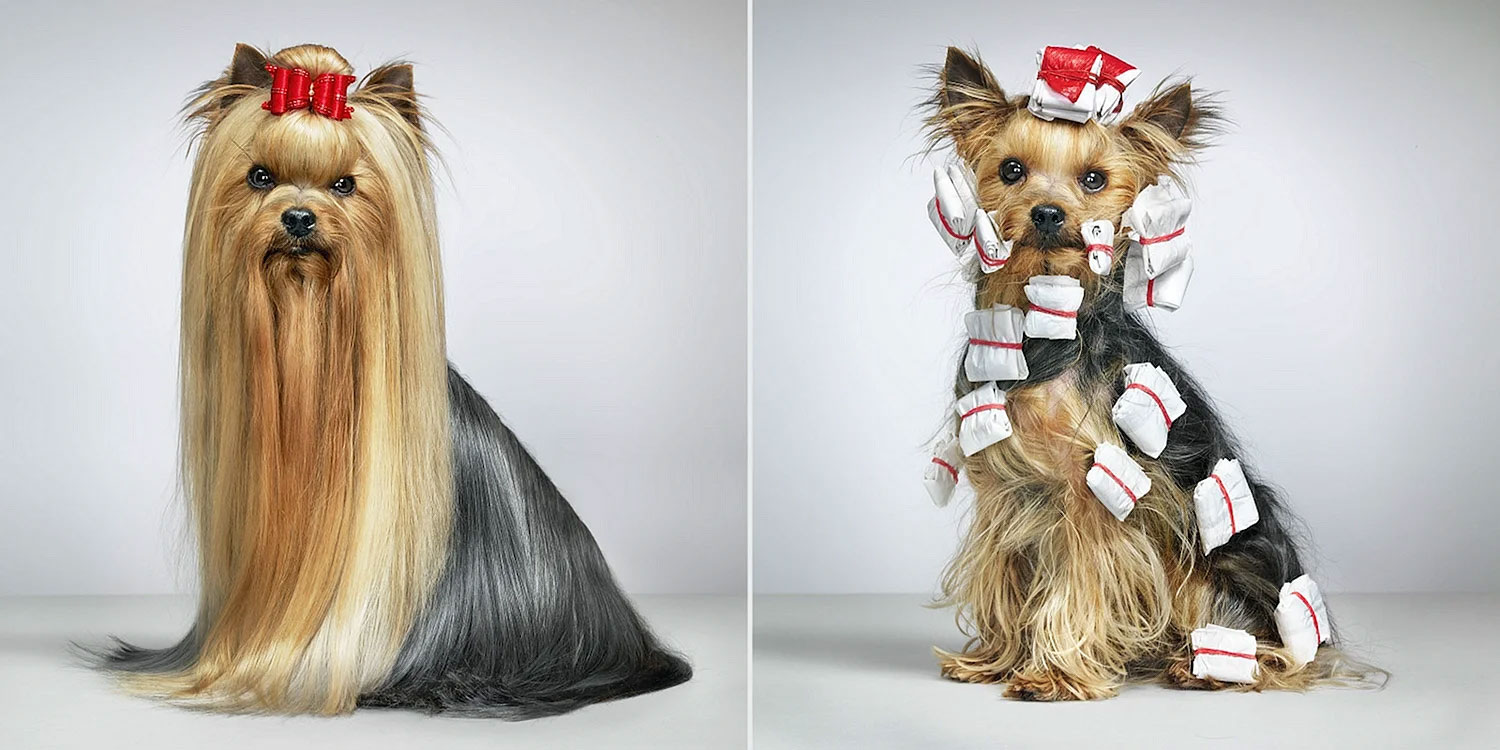
Yes, you may not know, but most show dogs pictured in the photo, with their luxuriously long coats, spend most of their lives in special curling irons. Otherwise, it's simply impossible to avoid severe dirt and matting. Furthermore, such long hair would interfere with the animal's daily life.
Grooming
Most breeders whose dogs don't participate in shows or have retired prefer a variety of haircuts. Dogs with short haircuts should visit the groomer on average once every three months.
A typical Yorkie grooming session in Moscow costs between 1,800 and 2,600 rubles. Naturally, a full grooming package for a show dog will cost considerably more.
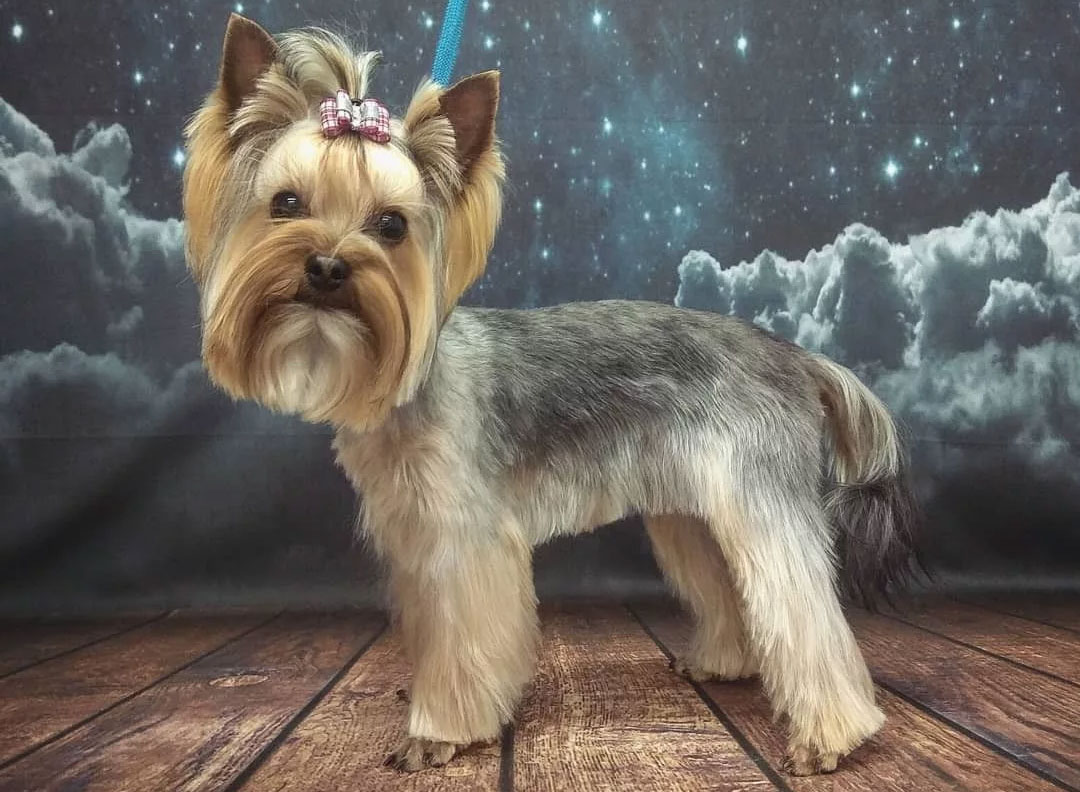
You can also groom your dog yourself at home by purchasing a good set of clippers and watching a few good video tutorials. Naturally, whether you choose to groom your dog yourself or take him to a salon, it's important to acclimate him to grooming while he's still young. Otherwise, he'll simply not let the groomer do the job and will become very nervous every time he visits the groomer.
Cloth
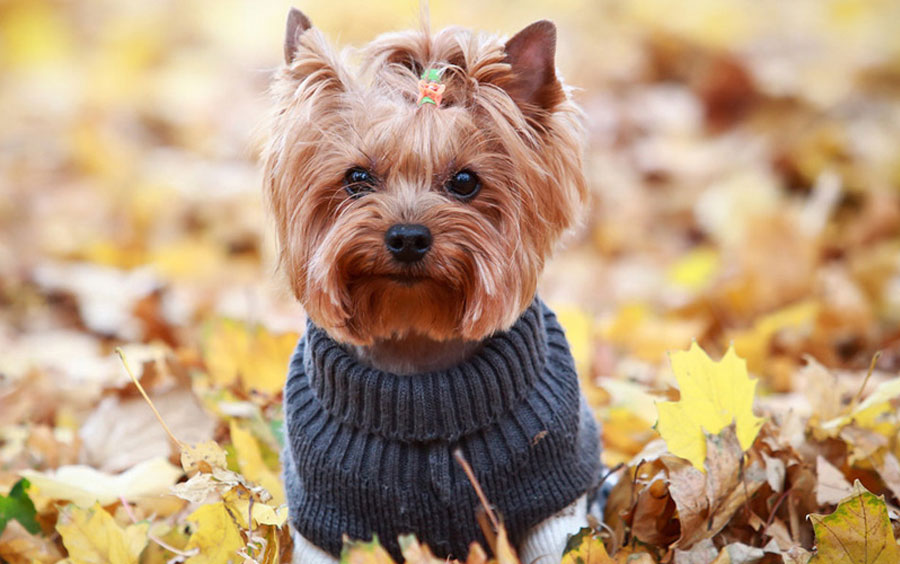
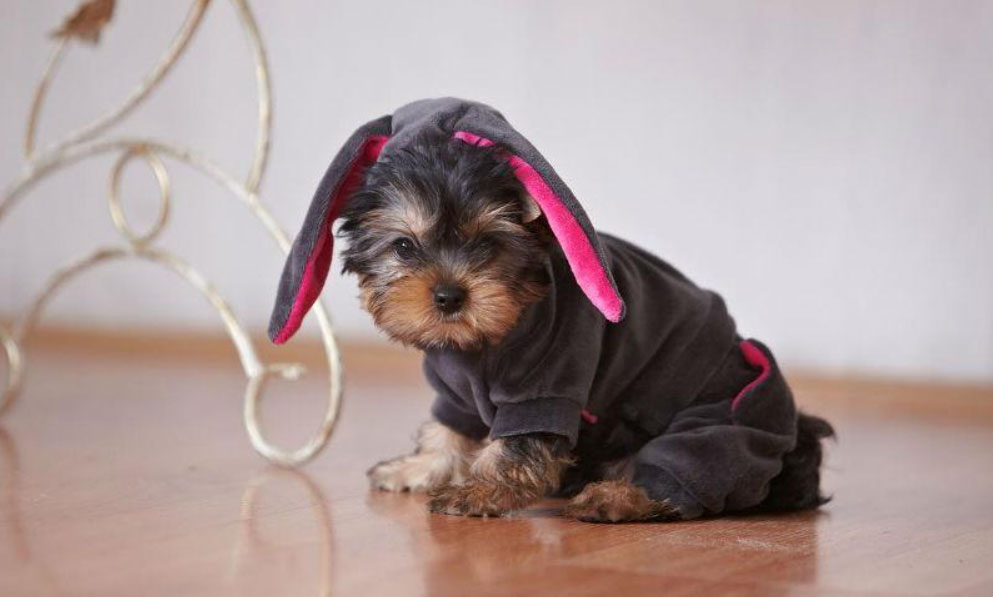
Clothing for a Yorkie is not a whim of the owners, but a necessity (considering the lack of undercoat, it is not surprising that these dogs get quite cold).
- During the cold season, clothing is a necessary means of protection from the cold:
- In the warmer months, it's a way to protect your pet from the scorching rays of the sun (a short-haired baby can easily get sunburned), getting dirty too quickly (and bathing too often), and ticks.
Education and training
Yorkshire Terriers are decorative dogs, but they need education, training and socialization no less than any other breed.
Training is necessary because it:
- helps the dog determine its place in the pack (family) hierarchy;
- provides the dog with the necessary activity, mental stimulation and interaction with the owner;
- ensures comfort for all people living in the same house with the pet;
- minimizes negative manifestations in the dog’s character;
- ensure adequate animal behavior at exhibitions.
As a rule, most of the problems that owners have with Yorkies are caused by the lack of training and attention.
Diet and nutrition
The quality of their nutrition directly affects how long a Yorkie lives and how often they need to be seen by the vet. Their digestive tract is very delicate, and any stressful food can cause serious health problems.
Yorkies are strictly prohibited from:
- food from the master's table (fatty, fried, salty, sweet, with spices and chemical additives);
- chicken (a large percentage of Yorkies are allergic to this type of meat);
- low-quality feed (they often contain chicken and chemical impurities).
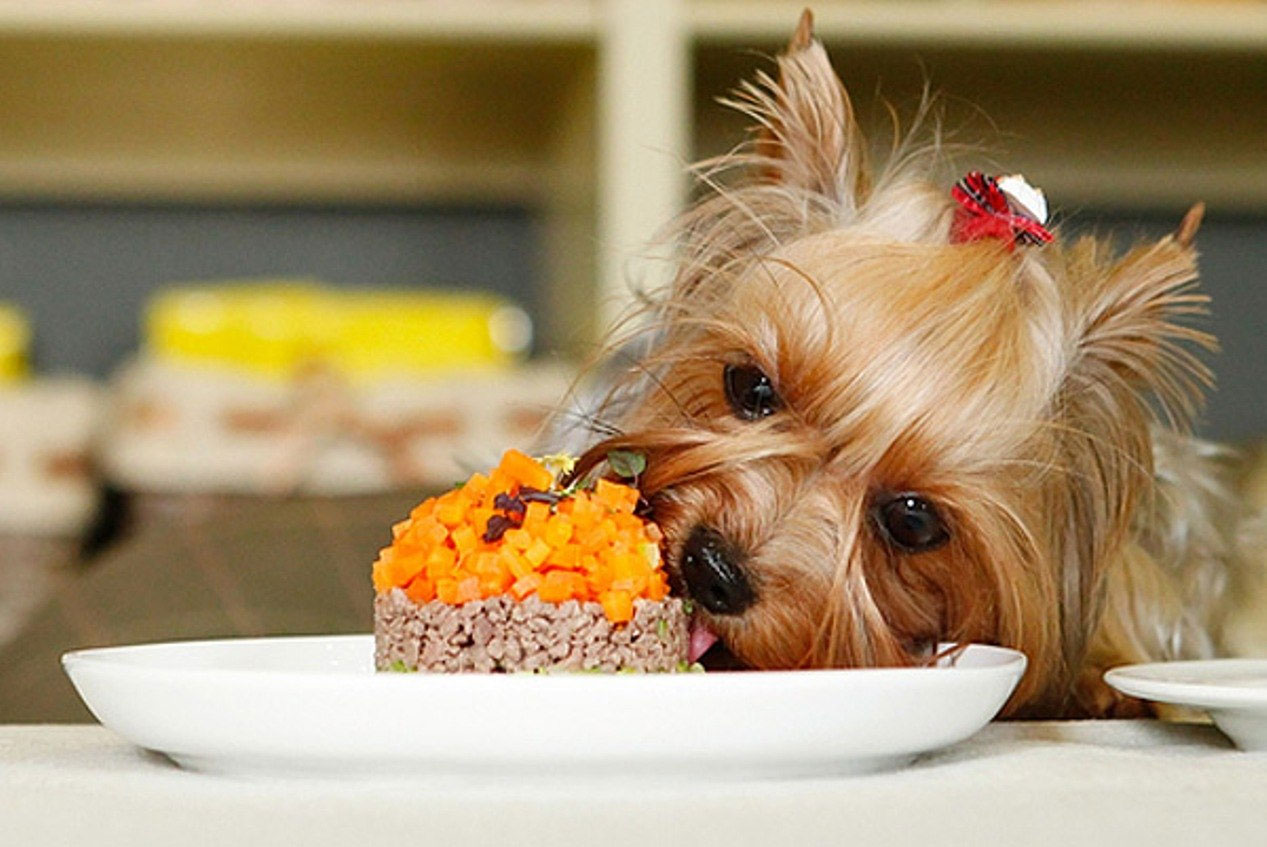
The owner's choice is either natural food as recommended by the veterinarian, or dry food of the following class:
- premium;
- super premium;
- holistic.
Important! Mini and micro dogs should eat 3-5 small meals a day. These small dogs have a significantly faster metabolism, and hunger can cause a sharp drop in blood glucose.
Health
Among standard-sized dogs, there are quite a lot of strong and healthy representatives; just look at how long the famous long-lived Yorkshire Terriers lived – 20-22 years.
At the same time, the breed also has its own characteristic genetically transmitted diseases, since artificial selection took place:
- Perthes disease;
- portosystemic shunt;
- hypoglycemia;
- disorders of the gastrointestinal tract, liver, pancreas;
- tracheal collapse;
- heart defects;
- developmental disorders of the vertebrae and joints;
- retinal dysplasia;
- hydrocephalus;
- allergies.
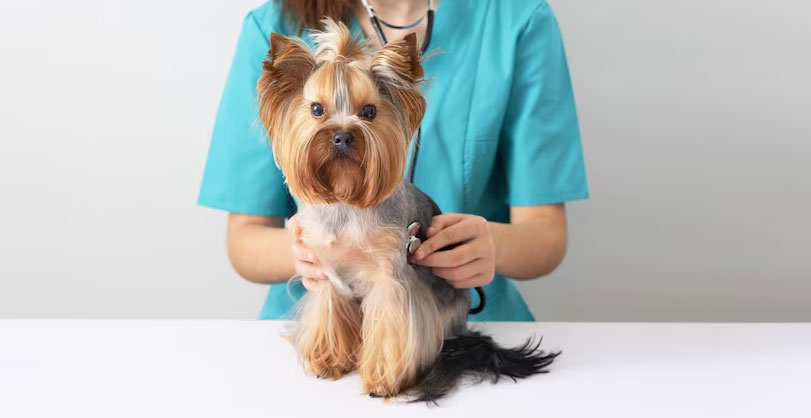
Veterinarians warn that there's a correlation between a dog's size and the likelihood of developing dangerous diseases. The smaller the Yorkie, the higher the risk of genetic disorders.
Choosing a puppy
After reviewing the breed, you should first decide what kind of puppy you'd like to buy, and then look for a reliable, experienced Yorkshire Terrier breeder or kennel in your area.
It is better to buy a puppy of a classic color at the age of 3-4 months, when the "change of color" is already visible and it is possible to say at least approximately whether there is a prospect of the correct shade and quality of the coat.
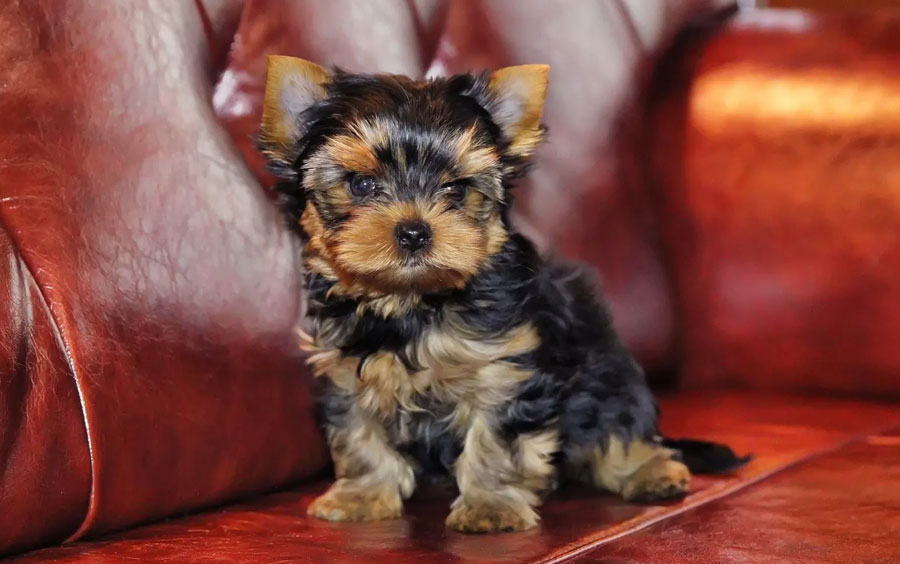
That's why you should be wary of the following things in sellers:
- selling puppies too early;
- 100% guarantee of the size or color of the dog in adulthood (at least until the puppy is less than 4-5 months old);
- demonstration of a miniature "mother" in exhibition condition;
- sale without prior acquaintance.
Many nurseries offer reservations for puppies, meaning you can choose a pet almost immediately after birth and pick it up when the puppy reaches 3 months of age (in some cases, for example, if they are "micro" puppies, then 6 or even 9 months to rule out the possibility of genetic pathologies).
Naturally, a mandatory factor when choosing is the availability of documents confirming the puppy's pedigree and making it possible to trace the genetic lines of its parents.
The price of York
The question of "how much does a Yorkshire Terrier cost" is a very difficult one, because the breed is incredibly popular and people are willing to pay incredible amounts of money for some of its representatives.
The average price of a puppy with documents in Russia varies from 40,000 to 80,000 rubles.
Particularly valued:
- classic babies with show potential and excellent genes (as a rule, such dogs are sold at the age of 6+ months);
- Goldstaches, as well as dogs that carry this unique gene;
- solid chocolate.
Nurseries of Russia
In Moscow, the following nurseries breed Yorkies:
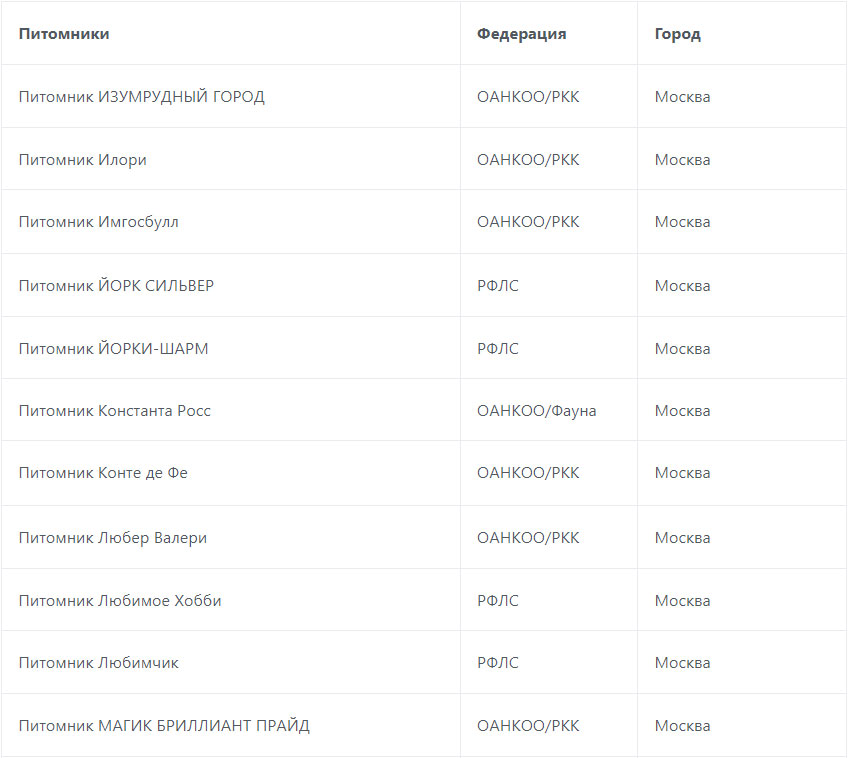
In St. Petersburg, you can buy a Yorkshire Terrier puppy by contacting the following kennels:
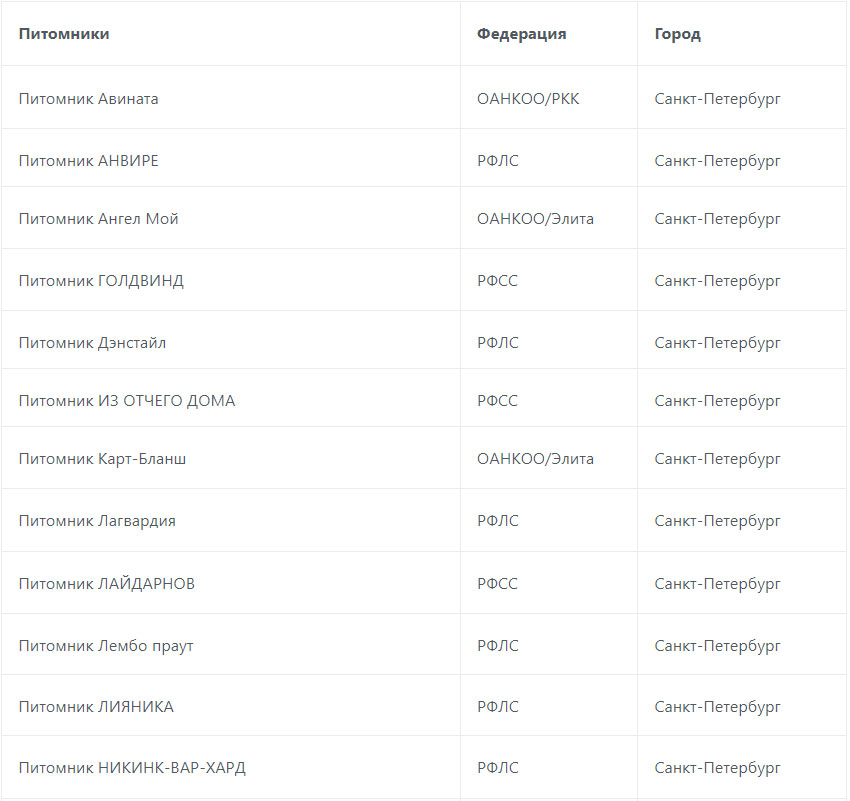
We also offer several breeding centers for various lines of this breed in other regions of Russia:
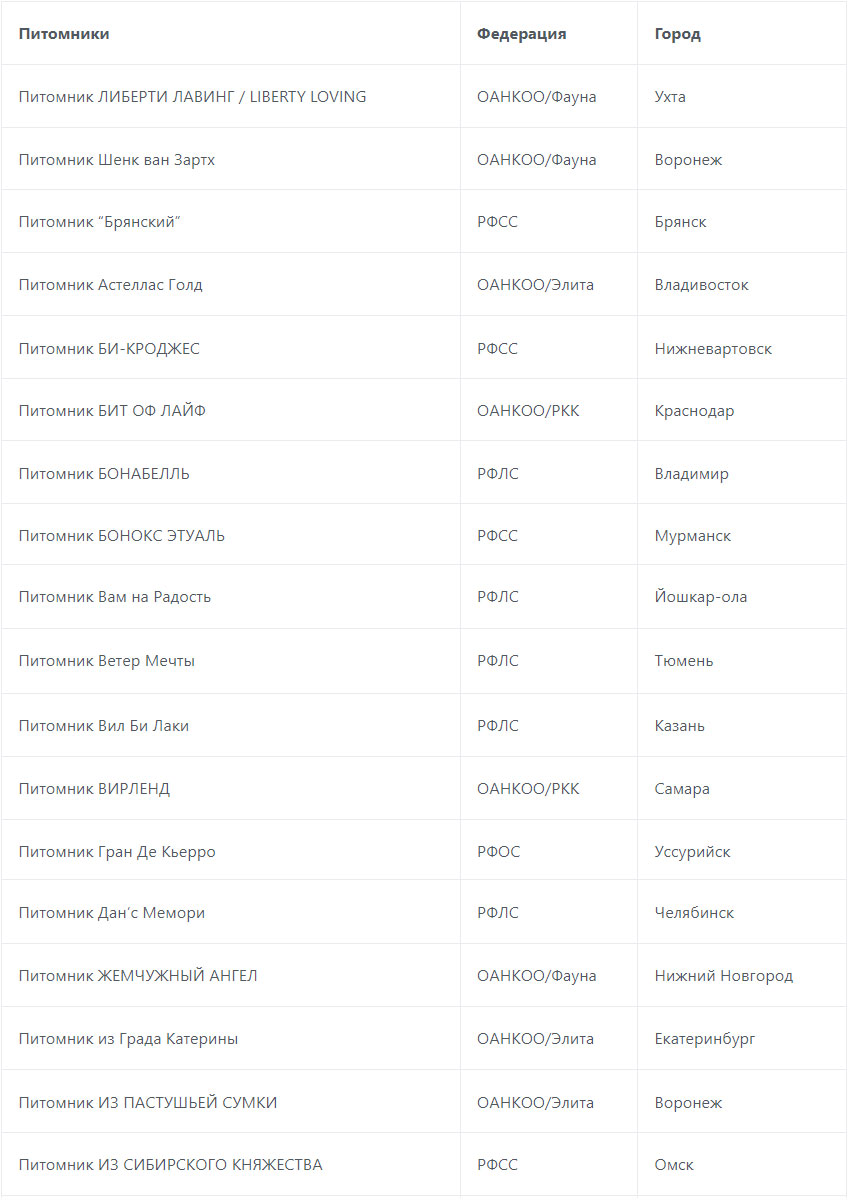
Naturally, our list doesn't include all the country's nurseries, so we recommend simply searching online or contacting your regional club, where they can help you find a healthy, purebred puppy.
Photo of a Yorkshire Terrier
Video about the breed
We also suggest watching a video about the Yorkshire Terrier and Biro York breeds.
Read also:
Read also:


Add a comment