
How do cats use body language to communicate?
When trying to figure out what's going on in your cat's head, it's important to pay attention not only to verbal cat sounds but also to their body language. They communicate with us constantly using body language, and some use it even more often than vocal cues.
You've probably noticed these mundane feline behaviors that your cat displays. For example, she might twitch her tail, stretch out on her back to show her belly, or wink at you.
Does this all mean something? Of course! This article examines the most common nonverbal gestures displayed by cats and provides their interpretation. For ease of reference, the article is divided into subheadings, each focusing on a specific body part.
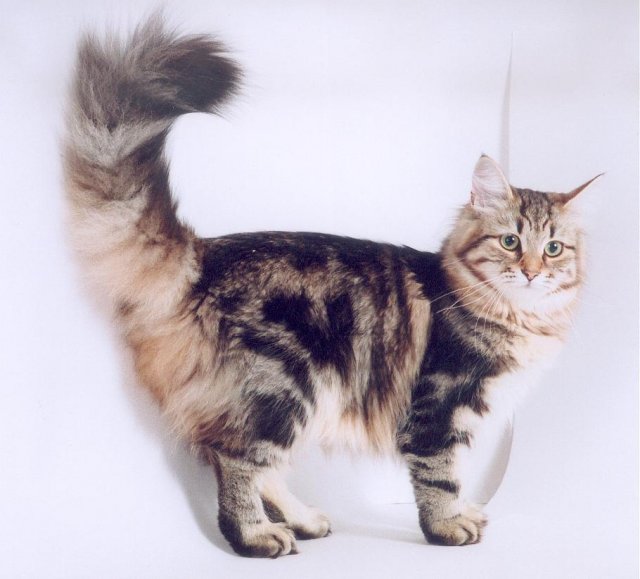
Tail
What does a cat's tail "say"? How can you tell your pet's mood by looking at its tail?
Wagging its tail
Tail wagging (i.e. the tail slowly and smoothly moves from side to side along its entire length) usually signals excitement, alertness, and interest in the surrounding environment.
Swings its tail
Tail swishing (i.e., the tail rapidly moves from side to side, an aggressive motion) means the cat is agitated and irritated. Typically, when a cat does this, it assumes an aggressive stance. The hairs on its tail stand on end, causing it to appear fluffy. In this case, it's best to leave the cat alone, otherwise you risk becoming a victim of its attack.
Twitches tail
If a cat twitches its tail, it means it's interested in something it's seeing. However, this gesture can also be the first sign of aggressive behavior, for example, if a strange cat has invaded its territory. In this case, the cat will follow this gesture with tail wagging and aggressive behavior.
Tail shaking
This gesture is typical for cats marking their territory. A cat may also tremble the tip of its tail when it rubs against your legs or when you scratch its back, especially near the tail. In this case, tail trembling is a sign of intense affection.
Tail raised up
If a cat holds its tail up while walking, it means it's happy and confident. Other nonverbal cues (such as gait or gaze) will also reflect this behavior.
Tail partially tucked between legs
This gesture usually means the cat is scared, unhappy, or feels threatened. Accompanying nonverbal gestures include flattened ears, a lowered head, and a body pressed to the ground.
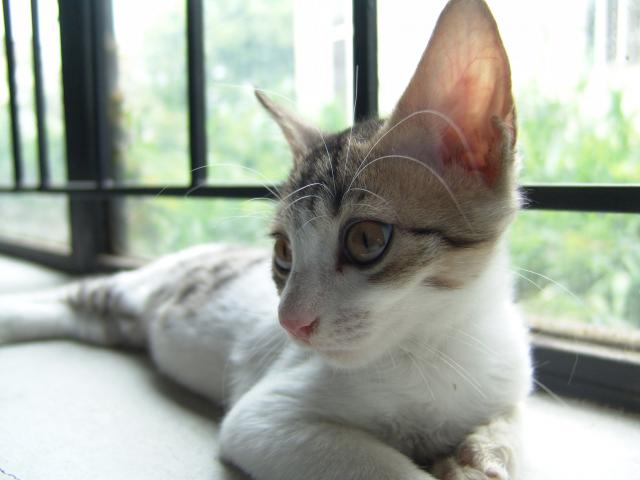
Ears
What can a cat's ears tell you?
Pricked ears
This is a sign that a cat is interested in what she hears around her. You've probably noticed how cats wiggle their ears to hear what's going on behind them without turning their heads.
Ears pressed to the head
If the ears are pressed against the head and their tips are directed backwards, this means that the cat senses danger and is trying to protect its ears in this way.
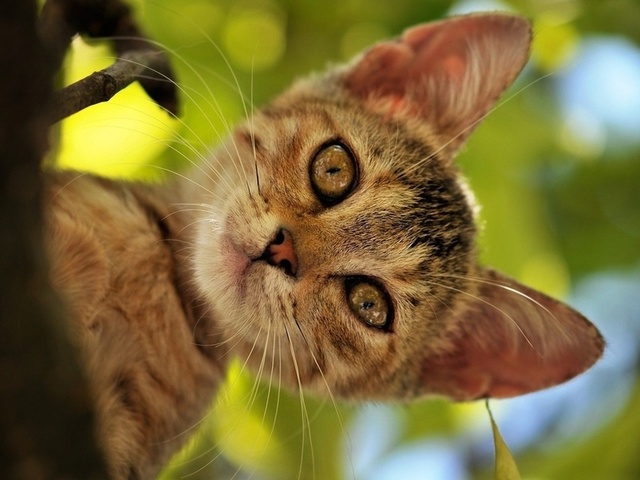
Head and mustache
The head and whiskers can also tell a lot about the cat.
Head raised
The meaning of this gesture depends on the circumstances. If a cat is happy, it will raise its head, showing curiosity and trust. This gesture is usually accompanied by pricked ears. On the other hand, if a cat is cornered by another cat, it will raise its head, showing dominance, and lay its ears back protectively.
Head down
This gesture signifies submission and humility. It may be displayed in the event of an attack by another cat. In a calmer situation, a lowered head can symbolize drowsiness, boredom, or tranquility.
Cat whiskers
Whiskers can be an indicator of a cat's mood. If the whiskers point forward, the cat is relaxed, happy, and curious. If the whiskers point backward, the cat is either defensive or about to attack.
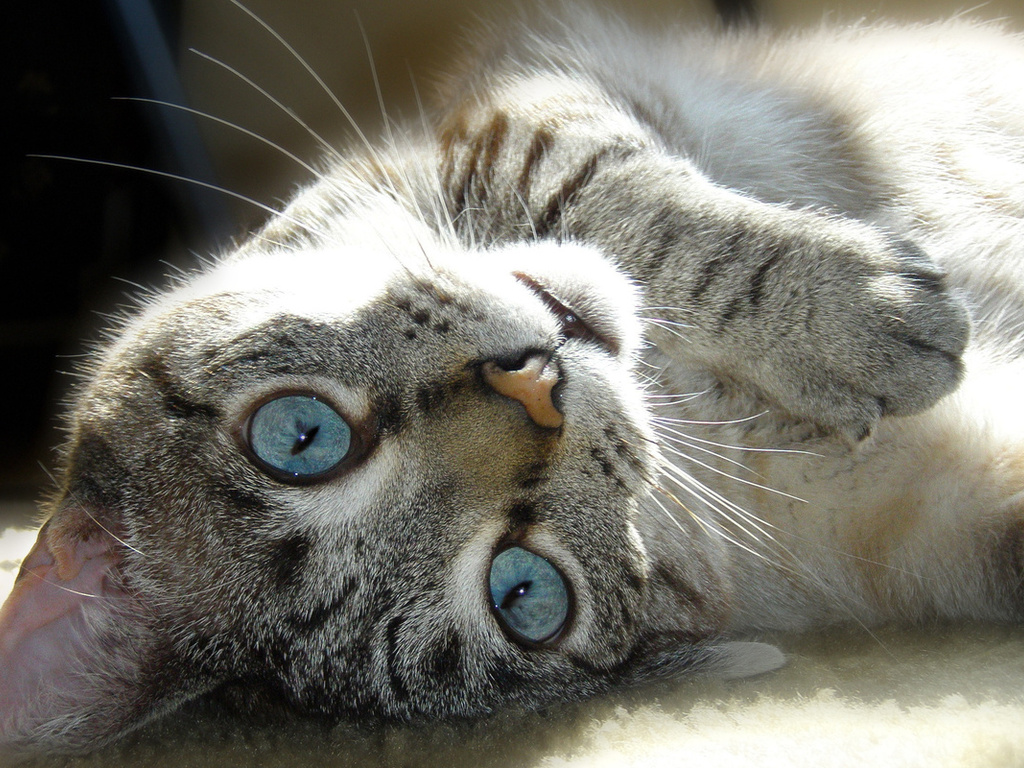
Sight
The eyes can tell you how your cat is feeling.
Staring, eyes wide open
This look is typically seen in cats fighting or in cats about to attack another cat, another animal, or a person. They're trying to intimidate their opponent.
Squinting, slowly blinking eyes
The meaning of this gesture is the opposite of the one described above. The cat is saying that she enjoys the presence of another animal or person and trusts them completely.
Have you ever wondered why cats, when in a room with several people, immediately gravitate toward the person who doesn't like cats? It's all about their gaze.
Cat lovers' gaze will be fixed on the cat, causing it to feel threatened and try to stay away. A person who doesn't like cats won't want to look at it, sincerely hoping the cat won't get underfoot. The cat sees such a person as the only harmless creature in the room, so guess who it will run to?!
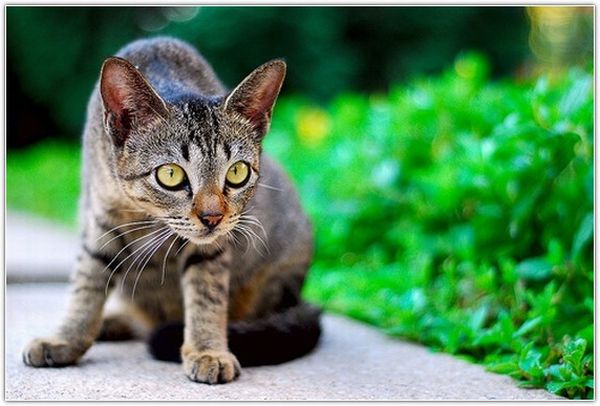
Body
A cat's body language can reveal a lot. Just observe your pet and you'll quickly understand what to expect.
Marking time
It is a gesture of affection, love and comfort.
Rubs against legs
Cats do this when they want to leave their scent on you, as if marking you as "their territory." It's a sign of great affection.
Rolls on his back, showing his belly
It means the cat is submitting to you. It's a compliment, showing that the cat loves and trusts you.
Straight or bent legs
If a cat stands with its legs straight, its head raised, and its ears perked, it's happy, confident, and curious. If it's under attack, if its front and back legs are bent, it's trying to avoid a fight, but will defend itself if necessary.
Arched back
Kittens often arch their backs playfully, pretending to fight. In adult cats, this gesture indicates that the animal is preparing for a real fight. In conjunction with this gesture, the cat may also flatten its ears, open its eyes wide, and the hair on its back and tail may stand on end.
When trying to interpret a cat's body language, it's important to pay attention to the cat's entire body, not just individual body parts. Don't forget to consider the surrounding circumstances and the cat's vocal cues.
Read also:

-550x315.jpg)


Add a comment