
Stomach ulcer in a dog
Stomach ulcers are not uncommon in dogs. And the owners are almost always to blame. Some don't care about their pets, while others are overly protective, always eager to feed and pamper them. The result is digestive problems, gastritis, ulcers, and pancreatitis.
However, there are other reasons why pets might develop this unpleasant condition. We'll explore them below.
Content
Causes of gastric ulcers in dogs
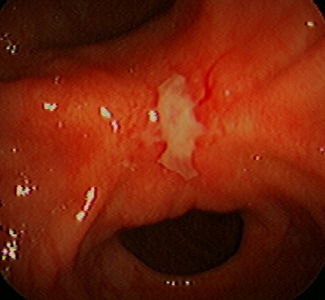
There are many reasons why dogs develop stomach ulcers - here are just a few of them:
Poor nutrition
First and foremost, I'd like to put improper feeding first. This isn't just about an unbalanced diet or feeding spoiled food (yes, some owners are guilty of feeding their dogs fermented soup, porridge, pieces of sausage that they won't eat themselves, etc.). We need to focus on soups and sausages in more detail! These are completely prohibited foods. No, not only can you give soup to dogs, but you should (especially if the animal already has... gastritis), but it must be prepared without adding spices, salt and prohibited products!
How do we feed our pets? Whatever we cook for ourselves, we feed it to our pet. Sometimes they even pour it from their own plate into a bowl, along with peppers and heavy cream. Sausages, hot dogs, and smoked meats—you just can't give them to dogs! Don't want it yourself, or is it spoiled? Throw it away! A dog isn't a trash can where you can stuff it with things you wouldn't eat yourself.
Also, read the ingredients of these products. They contain everything. Not everyone can eat them, and pets are completely prohibited from eating such foods, which contain more spices, salt, and preservatives than essential vitamins and minerals. So, if you feed your pet prohibited foods or food from your table, digestive problems will sooner or later make themselves known.
Medicinal
This is also a fairly common type of stomach ulcer in dogs. In some cases, it's a side effect of taking a veterinarian-prescribed medication (maybe it's inappropriate, the owner administered it incorrectly, or an overdose was taken), but more often, it's the pet owner who decides what, how much, and how many times a day to give their pet. The owner will make their own diagnosis (often, there are "helpers" online, for example, who say, "Oh, we had the same problem"), prescribe treatment, and then panic because the dog has gotten even worse.
Many medications (especially those intended for human use) are completely unsuitable for dogs. Some prohibited medications include salicylates (Aspirin and its analogues), non-steroidal anti-inflammatory drugs (Ketofen, Rimadyl), glucocorticoids (Dexamethasone, Prednisolone), and others. Be careful with these medications. Never give them to your pet without consulting a veterinarian.
Other reasons
Other possible causes of stomach ulcers in dogs include:
- Consequence after other diseasesFor example, gastritis worsens and develops into an ulcer.
- Liver problemsThis is especially true if bile is produced in much greater quantities than required. This disrupts the balance of the digestive system. Bile enzymes stimulate the production of enzymes in the stomach, which, in turn, corrode the mucous membrane and underlying layers.
- Renal failureIt would seem that the kidneys and the stomach are not the same, and what's the connection between them? As soon as the blood urea concentration rises, gastrin production decreases. As a result, hydrochloric acid is secreted in enormous quantities, and the mucous membrane can't withstand it, leading to ulceration. And the worse the animal's condition, the deeper and more severe the ulcer.
- Neoplasms in the stomachTumors grow, the mucous membrane becomes damaged and easily ulcerates.
- Stress, shock.
- PoisoningDon't forget about poisons either. Poisoning also damages the digestive system. In some cases, recovery is relatively quick and without complications, while in others, lifelong consequences can occur (if the pet's life is even saved).
Symptoms of stomach ulcers in dogs
The symptoms of a stomach ulcer in a dog are non-specific. Some are very noticeable, while others are subtle. Therefore, it may not be immediately apparent to the owner that an ulcer is the cause.
Vomiting and diarrhea
The dog begins vomiting. Blood is noticeably present in the vomit. However, this doesn't mean the vomit will be red; it's more often a "coffee-colored" color. Due to digestive problems, the animal experiences diarrhea. The stool smells sour and pungent.
Appetite is greatly reduced or absent altogether
It's understandable how to eat when your stomach hurts, because when you eat food, hydrochloric acid starts to be actively produced. And that's very painful. Just think, such a strong acid coming into contact with an open wound. How could you not howl in pain?
Pain in the stomach when palpated
If you palpate the stomach area, it will be extremely painful. The animal will whine, struggle, and arch its back.
Increased thirst
This can be explained by the body's attempt to restore its water balance. During vomiting and diarrhea, animals become dehydrated. Therefore, drinking plenty of fluids is essential. Furthermore, a large amount of water in the stomach reduces the concentration of hydrochloric acid (dilutes it). Therefore, the pain subsides slightly, and the whiskers feel better. But not for long, as the illness persists., The dog's stomach ulcer continues to bother him.
Unnatural posture
They call it "praying." Only in it does the animal feel better.
Anemia
In severe cases it develops anemia (If the ulcer is bleeding heavily). The mucous membranes are pale. No one can make a better diagnosis than a veterinarian, so as soon as you notice these symptoms of a stomach ulcer in your dog, don't delay and take your pet to the vet!
Treating a dog with a stomach ulcer
Treatment for a dog with a stomach ulcer begins with a diagnosis. To do this, the veterinarian must not only examine the animal but also conduct additional tests (laboratory testing of blood, urine, and even stool samples for blood, ultrasound, X-rays, and other procedures). Making a diagnosis based solely on symptoms is inappropriate. Therefore, look for clinics that have laboratories and the necessary equipment.
List of similar diseases
Understand that additional examinations are not a way to extort money from the owner, but an opportunity to make a correct diagnosis, discover the cause of the disease, and assess the extent of the lesion. Only the combined results of all the tests allow for the prescription of effective treatment. After all, the symptoms of a stomach ulcer in a dog are similar to those of other diseases such as
- gastritis,
- hepatitis (especially viral),
- pancreatitis,
- leptospirosis,
- parvovirus enteritis,
- renal failure and poisoning (which themselves can cause the development of ulcers),
- foreign body in the stomach,
- cholecystitis,
- parasitic invasion and others.
You'll agree, the list of diseases with clinical signs characteristic of ulcers is extensive. And without additional testing, it's simply impossible to "recognize" the condition.
Treatment plan for dogs
Typically, the treatment plan for a dog with a stomach ulcer looks like this:
- H2 receptor blockers. These medications are given to the animal to reduce the secretion of hydrochloric acid and the enzyme pepsin. M-anticholinergics are also necessary, which inhibit the functioning of all digestive glands.
- Omeprazole and its analogues, because these drugs “speed up” the proton pump.
- These medications not only protect but also help the affected mucous membrane heal faster. They are sometimes called "band-aids."
- Antiemetic (most often Cerucal, since it not only stops vomiting, but also normalizes intestinal motility).
However, don't self-medicate! Otherwise, you risk giving your pet an antiemetic when vomiting "helps" (for example, in cases of poisoning, vomiting helps remove most of the toxins from the digestive tract). Furthermore, if there's a foreign body in the stomach or throat, vomiting can help remove the unwanted substance. Furthermore, you might miscalculate the dosage, which could cause even more harm to your pet. All treatment for a dog with a stomach ulcer should be supervised by a qualified veterinarian!
- Antibiotics. Yes, unfortunately, we can't do without them anymore. An ulcer is already a "wound," so there's always a risk that bacteria will enter the bloodstream through it, thereby increasing inflammation in the stomach.
- Hemostatic agents, as well as drugs containing vitamin K1.
- Intravenous administration of both saline solutions and amino acid supplements is necessary to rehydrate and "feed" the dehydrated dog, as a dog with a stomach ulcer will barely eat.
However, in addition to medication, dietary therapy is mandatory. Without a gentle diet, your pet will never gain weight.
Diet for a dog with stomach ulcers
What should I feed a dog with a stomach ulcer? Feeding a pet properly is paramount. Portions should be small, but meals should be more frequent (3-4). Food should be at room temperature. Hot or cold food will only further irritate the stomach lining. Plenty of water is essential. It should be clean, at room temperature, and changed at least once a day. The animal should have free access to drinking water.
We are starving
During the first 24 hours after diagnosis, your veterinarian will likely recommend a fasting diet. Only on the following day should you gradually introduce new foods. The food should be easily digestible, soft, and warm. Feed mucilaginous cereals (oatmeal, rice, or pearl barley) in water (without oil, salt, sugar, or other additives). Avoid meat for now. It takes too long to digest, causing the stomach to produce more hydrochloric acid and enzymes, which is difficult for an animal with an ulcer. Chicken is an exception, but not too often (start with chicken broths; after a week or two, you can introduce poultry meat into the diet).
The Importance of Protein
But protein is essential. It's essential for any animal (especially a predator). Where can you get protein if you have to be careful with meat? Boiled eggs are recommended. Milk, cottage cheese, and other fermented milk products are prohibited—they will cause increased hydrochloric acid production in the dog's stomach.
If your pet has been eating dry food, owners don't need to worry too much about preparing the right food for their dog. There are plenty of specialized dietary foods available (for animals with digestive problems). Just be sure to soak the food in water first to prevent any hard particles from further irritating the mucous membranes.
Preventing stomach ulcers in dogs
Prevention of stomach ulcers in dogs, as with any other disease, consists of preventing the pet from being exposed to the causes of the disease.
- Feed your pet properly. Balance the diet. Don't give them table scraps or table scraps. Throw away spoiled food and chicken bones, and keep the trash can out of your pet's reach. Make sure your dog doesn't ingest anything inedible (rocks, bones, toys, Christmas tinsel, sausage skins with metal rings, etc.).
- Prevent stress.
- Don't neglect other illnesses (gastritis, pancreatitis, kidney and liver disease, and other ailments). Treat promptly and appropriately under the supervision of a veterinarian.
- Do not self-medicate. Do not administer any medications without consulting a veterinarian.
This is what an endoscopy for gastric ulcers in dogs looks like on video (if you don't have to watch it and are easily sensitive, don't watch it).
Any questions? You can ask our website's staff veterinarian in the comments below, who will answer them as quickly as possible.
Read also:


10 comments
Tatiana
Could you please tell me my dog is licking the floor? What could it be? Gastritis? Sometimes he drinks and then starts licking the floor too. We've been taking Ursofalk for over a year. Could it be because of that? We only eat dry veterinary food with oxalate.
. Only drying. And of course, constipation. Help with advice on what to do about constipation.
Daria is a veterinarian
Hello! My pet is lacking vitamins and minerals, which is why it's licking the floor. If it's constipated, it's important to add fiber to its diet: either vegetables or fiber itself. Drink more water, and perhaps replace one feeding with wet food. Walk more often to promote intestinal motility. Check the food's composition. You'll likely need to switch to something else. Who prescribed Ursofalk, and why is it being used for such a long time? If it's a gallbladder problem, it's easier to balance the feeding: small, frequent meals. The stones would have passed within a year, or surgery would be worthwhile. Or stomach problems? But again, a year is a very long time. You need to find the cause. Go to the clinic: get a complete blood count and biochemistry panel. If it's a liver problem, get an ultrasound; if it's a stomach problem, get a gastroscopy (look for a clinic with an endoscope). It might be time to start medication!
Catherine
Hello. We're diagnosing a dog with a perforated colon ulcer. We've had our dog for six months. We haven't noticed any symptoms. How long has this been developing? We haven't seen any diarrhea or loss of appetite. And then this happened so suddenly...what did we miss?
Daria is a veterinarian
Hello! There's no way such a condition could have developed in a day. The ulcer itself had to have formed before the perforation occurred. And before that, there had to be inflammation of the intestinal mucosa. None of this happens in a day or a week. However, there are countless causes of colitis (helminthiasis, poisoning, medications, improper feeding, infections, injuries from hard or inedible objects, etc.). There might not have been diarrhea, but the stool should have clearly changed (softer, possibly containing mucus, blood, or unformed). Abdominal pain should also have been present (especially when the ulcer appeared).
Galina
Hello. My Spitz recently had a stomach ulcer with low acidity. We've been intensively treating it since April 2018, and now we're on Fill's I'd Lou Fat canned food and a little buckwheat porridge. He eats three times a day, and we keep a close eye on him, but he has a habit of constantly licking things, gutting soft toys, and won't pass by urine piles or traces outside. Occasionally, but rarely, he vomits. He once vomited bile in the morning, and yesterday, right after feeding, he vomited everything he'd eaten like sausage. After a while, he asked to eat again. I have a question: could the ulcer flare up again, and what can I do to prevent it from reoccurring? Should I give him flaxseed jelly every morning? What's the proper feeding and prevention method? It's not in our clinic's best interests to give advice.
Daria is a veterinarian
Hello! If you feed your pet incorrectly, gastritis will worsen and ulcers may develop. Regular checkups and examinations are essential. Flaxseed should be used with caution and brewed correctly. "Paste" can be added to oatmeal; it coats the stomach lining well. You can use chamomile or oak bark infusion instead of water as an anti-inflammatory. Give a course of Almagel A and omeprazole during gastritis flare-ups. Wear a muzzle when walking your pet, and the problem of eating garbage and chewing on other things will be resolved. At home, remove anything foreign that could be eaten, spoiled, or swallowed from areas within your pet's reach. Feed either commercial food or natural food. Do not interfere. Feed small portions frequently. Water should always be freely available.
Daria
Hello! Please help. We've been treating liver problems for about six months: first, a course of injections, then they prescribed Almagel in combination with Phosphalugel. Things seemed to improve. But sometimes, out of the blue, she starts vomiting and has diarrhea. The same medications are needed again. The vomiting has stopped, but now, once a week, her stool is soft, covered in mucus, with drops of blood at the end. The vets said it was just blood vessels bursting, nothing serious. We took Ascorutin and Phosphalugel. About a month has passed, but her stool is the same. She even asks to go to the bathroom at night; she can't hold it. Dog: Golden Retriever, female, 2 years old
Thank you!
Dasha is a veterinarian
Hello! Have you had a blood test done? It would help us understand if there are liver problems or if something else is suffering (like the pancreas). An ultrasound wouldn't hurt to assess the liver's condition. The treatment seems too "light." If there are liver problems, why did they prescribe Almagel? So, gastritis is also suspected? Have you given any antiemetics? What are you feeding? Have you switched the animal to super-premium or holistic food for animals with liver or gastrointestinal problems? What was the poisoning? More medical history would be appreciated.
Tatiana
My dog vomits when he eats. I can feed him a small portion (50 or 100 grams) in small pieces, but any larger amount makes him vomit. Even if I manage to feed him, he feels unwell afterwards—drooling and cramping in his stomach. We went to the vet, and they did an ultrasound, but his stomach and intestines weren't visible (due to gas, as the vet said). They prescribed an antibiotic (ceftriaxone), prednisolone, omeprazole, and metronidazole. He drank everything and had injections, but he didn't get any better. I started giving him No-shpa (which provided some relief). Today he was given Duspatalin. His stomach seems to have calmed down a bit. He's sleeping now. He's vomiting bloodless vomit (foamy saliva). His stool is normal, but the last time he pooped was three days ago. He's been sick for 14 days. He's pooped three times during that time. He really eats very little. He drinks water, a little less than before, but he used to eat dry food, and now he eats boiled chicken. He's losing weight and strength. What should I do?
Dasha is a veterinarian
Hello! What kind of food was he eating before? The symptoms sound very similar to gastritis or gastroenteritis. The inflammation needs to be addressed. Were probiotics/prebiotics prescribed after the antibiotics to restore the intestinal flora? Give him Almagel and some cereals with mucous properties to coat the stomach lining. Cerucal can be used for vomiting. Don't overfeed him. Feed him little by little. But the digestive tract needs further examination. Ideally, a gastroenteroscopy would be appropriate.
Add a comment