
Japanese Chin (Japanese Spaniel)
The Japanese Chin is a miniature dog with a decorative appearance and a friendly nature. They were developed centuries ago to entertain and delight nobles. The Chin is an exceptional companion, understanding human psychology, adapting to one's mood, and ready to accompany its owner anywhere and anytime. Another name for the breed is the Japanese Spaniel.
Content
History of origin
The country of origin is Japan. It's rare to encounter a Japanese Chin on the street, and even when they do, many confuse them with a Pekingese. It's difficult to say with certainty whether they are related. The name "chin" in Japanese is written with two characters and literally translates as "animal" and "in between." What the Japanese had in mind remains a mystery.
The Japanese Chin is such an ancient breed that virtually no information about its origins remains. Some believe that the Chin, Pug, and Pekingese share a common ancestor—the Tibetan Toy. According to one theory, these dogs were brought to the Land of the Rising Sun by a Tibetan monk; another, they were a gift to the Japanese Emperor from the ruler of Korea.
The first description of the Chin dates back to the 12th century. These dogs held a special place in Japanese culture, were respected and revered, and were the subject of legends and depicted in works of art. These Japanese dogs were beloved not only by the imperial family but also by noble families throughout the country.
Their breeding in earnest began in the 14th century. Breeding methods were then kept a closely guarded secret. Breeders raised and trained the dogs themselves, monitored their health, and presented them as adults to nobles. Japan did not ban the export of local dogs, as was the case in China; they were often given to ambassadors of other countries as a sign of respect. In 1613, Chins first appeared in England, owned by Catherine of Portugal, wife of Charles II. Around the same time, Spanish authorities learned of these dogs from Japan, as evidenced by the paintings of artists who could not ignore them. However, they were not destined to spread throughout Europe in the 17th century. Many dogs died during the long journey, while others were adversely affected by the new climate or unfamiliar food. Only in 1860 did the world learn about the breed, when a Japanese Chin was given to Queen Victoria of England as a gift. They appeared in America a little earlier, in 1854.
Appearance and standards
The Japanese Chin is a small dog with large eyes and long, thick fur. Its build is lean and muscular, with a square frame. The average height is 18-25 cm, and its weight is 2-4 kg. Sexual differences are clearly defined; unlike the lighter females, males are more robust and elegant.
- The head is fairly large relative to its overall size and round. The skull is domed. The stop from the forehead to the bridge of the nose is very distinct and deep. The muzzle is wide and short. The nose is large, somewhat flattened, and should be level with the eyes. It is usually black, but can be dark brown with tan markings. The jaws are wide and short. The bite is tight or level. When the mouth is closed, the teeth and tongue should not be visible.
- The small, triangular ears are set high and drooping. The eyes are round, slightly convex, and set straight. They are always dark in color, with only a little white visible at the corners. The neck is lean and muscular.
-
The back is strong, straight, and short. The croup is rounded and slightly sloping. The medium-length tail is set high, curled over the back, and densely covered with feathering that forms a plume.
- The chest is deep and moderately wide. The belly is tucked up. The limbs are parallel, straight, and strong. The paws are slightly elongated (hare-like), with black claws. The movements are free, smooth, and easy. The head is held high.
-
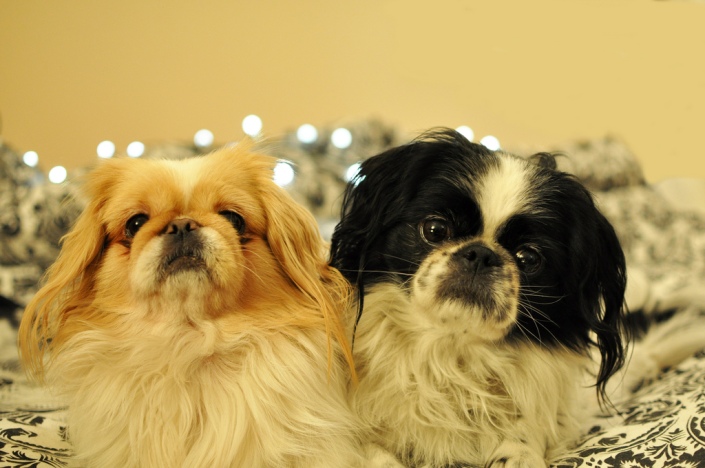
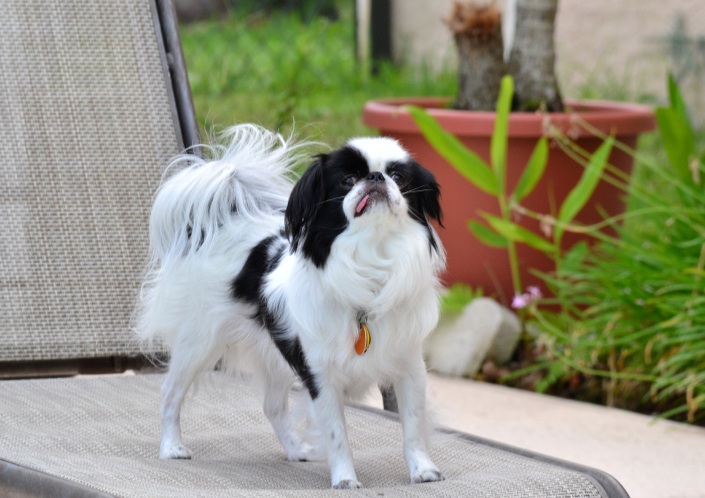
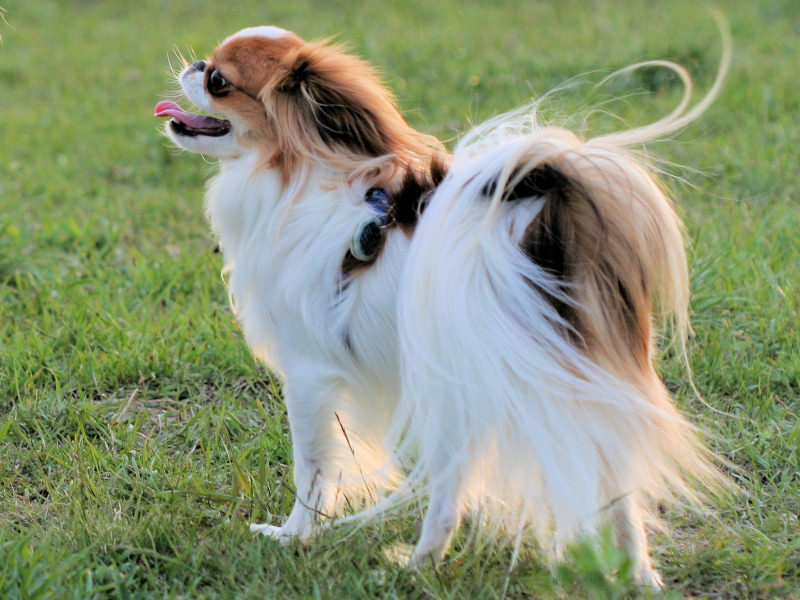
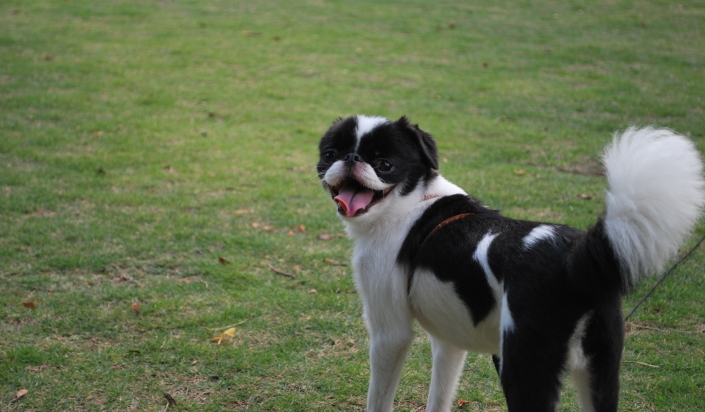
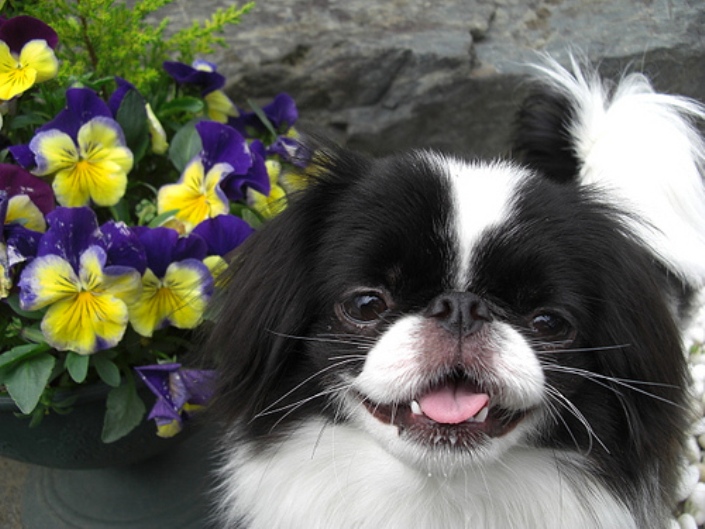
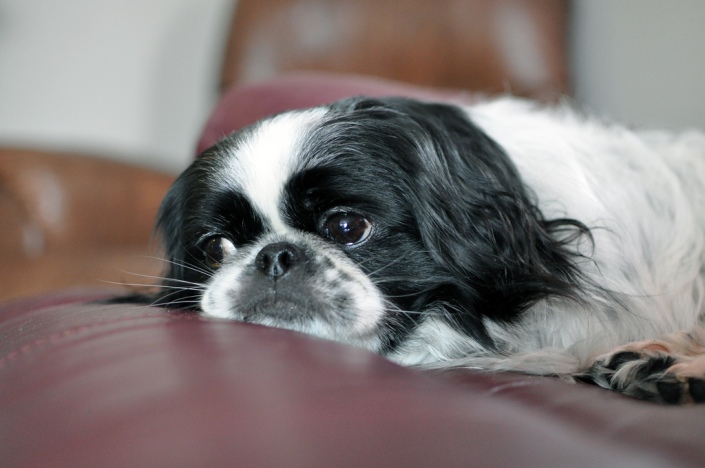
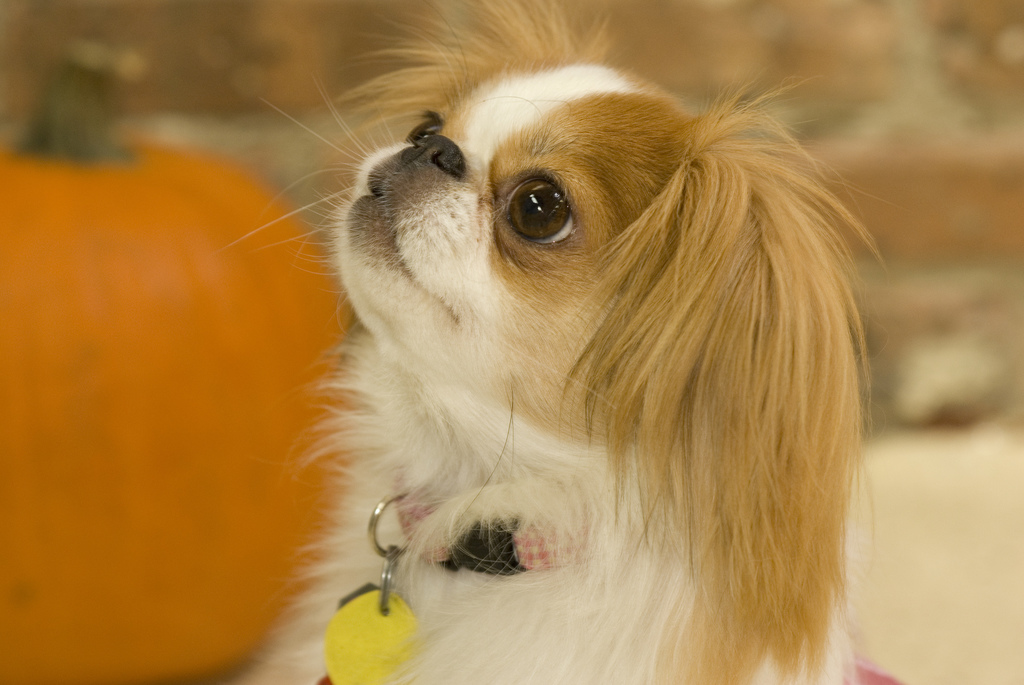
The coat is silky, long, and straight. Decorative hair appears on the tail, ears, and back of the legs. In males, it also forms a mane. The base color is snow-white, with symmetrical black or red spots on the ears and body. Red is acceptable in any shade, from lemon to almost brown. The spots are clearly delineated. If the head is dark, a white blaze on the forehead is desirable.
Training
Training and education of puppies begins early. Sometimes, breeders themselves instill some simple skills in them from the very first months of life. Most Chin are very intelligent and quick-witted, so they easily learn simple commands and various tricks. However, it's important not to overdo it with repetitions; a command shouldn't be performed more than five times in a single training session, otherwise the dog may become stubborn and refuse to work. Those planning to participate in shows place special emphasis on obedience, teaching the dog to stand from 2.5 to 3 months of age. The main rule in training a Chin is to always praise and reward with treats; otherwise, the dog won't see the point in doing anything.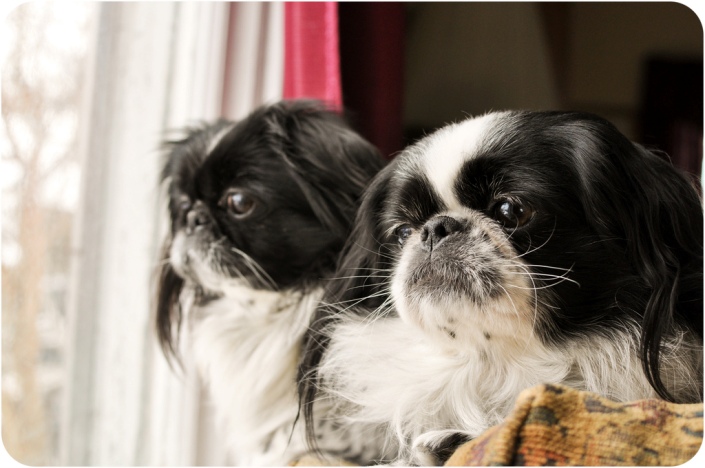
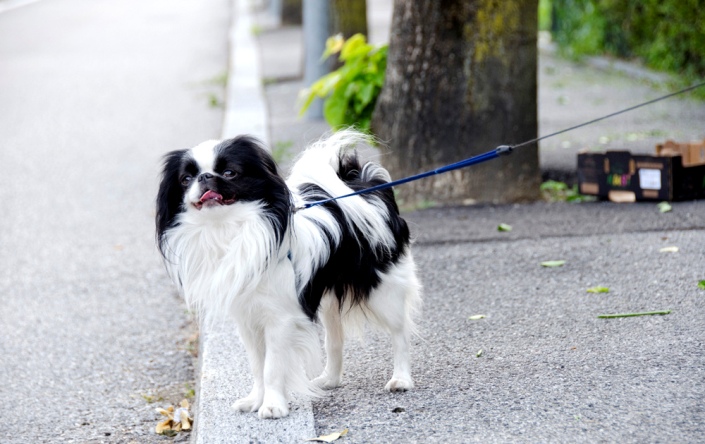
The Japanese Chin is very energetic and needs plenty of walks to stay in shape. While these walks should be short, they should be done 2-3 times a day. Besides relieving themselves outside, walks also help the dog learn to socialize with other animals. Regular exercise has a beneficial effect on metabolism. Due to the unique structure of their skull, Japanese Chins may experience breathing difficulties in extremely cold or hot weather. Therefore, it is not recommended to take them outside for long periods of time during these periods.
Character and psychological portrait
The Japanese Chin is a dog with a balanced, cheerful personality. However, some specimens of the breed have a choleric nature. A Japanese Chin's psychological well-being depends entirely on the amount of time their owner devotes to them. They are often jealous and easily offended. If there are several dogs in a household, each should have individual time with their owner. The Japanese Chin is friendly with people they know, but is always wary of strangers. They feel somewhat reserved in unfamiliar surroundings.
Japanese Chins rarely bark, are restless, or make noise, but they will not let anyone harm their owner. They are bold and fearless dogs, unfazed by loud noises or large animals. They are absolutely not suitable as toys or companions for children. A proud and independent Chin can only be an object of admiration and care for a responsible adult owner. Some Chins are characterized by unstable behavior; lack of attention or excessive jealousy can cause them to lose their appetite. If this behavior is noticed, care should be taken to prevent it in the future.
They generally get along well with other animals, but rarely develop any particular affection. Chins will always prefer human company to that of dogs, and are generally completely indifferent to cats.
Maintenance and care
Chins thrive in apartments of any size, but they should have their own resting area with a bed and toys. When choosing a spot for your dog, keep in mind that they often snore in their sleep, which can cause some discomfort for light sleepers. Despite their very long, beautiful coats, Chins are easy to groom. They have no undercoat, and their straight, silky hair is tangle-free. To keep their coat beautiful and well-groomed, brush them regularly, though slightly more frequently during shedding season. If your pet is not shown, a short haircut is sometimes given in the summer.
At least once a week, the Japanese Chin needs its eyes washed and teeth brushed. Its ears are regularly inspected for signs of infection. Bathe as needed, and dry shampoo can be used occasionally. After bathing, the dog's coat should be thoroughly dried with a hairdryer on cool setting. Nails should be trimmed every two weeks. The hair between the paw pads should be trimmed when it becomes too long.
Features of wool
A Chin's coat doesn't fully develop until 2.5 years of age. It can take longer for females if they've already given birth, as they completely shed their old coat 1.5 to 2.5 months after giving birth, and the regrowth process is quite lengthy—about 1.5 years. Males' coats change gradually and only during the seasonal shedding period, so they always look their best.
Japanese Chin grooming: necessity or fashion?
Although these dogs are blessed with a magnificent, long, and silky coat, it doesn't require extensive grooming. A natural appearance is highly prized, especially at shows, so Japanese Chins don't need to be trimmed, other than to remove excess hair from overgrown areas.
However, many owners believe that machine clipping of the Japanese Chin's coat is necessary during hot weather, both to help the pet cope with the heat and humidity, and to make it easier for owners to groom the dog without wasting time on lengthy brushing.
The Japanese Chin's short haircut is advertised and promoted through pet salons and online companies, which claim that frequent trims can improve the quality of the coat and make it healthier, and that it is also fashionable and stylish.
But if you ask a dog specialist whether a Chin needs a haircut, you will hear something like the answer below.
The Chin may only require trimming between the paw pads, under the tail, and sometimes in the genital area, as the long hair in these areas can quickly become dirty and matted. Overgrown long hair on the paws may also need to be trimmed at the level of the pads. Other than these areas, this breed does not require any other grooming.
Diet and health
A Japanese Chin's diet should be high in calories. These dogs eat little and exercise a lot, even in an apartment. Their diet should be rich in protein and calcium, and they should receive fresh fruits and vegetables daily. If owners choose to feed commercial food, it should meet the breed's specific requirements and be at least premium.
A Chin's full lifespan, including reproductive age, lasts up to 8 years. After this age, dogs begin to age, and some chronic illnesses may worsen or develop other conditions typical of old age. After 7-8 years, they begin to lose teeth, especially females who have given birth. From 10 years of age, vision and hearing begin to deteriorate. These dogs require special care and attention.
If your pet is a Japanese Chin, various illnesses will occasionally surface. The key is to not panic, and at the first sign of any illness, take your pet to the veterinarian for a checkup.
Chin are most prone to:
- cataract;
- dislocation of the kneecap;
- heat stroke.
These dogs are also susceptible to developing abnormalities resulting from improper care or irresponsible behavior on the part of their owners. Unfortunately, these dogs are often susceptible to dangerous infectious diseases.
The most common disease among them is so-called "canine distemper," which can be contracted by animals of any age. It is perhaps the most dangerous and contagious disease, for which no treatment has yet been developed.
They only prescribe a set of procedures to neutralize the virus, which does not guarantee the pet's complete recovery.
It's recommended to take preventative measures against distemper from puppyhood: the most important thing is to get the distemper vaccine on time. This preventative measure saves many animals from dying every year.
With proper care and feeding, the Japanese Chin can live quite a long time – 18-19 years. Average life expectancy is 15-16 years.
Choosing a Japanese Chin Puppy and Price
Choosing a Japanese Chin puppy depends primarily on the prospective owner's expectations. This could be a show dog, a promising stud, or perhaps just a companion. In both cases, the choice must be taken very seriously. Dogs are purchased only from reputable breeders, and breed specialists are often consulted for help. If a companion is simply needed, many issues, such as color, coat quality, and minor exterior flaws, are less important.
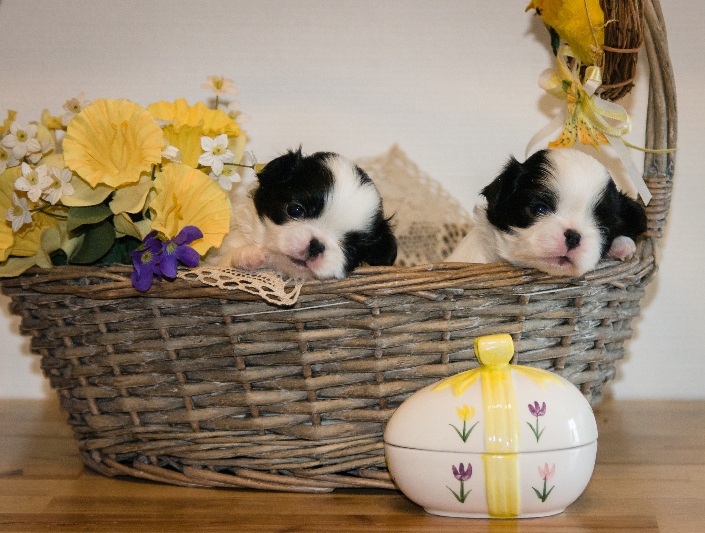
It's best to pick up a puppy when it's at least 3 months old. Puppies should already be:
- vaccinated;
- educated;
- toilet trained and house trained.
Plus, you won't have to prepare pureed food 5-6 times a day. A grown puppy can now be taken for walks outside and left indoors all day.
The price of a Japanese Chin varies widely. A pet-quality puppy can be purchased for $600-$1,000. Dogs with breeding potential or show quality can cost up to $2,000.
Knitting features
Beginning dog breeders often ask how to breed a Japanese Chin. It seems like a fairly common practice: a female dog is mated with a male dog, mating occurs, and two months later, adorable puppies are born.
However, to breed purebred dogs, official permission from a kennel club will be required. Canine experts will study the Japanese Chin's pedigree, check the female's compliance with breed standards, and only then issue a documented breeding permit.
Before the important event, it will be necessary to check both partners for diseases, deworm them, and administer the necessary vaccinations.
By the time the bitch goes into heat, the owner needs to select a main male and, in case he is unable to attend, a replacement.
Females under 15 months of age and over 3 years of age are not allowed to participate in their first mating. Immature and overripe females will not produce healthy litters.
A female dog can be bred after 10 days of her heat cycle. If the mating of a Japanese Chin is successful, she will give birth to 2-4 cute puppies within 63 days.
Photos
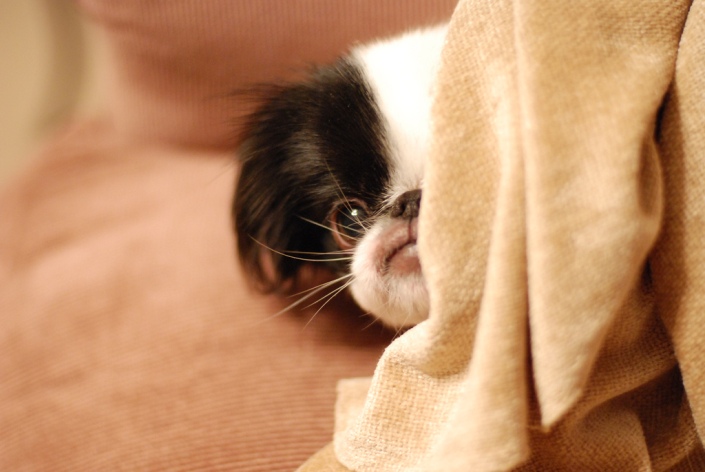
Japanese Chin Photos:
Video review of the breed
Read also:
- Japanese Bobtail is a cat breed
- Japanese dog breeds
- Japanese Terrier (Mikado Terrier, Japanese Fox Terrier, Kobe Terrier)


Add a comment