
Japanese Bobtail is a cat breed
The Japanese Bobtail is an indigenous breed of domestic cat with a short tail. They have been known in their homeland for several centuries, appearing in art and folklore, and are prized for their remarkable grace, beauty, and cleanliness. The Japanese believe that these short-tailed creatures bring good luck, wealth, and prosperity to the home.
Content
History of origin
Japanese Bobtails can rightfully be considered one of the oldest cat breeds. Their images appear in paintings from the 17th and 18th centuries, but they are believed to have been around for much longer. These short-tailed cats likely arose as a result of a random mutation.
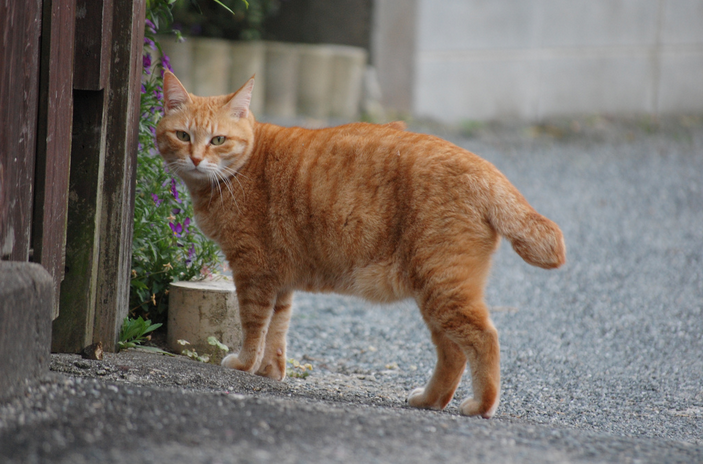
Nothing is known about the breed's origins. In 1602, the Japanese emperor signed a decree unleashing all cats and making them free. They were now tasked with controlling rodents that threatened silkworms. The purchase and sale of cats remained prohibited for a long time, but natural selection and uncontrolled breeding had a positive impact on their health and genetics.
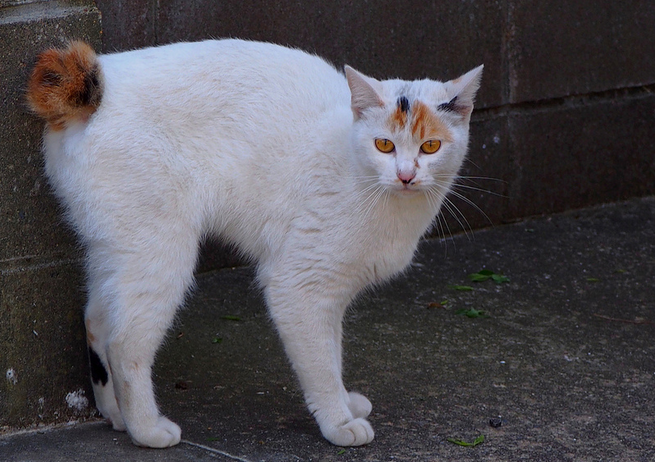
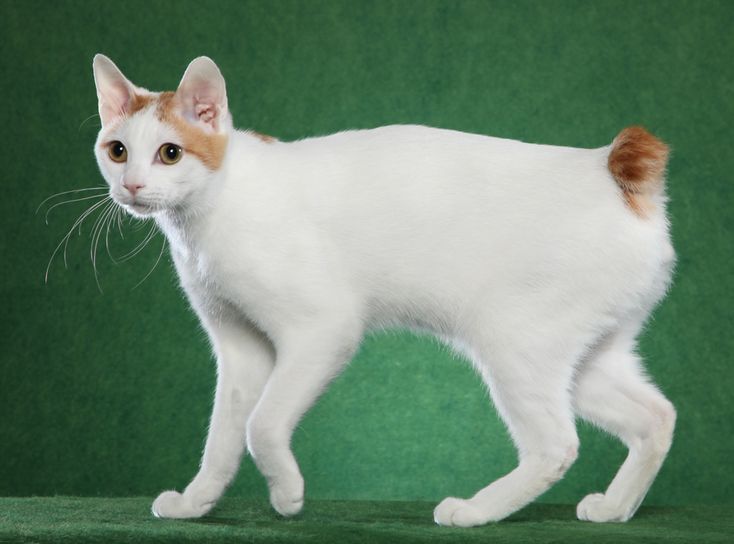
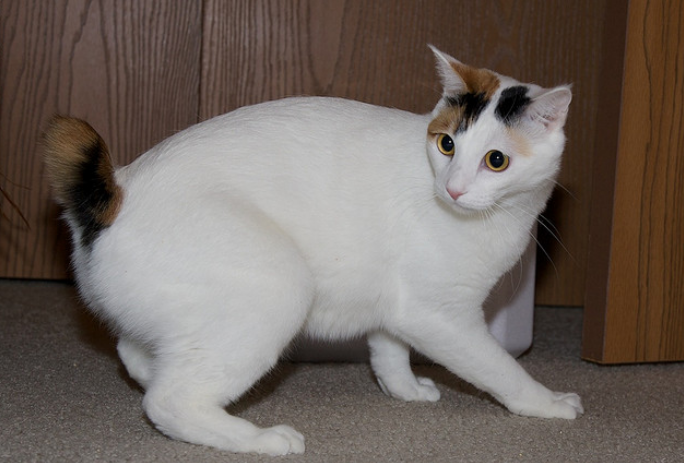
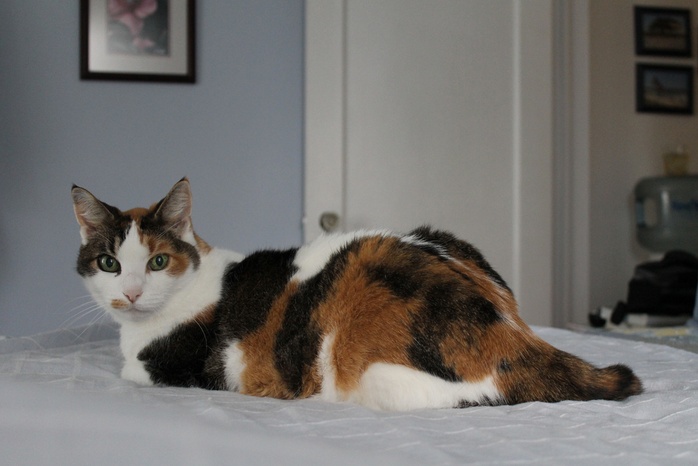
In the country's culture, short-tailed cats have always held a place of honor, with those with the "mi-ke" coloring, which translates as "tricolor," particularly prized. However, these were not "tortoiseshell" cats; the primary color was white, with small black and red spots on the head, body, and tail.
In 1968, American breeder Elizabeth Freret brought three kittens with short tails from Japan. A year later, a standard was developed for them and a new breed, the Japanese Bobtail, was registered with the CFA.
General characteristics
Japanese Bobtails are cats with ideal natural proportions, not spoiled by “designer” selection.
Appearance
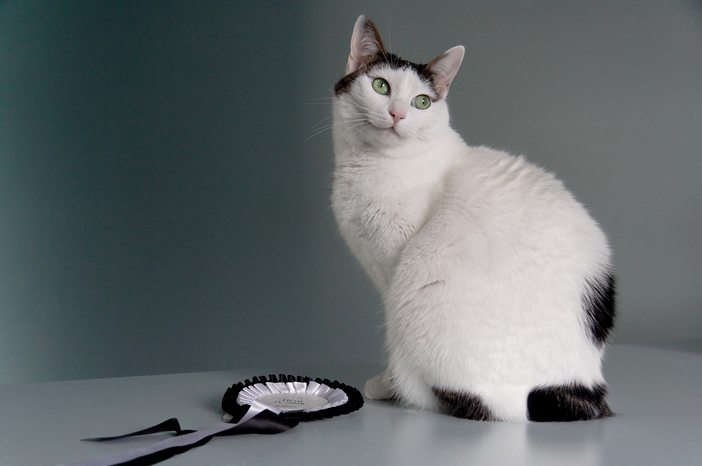
They have a strong chest, a level back, strong bones, and well-developed muscles. Their build is somewhat slender, but this doesn't detract from their appearance; on the contrary, it lends them a special grace. Females weigh 2-2.5 kg, while males are slightly heavier, weighing 3-4 kg.
Bobtails are natural hunters, running fast and jumping agilely. Like all bobtails, their hind legs are slightly longer than their front legs, creating a slight rise at the croup. The head is triangular, with a well-defined muzzle featuring prominent cheekbones and temples. The nose is long, with a subtle curve at the bridge. The eyes are fairly large, oval, and set slightly obliquely. The ears are long but not oversized; they blend harmoniously with the proportions of the head, set wide apart and tilted slightly forward.
Unlike American Bobtails Japanese cats, like Manx cats, are not tailless. They retain all their tail vertebrae, but they are deformed, very short, or curved. Each cat's tail is unique; it can be flexible or fixed, and its size and shape should complement the cat's appearance, but should not exceed 7 cm in length.
Japanese Bobtails can be longhaired or shorthaired. The coat is pleasant to the touch, silky and smooth. The hairs lie flat against the body, with only a slight standout on the tail. It is desirable for the coat color to match the eye color. Any color is acceptable, but lilac, Abyssinian, chocolate, and Siamese are not accepted. Longhaired Bobtails boast a fluffy ruff, tail, and breeches.
Character
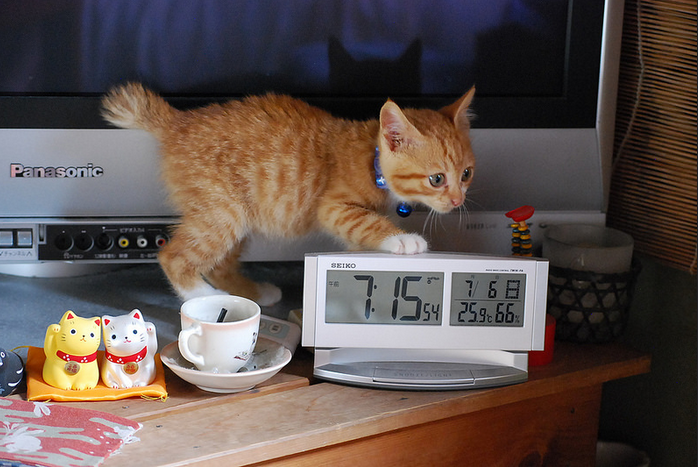
Japanese Bobtails are incredibly playful and energetic. Their activity level, especially when young, can be compared to a small hurricane, only a very gentle one. Rather than sweeping everything in their path, they will deftly maneuver around obstacles. Bobtails are goal-oriented and unrivaled hunters. They are very sociable and curious, forming strong bonds with their family and owner, with whom they spend a lot of time.
If you see your cat staring at you, trust me, it's not idle curiosity. Your bobtail is most likely learning. And don't be surprised if you find your cat in a seemingly locked closet or washing machine. If you're having trouble finding your pet, check these hard-to-reach places first. Chances are, they're somewhere there.
A striking characteristic of the Japanese Bobtail is their "talkativeness" and ability to produce a wide range of sounds, from simple meows to chirps. Character flaws include stubbornness and overconfidence. Teaching a bobtail something unwilling is difficult; it decides for itself where to go and where to climb.
The Japanese Bobtail requires constant attention and an active lifestyle. A bored animal is a ticking time bomb, capable of destructive behavior.
The Bobtail is a highly intelligent breed. They quickly learn to adopt behavior patterns from other dogs, most often dogs. For example, they may start fetching things or walking on a leash. Their intelligence and curiosity often get them into trouble. Japanese Bobtails are quite adept at entering forbidden places and escaping from enclosed spaces.
Maintenance and care
To ensure a happy life for your pet, especially if they're kept in an apartment with no access to the outdoors, you'll need to create a proper play area. This could be a tree or cat furniture with playhouses. These cats quickly get bored with regular mice or balls; it's better to invest in interactive or logic games.
A Japanese Bobtail's owner must always be on guard due to their pet's active temperament. A playful cat can easily jump out of a window, fall off a closet, or run through an open door.
Japanese Bobtails are very clean and self-grooming, so they are rarely bathed, usually before shows. During shedding season, loose hair is removed daily with a brush or glove to speed up the shedding process. Otherwise, brushing is only necessary once a week. Eyes and ears are cleaned as needed.
Japanese bobtails have strong paws equipped with sharp, powerful claws that require care. In most cases, animals address the problem themselves by filing their claws on a comfortable surface. However, a preventative checkup is always a good idea, as if the claws grow too long, they begin to curl toward the paw pads, causing pain when walking.
Diet
There are no special feeding requirements for Japanese Bobtails. They are best fed super-premium or premium ready-to-eat foods, which contain only natural ingredients and all the necessary vitamins and minerals. They can also be fed natural food, but the diet should be lean meat in a 2:1 ratio. The main thing to remember is that a balanced diet is the key to a cat's good health and longevity.
Please note! The Japanese Bobtail is an excellent hunter, seizing the opportunity to feast on rodents or birds. Experienced breeders know how many deadly infections a stray rodent can carry. Therefore, it's best to walk your cat on a leash. As a last resort, you can attach a collar with a bell to its neck.
Health
Japanese Bobtails are strong and healthy cats with strong immune systems. They rarely get sick and are free of the genetic diseases that hybrids are often prone to. Litters typically consist of 3-4 kittens, with a very low mortality rate. The kittens begin running earlier than other breeds and are more active. Japanese Bobtails are often long-lived, living up to 20 years.
Unlike most other breeds, these cats' harassment isn't characterized by persistent howling, but by riotous behavior and brawling. It's worth noting that the Japanese Bobtail mother is an excellent breeder. A mother typically gives birth to 3-6 kittens. The kittens are often strong and robust, and nurse well. They begin to leave the nest early, sometimes as early as three weeks. For this reason, a Japanese Bobtail breeder must periodically supervise the kittens and assist the mother in raising the litter as much as possible.
How much does a Japanese Bobtail cost?
The price of a Japanese Bobtail starts at 30,000 rubles. Factors such as color, pedigree, and other nuances influence pricing. Buying this cat is an expensive proposition, but those who adopt one generally don't regret it.
The Bobtail is a social cat breed. He craves family companionship and a vibrant life. He enjoys walks and doesn't mind a leash or harness.
If you're looking for a true piece of Japan, a bobtail is your pet. Welcome one into your family, and he'll be sure to reciprocate.

Read also:


Add a comment