
Japanese Terrier (Mikado Terrier, Japanese Fox Terrier, Kobe Terrier)
The Japanese Terrier is a small dog with a very short coat and a lively temperament. One of the rarest breeds in the world, the Japanese Terrier was never a working dog; it was bred as a companion. Other names for the breed include: Snow Terrier, Mikado Terrier, Japanese Fox Terrier, and Kobe Terrier.

Content
History of origin
In the 17th century, many European dogs were brought to Japan from the Netherlands, as only one port—Nagasaki—was open to the West. Subsequently, these newly arrived dogs spread throughout the country and interbred with local breeds. As a result, a specific type emerged. According to the most popular theory, Japanese terriers descended from smooth fox terriers, Manchester, Italian greyhounds and some other, currently undefined, breeds.
The port cities of Kobe and Yokohama are considered the historical homeland of Japanese terriers. It is here that these small toy dogs, descendants of European terriers, have largely survived. Targeted breeding of these dogs as a breed began only in the 1920s. By the 1930s, the breed type had been established. In 1932, a breed club was founded and a standard developed. In 1964, the breed was officially recognized by the Fédération Cynologique Internationale.
Appearance
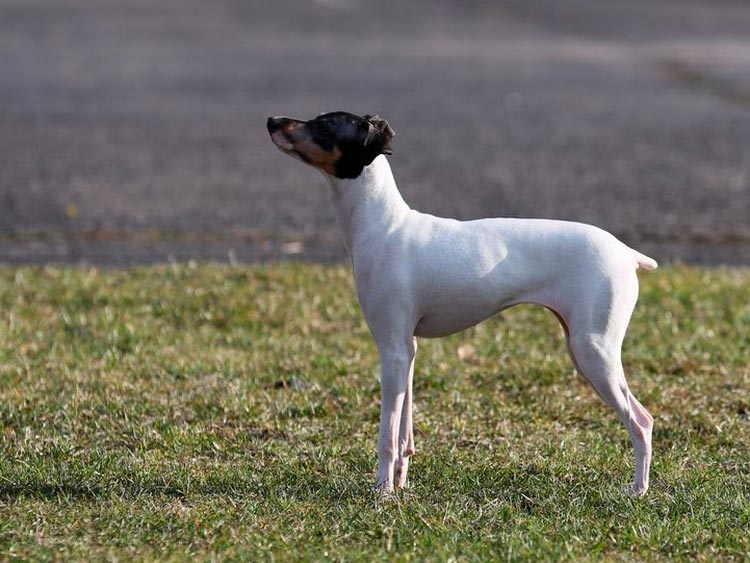
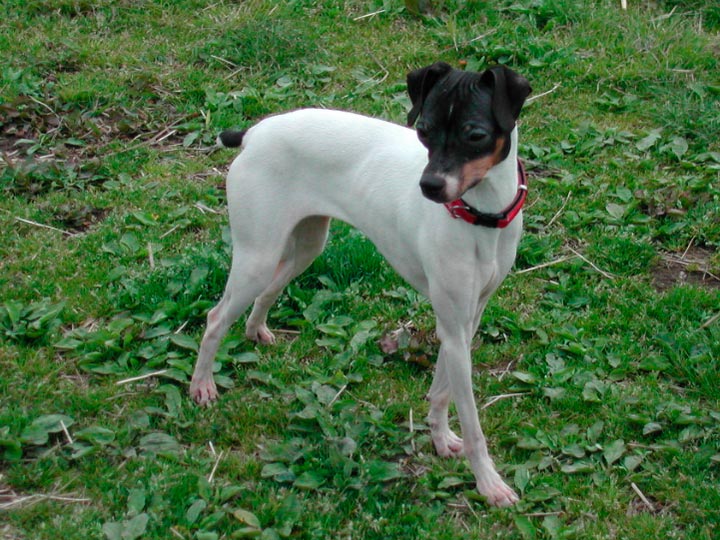
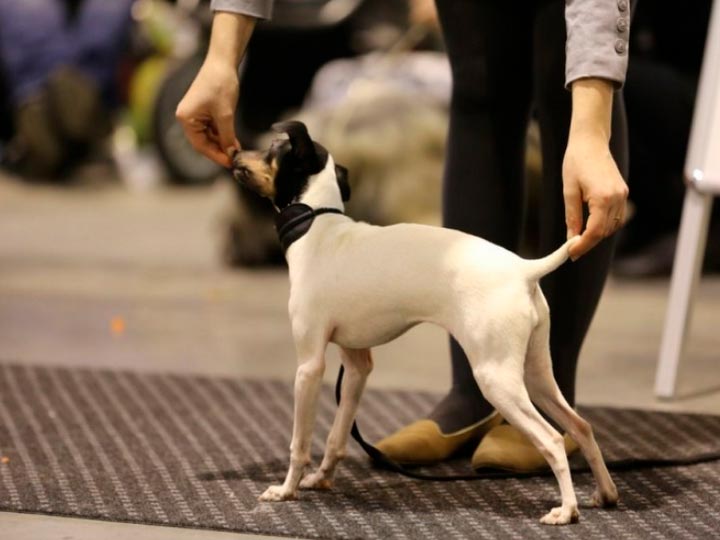
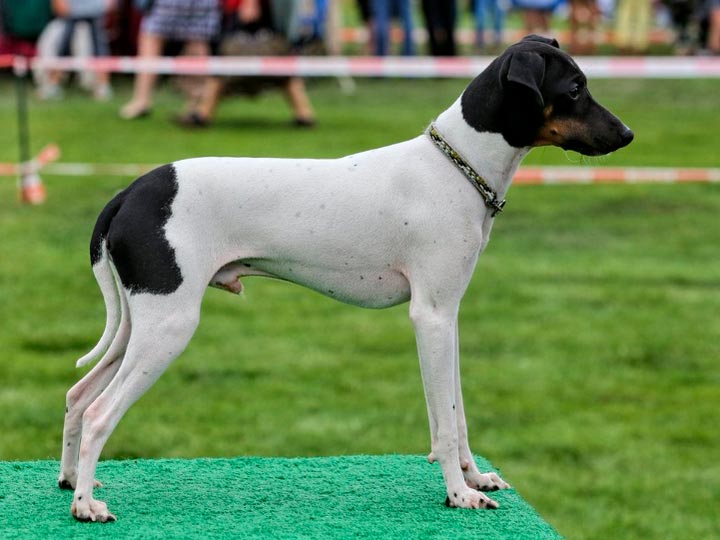
The Japanese Terrier is a small, very light dog of elegant appearance, square in shape, with a clearly defined, compact outline and very short hair.
- Height at withers: 30-33 cm;
- Weight 3-6 kg.
The Japanese Terrier's appearance resembles American Toy Fox Terrier. It differs from it in the length of its fur, hanging ears and more refined build.
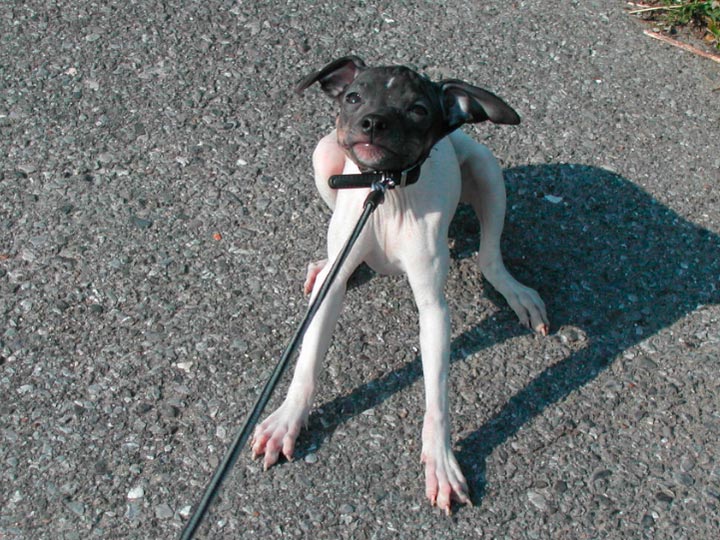
The head is wedge-shaped. The skull is moderately narrow and flat. The stop is not very pronounced. The bridge of the nose is straight, the tip of the nose is black. The lips are thin and tight. The bite is scissor-shaped. The cheekbones are flat. The eyes are oval, medium in size, and dark in color. The ears are set high, thin, V-shaped, hanging on cartilage, falling forward in a triangle. The neck is strong, moderately long, and without dewlap.
The body is square. The withers are prominent. The back is strong and short. The loin is arched. The croup is strong. The chest is deep and not too wide. The belly is well tucked up. The tail was traditionally docked in the past. Today, it may be docked in countries where it is not prohibited. The natural tail is thin, moderate in length, tapering to a point, and carried moderately high. The limbs are relatively long and slender, with straight forelegs and moderately angulated hind legs. The paws are tightly knit.
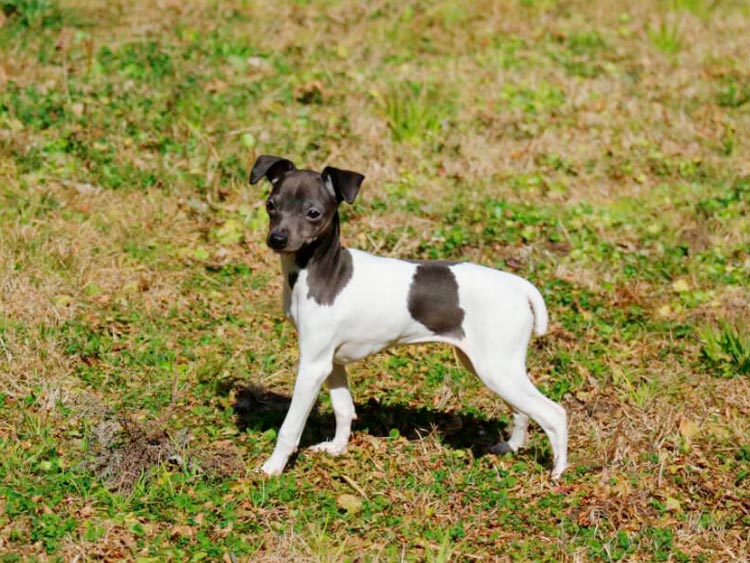
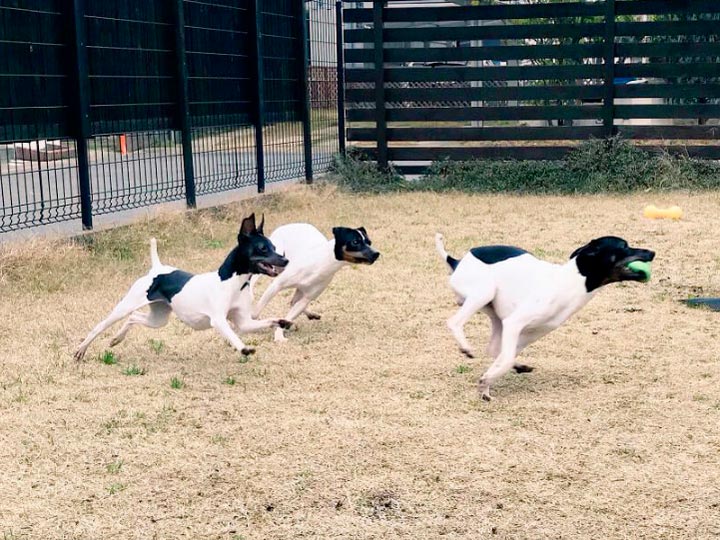
The Japanese Terrier's coat is very short (only 2 mm long), thick, smooth, and shiny. Its coloring is tricolor: the body is white with black spots, brown spots, or black markings, and the head is black, red, and white.
Character and behavior
The Japanese Terrier is a playful, cheerful, and happy dog. It is energetic, agile, and friendly, though somewhat timid and shy, especially with strangers. It has a hard time adjusting to new people and adores its own. It is very alert and makes a good watchdog. Among family members, it is gentle, obedient, and not prone to excessive barking. It gets along well with other pets. It is intelligent enough to quickly learn house rules. It requires careful training, good socialization, and education. Dogs that are not trained and overly pampered may exhibit various behavioral problems.
Content Features
The Japanese Terrier was bred as a companion dog. It is not suitable for outdoor living, but is best used as an indoor toy. It does not require a lot of space and can go on a pad. Its very short coat sheds little with regular grooming and causes virtually no discomfort. It has no distinctive odor, and is neat and clean. It requires moderate exercise; a 30-minute walk a day is sufficient. In bad weather, it can stay indoors.
It's important to note that Japanese Terriers' short coats offer little protection from the cold. These dogs are very sensitive to drafts, temperature fluctuations, and especially frost. Owners will need to ensure their dog is equipped with a versatile wardrobe.
Care
The Japanese Terrier is completely undemanding in terms of grooming. It requires occasional brushing and bathing every 10-14 days or less frequently. Ear cleaning and nail trimming are recommended as needed. Regular teeth brushing is also recommended.

Health and life expectancy
The number of Japanese Terriers is small, so breeders cannot avoid problems associated with inbreeding. The breed is susceptible to a number of hereditary diseases. These occur with varying frequency in different lines:
- elbow dysplasia;
- Perthes disease;
- ophthalmological diseases (glaucoma, progressive retinal atrophy, cataracts, others);
- allergies;
- malocclusion;
- cryptorchidism;
- umbilical hernia.
Life expectancy is 10-14 years.
Where to buy a Japanese Terrier puppy
It's not that the Japanese Terrier is on the brink of extinction, but there's no significant increase in popularity either. There are approximately 1,500 of these dogs in Japan, with an annual increase of about 30 puppies. Outside of Japan, there are a few breeding grounds in Europe and the United States, with a total of about 200 dogs. There are no data on representatives of the breed in Russia. In 2012, a pair of Japanese Terriers were brought to the Amainu breeding kennel, but it has since ceased operations.
Price
The price of a Japanese Terrier puppy varies widely. In Japan, according to listings, a puppy of this rare breed costs 400,000-600,000 yen (approximately $3,500-$5,500).
Photos and videos
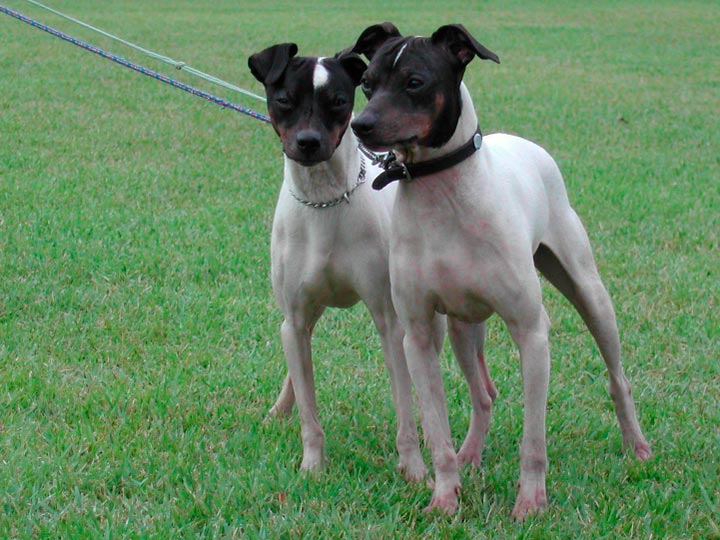
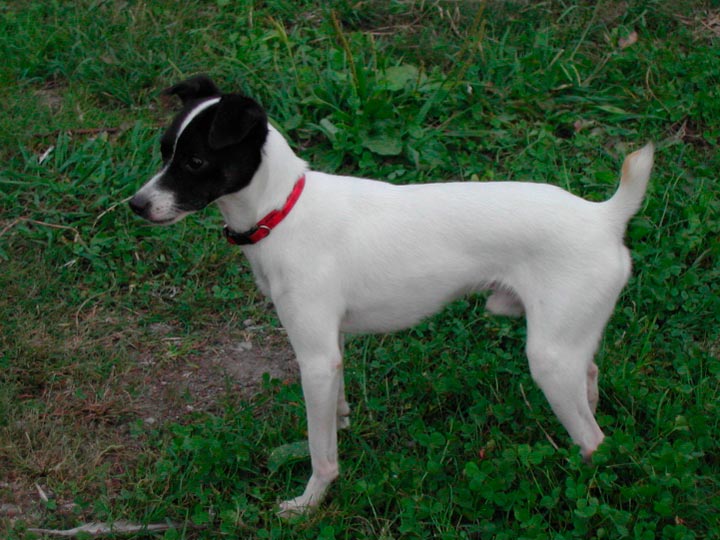
The gallery contains photographs of Japanese Terrier dogs.



Video about the Japanese Terrier dog breed
Read also:


Add a comment