
Jagdterrier (German hunting terrier)
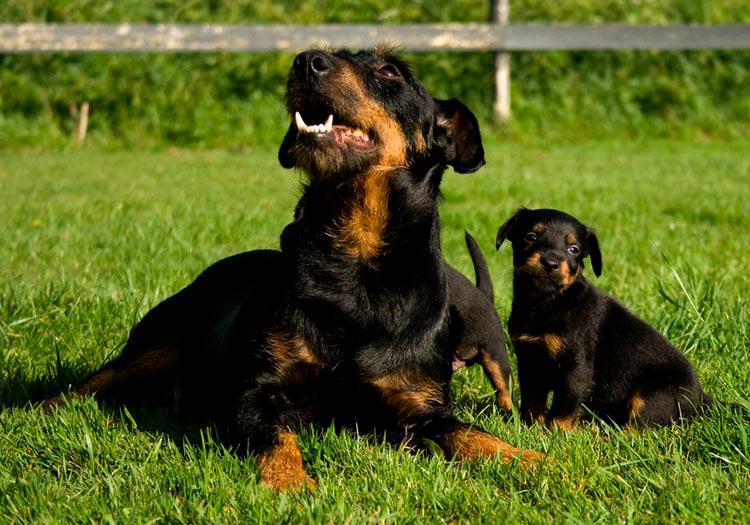
The German Jagdterrier is a dog that can't be judged by its size. It's a true fighter and hard worker, a great companion for any hunt, whether in burrows or on the open ground, for birds, hares, and even ungulates. It will become a loyal companion for its owner, but this cheerful animal has a rather complex personality. Another name for the breed is the German Hunting Terrier, often abbreviated as HOT.
Content
History of origin
The Jagdterrier's creation was prompted by the worldwide craze for dog shows. Breeders, in pursuit of a beautiful exterior, placed working qualities on the back burner, which displeased many hunters.
The Jagdterrier owes its origins to the German fox terrier breeder Walter Zangenberg and his associates. Their work began in 1923, when Zangenberg, an avid hunter, acquired black, non-standard puppies for next to nothing. fox terrier and imported English cable dogs. These dogs formed the core of the new breed. Work on the Jagdterrier coincided with the rise of nationalism in Germany, so other dog breeders soon joined in. In 1926, the German Jagdterrier Club was founded. To offset the effects of years of inbreeding, the existing stock was diluted with English terrier bloodlines and Welsh TerrierIn 1934, the first standard was published, placing a key role on working qualities. The only requirement for the dog's exterior was to ensure its working ability. In 1954, the breed was recognized by the International Cynological Association. Jagdterriers arrived in Russia in the 1970s and quickly became popular among hunters.
Video review of the Jagdterrier dog breed
Hunting with a Jagdterrier
The Jagdterrier is a specialist in burrow hunting for badgers and foxes. The dog hunts from a pre-scouted, inhabited burrow. Upon sensing a scent, it enters and calls out so the hunter can monitor the location of its assistant. Upon spotting the animal, the Jagdterrier must either drive it out of the burrow by shooting, or engage in combat, grabbing the game by the neck and dragging it out. Working with badgers is more dangerous and difficult. The dog cannot bring a large animal to the surface, so it must block it in a dead-end passage and hold it until the hunter digs the burrow.
The Jagdterrier can hunt feathered game, such as pheasant or partridge. It locates the bird and, after a shot, retrieves the wounded bird. A pointing stance is not typical for it. When hunting ducks, the Jagdterrier eagerly retrieves the prey from the water to the hunter in a boat. The HOT can be used for wild boar hunting. The dog follows the scent using both upper and lower scent. It also follows a blood trail.
What does the Jagdterrier standard look like?
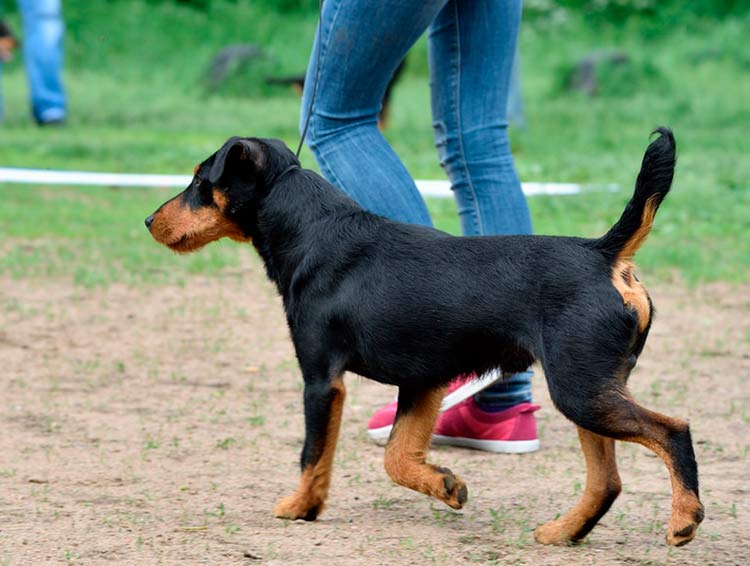
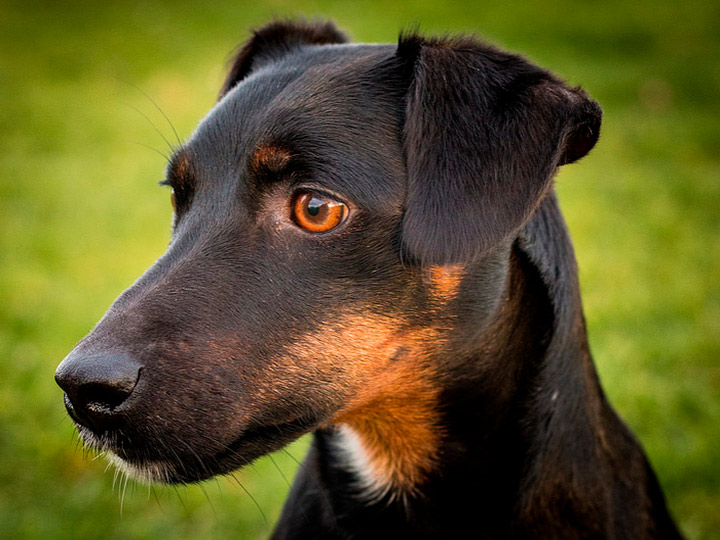
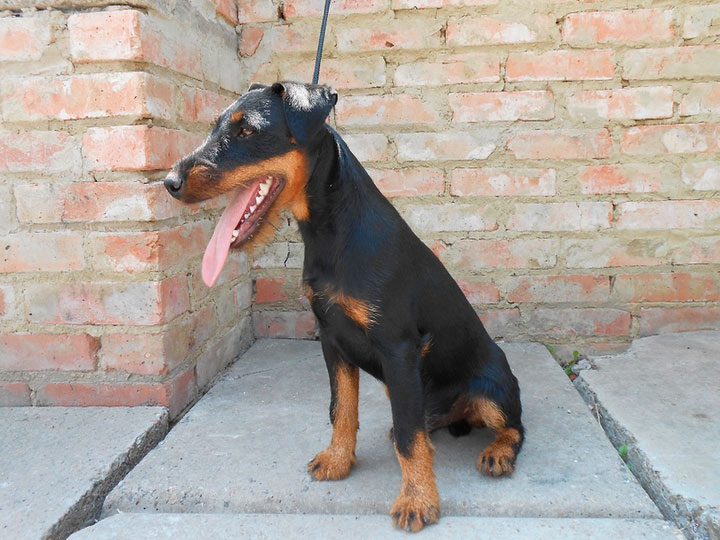
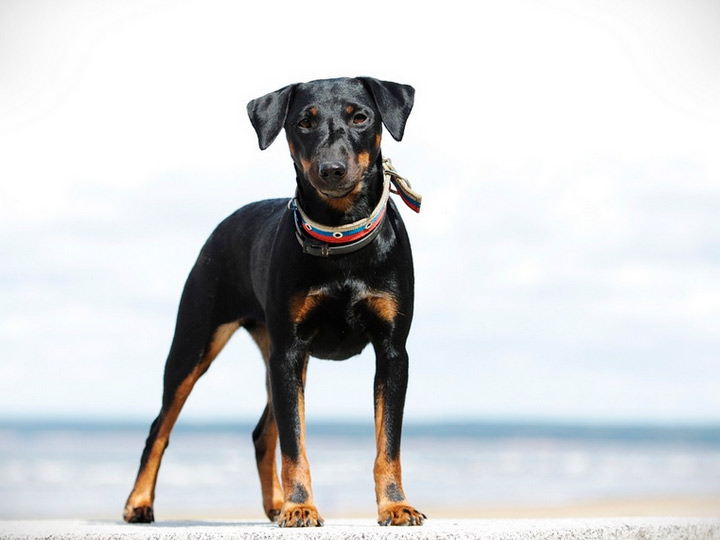
The German Jagdterrier is a small, compact, and well-proportioned hunting dog. It is typically black and tan in color. Sexual dimorphism is moderate. Height at the withers ranges from 33 to 40 cm, and weight ranges from 7.5 to 10 kg. The standard highlights several important proportions:
- The chest circumference exceeds the height by 10-12 cm;
- The length of the body slightly exceeds the height;
- The chest depth is 55-60% of the height.
The head is wedge-shaped, elongated, but not pointed. The muzzle is slightly shorter than the cranial region. The skull is flat on top and wide between the ears. The stop is weakly defined. The nose is black, although brown is permitted in brown-colored dogs. The muzzle has well-defined cheekbones. The lower jaw is deep with a strong chin. The lips are tight and pigmented. The teeth are strong and complete, with a scissor bite. The eyes are small, oval-shaped, dark, and deep-set. The eyelids fit tightly. The ears are folded forward, set high, and of medium size. The outer auricle is V-shaped.
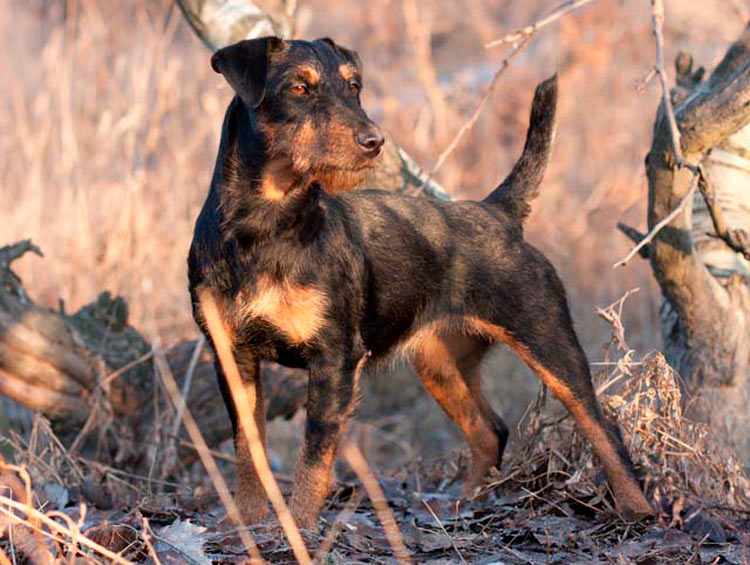
The neck is strong, well set, and not too long. The topline is straight, with well-defined withers. The back is straight, moderately long, and strong. The croup is horizontal and muscular. The chest is deep but not wide. The ribs are well sprung. The underline is elegantly arched. The belly is tucked up. The tail may be docked by 1/3 in countries where this is not prohibited. It should remain long enough for the hunter to pull the dog out of a hole. It is carried slightly elevated, but never on its back. When carried naturally, it is carried horizontally or sabre-shaped, and is of medium length. The legs are proportionate, straight, and parallel. The shoulders are long, with the elbows close to the body. The front feet are usually wider than the back feet. The toes are close together. The pads are dense, hard, and dark in color.
The skin is dense, thick, and free of folds. The coat comes in two types: coarse and wiry or coarse and smooth, but in either case, it is straight and dense. Wirehaired dogs have eyebrows, a beard, and a mustache on their faces, with the hair being somewhat longer in some areas of the body. The coat color is black, dark brown, or grayish-black with tan markings. A dark or light mask is acceptable, as are small white markings on the toes and chest.
Character
The Jagdterrier is energetic and emotional, with a lively temperament, easily excitable, and extremely impatient. Bold, alert, and intelligent, they love to bark at anything that moves and reacts to any sound. The Jagdterrier is self-sufficient, independent, and very stubborn, confident in their abilities, not shy or aggressive. They are prone to wandering. Gender also influences the dog's personality; females are more obedient, affectionate, and less prone to dominance.
The Jagdterrier is a hunter to the core. He must constantly be running, catching, or chasing something. He can be pugnacious and rarely gets along with other males. A peaceful coexistence with cats, if raised under the same roof, is possible. One of the Jagdterrier's characteristic traits is a ferocious attitude toward animals. This quality is essential for a good hunter, but it hinders him in everyday life and prevents him from getting along with other dogs, especially those of non-hunting breeds. Walking a Jagdterrier in the park with other dog owners can be difficult, he can't be let off leash in the city, and he won't be able to get along with a pet hamster.
The Jagdterrier can be a wonderful hunter and guard dog, but will only become a loyal and obedient companion for an owner who can build a proper, trusting relationship with this wayward dog.
Despite their size, Jagdterriers prefer to occupy the highest level in the hierarchical pyramid. A dog recognizes only one owner. He loves other family members, but considers them equals or even inferiors. He has a strong guard instinct, is a fearless and courageous dog who will never let anyone harm his own, and is ready to engage in a fight even with a larger opponent. He is either friendly or indifferent to familiar and peaceful people. Puppies often view children as their peers, but as they grow older, the dog becomes less tolerant of a child's pranks and will certainly snap if something doesn't please him.
Education and training
Jagdterriers are highly trainable, but owners need to learn how to handle the dog. They have difficulty remembering commands due to excess energy. It's recommended to train a puppy or an adult dog only after a good walk. Techniques and exercises are developed from simple to complex. Classes are held in an area with the fewest distractions. Techniques are practiced comprehensively, with new ones always taught in the first half of the class, when the dog is still relatively obedient. Older material is covered in the second half, when the nervous system is already somewhat fatigued. It's best to train a Jagdterrier in the morning and evening, gradually increasing the duration of the session. Repeat a single command no more than five times. The skills acquired at the end of the general training course form the foundation for hunting skills.
The uncontrollability that Jagdterrier owners often talk about is the result of the dog not fulfilling its hunting needs and the accumulated energy not finding an outlet.
Hunting training begins at ten months of age. Its effectiveness depends on the owner's experience and the dog's natural talents. Age and type of nervous system activity are also important factors. When working with a Jagdterrier, a prong collar and other equipment for gentle physical stimulation are sometimes used.
Content Features
The ideal environment for a Jagdterrier is a free-range enclosure with regular walks and opportunities to hunt. It's worth noting that the dog quickly adapts to house or apartment life.
The Jagdterrier is suitable for keeping in an apartment, provided it gets good physical exercise and its hunting instincts are fulfilled.
A Jagdterrier puppy requires constant supervision. A single moment of distraction can ruin a favorite slipper. And not just a slipper. Jagdterriers of any age, if not occupied with useful activities, love to destroy things and develop other bad habits. If a puppy isn't trained to use a crate or playpen with high sides, it may even start repairing the house on its own.
A Jagdterrier is recommended only for avid hunters or people who lead an active lifestyle and enjoy long walks. The Jagdterrier is not suitable as a toy dog or a companion for the elderly.
The Jagdterrier is very active and energetic, requiring long walks without a leash, but not in city limits, where it might run into traffic or get into trouble chasing a neighbor's cat. The Jagdterrier wants to be free and independent, but wants its owner to be nearby.
Nutrition
Jagdterriers often prefer natural food, but they can be trained to eat prepared foods if the owner prefers this type of diet and is willing to purchase a premium-quality food. Jagdterriers eat a lot for their size, but this is justified by their high energy expenditure. During periods of intense physical activity, before hunting, or in cold weather, caloric intake is increased. Jagdterriers are not prone to overeating and rarely gain weight when young, but it is recommended to feed them portions at regular times. On walks, Jagdterriers are not averse to snacking on various scraps and other items that their beloved owner would never allow at home. It is virtually impossible to break a dog of this habit, so constant supervision is necessary.
Care
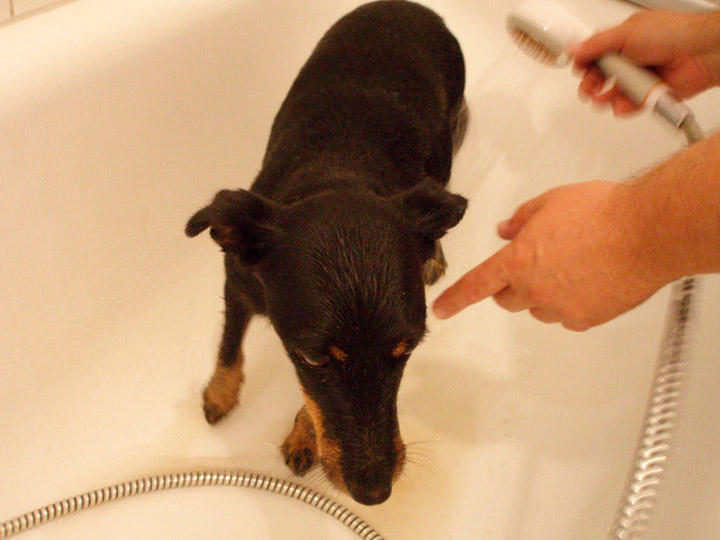
The Jagdterrier is completely unpretentious in terms of grooming. It only requires occasional brushing, ear cleaning, eye cleaning, and nail trimming. Bathing is infrequent, usually no more than once every three to four months. This does not include rinsing the paws and belly after walks.
Health and life expectancy
The Jagdterrier is a healthy breed, characterized by robust health, strong immunity, and no known negative genetics. Geneticists identify only one condition in the breed: Ehlers-Danlos syndrome. This rare hereditary disorder is characterized by excessive fragility and elasticity of the skin. The main reason for seeking veterinary attention is injuries sustained while hunting. This does not rule out the possibility of contracting the disease as a result of improper care, nutrition, or husbandry. Dogs must be vaccinated against major infectious diseases, including rabies, especially those that hunt and come into contact with wild animals. Deworming and treatment for external parasites are also important.
Life expectancy is usually 12-15 years.
Choosing a puppy
When choosing a Jagdterrier puppy, consider your needs. If you need a hunting companion, consider the working qualities of the parents. It's best to get a hunting dog from a breeder who is also a hunter. If you need a Jagdterrier for sport and as a companion, there's no point in overpaying for a puppy from outstanding working parents.
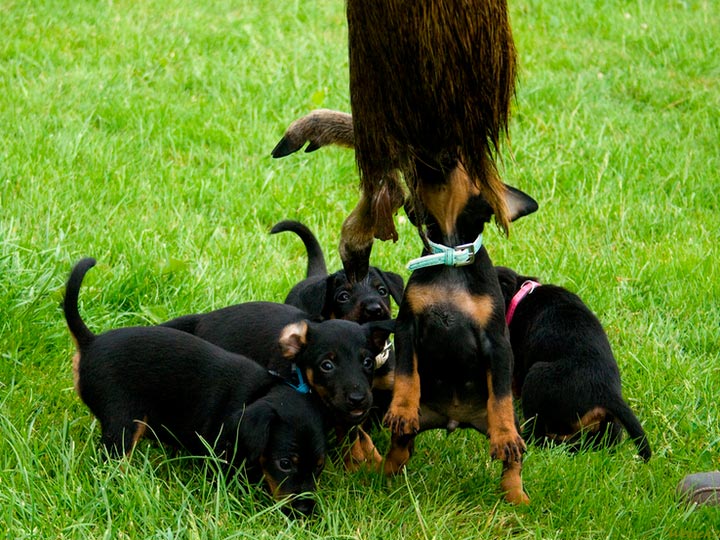
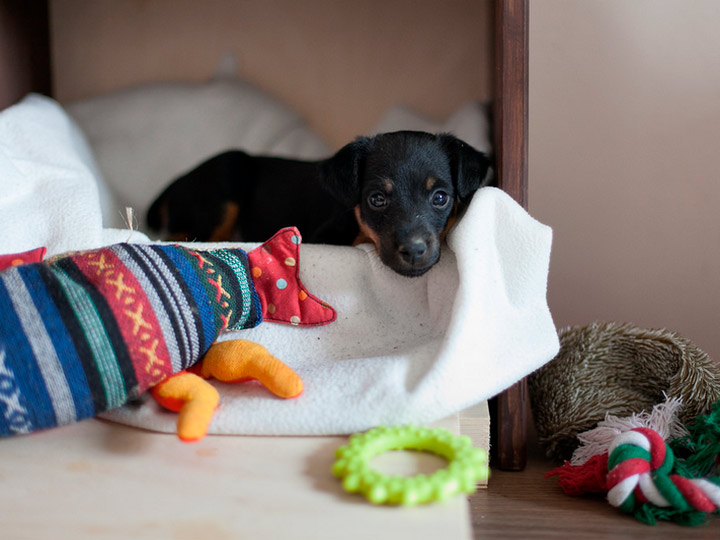
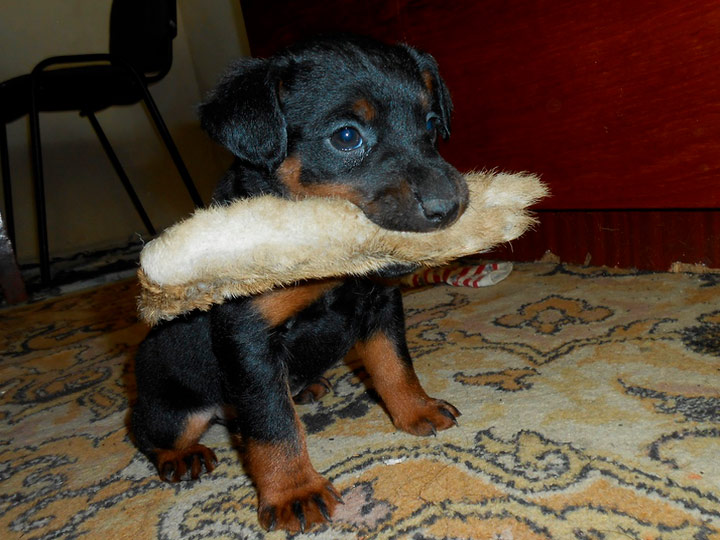
A small Jagdterrier should be healthy, not skinny, with strong bones, powerful paws, and a shiny coat. They should be active, playful, and curious. As early as 1-1.5 months old, they begin to show their true personality. A puppy that tries to playfully attack, accompanying all its actions with a serious bark, will likely be an excellent hunting companion. A calm, phlegmatic puppy will likely be easy to keep in an apartment.
Price
A Jagdterrier from working parents, but without a pedigree, costs an average of 5,000 rubles. If the parents are of elite bloodlines, show winners, and holders of working diplomas, but the puppies are the result of an unplanned mating and lack papers, they sell for 5,000-10,000 rubles. Pups from pedigree kennels start at 15,000 rubles. Some promising puppies can cost more. It's always important to confirm with the breeder the reason for the high price. Adult working dogs typically cost from 30,000 rubles.
Photos
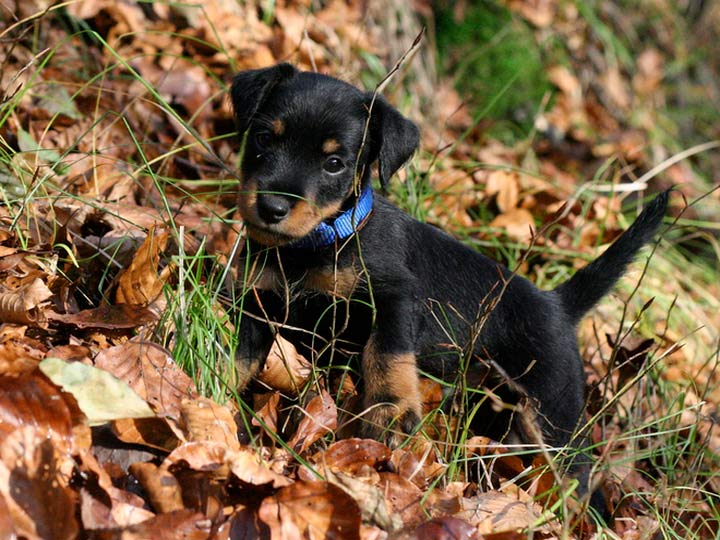
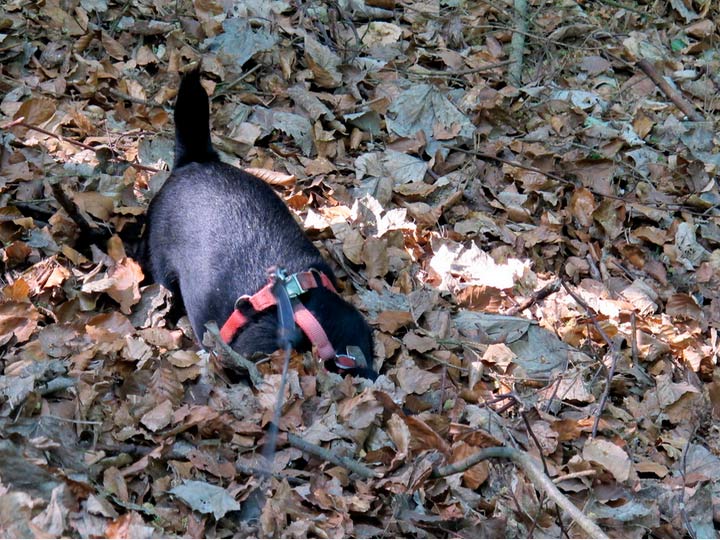
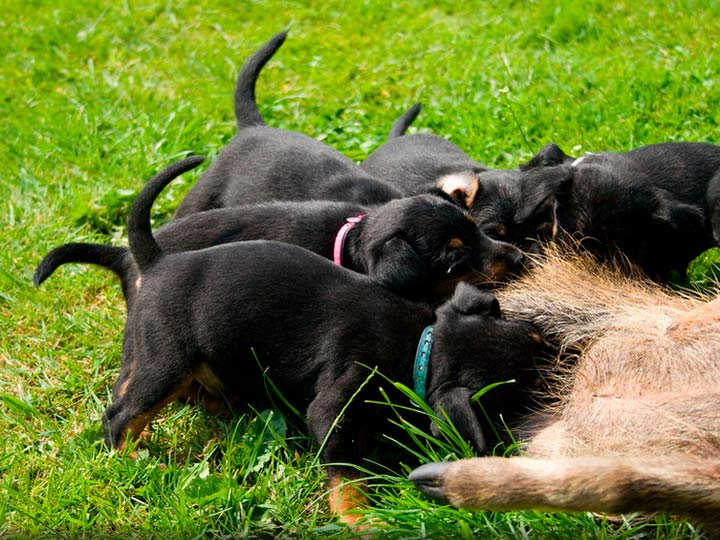
The gallery contains photos of adult Jagdterrier dogs and puppies hunting, on walks, and at home.
Read also:


Add a comment