
Taking blood from a cat
Taking a cat's blood sample is a key component in diagnosing various diseases. This analysis will provide information on various pathologies and disorders in the animal's body and will help the veterinarian choose the appropriate treatment strategy. In some cases, a repeat sample may be necessary to monitor the condition or assess the recovery process. The procedure must be performed by a specialist to prevent injury to the animal. Blood sampling in cats can be performed either at a veterinary clinic or at home.
Indications
Blood is drawn from cats and dogs for the same purposes as from humans: to diagnose their condition and identify various diseases. Blood testing is also required for both donor and recipient blood transfusions.
Important! Blood transfusion is a complex and difficult procedure that is performed strictly according to medical indications (cancer, anemia, trauma, clotting disorders, sepsis).
The analysis may be prescribed in the following situations:
- Disease diagnosis. The test will assess white blood cell levels and other indicators, which may indicate the presence or absence of inflammation, various pathologies, and other bodily disorders.
- Preoperative examination. This test is almost always prescribed before surgery. It helps minimize the risks associated with any procedure. It can also help identify hidden problems in the animal's organs that could negatively impact the cat's condition after surgery.
- Preventive measures. A test can be initiated by the cat owner or the sanitary and epidemiological service to identify infectious agents in the animal if there is a high risk of dangerous diseases in a given area.
Types of analysis
The following tests may be ordered to evaluate various conditions:
- general blood test – shows the level of red blood cells, white blood cells, hemoglobin, etc.;
- biochemical analysis is a more informative method that allows you to evaluate the functioning of a particular organ or system (level of total protein, amylase, triglycerides, glucose, magnesium, sodium, etc.);
- Determination of hormones – used to diagnose reproductive function and metabolic processes;
- electrolytes and blood gases – allow the diagnosis of systemic diseases that are accompanied by muscle weakness, gastrointestinal dysfunction, edema, etc.;
- Blood cytology – used in the diagnosis of neoplasms;
- blood for hemotransfusion – necessary to determine the compatibility of the biological material of the donor and recipient.
How is blood drawn?
Blood sampling from a cat should be performed by a specialist, as the procedure requires specific knowledge and skills. Since cats are quite sensitive animals, blood sampling can be done at home to reduce stress.
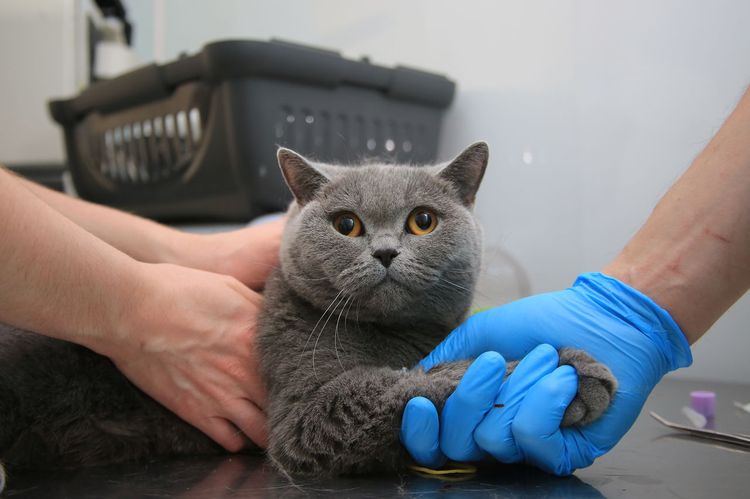
Before the procedure, it's important to properly immobilize the cat. This is necessary, first and foremost, to avoid harm to the animal itself, as well as to avoid injury to the owner and the veterinarian. Specialists will advise on how to properly hold the animal to ensure the procedure is as quick and effective as possible, so the owner should trust them and follow their recommendations. In complex cases, sedatives may be used.
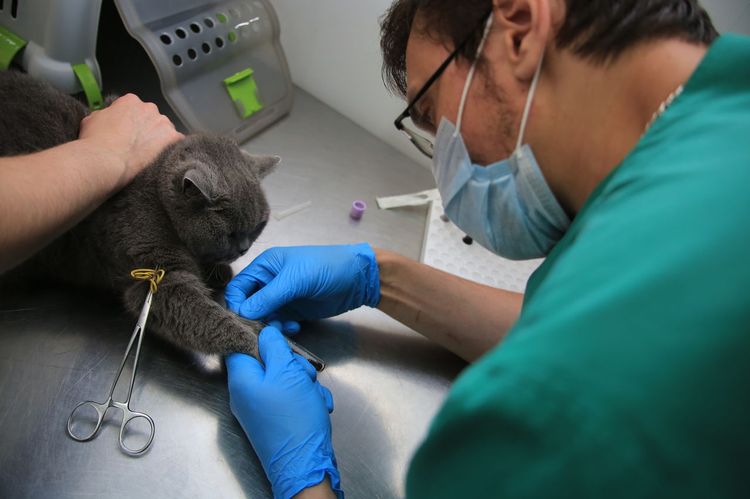
Blood samples are taken from an internal vein of the cat's upper or lower limb. A tourniquet may be applied to the paw. The collection procedure is as follows:
- The area where the hair will be is trimmed. an injection was given.
- The animal's skin is treated with a disinfectant solution.
- The specialist punctures the vein with a sterile needle and a special test tube, into which the biological material is immediately placed.
- The wound is treated with a disinfectant solution.
- An elastic bandage is applied to the wound and should not be removed for 10 minutes.
How to take blood from a cat: video
Where is the procedure performed?
Biological sampling can be performed at a veterinary clinic, a specialized laboratory, or at home. The cost will depend on the complexity of the procedure, the nature of the subsequent testing, transportation costs (if blood sampling is performed at home), and other veterinary service requirements.
When choosing a clinic or laboratory, it's important to confirm whether they perform the test prescribed by your veterinarian. Some facilities lack the necessary equipment or facilities to perform a specific test.
Important! To evaluate the results over time, it is necessary to submit biological samples to the same laboratory (clinic). Different institutions may use different methods of processing samples (different reagents, equipment, etc.), so results may vary.
The cost of this procedure in Moscow ranges from 500 to 1,000 rubles. The cost of drawing blood from cats at home is also calculated. It starts at 500 rubles, depending on the distance to the clinic and the urgency of the call.
Read also:
- Low White Blood Cells in Cats: Symptoms and Treatment
- How to give a pill to a cat
- Leukemia in cats: symptoms and treatment


1 comment
Elena
Thank you, everything is clear and understandable!
Add a comment