
Patellar luxation in dogs
Patellar luxation (patellar luxation) in dogs is one of the most common orthopedic conditions. While it affects all breeds, it most often occurs in toy breeds such as Yorkies, Chihuahuas, Spitz, Toy Terriers, and their crossbreeds.
Content
Causes of occurrence
Most often, patella luxation in dogs is associated with certain congenital orthopedic pathologies, but can also occur as a result of trauma or inflammatory diseases.
The mechanics of the knee joint are controlled by a complex of components. Normally, the patella is located in the groove of the joint (between its distinctive protrusions). It is mobile during flexion and extension of the leg, but is maintained in its proper position by ligaments.
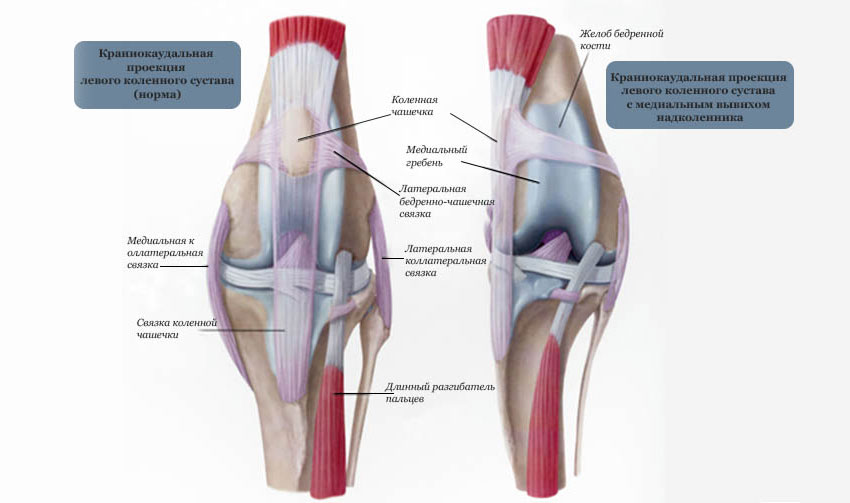
Patellar luxation in small-breed dogs is very common due to congenital structural differences in the knee joint. The protrusions that form the characteristic indentation in the joint are weakly defined in small breeds, allowing the patella to simply slide along the bone surface without locking into place.
Traumatic luxation of the patella can occur not only in Spitz and Yorkies, but also in any large dog (including cats). This condition often occurs when the ligaments and tendons that hold the patella in place are damaged, which often occurs with bone or knee joint injuries.
Classification of dislocations
Depending on the cause of the displacement of the kneecap and the direction in which the patella is displaced relative to the main axis, a distinction is made between:
- medial dislocation (occurs with congenital pathologies) – displacement occurs towards the inside;
- lateral dislocation (develops when the cruciate ligament malfunctions) – displacement occurs to the outer side.
In small dogs, medial luxation of the patella is most often diagnosed, while in cats and large dogs, lateral luxation is most often diagnosed.

There are four degrees of patella dislocation (the classification applies to both medial and lateral cases).
1st degree
 There are characteristic changes in the joint's function, but the patellar displacement is minor or intermittent. The kneecap returns to its normal position on its own, without damaging the cartilage.
Often, at this stage, the disease is asymptomatic and is diagnosed only with a full examination of the animal based on X-rays of the joint, in which characteristic structural features can be seen.
2nd degree
 The displacement becomes permanent or occurs very frequently and the kneecap can no longer return to its correct position on its own.
Damage to the cartilage causes inflammation and pain, often leading to lameness. At this stage, lameness may be intermittent, and the dislocated patella can be manually repositioned.
III degree
 The kneecap is permanently located outside the articular notch, which is why pain and lameness are constantly present, and the dog stops putting weight on the injured limb.
If you try to reset the kneecap, it can be returned to the notch, but with the slightest movement of the joint, it shifts again, which causes severe pain to the animal and can cause damage to the cartilage tissue.
IV degree
 The patella is permanently dislocated, but it can no longer be manually repositioned due to significant changes in the cartilage. The limb structure changes, and the mechanics of the joint are disrupted.
Symptoms of a dislocation
A grade I or II luxation of the patella in a Yorkie or Spitz may go unnoticed. Owners may occasionally notice their dog limping or losing weight on its leg. The problem is uncommon and resolves on its own, so inexperienced owners often avoid veterinary care, assuming their pet has simply suffered a minor leg injury.
That's why it's important for owners to know that they can suspect a dislocated patella in a dog based on the following symptoms:
- decreased activity (the dog begins to avoid exercise);
- periodic stretching or shaking of the paw (this way the pet can independently reset the patella in case of grade I dislocation);
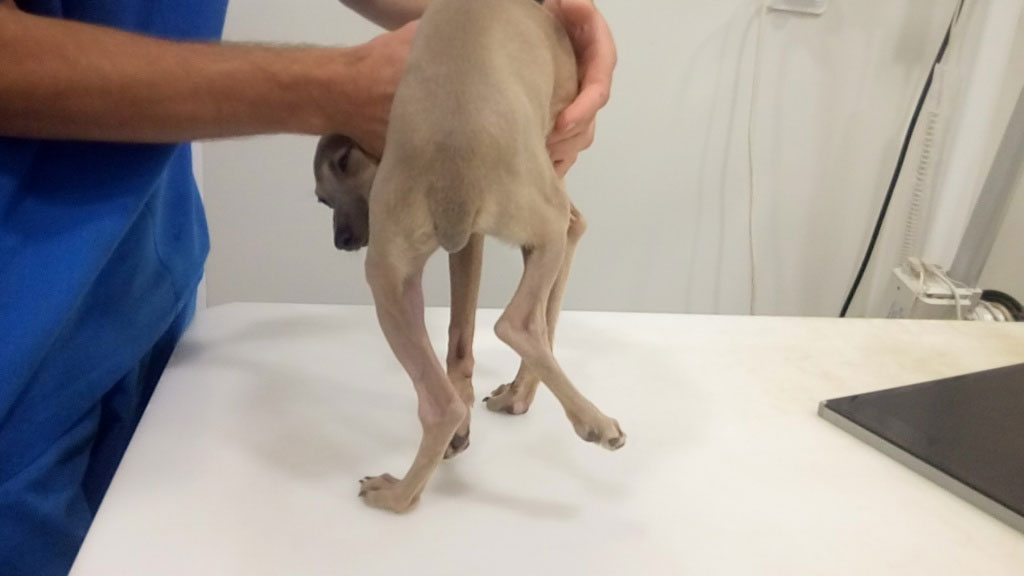
- lameness (bouncing gait);
- bending of the paw (the dog does not put weight on the sore limb);
- displacement of the knee joint (to the inside or outside).
Important! If you notice that your pet has a noticeable joint displacement, do not attempt to realign the patella yourself. This procedure should be performed by a veterinarian who understands the structure and function of the knee joint.
Diagnostics
If the clinical picture is obvious in the case of a joint injury or dislocation of grades III-IV, then a diagnosis of congenital pathology of grades I-II is possible only after a complete examination of the animal.
A veterinarian can assess patellar mobility and the presence of pain in the limb during an initial examination. However, the condition of the knee joint, the position of the patella, and the presence of pathological changes in the cartilage can only be determined through X-rays or CT scans.
Treatment methods
Once a veterinarian has diagnosed medial patella luxation in small breed dogs, they will be able to determine the most effective treatment based on:
- degree of patellar displacement;
- causes of pathology;
- concomitant factors.
Dogs diagnosed with congenital orthopedic problems, even after successful treatment, cannot be used for breeding, as this pathology will be passed on to their offspring.
Conservative treatment
It is used for dislocations of grades I-II, not accompanied by inflammation, as well as in animals for which surgery is contraindicated for some reason.
Conservative treatment should be comprehensive and include:
- pain relief (if necessary);
- anti-inflammatory drugs;
- probiotics for the gastrointestinal tract (non-steroidal anti-inflammatory drugs can negatively affect the stomach);
- compresses with dimexide solution;
- vitamin complexes;
- physiotherapeutic methods.
Operation
In most cases, veterinarians recommend surgical treatment to owners if a luxating patella has been diagnosed in small or large breed dogs, as timely surgery can help animals return to a normal, active life.
Today, there are many surgical techniques for resolving this orthopedic problem, so your veterinarian will determine which surgery is best for your pet after assessing the condition of the joint, the cause of the problem, and other important factors.
By visiting the thematic forum, you can easily find out what veterinary clinics are currently performing:
- osteosynthesis;
- arthroplasty;
- osteotomy of the tibia bones;
- wedge-shaped gutter plastic surgery (to form the correct depression);
- lateral suture;
- implantation of artificial ligament, etc.
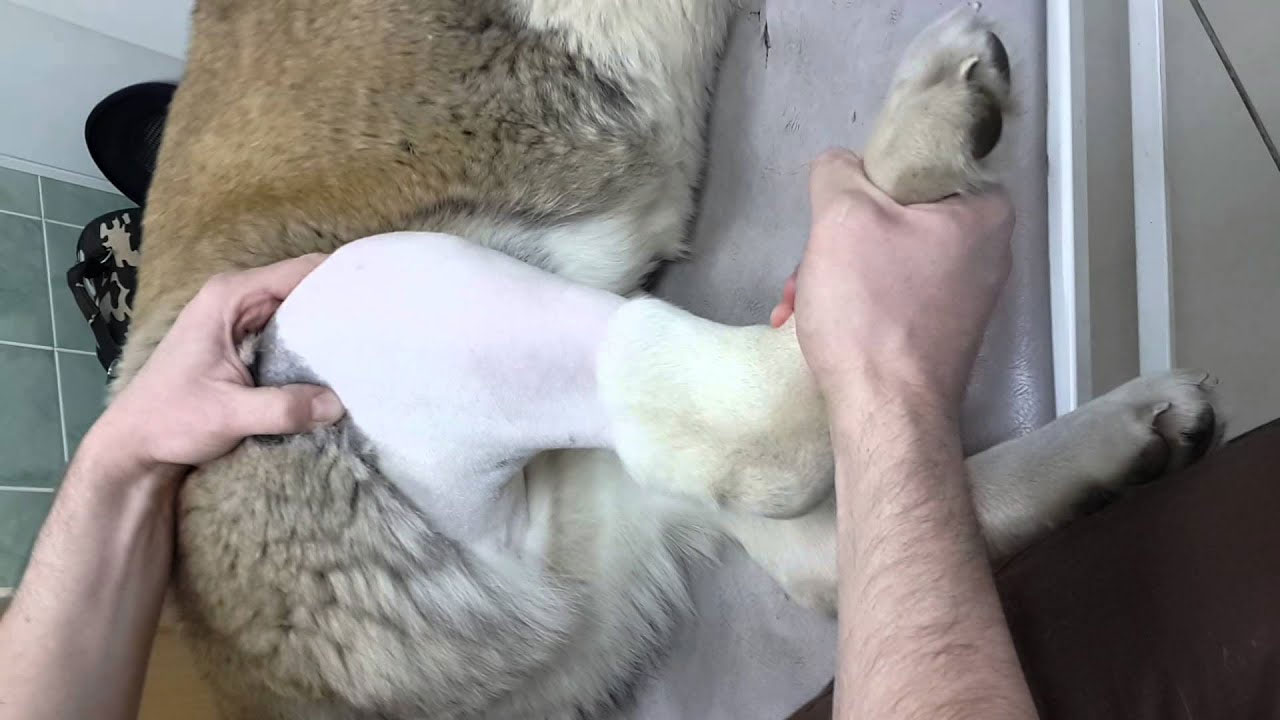
The prognosis for patients following timely surgical treatment is favorable in over 99% of cases. After a period of rehabilitation, dogs can fully return to an active lifestyle. This is confirmed by numerous reviews from owners whose pets underwent surgery after being diagnosed with patellar luxation or luxating patella.
Advice from veterinarians
Read also:
- Dewclaws in dogs: what are they and should they be removed?
- Herniated Discs in Dogs: Symptoms, Treatment, and Recovery
- Dislocation or sprain of the paws in dogs: symptoms and treatment


Add a comment