
Dislocation or sprain of the paws in dogs: symptoms and treatment
The most common consequence of limb injuries or excessive strain on ligaments is a dislocation or sprain of a dog's front leg (shoulder), hip, or knee joint. These conditions are closely interrelated, as one almost always accompanies or leads to the other. However, there are significant differences between dislocations and sprains in terms of the degree of joint damage, the severity of symptoms, and the complexity of treatment.
Causes and types
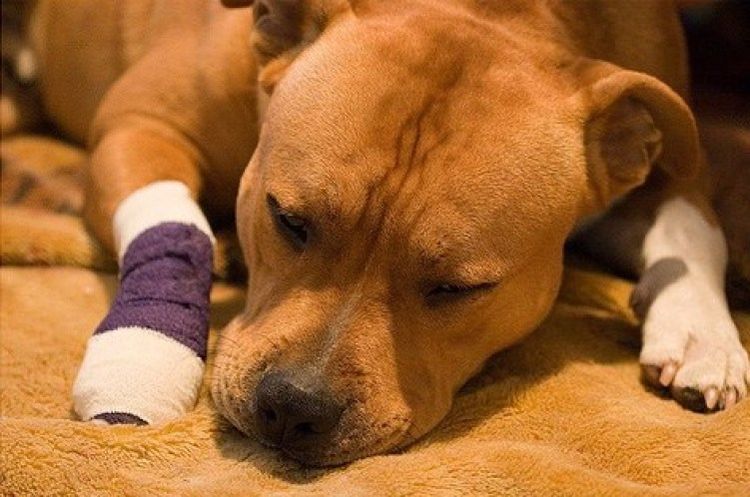
Essentially, a dislocation is a displacement of the joint heads of the bones relative to each other, while a sprain is a partial injury to the ligaments surrounding the joint with micro-tears of individual fibers. The situation is similar to a leg sprain in humans. There are two main groups of factors that provoke a sprain or dislocation of the paw in dogs:
- traumatic – associated with injuries resulting from falls from a great height, road accidents, active games, or damage during childbirth;
- congenital – caused by pathologies of intrauterine development of the fetus during pregnancy.
In addition, according to etiology, limb dislocations are divided into the following types:
- paralytic - caused by atrophy of the muscles that support the joint.
- pathological – is a consequence of diseases of the musculoskeletal system;
- "Habitual" - ligaments that have been stretched once are no longer able to fully support the joint, and with the slightest increase in load, a repeated dislocation occurs.
Sprains can be mild or moderate. Severe is already ligament rupture, which is usually accompanied by a dislocation and is considered a separate type of injury.
In terms of pathogenesis, a dislocation or sprain of a dog's front paw is usually traumatic in origin, while a disruption of the hip joint is most often caused by internal pathological changes. Furthermore, such disruptions of anatomical geometry and ligamentous integrity can occur for a variety of reasons at any joint of any limb.
Signs
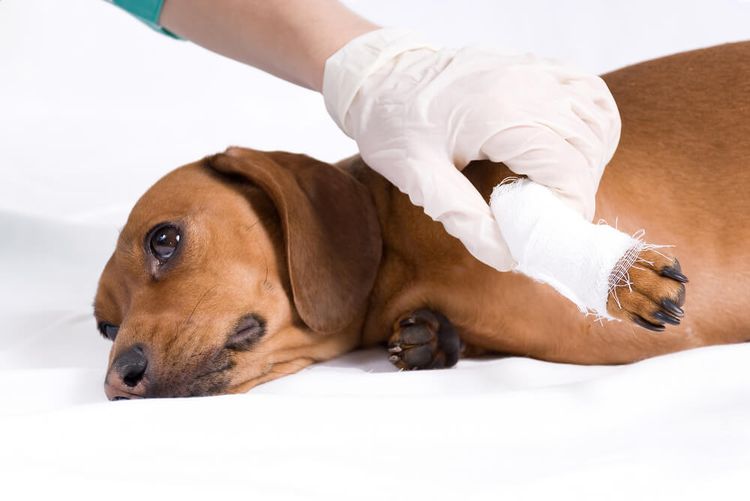
The first symptoms of a dislocated paw in a dog are lameness or an unnatural posture. Other signs depend on the location of the injury:
- When a pet cannot stand up normally and has difficulty lying down, this indicates a sprain or dislocation of the dog’s hind leg;
- with a hip sprain, the animal's paw is tucked in, but is in a natural position, and with a dislocation of this joint, the tucked paw "falls" inward and it is also difficult for the animal to get up after lying down for a long time;
- with medial luxation of the patella, the joint shifts inward or outward and swells, the animal moves the limb with difficulty and tries to direct it inward;
- A dislocated shoulder is characterized by a displaced shoulder blade and lameness, and the pet falls over when walking, making it difficult to determine which paw is hurting;
- When a dog's front paw is sprained or dislocated, the symptoms of lameness are accompanied by a "weak" gait with the affected limb being drawn up.
Every touch to the dislocated joint causes severe pain. This can cause the dog to become aggressive, growling, whining, and attempting to escape.
First aid
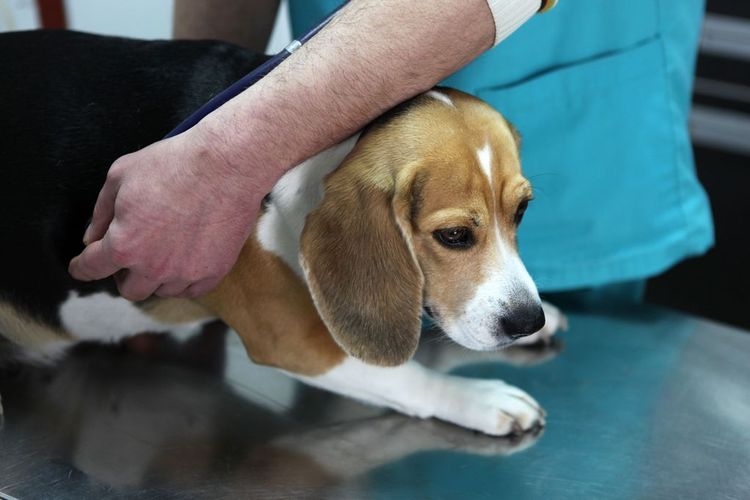
If your dog shows signs of a dislocation, don't panic, as the injury, although serious, is not life-threatening with timely and proper treatment. The key is to administer proper first aid and immediately call a veterinarian or take your pet to a clinic.
First, you need to muzzle your pet, as any dog in pain shock can become aggressive and unpredictable. Then, follow these steps:
- carefully lay the pet with the injured joint facing up and examine for tissue tears;
- do not allow him to walk, but if necessary, carry him on a stretcher or blanket;
- fix the joint with an elastic bandage, ideally with the application of a soft splint with fixation above and below the joint;
- wrap the injured area with film, then with cloth and apply cold.
Do not attempt to reset a dog's dislocated paw yourself! Improper actions can cause significant harm and severe pain, especially if the injury involves torn ligaments and internal bleeding.
Before contacting a veterinarian, monitor the temperature of the limb with the bandage on. If it becomes cold, loosen the bandage.
In case of severe pain syndrome, in which the animal whines or howls, it is recommended to inject painkillerTraditional "human" analgesics such as Ketanov, Baralgin, or Analgin are suitable for this purpose. If your pet is allergic to such medications, only zootherapeutic drugs, such as Traumeel, can be used.
Diagnosis and treatment
Before treating a dog's dislocated paw or sprained ligament, a veterinarian will conduct an examination and, if necessary, order x-rays. In some cases, an MRI may be necessary.
For mild to moderate sprains, treatment can be done at home:
- on the second day, warming compresses are applied;
- on the third, they perform a light massage, continue warming wraps and apply paraffin applications;
- on the fourth and further, they begin to rub in external preparations with troxevasin.
Any dislocation should be treated exclusively by a veterinarian, regardless of whether you have a Spitz or a Labrador. Uncomplicated dislocations of the front paw in dogs are the easiest to treat: the dislocated joint is reduced and then immobilized with a sling or splints. If necessary, an open reduction technique can be used, which involves surgically removing any growths from the joint cavity that have developed as a result of the injury. In any case, even the simplest treatment for medial patella luxation in dogs is performed under general anesthesia.
For a hip dislocation that has been present for less than five days, the joint is also reduced and immobilized. If this procedure is ineffective or the dislocation is more than five days old, surgery is required to install special fixators or remove the femoral head.
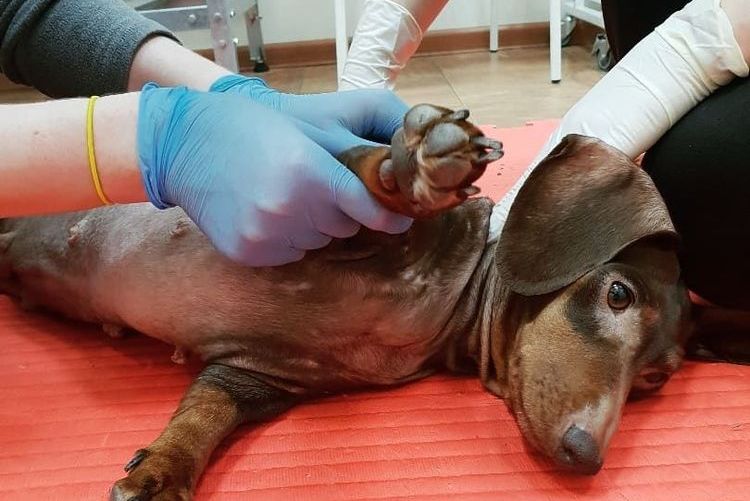
Treatment for a dislocated shoulder in a dog depends on the degree of instability and damage to the joint. Minor injuries require medication and physical therapy. Severe injuries typically require implantation of a capsule or artificial ligament.
Without proper treatment, which should begin immediately after the injury, scar tissue forms in the joint area, preventing the joint from being repositioned and requiring more extensive and expensive treatment. Any improper treatment can lead to lifelong lameness and chronic pain in dogs.
Read also:
- Dog dragging its hind leg: causes and treatment
- Vestibular syndrome in dogs: symptoms and treatment
- Hind Limb Paralysis in Dogs: Symptoms and Treatment


1 comment
Mikhalych
Ketanov causes internal bleeding, often fatal, and has numerous side effects. What do you recommend?
Add a comment